Casanova, Venice and Europe
On the occasion of the three hundredth anniversary of the birth of Giacomo Casanova (2 April 1725 – 4 June 1798), the Foundation is participating in the city’s celebrations with a programme of activities that will unfold throughout the year, involving all of its Institutes and Research Centres.
The aim is to present a complex and multidisciplinary portrait of one of the most iconic figures in the history of Venice, who was a central figure during the final century of the Serenissima’s existence. The Foundation celebrates the European spirit embodied by Casanova. The programme includes a major exhibition, which will take place in the autumn at the Galleria di Palazzo Cini in San Vio and in two venues, Carnelutti and Piccolo Teatro, on the Island of San Giorgio Maggiore.
«The project dedicated to Casanova is an opportunity to highlight the deep connection between the Fondazione Giorgio Cini and the city, its history, and its cultural context, drawing inspiration,” explains President Gianfelice Rocca, “from the great personalities and significant themes that have shaped History. It is an opportunity to emphasise the expertise, research, and collaboration between the Foundation’s Institutes and Centres in an international context. The Foundation’s vocation is to be an active participant, through this and other events, in the global stage of dialogue based on cultural diplomacy as a useful and necessary tool to respond to an era like ours, in which cultures and civilisations risk becoming enemies, unable to listen to, understand, and collaborate with each other».
The Scientific Director, Daniele Franco, emphasises: «Fondazione Giorgio Cini is working to propose a reading of Casanova that goes beyond the usual imagery, the ‘myth’ that has become entrenched in traditional interpretations surrounding him. The primary aim is to highlight a complex character, a man who, from Venice, travels throughout Europe, in a historical period of rapid cultural and political change, where a vision of European society begins to emerge, one that is permeated by uncertainties, tensions, and an increasingly open and complex cultural debate. In Casanova’s writings, we can find many of the contradictions and forces for change that Europe is grappling with today».
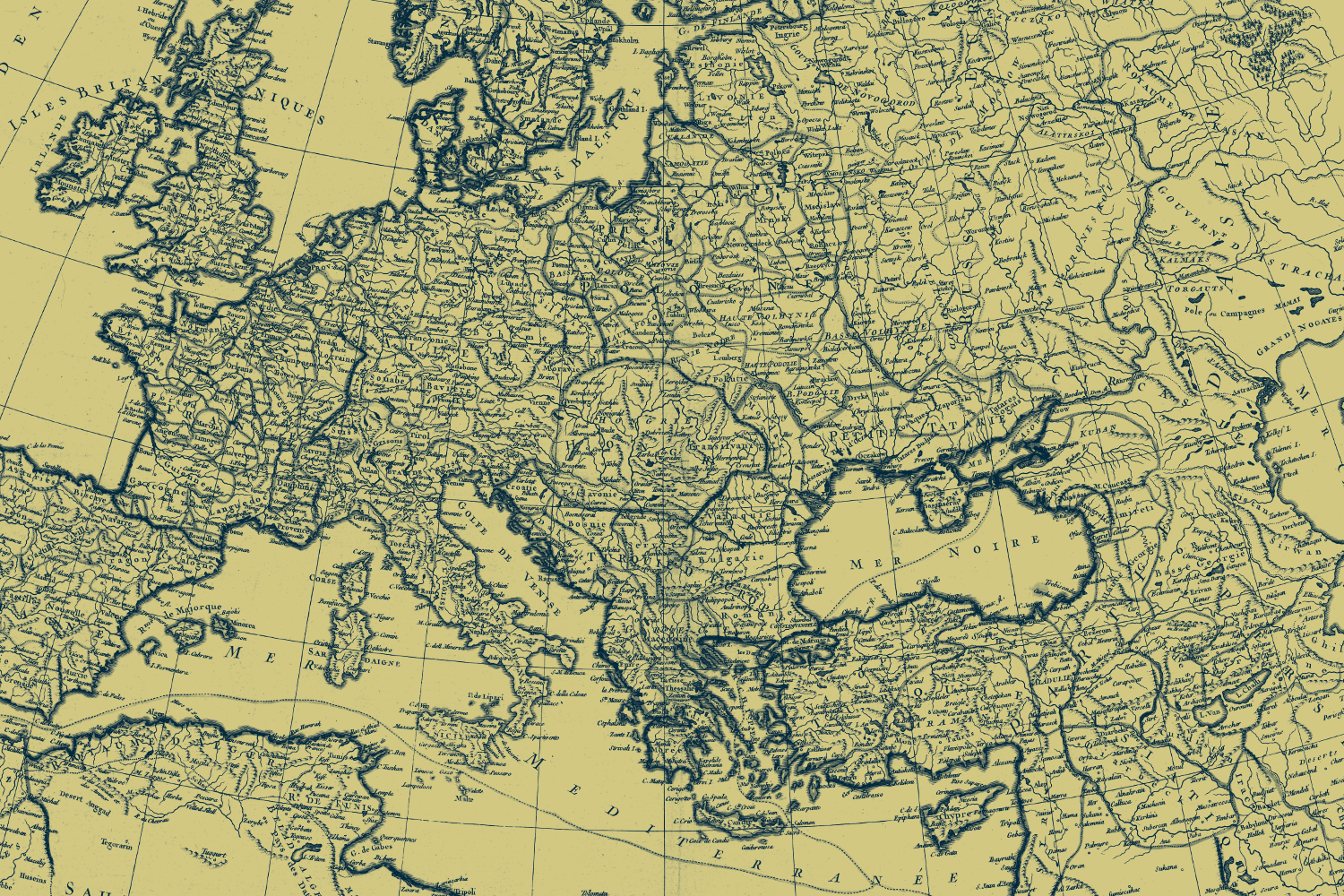
Study days and conferences, workshops, concerts, and a major exhibition: Fondazione Giorgio Cini presents a programme of interdisciplinary activities that will take place throughout the year.
Activity Programme
INTERNATIONAL CONFERENCE | 4 - 7 JUNE 2025

Casanova in Time 1725 – 2025 is the title of the international symposium focused on the historical figure of Casanova, emblematic of a world that was fading, such as the Republic of Venice, but also of the transformations within modern society. His myth has traversed the past three centuries, reflecting the perspectives of eighteenth-century scholars, historians, artists, filmmakers, and figures from both culture and politics.
The symposium, which will take place on the Island of San Giorgio Maggiore and at Ca’ Dolfin, is the result of a collaboration between the Fondazione Giorgio Cini (Institute for the History of Venetian Society and State) and the Ca’ Foscari University of Venice (Department of Linguistic and Comparative Cultural Studies), along with the Ateneo Veneto, the State Archives of Venice, the Museum of Venetian Eighteenth Century Art, and the Correr Museum Library.
–
CONCERT | 5 JUNE 2025
The concert organized by the Vivaldi Institute on the occasion of the tercentenary of the birth of Giacomo Casanova (April 2, 1725 – June 4, 1798) is one of the events promoted by the Giorgio Cini Foundation as part of a rich program of activities throughout the year, involving all its Institutes and Research Centers.
–
LECTURES AND CONCERTS | 6 JUNE 16 JULY, 27 NOVEMBER 2025
Three of the six advanced courses scheduled at the Italian Antonio Vivaldi Institute are dedicated to the world of Casanova.
On June 6 the conference Vivaldi e l’ornamentazione – Tra la Pietà veneziana e la Dresda di Pisendel focusing on the violinist J.G. Pisendel. On July 16, Casanova before Casanova will address the myth of the libertine: the seminar will close with a student concert dedicated to the drama for music L’inganno trionfante in amore, the debut of which took place in 1725, the year of Casanova’s birth, at the Teatro Sant’Angelo in Venice. Finally, on November 27, they will study the vicissitudes of Vivaldi’s singers, librettists and competitors in Zanetti’s caricatures.
The Vivaldi Academy offers high-level training activities aimed at groups of students selected through public calls: an opportunity to refine performance skills and deepen musicological aspects of Vivaldi’s compositions.
–
CONCERT AND SEMINAR | 22 - 26 SEPTEMBER 2025
The Egida Sartori and Laura Alvini Seminars in Early Music, directed by Pedro Memelsdorff, explore the possible shared Parisian experiences of Giacomo Casanova and Joseph Boulogne, through the research and study of musical scores and other related materials.
Twenty years younger, Boulogne shared several biographical traits with the more famous Venetian: a frequent visitor in other noble circles, a legendary seducer, violinist, and later, a political agent and freemason. Boulogne’s work will thus be considered in the context of his political activities.
The seminar and concert titled Joseph Boulogne Chevalier de St. George: Concerts and Symphonies (1770-1780) will be led by Théotime Langlois de Swarte, a young star of European and global baroque violin. Assisting him with the symphonic repertoire will be the seminar’s director himself.
–
EXHIBITIONS | 26 SEPTEMBER 2025 / 17 OCTOBER 2025 - 2 MARCH 2026
The exhibitions are part of a broader cultural programme involving all the Institutes of the Fondazione Giorgio Cini, with conferences, concerts and seminars dedicated to the link between Casanova, Venice and Europe. These are also the two main themes of the double exhibition, divided between two venues:
Casanova and Venice at Palazzo Cini in San Vio (27 September 2025 – 2 March 2026) with a focus on Venice, Casanova’s birthplace and the first stage of his life.
–
Casanova and Europe. Opera in several acts on the island of San Giorgio Maggiore (17 October 2025 – 2 March 2026): a look at Europe and the network of travels, relationships and adventures that made Casanova a European figure ahead of his time. The exhibition Casanova and Europe. Opera in several acts is organised in collaboration with the Fondazione Teatro La Fenice for the staging.
–
At the centre of the exhibition at Palazzo Cini is the extraordinary collection of caricatures in the Album of Anton Maria Zanetti il Vecchio, as well as a selection of paintings, drawings, engravings, objects, books and other items from the Foundation’s collections, together with valuable loans from Italian and foreign museums and collections.
–
On the Island of San Giorgio Maggiore, the materials from the Nino Rota Collection preserved by the Institute of Music will be particularly fascinating. They relate to Federico Fellini’s famous film Il Casanova (1976) and include notebooks with musical notes, handwritten scores and photographs. From the Malipiero archive, on the other hand, other documents will be available, testifying to the famous composer’s particular interest in 18th-century Venice, to which he dedicated an important body of work, as well as a text (Giacomo Casanova e la musica, in “Il filo d’Arianna. Saggi e fantasie”, Einaudi 1966), of which notes and transcriptions are preserved.
CONFERENCE | 4 NOVEMBER 2025
Antonio Trampus, professor of Modern History at Ca’ Foscari University in Venice, and Alessandro Marzo Magno, renowned journalist and essayist, discuss who Casanova really was, between historical reality and fiction, culture and imagination, coordinated by Egidio Ivetic, director of the Institute for the History of Venice at the Fondazione Giorgio Cini.
The historians will attempt to take stock, considering the achievements of historiography and taking into account the evolution that the figure of Casanova has undergone in popular culture over the last two centuries. This dialogue comes almost at the end of the Casanova year and represents an opportunity to consider the celebrations at national and international level and to reflect on the future of a character who has contributed to consolidating the myth of Venice.
–
DAY OF STUDIES | 19 NOVEMBER 2025
The Institute for Theatre and Opera is organising a study day to explore the theatrical scene during Casanova’s time and to examine the echoes of Casanova in twentieth-century Italian theatrical productions. Scholars from various European universities will reflect on how the myth of Casanova has been portrayed on Italian stages in the contemporary era.
The initiative, which will take place on the Island of San Giorgio Maggiore, is organised in collaboration with Ca’ Foscari University of Venice and the Université Sorbonne of Paris.
–
CONCERT | 19 NOVEMBER 2025
Musicians Stefano Albarello (conductor, qānūn, baroque guitar), Peppe Frana (lutes, lavta, and tanbūr), Giovanni De Zorzi (ney flute), and Gianfranco Russo (viola d’amore) have been invited by the Intercultural Institute of Comparative Musical Studies, as a tribute to the cosmopolitan profile of Giacomo Casanova.
The concert Casanova al Levante will feature music popular during his travels in Eastern Europe and Constantinople, derived from both Venetian and Ottoman traditions, performed with instruments from both musical cultures.
Among the writings left by some ambassadors of the time, we find music transcribed according to Western standards, instrumental and vocal compositions that could be described as turquesque. The musical instruments used also create a fusion between the importation of Eastern culture and the “orientalisation” of Western instrumental tradition. This is the case of the viola d’amore, later adopted in the Ottoman world under the name sine kemān.
–

