Teatro Verde
Teatro Verde is currently undergoing a restoration project that began in 2021 and is still in progress, made possible thanks to the support of Cartier.
The history
Teatro Verde, inaugurated on July 11, 1954, is an exceptional example of contemporary architecture within the lagoon setting. Together with the surrounding park, it was created as part of a two-hectare extension of the Island, developed following the extensive restoration plan carried out by the Foundation.
Designed by Luigi Vietti together with Angelo Scattolin, the theater can accommodate up to 1,500 spectators and draws inspiration from the tradition of “green theaters,” where landscape, art, and architecture merge together.
The theater has a long and prestigious history of live performances. In 1954, it was inaugurated with the staging of the sacred work Resurrection and Life, set to Renaissance Venetian music. This was followed by Arianna by Benedetto Marcello, two symphonic concerts conducted by Dimitri Mitropoulos, Le Baruffe Chiozzotte, and a series of Japanese “Noh” performances. Over the years, the theater has hosted, among others, the Theatre of Athens, the Théâtre National Populaire, the company of Annie Ducaux, and the Oxford Playhouse.
Its musical programming has also been particularly significant: the latest festival, held between 2013 and 2014, featured performances by artists including Patti Smith, Kings of Convenience, and Ludovico Einaudi together with Paolo Fresu.
In 1999, thanks to La Biennale di Venezia, the acclaimed production Parabola by Carolyn Carlson was presented here. On that occasion, the celebrated American choreographer and dancer declared that she had felt “inspired from the very beginning. When I arrived at this theater there was a great vibration: the garden, the water, the woods all around.” San Giorgio had become the island of dance.
In 2023, at Teatro Verde, the artist Mattia Casalegno, together with the composer Martux_M, created the video and digital work La Maschera del Tempo, commissioned by the Foundation’s Digital Center – ARCHiVe.
The restoration
The amphitheater has always been exposed to the harsh lagoon environment and to flooding caused by high tides. In fact, the section of the theater located beneath the stage lies 0.82 meters below mean sea level.
The theater has undergone a long and complex restoration process.
In the first phase, the works focused on the stone seating of the terraces and the replacement of the plants forming the backrests, introducing new privet specimens equipped with automatic irrigation systems. This was accompanied by a broader maintenance intervention on the surrounding vegetation, allowing the structure to re-emerge within the park and toward the lagoon.
A second major conservation project involved the 1,350 square meters of gray and white stone paving: each element was carefully dismantled, surveyed, and numbered to allow its precise repositioning after restoration, recreating the great mosaic of the stage. Particularly important was the waterproofing of the entire surface, while preserving the original slope designed to create a magnificent platform for stage performances.
The restoration site also provided an excellent educational opportunity for future restoration technicians, involving students from UIA – Università Internazionale dell’Arte di Venezia in the marble restoration work throughout the audience seating area.
More recently, the large metal trusses installed in the past were dismantled and removed, completely reopening the views toward the sides and the lagoon. Preparatory work is currently underway on the two buildings located to the right and left of the theater, which house ticket offices and services and play a fundamental role in connecting the theater level with the large underground area once used for storing stage equipment, dressing rooms, and set-design workshops.
All restoration work, authorized by the Superintendency, is overseen by the architect Renata Codello and the Foundation’s Technical Office.
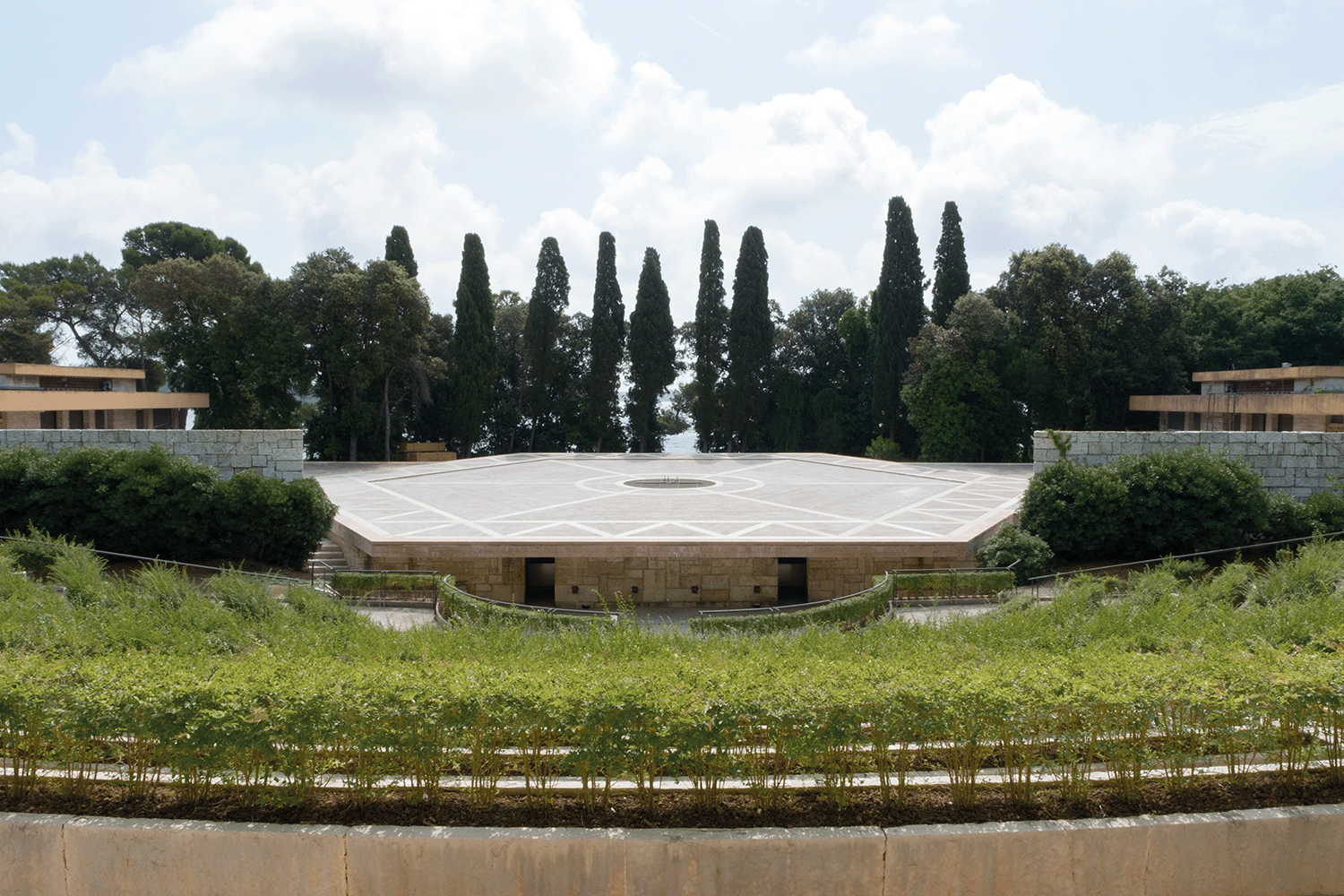
Teatro Verde, 2025.

