Periodici Archives - Page 2 of 10 - Fondazione Giorgio Cini

Lettera da San Giorgio 50

Founded in 1998, Lettera da San Giorgio is the Foundation’s journal, which gathers information on the upcoming activities of the Institutes and Research Centres.


The articles featured in this issue:

  • Eleonora Duse, what a wonderful actress!
  • The historical archive of the Fondazione Giorgio Cini Notes from the reordering process underway. With an apostille on Vittore Branca
  • ARCHiPub. On Cultural and Digital Matters
  • Remembering Vittore Branca


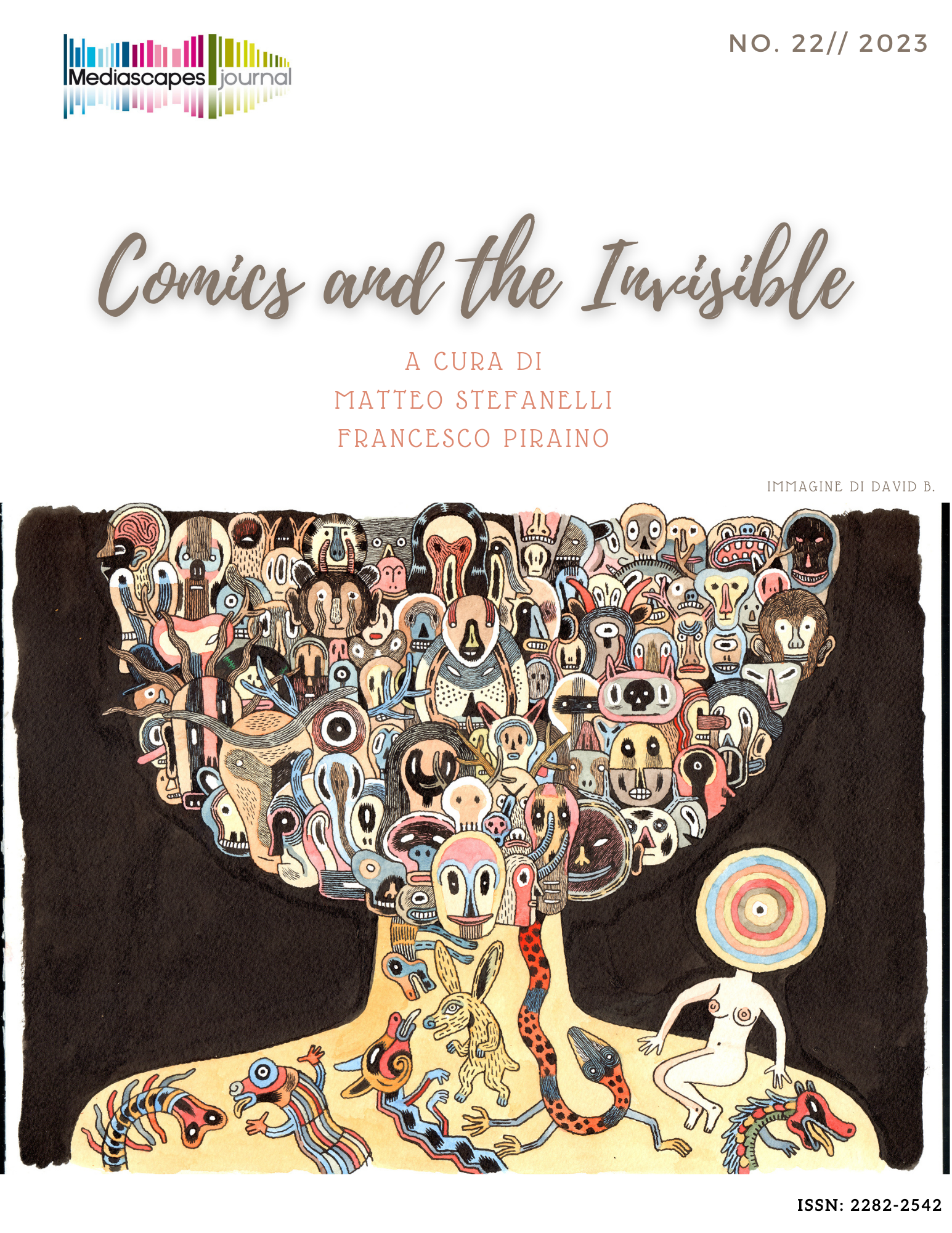
Special Issue “Comics and the Invisible” of Mediascapes Journal, vol. 22, no. 2

Comics and the Invisible is a special issue published by Mediascapes and edited by Matteo Stefanelli (Università Cattolica of Milan) and Francesco Piraino (Giorgio Cini Foundation / Harvard University).

It represents the last step of the Creative Europe project Invisible Lines (https://invisiblelines.eu) realised by Fondazione Giorgio Cini (Italy – coordinator), Central Vapeur (France), Hamelin APS (Italy), and Baobab Books. (Czech Republic).


Comics and the Invisible explores the concept of invisibility in comics and illustrations, trying to reply to the following questions: in what terms can comics be understood as an invisible art or, from a very different perspective, as an art of the invisible?
How can it be a tool for telling stories and visualizing ideas that rarely find a place in the ordinary ecology of visual media? Is this art of the invisible a tool to connect with other dimensions (mental, psychological, spiritual, ontological)?


Table of contents:

– Comics and the Invisible, Introduction to the Special Issue, Francesco Piraino, Matteo Stefanelli
– Immersive marginality Comics and the cultural power of (its) invisibility, Matteo Stefanelli

– The Color of Paper, Seeing Race in the Comics Medium, Chris Gavaler
– Playing with the Invisible Novel, Movies, Comics, Daniele Barbieri
– Tracing the Invisible, Lynda Barry’s Comics, Maaheen Ahmed
– Spirituality and Comics in Hugo Pratt, Alan Moore, and David B.Esotericism as “Unsettled Knowledge”, Francesco Piraino
– Making visible the invisible Representing religious content in manga, Carolina Ivanescu
– Giving Up the Artistic Aspect The invisibility of comics made in extreme conditions of confinement: Charlotte Salomon, Karel Frans Drenthe and Eleuterio Fernández Huidobro, Erwin Dejasse
– How to Make the Invisible Visible? Some Innovative Approaches in 21st-Century Comic Art, Francesca Pietropaolo
– Lived and abandoned spaces Invisibilities in comparison, Rodolfo Dal Canto
– Dancing with the (un)seen Problematizing the viewer’s gaze through Mediterraneo’s visual aesthetics, Silvia Vari


Link to the Special Issue.


Lettera da San Giorgio 49

Founded in 1998, Lettera da San Giorgio is the Foundation’s journal, which gathers information on the upcoming activities of the Institutes and Research Centres.


The articles featured in this issue:

  • The Italian Photo Library of Nicolò Cipriani (1892–1968)
  • Accessible green areas: new projects for the Fondazione Giorgio Cini
  • Recording the paintings collection at Galleria di Palazzo Cini in San Vio
  • Francesco Rutelli at the Fondazione Giorgio Cini

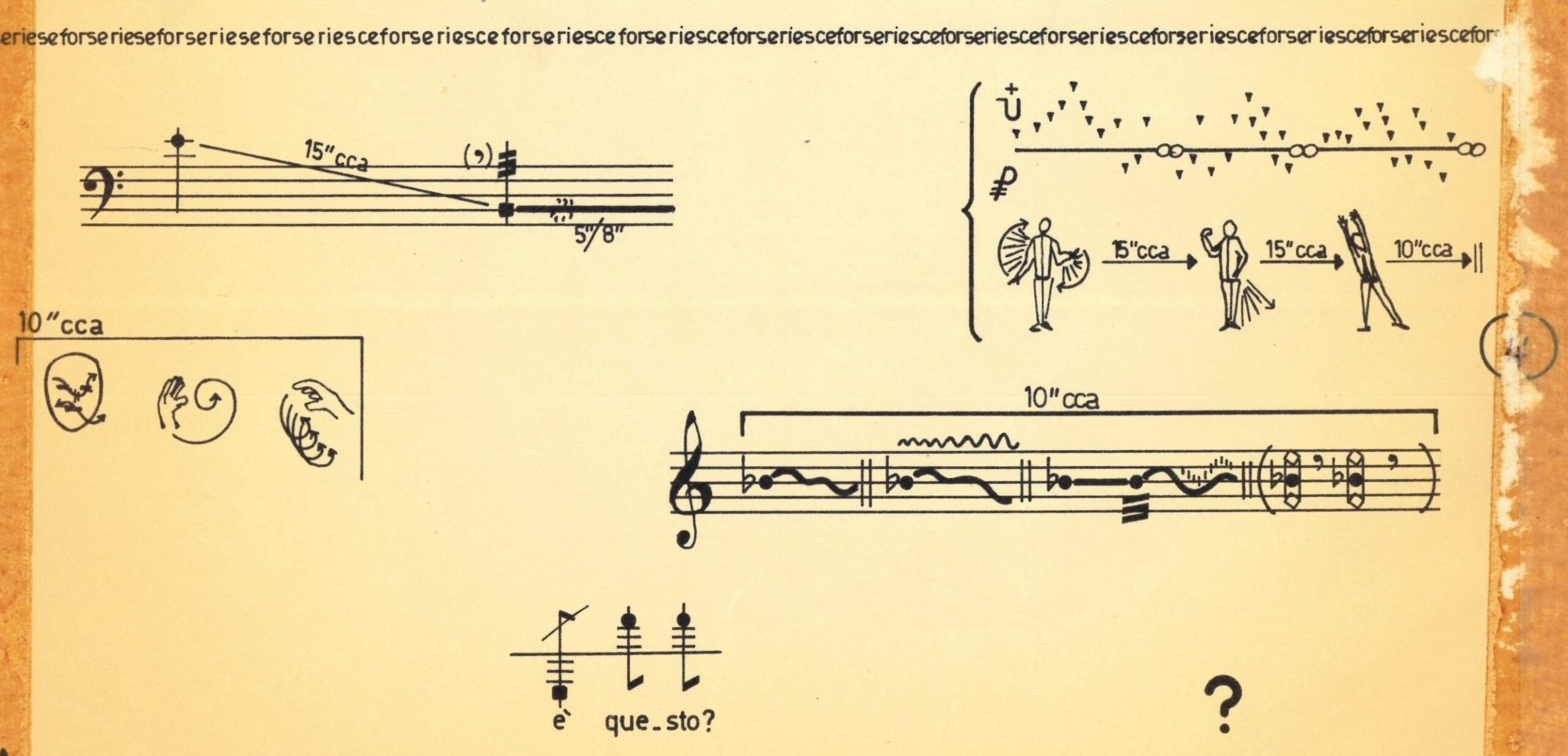
Archival Notes No. 7

An open-access, peer-reviewed journal, curated by the Institute for Music of the Giorgio Cini Foundation. With an interdisciplinary approach, Archival Notes. Source Studies in Twentieth and Twenty-First-Century Music is dedicated to the research of musical sources from the twentieth and twenty-first centuries.


Articles

  • Luk Vaes, «Aus dem Nachlaß»: Sedimentation in Mauricio Kagel’s «Tactil» and «Unter Strom»
  • Marco Cosci, Altering «A(lter)A(ction)»? Egisto Macchi Then and Now
  • Filipa Magalhães, Constança Capdeville’s Personal Archive: Difficulties in Describing and Documenting Performative Practices
  • Luisa Santacesaria e Valentina Bertolani, «Suite “colori”» by Mario Bertoncini: From Performance to Archival Research
  • Marco Fusi, Fingers to Sounds, Sounds to Fingers: Creative Interaction with Giacinto Scelsi’s Archival Materials as Means to Devise Performance Practices of His Music
  • Landon Morrison, On the Horizon of Digital Technics in Kaija Saariaho’s «IO» and «Nymphéa»

Perspectives

  • Marco Angius, ‘E la mente annullata naufraga nel vento’: A New Appraisal of Giacomo Manzoni’s «Parole da Beckett» from the Perspective of a Conductor

Documents and Reports

  • Gianmario Borio, «Research-led Performance»: Report on an Ongoing Project
  • Luisa Santacesaria e Giulia Sarno, Ctrl+s | Conversations on the survival of electronic music

The seventh issue of Archival Notes is available for download and consultation on the OJS platform of the Fondazione Giorgio Cini.

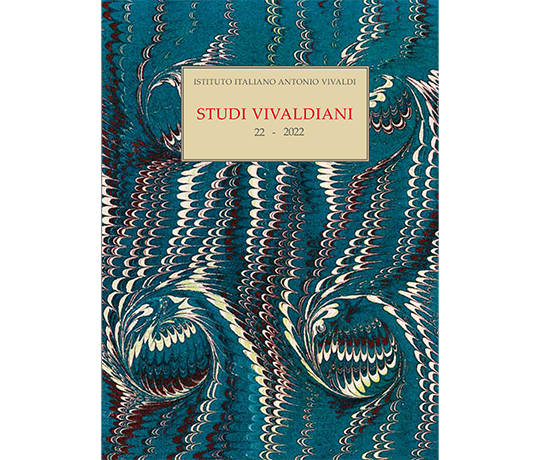
«Studi vivaldiani» 22

• Giuseppe Gullo, Antonio Vivaldi’s Chronic Illness: Shedding New Light on an Old Enigma

• Ella Bernadette Nagy, Discography with Commentary on the Compositions for Lute and Mandolin by Vivaldi

• Miscellany (M. Talbot)

• Discographie Vivaldi 2021-2022 (R.-C. Travers)

«Saggi e Memorie di storia dell’arte» 45

• Chiara Paniccia, Scolpire l’Exultet, istoriare la colonna. Il programma figurativo del candelabro pasquale tra riforma della Chiesa e imitatio imperii

• Francesco Fratta de Tomas, Pagine di legno: animali fantastici, miti e citazioni arcaiche negli arredi a intaglio piatto del primo Quattrocento

• Fernando Rigon, Ercole in villa. La ‘Virtù heroica

• Francesco Saracino, Allori, Bronzino e la Vergine Incoronata dal Bambino

• Martina Lorenzoni, Federico Zuccari e la serie degli Uomini illustri: un gruppo di disegni inediti

• Enrico Ghetti, Per il problema di Lorenzo Gennari, tra il Guercino, Matteo Loves e Benedetto Zalone

• Sarah Ferrari, Le infinite vie del mercato dell’arte: note a margine di una ricerca sulla dispersione della collezione di Silvio Valenti Gonzaga (1690-1756) tra Svezia e Danimarca

• Orfeo Cellura, Disegni di paesaggio a Bologna fra Sette e Ottocento. Novità dal fondo Certani

• Simona Larghi, La fornace Seguso Vetri d’Arte diretta da Flavio Poli (1937-1963): il settore dell’illuminazione attraverso le testimonianze d’archivio

• Irene Quarantini & Ernesto Damiani, Arte Italiana Contemporanea 1955: filologia di una mostra itinerante

• Elisa Prete, Find some friend of Italian art in America. Le relazioni internazionali della Galleria dell’Ariete di Milano

Lettera da San Giorgio 48

Founded in 1998, Lettera da San Giorgio is the Foundation’s journal, which gathers information on the upcoming activities of the Institutes and Research Centres.


The articles featured in this issue:

  • The Gian Francesco Malipiero Collection of the Fondazione Giorgio Cini. The fiftieth anniversary of the death of the Venetian composer
  • The membership project: Cini Ambassador
  • Online and On-Site Heritage: New Intergenerational Dialogues
  • Francesco Dal Co at the Fondazione Giorgio Cini

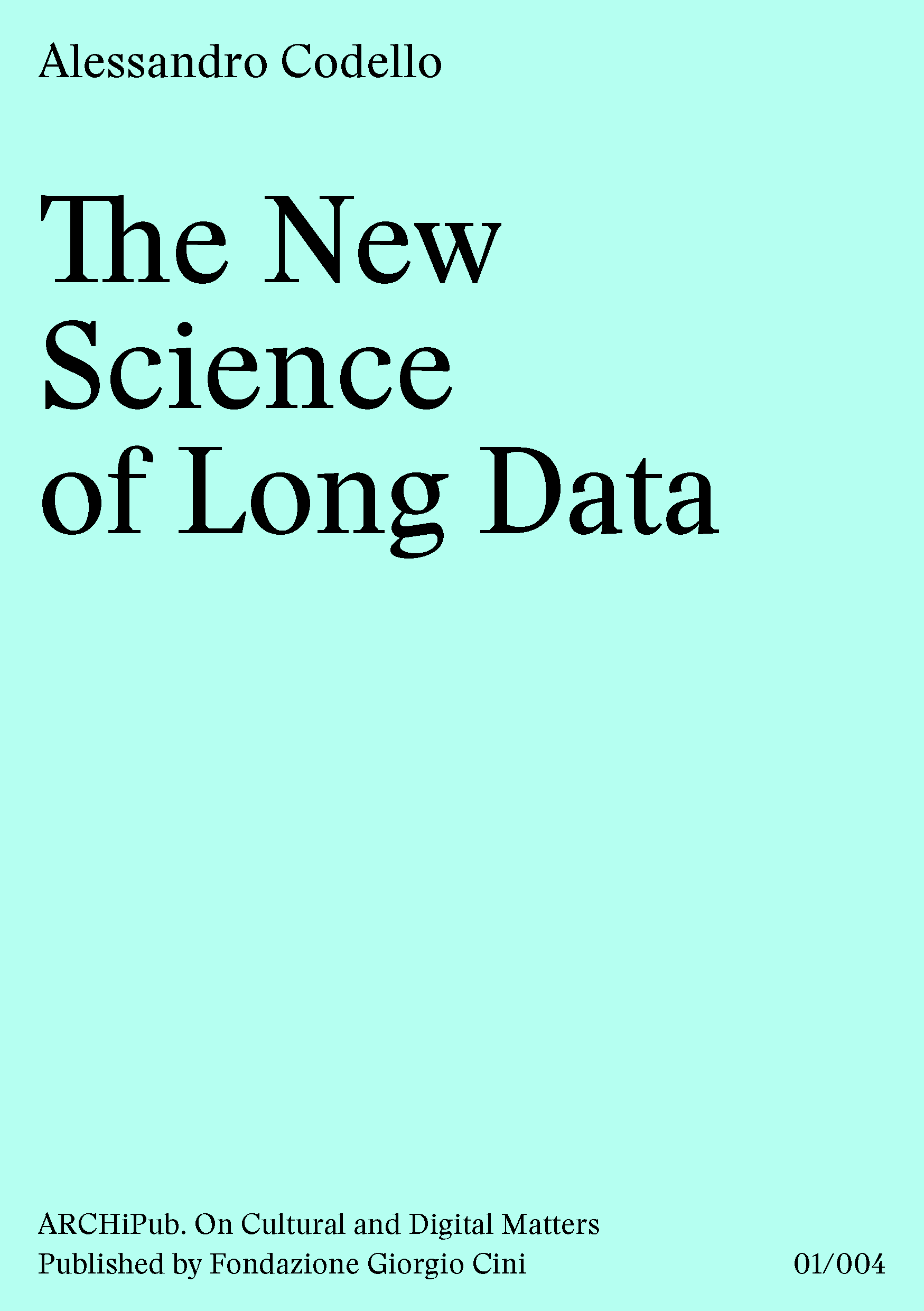
ARCHiPub 01/004

Interdisciplinary series edited by the Digital Centre – ARCHiVe of the Fondazione Giorgio Cini, dedicated to contemporary research in the Digital Humanities.

Alessandro Codello’s contribution introduces “Long Data” as a novel approach to unlocking the cultural heritage within historical archives. This concept contrasts with Big Data by focusing on the deep historical context found in meticulously preserved archives, revealing insights into cultural heritage. Utilizing new Artificial Intelligence technologies in harmony with traditional archival methods, Long Data aims to analyze, transcribe, and model historical data on an unprecedented scale. This approach promises a more comprehensive understanding of history, enhancing studies on societal and cultural evolution. A key example of Long Data’s application is the Venice State Archive (ASVe), which holds over a millennium’s worth of documents. The initiative seeks multidisciplinary collaboration to make accessible this vast archive, thereby safeguarding its cultural heritage and preparing the ground for a revolution in historical research.

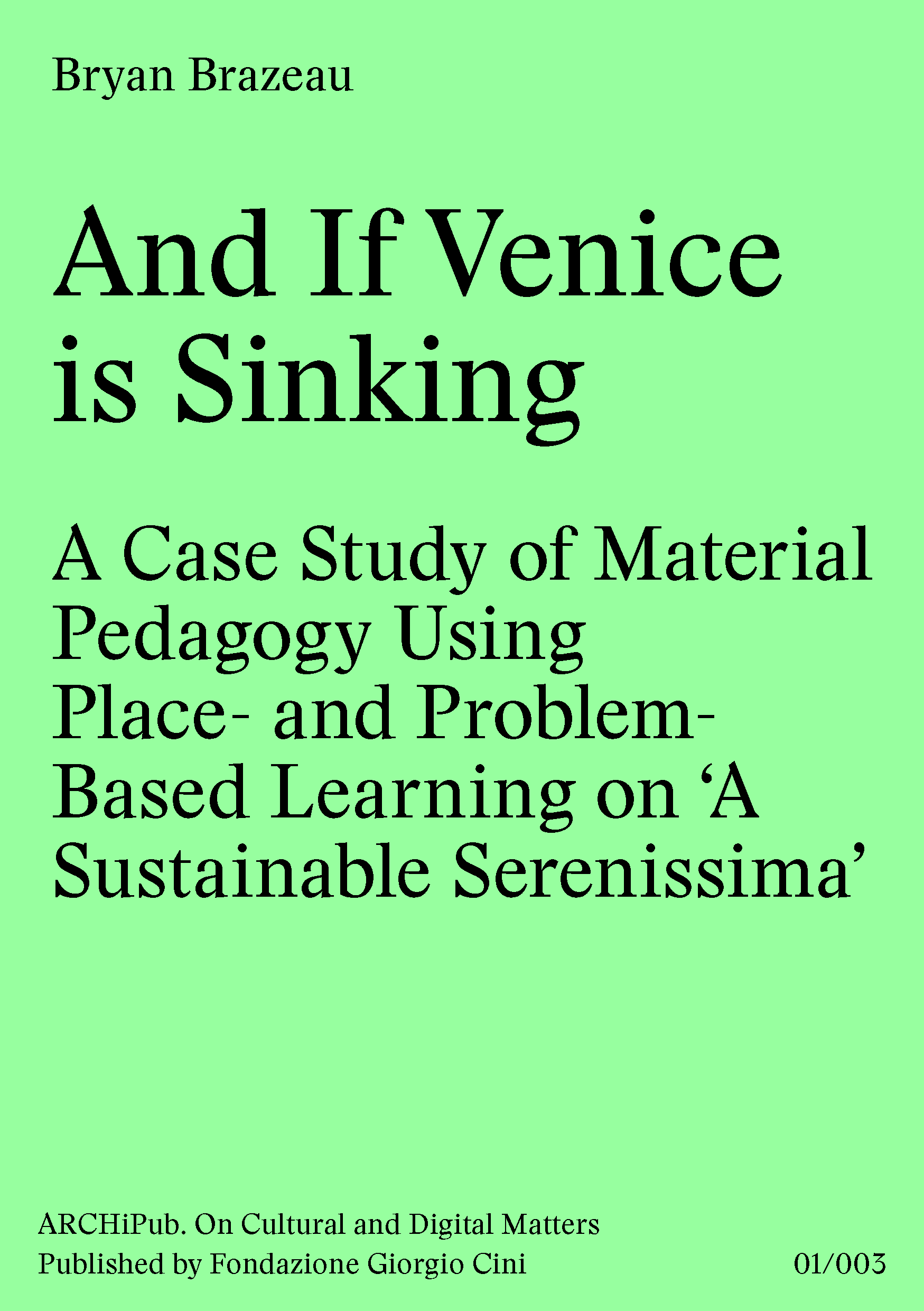
ARCHiPub 01/003

Interdisciplinary series edited by the Digital Centre – ARCHiVe of the Fondazione Giorgio Cini, dedicated to contemporary research in the Digital Humanities.

E se Venezia affonda: uno studio di caso sulla pedagogia dei materiali usando l’apprendimento basato su luogo e problema su “Una Serenissima sostenibile ” di Bryan BAnd If Venice is Sinking: A Case Study of Material Pedagogy Using Place- and Problem-Based Learning on ‘A Sustainable Serenissima‘ by Bryan Brazeau, Head of Liberal Arts at the University of Warwick. A Sustainable Serenissima was first taught as an experimental transdisciplinary pilot module in AY 2018-2019. The module’s learning objectives include critical analysis of local sustainable solutions, analysis of future implementation plans, and consideration of the scalability and adaptability of the problem of Venetian sustainability to other global challenges.

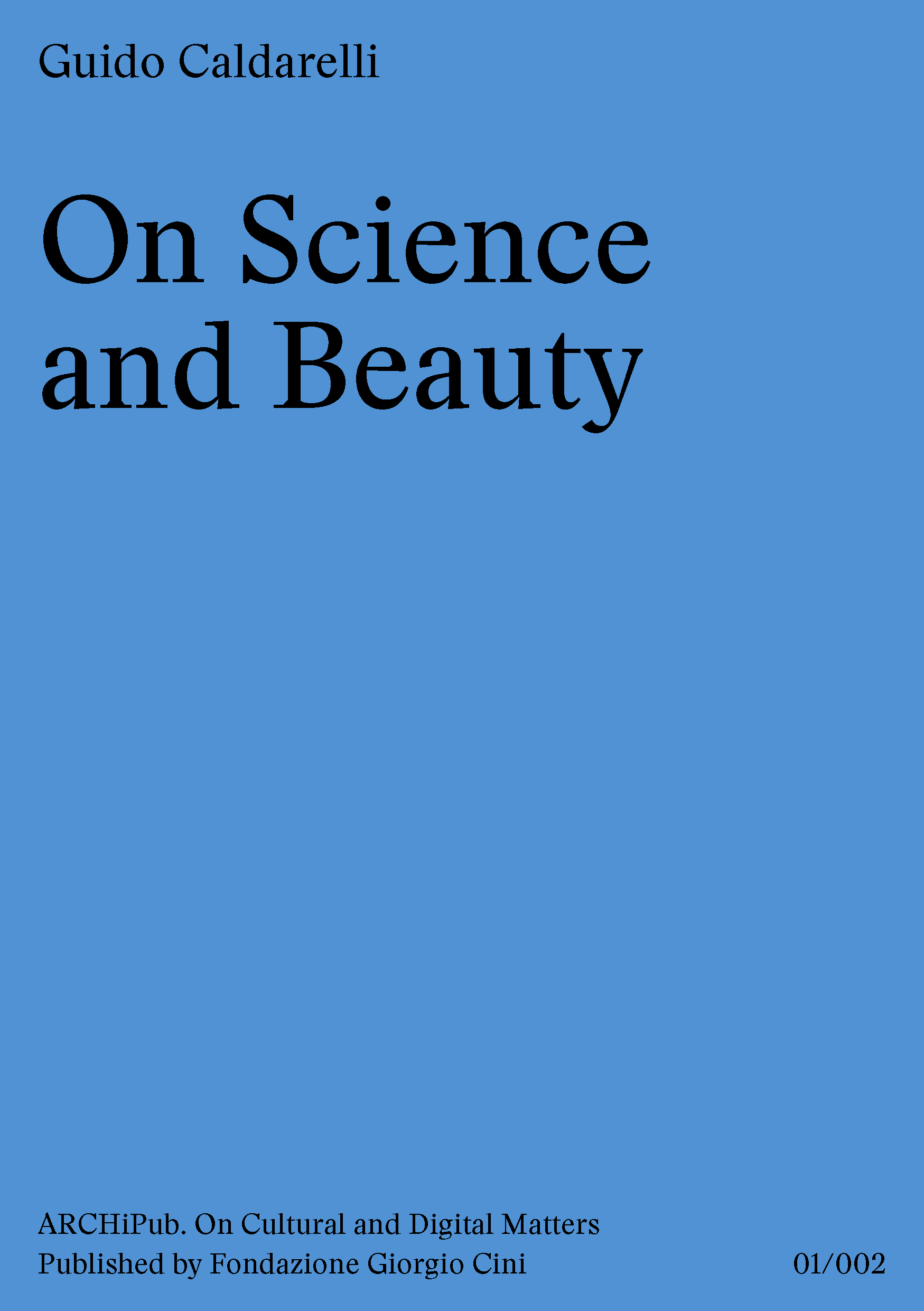
ARCHiPub 01/002

Interdisciplinary series edited by the Digital Centre – ARCHiVe of the Fondazione Giorgio Cini, dedicated to contemporary research in the Digital Humanities.

Full Professor of Physics at Ca’ Foscari, and a LIMS Fellow, Guido Caldarelli illustrates how science and beauty are often thought of as being distinct and separate fields, with science concerned with understanding the underlying mathematical mechanisms of the natural world and beauty typically considered a subjective experience.