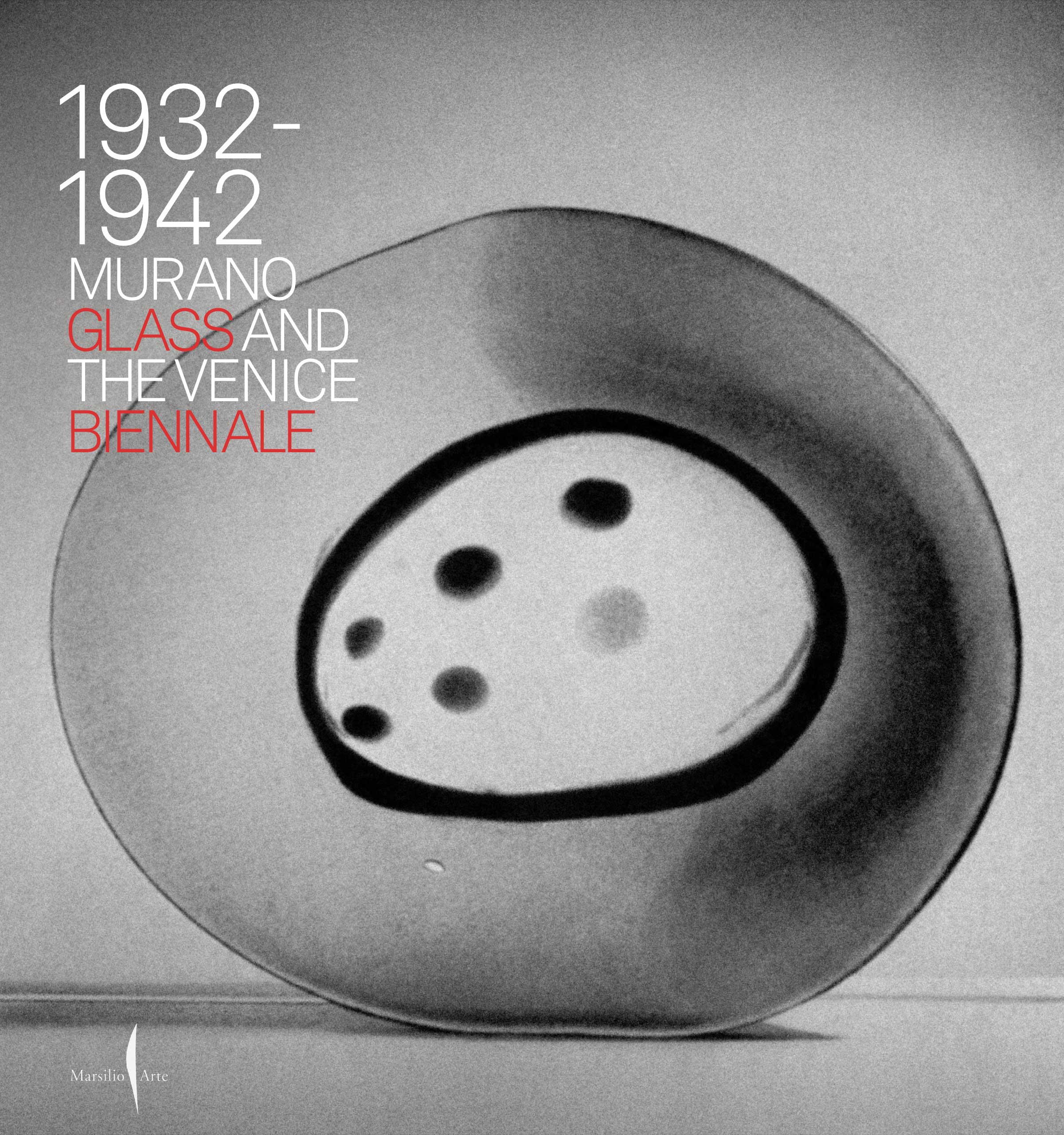
1932–1942 Il vetro di Murano e la Biennale di Venezia
The volume, edited by Marino Barovier and Carla Sonego, examines the exhibitions that took place between 1932 and 1942, from the inauguration of the Venice pavilion to the XXIII Biennale, the last before its interruption due to the outbreak of WWII. These were years of great creativity and experimentation with materials and colours, both through the reappraisal of ancient techniques and the development of new processes.
Numerous glass furnaces and companies participated in the Venetian event during these years, including: AVEM, Barovier (later Ferro Toso-Barovier and Barovier-Toso & C.), Barovier Seguso & Ferro (later Seguso Vetri d’Arte), Cirillo Maschio, Moretti Ulderico & C., S.A.I.A.R. Ferro Toso & C., S.A.L.I.R., Salviati & C., Successori Andrea Rioda S.A., Aureliano Toso, Fratelli Toso, V.A.M.S.A., Venini S.A., and Zecchin Martinuzzi. Among the leading figures active in the various furnaces during this fertile period in Murano, the following are particularly noteworthy: Carlo Scarpa, Guido Bin (Mario De Luigi), Ercole Barovier, Flavio Poli, Dino Martens, Vittorio Zecchin, Franz Pelzel, etc.
The result of in-depth bibliographic and documentary research into the historical archives of the Biennale as well as public and private archives, with often unpublished period photographs, drawings and documents, the catalogue documents what was exhibited in the six editions of the Biennale between 1932 and 1942. A careful selection of 160 works, illustrated with photographic plates, testifies to the remarkable quality of Murano’s extraordinary production.