Cuban Santería Music
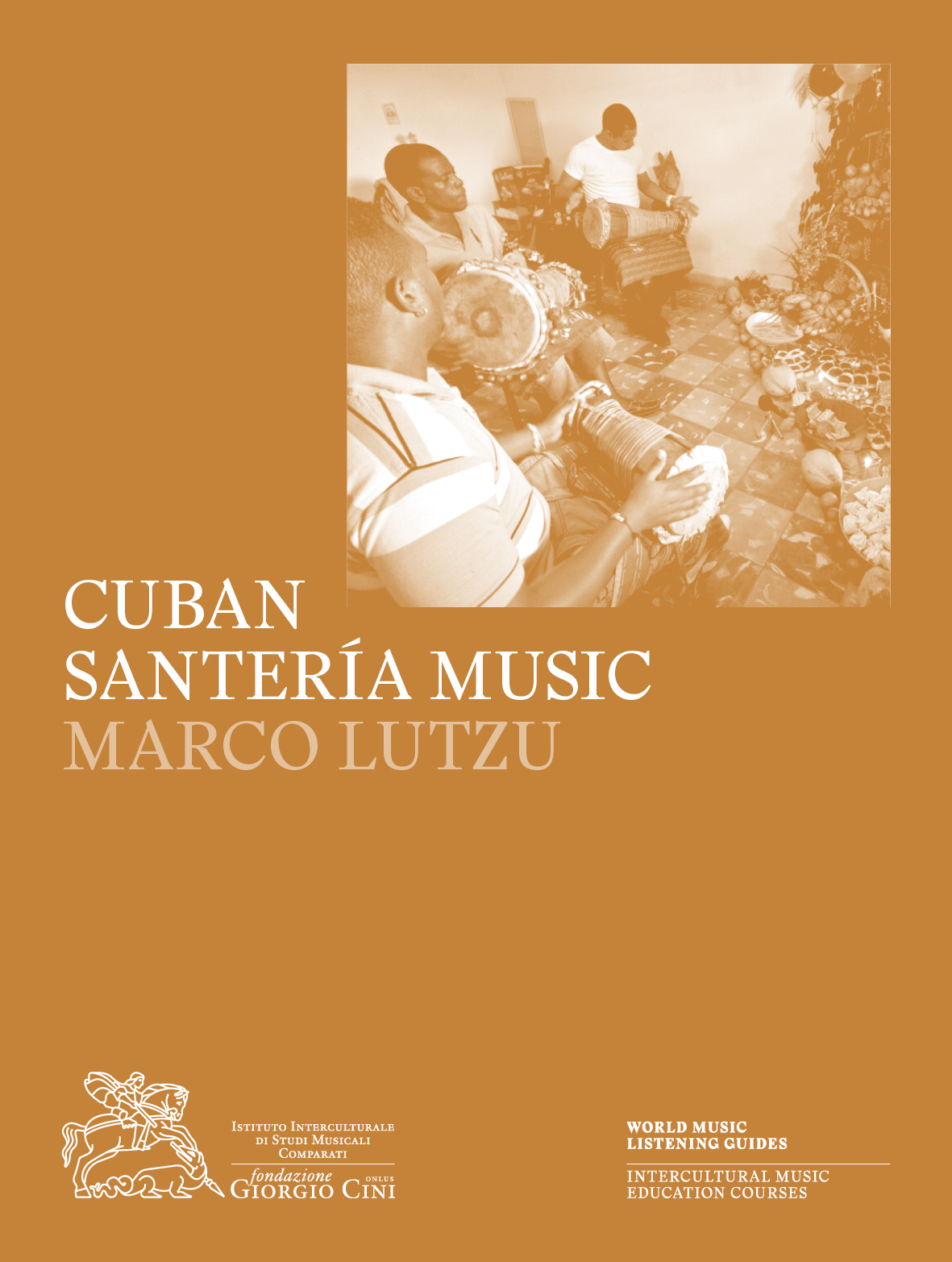
Third edition of the editorial series World Music Listening Guides. Intercultural Music Education Courses, the guide Cuban Santería Music, created by Marco Lutzu, explores the role of the rhythms of the batá drums in ceremonies for invoking the orichas, the deities of the Santería religion. The audiovisual materials presented in these pages come from recordings made during the event Batá drums in the Cuban Santería, organised by the IISMC in 2016 as part of the series Music and rites, and are supplemented by additional recordings and images collected by the author in the field. These materials are here reorganised and presented in the form of video animations, which constitute the central element of the guide. The materials are arranged to alternate between different perspectives, offering a comprehensive overview of the religious practice, the musical instruments, and the role of music. Following an introductory section, which traces the origins and characteristics of the Afro-Cuban religion of Santería and outlines the main figures of the oricha pantheon, the batá drums immediately take centre stage: a short ethnographic video documentary illustrates the various stages of their construction and the significance they hold in religious practice. In the worship of the orichas, the rhythms of the batá drums are accompanied by singing and dancing, which play a necessary role in the ritual (Toque de santo) to invoke and call upon the deities. Two video animations respectively depict the long introductory instrumental sequence (orun seco), composed of rhythmic formulas performed on the drums and dedicated to the different orichas, and the short songs performed during the central stages of the ceremony (orun cantado). Finally, three multimedia animations analyse the intricate polyrhythmic patterns of the batá drums, describing the transitions between different formulas, the ‘conversations’ between the various instruments, and the improvisatory practice. These aspects are presented using a transcription system that allows the viewer to visualise the development of the rhythmic sequence in its various articulations.