Leo S. Olschki Editore, Florence Archives - Fondazione Giorgio Cini

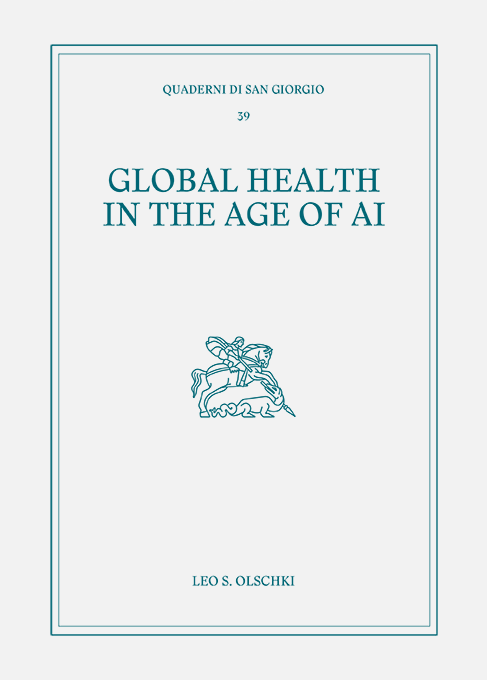
Global Health in the Age of AI

Global Health in the Age of AI  is the result of the international Symposium of the same name held at the Fondazione Giorgio Cini in November 2024. The analyses that emerged during the Symposium demonstrate that, without a coordinated, multi-level effort, AI risks exacerbating, rather than reducing, global health inequalities. Hence the idea of formulating recommendations that propose a systemic approach capable of coordinating the technical-scientific, social, ethical and regulatory dimensions. These recommendations form the content of this 39th Quaderno di San Giorgio, the outcome of the symposium but, at the same time, a starting point for new studies and solutions, a collection of guidelines to be shared in order to envisage future scenarios and what can already be achieved today. One fundamental question remains: no ‘technological solutionism’ can compensate for the social and structural inequalities that affect access to and health outcomes globally; what is needed is a constant and sustained commitment from all stakeholders.

The publication of the Quaderni di San Giorgio, more than seventy years after the first volume, bears witness to Fondazione Giorgio Cini’s desire to actively contribute to contemporary thought and to promote the dissemination of the outcomes of the scholarly gatherings held on the island of San Giorgio. These pages bring together voices from politics, science, philosophy, and all the humanities, with contributions from the most authoritative figures in international culture, that continue to shape what has always been defined on the island of San Giorgio as “dialogue between cultures.” This edition of the Quaderni, while renewed, retains the same editorial style and scientific aims as in the past. “In San Giorgio we study, and from San Giorgio we speak and write. The Quaderni are therefore intended to document not the studies carried out in San Giorgio as such, but rather the ideas that San Giorgio would like to spread across the world.”


«Saggi e Memorie di storia dell’arte» 48

  • Silvia Urbini, Amico Aspertini e il Nuovo Mondo
  • Francesca Girelli, Il baldacchino marmoreo per la cappella di san Giovanni Battista nella Cattedrale di Genova e l’allestimento delle reliquie del Precursore all’inizio del XVI secolo
  • Olga Piccolo, La ‘Leda al bagno’ della Scuola di Correggio già Salviati, Colonna e Rospigliosi: un interessante episodio di collezionismo nella Roma del XVI–XX secolo 
  • Fiorenzo Fisogni, Il Terzo Libro del Giardino della Pittura di Francesco Paglia. Una guida per l’Italia del Seicento
  • Riccardo Naldi, Girolamo Seripando, Annibale Caccavello e il coro ligneo della cattedrale di Salerno
  • Vincenzo Mancini, Francesco Ruschi pittore romano?
  • Valeria Sedleryonok, La formazione della collezione delle Gallerie dell’Accademia di Venezia dal 1807 al 1817 come costruzione di una nuova immagine della scuola veneta
  • Carolina Trupiano Kowalczyck, Jules-Robert Auguste, Eugène Delacroix, Louis La Caze e il barone Schwiter nella Parigi delle avanguardie. La nascita del gusto orientale e il revival del rococò francese
  • Fausta Piccoli, Una tela di Cosroe Dusi per Francesco Gualdo
  • Alice Cutullè, In memoria di Yole Biaggini Moschini: ritratti in prosa, pittura e scultura
    • Zavatta, “Siamo di fronte a un’offensiva organizzata in grande” Antonio Morassi, Roberto Longhi e le polemiche intorno alla Mostra dei Guardi del 1965
    • Greco, L’immagine della scultura di Hans Arp in Italia attraverso le fotografie riprodotte nelle pubblicazioni nazionali (1947-1966)

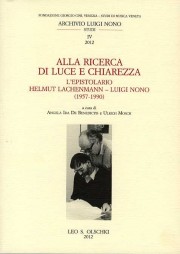
L’epistolario Helmut Lachenmann – Luigi Nono (1957-1990)

“Alla ricerca di luce e chiarezza”. L’epistolario Helmut Lachenmann – Luigi Nono (1957-1990) (“In Search of Light and Clarity. The Helmut Lachenmann–Luigi Nono Correspondence”), edited by Angela Ida De Benedictis and Ulrich Mosch, brings together over 121 documents – letters, postcards, telegrams, etc. – exchanged over around thirty years by two leading figures on the contemporary music scene. This latest book in the “Luigi Nono Archive Studies” series charts the development of an unusually intense and important artistic and human relationship. Having begun with teacher-student exchanges, their relationship continually developed over time, despite disagreements, long silences and momentary misunderstandings. From the initial discussions on composing technique and music poetics in the 1950s and ‘60s to letters with a rare emotional intensity in the 1980s, what emerges from their correspondence is the same passion for “making” and “experiencing” music and a deeply felt commitment shared by both men, albeit with at times different results and emotions.
The documents are published in their original language, while the story of this exceptional correspondence has been entirely reconstructed by the editors. There are also three appendices: i.e. some letters written by Lachenmann to Nono which, for various reasons, were never sent; nineteen letters written by the two correspondents to other leading personalities on the music scene in the second half of the twentieth century; and, lastly, a collection of seven mostly previously unpublished texts by Lachenmann on Nono, written for various occasions from 1957 to 1974. The entire correspondence and accompanying documents were collected as the result of research conducted at the Fondazione Luigi Nono, Venice, the Paul Sacher Stiftung, Basel and various other European archives.