Music for Spirit Possession Cults In Burma, Myanmar
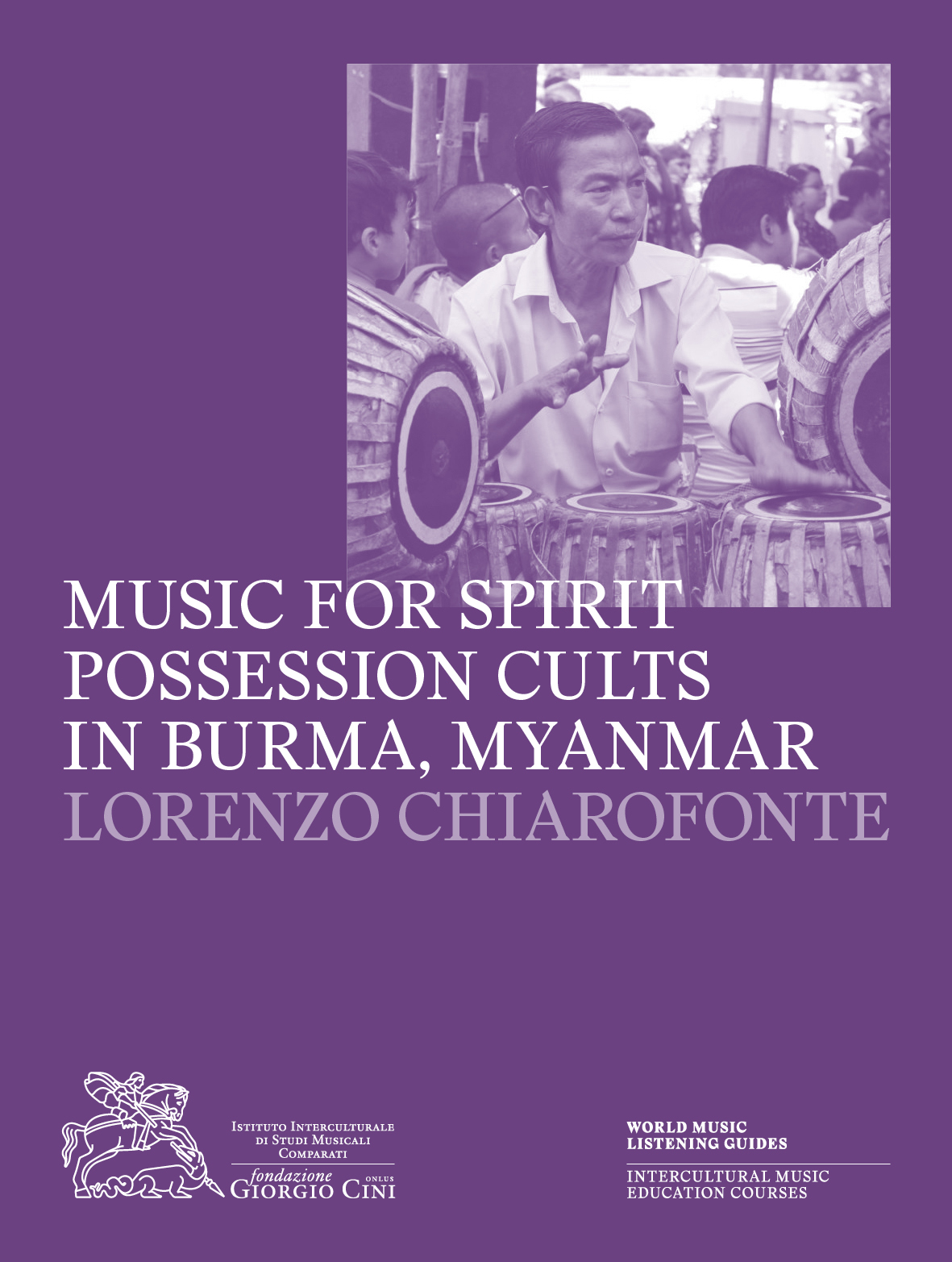
This first number of The World Music Listening Guides. Intercultural Music Education Courses, Music for Spirit Possession Cults in Burma (Myanmar), is devoted to the Burmese hsaing waing ensemble and the role it plays in the spirit possession ceremonies of the nat cult. The contents presented here derive from audiovisual materials collected during the event Nat pwe. Music and dance in spirit worship in Yangon (Myanmar), organised by the IISMC in 2017 as part of the series Music and rites, here reworked and presented in a series of multimedia animations that constitute the core of the guide. To convey the meaning that music assumes within these possession rituals, the contents are arranged to provide a general overview of the cult and its ceremonies before progressively focusing on performative aspects and the sound dimension. The interwoven, driving rhythms of the hsaing waing – an ensemble made up of gongs, tuned drums, oboes and voices, described here through fieldwork images collected by the author – generate the energy that sustains the possession dances of the nat kadaw (mediums), facilitating communication with the spirits. The interaction between the action of the instruments, the movements of the medium, and the participation of the audience is illustrated in an animation that reconstructs the unfolding of the different phases of the possession of the famous Brothers of Taungbyone, highlighting the ritual sequence of invocation, dance, entertainment, and the spirits’ dismissal. A specific section is devoted to the song ‘Shwe Byone Maung’, part of the repertoire of nat thachin (‘songs for the spirits’), in which a video animation highlights the various sections and musical structure of the piece. Finally, particular attention is given to the rhythmic interplay between the two main drums of the ensemble: the pat waing, a circle of drums that leads the performance, and the pat ma, a large suspended drum. Their interaction, one of the most distinctive features of this tradition, is analysed through a combination of diagrams, musical transcriptions, and video animations that demonstrate in detail how the dialogue between the two instruments shapes and energises the performance.