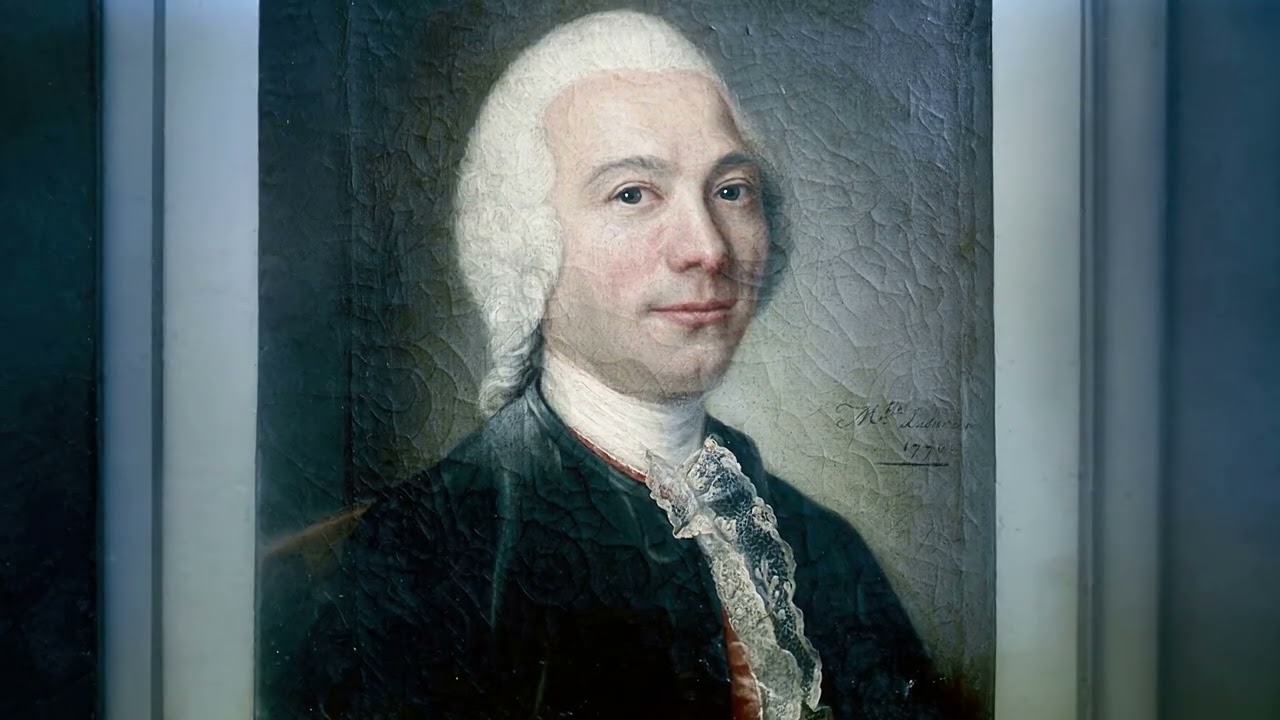
During 2026, three digital artists will develop their projects while working at the Giorgio Cini Foundation: Johanna Bruckner, Merve Sahin, and Riccardo Tesorini have in fact been selected for the third edition of the D.A.I.R. – Digital Artist in Residence open call, promoted by the Digital Center – ARCHiVe.
Istituto: Digital Centre ARCHiVe
Becoming Chimeric: Verso Identità Radicali Attraverso il Glitch
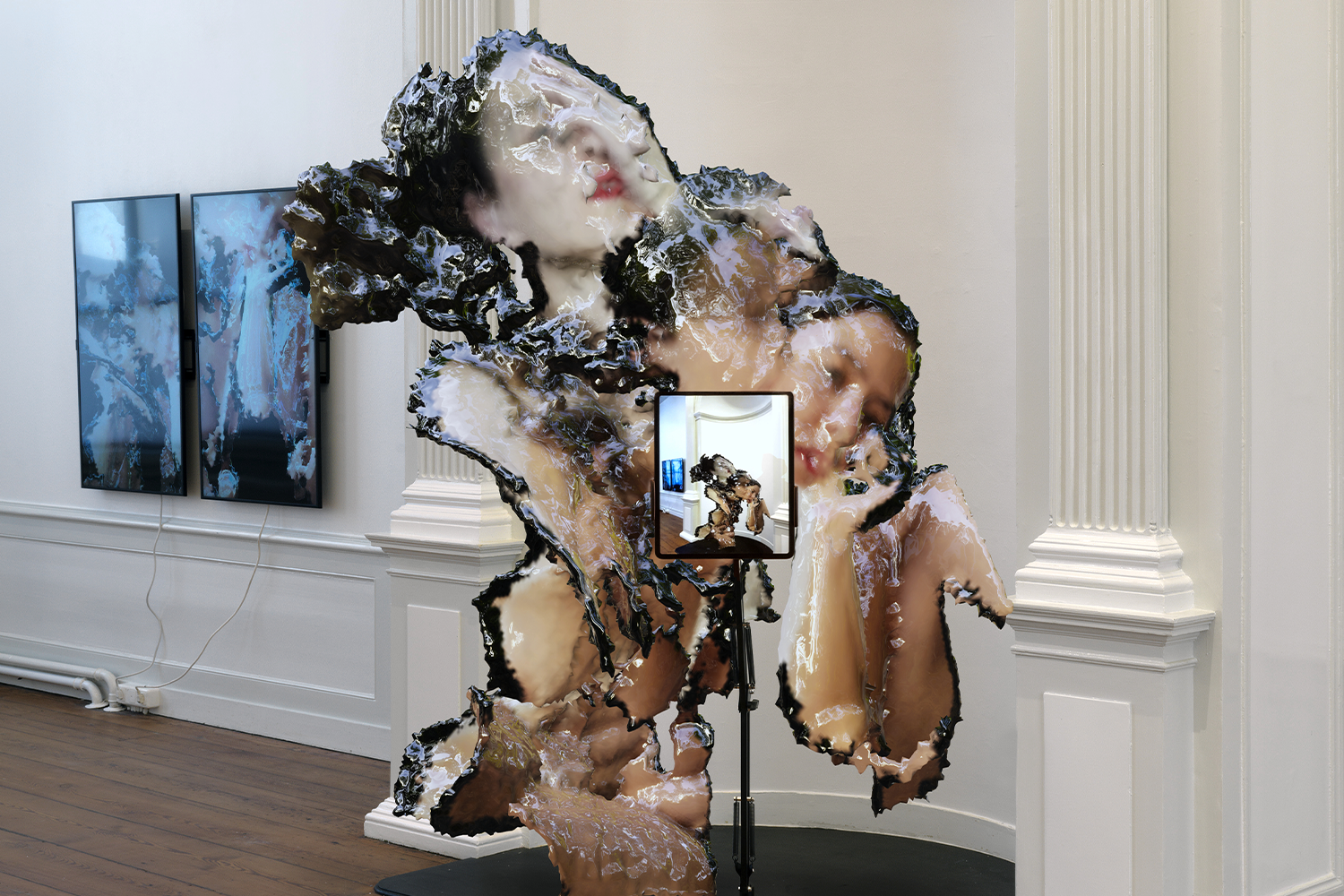
Martina Menegon presents her artistic research, rooted in post-digital practices and cyber/posthuman feminist theories, in which glitch and chimeric embodiment become tools for interrogating identity, presence and affect in our contemporary condition, deeply mediated by technology.
Through the use and misuse of 3D scanning, game engines, algorithms and immersive technologies, Menegon creates glitch self-portraits and interactive environments that confront the viewer with unsettling, affective and often disorienting encounters. Her works reflect on identity and presence, exposing the vulnerability of the hybrid body, the fragmentation of the self and the poetics of the liminal.
Working through these assemblages of physical and virtual elements, her practice explores hybrid, fluid bodies in continuous reconfiguration, suspended between fragmentation, multiplicity and liminal spaces. This research develops into a reflection on an unstable, glitched self, situated between alteration and hybridisation, matter and metamorphosis.
The lecture will be held in Italian and moderated by Ennio Bianco, curator and digital arts expert.
Digital technologies and physical change
20, 22, 24, 27, 29 April 2026 | 5 sessions, online on Zoom, 15 — 17
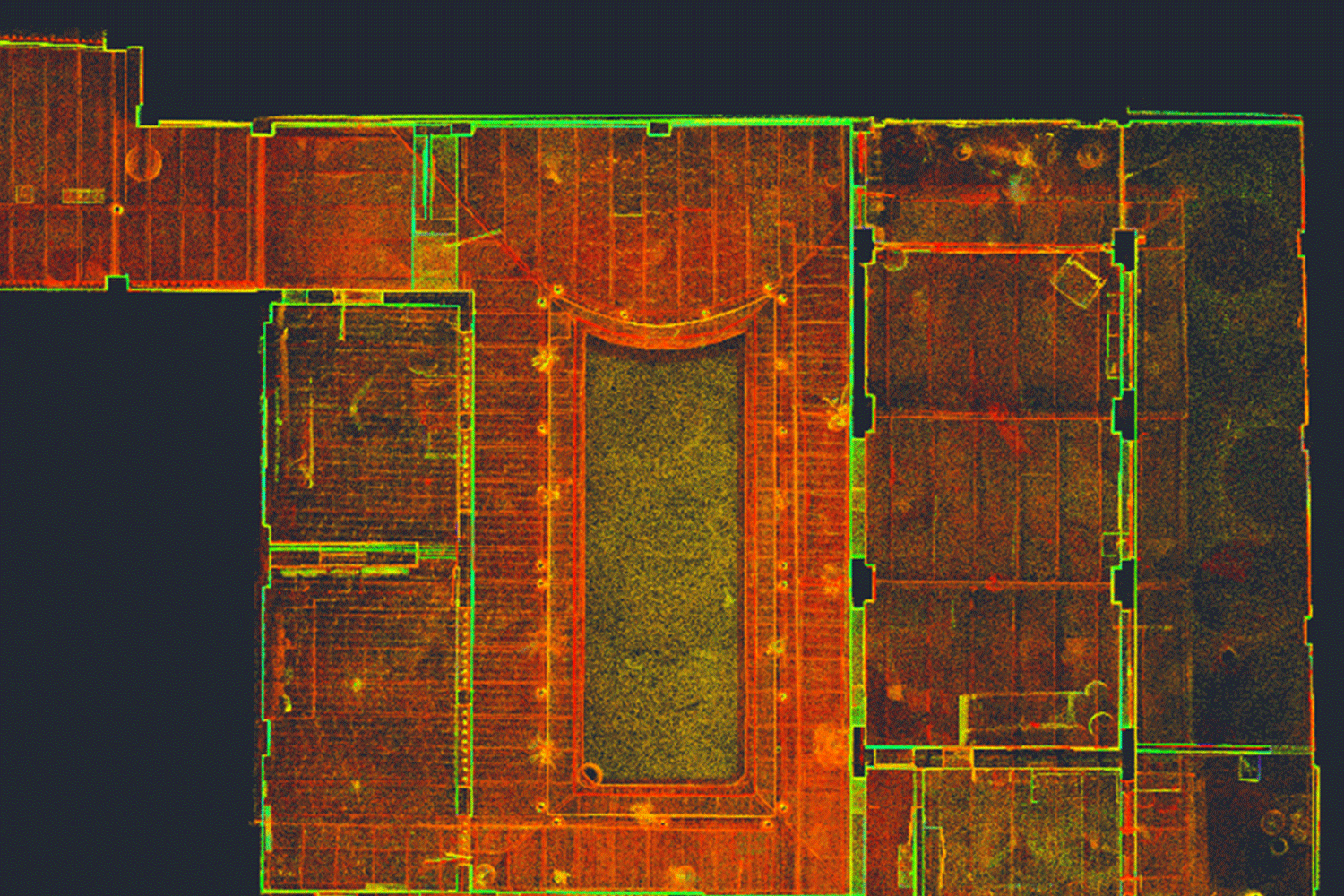
Digital Technologies and Physical Change. How technology enables real, tangible innovations in heritage preservation is a 10-hour online course curated by the Factum Foundation. Bringing together leading practitioners, researchers, and institutions, the sessions explore how advanced digital tools are transforming the ways cultural heritage is recorded, understood, and preserved, while generating concrete, physical outcomes.
Across five sessions, the course explores key challenges in heritage preservation: the reuse of industrial architecture in the Arctic, questions of provenance and restitution, community-led initiatives in South Asia, and new scientific methods for analysing cultural heritage. Case studies include the Aalto Silo in Oulu, the Torcello Altarpiece in Venice, the digital reconstruction of fragmented works in Nigeria and Lagos, and the use of advanced imaging technologies in Spain and UK.
Moderated by Costanza Blaskovic, the programme offers a focused overview of how high-resolution data is driving new approaches to preservation, access, and storytelling of cultural heritage.
The course will be held in English.
program
[accordion][/accordion]
[accordion_entry title=”20 April | Cultural strategies and practical solutions for contemporary architectural heritage in the Arctic context”]
Charlotte Skene Catling, Valentino Tignanelli – Revitalising Industrial Heritage: the Aalto Silo Project
Skene Catling de la Peña studio and Factum Foundation are repurposing Alvar and Aino Aalto’s first modernist industrial building, the AaltoSilo, in Oulu’s Meri-Toppila district (Finland). The silo blends functionality with bold design, reflecting Aalto’s lasting architectural influence. Since 2020, innovative interventions have focused on preserving this landmark of Finland’s industrial heritage, navigating both climatic challenges and social change.
–
Venanzia Rizzi – Material Continuity in Industrial Heritage
The adaptive reuse of another of Aalto’s buildings within the Meri-Toppila industrial complex focuses on industrial heritage, materiality, and the revitalisation of urban areas in the Arctic context. The building was recently converted into a climbing gym with facilities for the local community, preserving the original modernist structure and highlighting its design.
–
Eeva Huuhtanen – Aalto’s Rovaniemi: past, present and the creative future
After the Lapland War left Rovaniemi in ruins, Alvar Aalto was commissioned to reimagine the city. In 1945, he designed the iconic ‘Reindeer Antler city plan’ (Poronsarviasemakaava) and continued working on key buildings through the 1960s. Today, Rovaniemi is a UNESCO Creative City of Architecture, with cultural programmes celebrating Aalto’s legacy, the preservation of its heritage, and the city’s ongoing contribution to contemporary architecture and cultural tourism in Lapland.
[/accordion_entry]
[accordion][/accordion]
[accordion][/accordion]
[accordion_entry title=”22 April | Provenance, diaspora and forgotten fragments: Digital technology as a solution for restitution – part 1″]
Carlos Bayod Lucini – Recomposing Meaning: digital preservation of remnants
2.5D and 3D digitisation transform historical vestiges into models that can recreate objects physically, digitally reconnect fragments, and unlock new narratives-but choosing the right techniques and methods is essential for the best results.
–
Stefania Gerevini – The Torcello Altarpiece: from the photogrammetric recording to its digital reconstruction
From the thirteenth century to the early modern period, Venetian church interiors gleamed with brilliant gold and silver altarpieces and frontals, many of which could be opened and closed horizontally to reveal and conceal multiple layers of imagery. Today, we usually perceive them as static ornaments, but their digital reconstruction restores their original functionality while enhancing their study.
–
Francisco Prado-Vilar – The reconstruction of fragmented heritage: the stone Choir of Santiago de Compostela
The Choir of the Cathedral of Santiago de Compostela, sculpted by Master Mateo at the beginning of the 12th century, was partially destroyed in the 17th century, with the remaining pieces scattered and relocated. Advanced digital reconstruction-and the potential physical reconstruction of the choir-will allow it to be restored to its original appearance.
[/accordion_entry]
[accordion][/accordion]
[accordion][/accordion]
[accordion_entry title=”24 April | Knowledge transfer to communities for preserving at-risk heritage: recording and educational projects in South-Asia”]
Javier Ors Ausín – Minnette De Silva. The Online Archive of a Pioneer Modernist Architect in Sri Lanka
The World Monuments Fund and the Museum of Modern and Contemporary Art Sri Lanka are building local capacity to train professionals in digital preservation, including the 3D recording of historic buildings, as part of a project celebrating the work of Sri Lankan architect Minnette De Silva.
–
Helen Philon – Restoring Memory: The Tomb of Ahmad Shah and the Preservation of Deccan Heritage
The tomb of Ahmad Shah I (1391-1442) is housed within a medieval mosque, part of a complex that includes other royal family tombs in Ahmedabad, India. Preserving the mosque and its rich mural decorations is essential for understanding the historical, socio-religious, and economic context, especially given the scarcity of textual sources from the period. Recent 3D recordings will enable a digital restoration of both the structure and its painted walls.
–
Imran Khan – Educational initiatives in South-Asia and the world
Alongside developing new technologies and strategies for digital preservation, Factum Foundation aims to share best practices through hands-on workshops and recording campaigns.
Photogrammetry, often combined with other techniques, is a key part of the training programmes offered to institutions in South-Asia and around the world.
[/accordion_entry]
[accordion][/accordion]
[accordion][/accordion]
[accordion_entry title=”27 April | Provenance, diaspora and forgotten fragments: Digital technology as a solution for restitution – part 2″]
Mari Lending, Erik Langdalen – Provenance in architecture: the “Provenance Projected” project
While provenance traditionally traces the chronological history of objects in circulation (artworks, documents, archaeological fragments, natural specimens, etc.), Provenance Projected extends this concept to architecture. It reframes architectural provenance as a dynamic phenomenon-indeed, a forward-looking and creative instrument for change-used to interpret the past, present, and future potential of buildings.
–
Adam Lowe, Ferdinand Saumarez Smith – Repatriation issues and complex objects: the Bakor Monoliths, the Igbo Ukwu and Benin bronzes
Thanks to online catalogues and digital collections, it is now easier to trace the provenance of objects dispersed around the world, identify fragments held in museums, and determine their original location. However, when addressing repatriation and restitution, it is essential to rethink concepts of ownership and preservation and to develop practical solutions-often involving the creation of both digital and physical copies.
[/accordion_entry]
[accordion][/accordion]
[accordion][/accordion]
[accordion_entry title=”29 April | New methodologies for the digital analysis of cultural heritage”]
John Barrett, William Owen – The portable Selene Photometric Stereo System and its role in research strategies
The Selene Photometric Stereo System has transformed how scholars, curators, conservators, and restorers engage with the digitisation of documents, artworks, natural history collections, and cultural heritage. What new possibilities emerge when this technology becomes portable-capable of recording fragments at a billion pixels per square inch?
–
Santiago del Bosque Arias, Lucía Pereira-Pardo – Combining photometric stereo data with hyperspectral imaging (RIS): a pilot scientific investigation
For the first time, high-resolution 3D data from the Selene Photometric Stereo System has been combined with hyperspectral imaging. By identifying pigments through their unique spectral “fingerprints,” this integration opens new possibilities for studying cultural heritage-without ever touching the objects.
[/accordion_entry]
[accordion][/accordion]
Call for Application DAIR 2026
Deadline 8 March 2026
The Digital Centre – ARCHiVe of Fondazione Giorgio Cini announces a call for applications for two one-month residential scholarships covering the accommodation costs on the Island of San Giorgio Maggiore in Venice (Italy). The scholarships are intended for experienced digital artists and creatives of any artistic language or expressive medium, of all ages, nationalities, and backgrounds.
The project is set within the multidisciplinary context of Fondazione Giorgio Cini and aims to promote the creative reuse of digital data resulting from the Fondazione’s digitisation campaigns of its collections and archives.
The aim is to enhance its digital heritage, stimulate the production of original audiovisual works related to the Fondazione or the Island of San Giorgio Maggiore, and foster new dialogues between artists and the Digital Centre team, promoting encounters between art, new technologies, and science, and encouraging the cross-pollination of languages.
Application deadline: 8 March 2026. Go to the website
Residency period: 1 month, to be scheduled between April and November 2026
Info: [email protected]
Beyond Cinema

Third event of the 2025–2026 academic year for the ARCHiVe Online Academy, dedicated to the digital evolution of moving images and our relationship with them. The course Beyond Cinema, curated by Sara Francesca Tirelli with Miriam De Rosa, will explore archives, post-production, artificial intelligence and new audiovisual aesthetics, offering a critical perspective on cinema and contemporary visual practices.
Starting from an analysis of the transformations of the moving image in the digital age, the course aims to explore how technological evolution reshapes both artistic practices and our everyday relationship with images. At the intersection of cinema, art and new technologies, Beyond Cinema signals a shift away from the idea of the finished film towards forms of practice that weave together research, writing, editing and programming, as well as a bridge between pre-cinematic experiences and contemporary audiovisual practices. Central to the course are the construction and reworking of archives, the care of data and visual fragments, which become tools for observing how images are generated, circulate and sediment—and how artistic practice can still open critical spaces within the technologies that produce them.
The course will be held in Italian.
programmE
[accordion][/accordion]
[accordion_entry title=”23 February | Class 1″]
The first lecture, given by Miriam De Rosa, expands this reflection by examining the increasingly active role of users in producing and reworking images, the aesthetics emerging from the creative use of digital interfaces and the significance of the archive as a dynamic space for rewriting and reinterpretation.
–
If the contemporary moment is one in which we witness a transformation of images—now freed from their frames and embedded in our everyday experience—then the ways in which we approach, work with, and archive images become crucial. Starting from the assumption that, as users of digital technologies with a good degree of media literacy, we can do things with images rather than merely receive and consume them, this session broadens the reflections linked to the paradigm of immersivity and introduces examples of grassroots (and other) creative practices that make use of technology even without major production infrastructures. We will consider the tendency to turn digital interfaces into an aesthetic motif, examining how this occurs and with what outcomes. We will also question the role of the archive, understood not only as a repository of images but as a living space in which stories—and history—can be rewritten.
[/accordion_entry]
[accordion][/accordion]
[accordion][/accordion]
[accordion_entry title=”25 February | Class 2″]
The second lecture, led by artist and filmmaker Sara Francesca Tirelli, will focus on the analysis of her research and artistic practice, aimed at overcoming the boundaries between film, the visual arts and digital technologies, and on how processes of capturing reality, post-production and AI are reshaping the very notion of film and the visual archive.
–
The artist and filmmaker presents her research at the intersection of cinema, art and new technologies, exploring territories where traditional visual languages intertwine with the possibilities offered by contemporary digital tools. The artist talk focuses on how the recent technological paradigm shift is profoundly transforming the very nature of the moving image, redefining its form, function and modes of experience. Processes of capturing reality, post-production and artificial intelligence become the tools of an artistic practice that interrogates the ways in which our perception organises the visible today. The image is no longer conceived solely as a linear projection on a screen, but takes the form of an immersive and dynamic environment, capable of transcending the limits of the screen and simultaneously spreading across devices, digital platforms, archives and computational infrastructures, opening up new possibilities for interaction and aesthetic experimentation.
[/accordion_entry]
[accordion][/accordion]
Semantic Attractors, Bias, and Distributed Creativity: Images and Authorship in the Age of Artificial Intelligence
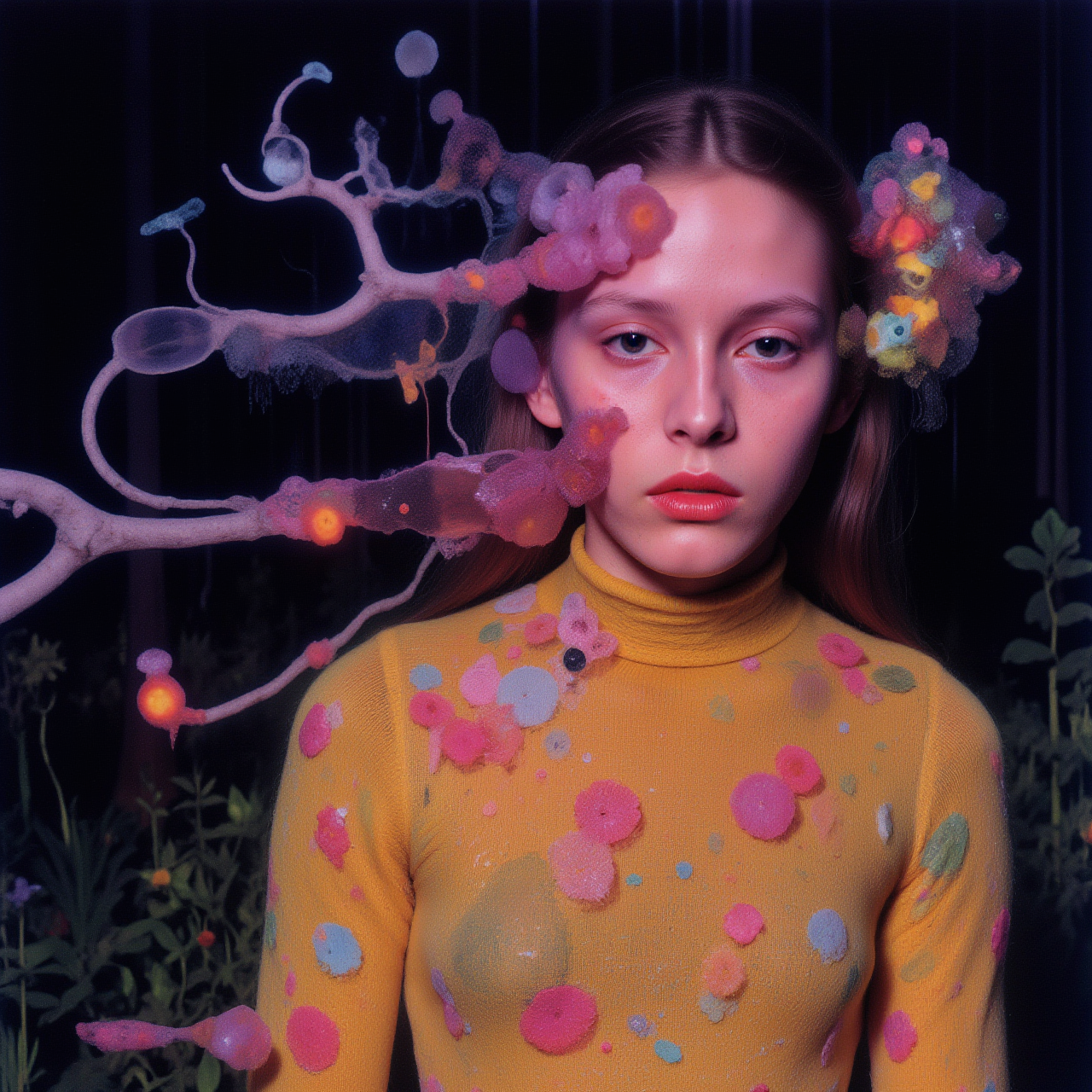
Artificial intelligence is radically transforming the production and perception of images, raising new questions about authorship, style, originality, and responsibility. Starting from an analysis of generative text-to-image and text-to-video models, the lecture unfolds along three conceptual axes:
1. The role of semantic attractors: words or concepts that guide visual generation by acting as gravitational poles of meaning;
2. The ethical and aesthetic biases implicit in datasets and algorithmic filters, inevitable insofar as they mirror our own prejudices;
3. The notion of distributed creativity, which deconstructs the idea of the author as an isolated individual and instead recognizes the network of actors (both human and non-human) involved in the construction of the image.
The lecture, curated by Francesco D’Isa, weaves together philosophical, semiotic, and technical perspectives, offering a critical and practical reflection on how to use these tools consciously, without succumbing either to technological hype or to a priori rejection. Designed for scholars, artists, and cultural practitioners, it invites a shift in perspective: not only to ask what AI does, but what it tells us about how we construct meaning, aesthetics, and collective memory today.
The lecture will be held in Italian.
Bringing Venice into Space
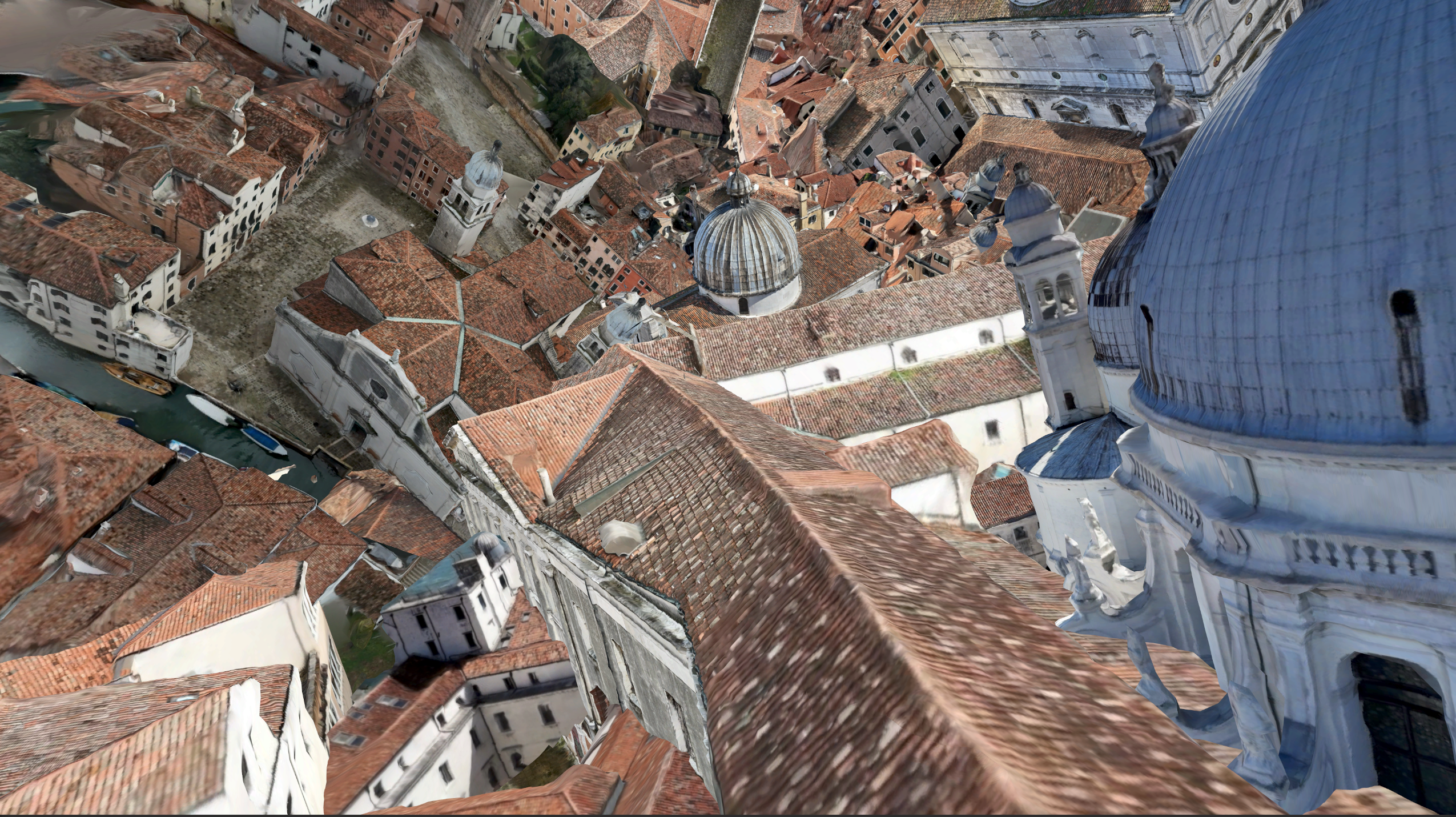
ARCHiVe Online Academy presents an intensive five-day workshop (30 hours), held by Matteo Tora Cellini of the CamerAnebbia collective. Bringing Venice into Space offers a practical and theoretical exploration of the creative use of advanced technologies in interactive and immersive installations. Participants will explore the design of dynamic environments and innovative narratives, with particular attention to transforming art and cultural content into accessible and engaging experiences.
The workshop will focus on part of the digitised cultural heritage of Fondazione Giorgio Cini and will include a photogrammetry session within the Foundation’s spaces and architecture, conceived as a practice of observation, measurement, and critical reading of space. The data collected will become living material for a design laboratory aimed at redesigning and reimagining architectures, transforming real elements into new narrative devices.
The objective of the workshop is to develop creative strategies to enhance historic and cultural spaces, experimenting with languages that combine technology, perception, and the memory of place.
The workshop will be held in Italian and is limited to a maximum of 15 participants. Attendance is free of charge upon registration, which must be completed by 11:59 pm (CET) on 13 January 2026.
Ettore Sottsass, l’attività grafica. Una ricerca d’archivio

Ettore Sottsass. L’attività grafica. Una ricerca d’Archivio it’s the third event of the 2025–2026 academic year of ARCHiVe Online Academy, curated by Fiorella Bulegato and Marco Scotti with Sergio Menichelli.
The talk will focus on a less explored aspect of Ettore Sottsass’s figure and career: his work in the field of graphic design, examined in the forthcoming volume Ettore Sottsass. L’attività grafica. Una ricerca d’Archivio (2025), edited by Fiorella Bulegato and Marco Scotti. The authors will engage in dialogue with Sergio Menichelli, a visual designer who worked at Sottsass Associati in the 1990s and is a keen expert on Sottsass’s practice.
During the event, the research that led to the publication of the volume will be presented, promoted by IUAV University of Venice and the Fondazione Giorgio Cini, where part of Ettore Sottsass Archive is preserved. Starting from the archive and relating materials, connections, and references to other collections and holdings, the lecturers will illustrate the path that led them to focus on Sottsass’s graphic design activity, probably the least known area within the vast body of work of the celebrated architect and designer. Menichelli’s perspective will offer the opportunity to delve into the architect’s graphic work from the viewpoint of someone who worked alongside him and experienced first-hand his personal design approach.
The lecture will be held in Italian.
Countering the Eclipse of Sound Memories: Workshop on Audio Documents
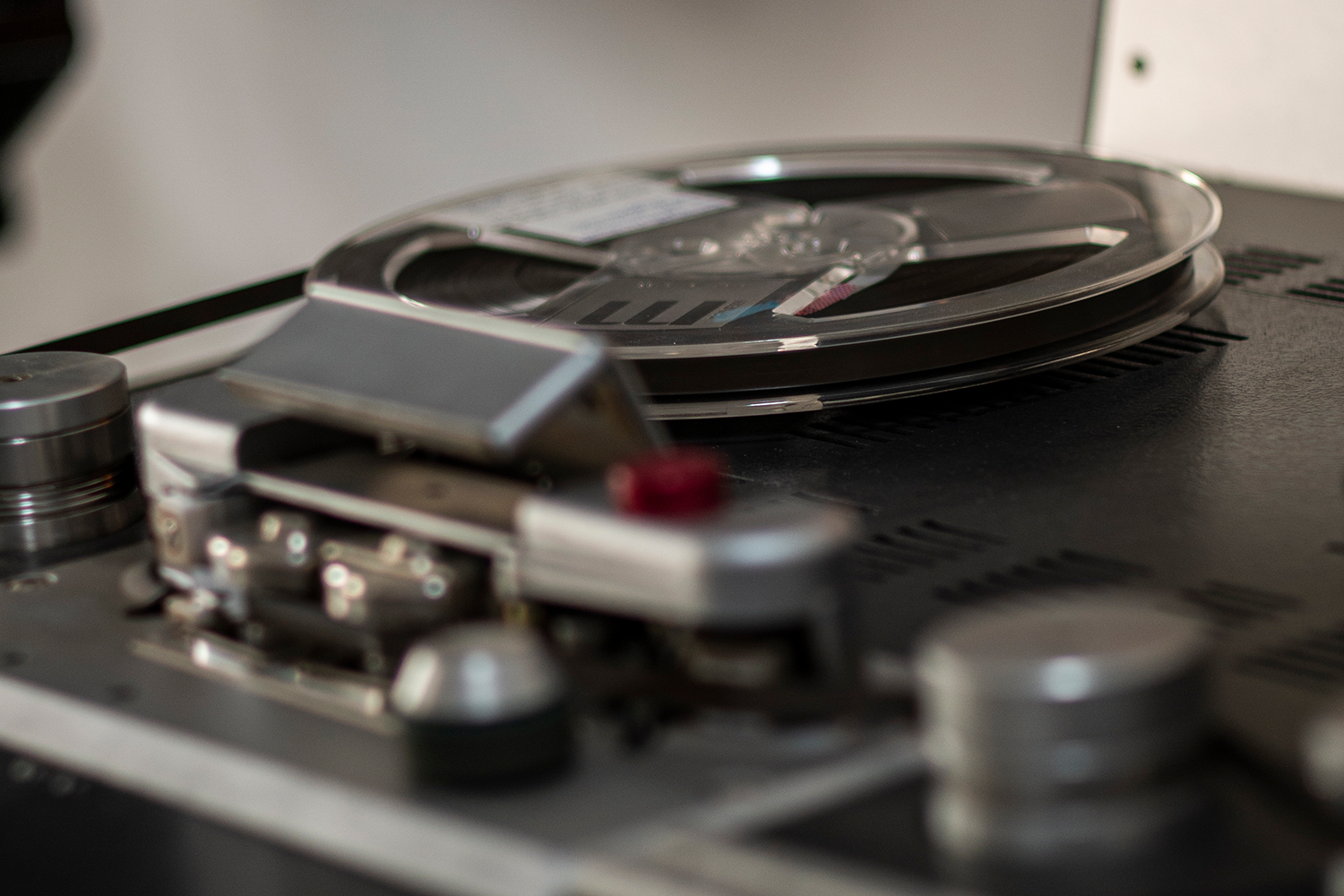
The Digital Centre ARCHiVe of Fondazione Giorgio Cini, in collaboration with the Centro di Sonologia Computazionale (CSC) of the Department of Information Engineering (DEI) at the University of Padua, is presenting Countering the Eclipse of Sound Memories: Workshop on the Digitisation and Preservation of Audio Documents, a workshop dedicated to scientific methodologies, technologies and international standards for the restoration, active preservation and digitisation of audio documents.
This three-day intensive programme on the Island of San Giorgio Maggiore will introduce participants to the historical and technical aspects of sound carriers, the principles of audio preservation, and the methodologies for their digitisation and restoration. Combining lectures and hands-on sessions, the workshop will cover the preparation and repair of media, analogue-to-digital conversion techniques, metadata creation, and best practices for long-term digital preservation.
Through a learning-by-doing approach, participants will engage directly with equipment and workflows, gaining both theoretical and practical skills in the digitisation and safeguarding of audio heritage.
This three-day intensive programme on the Island of San Giorgio Maggiore will introduce participants to the historical and technical aspects of sound carriers, the principles of audio preservation, and the methodologies for their digitisation and restoration. Combining lectures and hands-on sessions, the workshop will cover the preparation and repair of media, analogue-to-digital conversion techniques, metadata creation, and best practices for long-term digital preservation.
Through a learning-by-doing approach, participants will engage directly with equipment and workflows, gaining both theoretical and practical skills in the digitisation and safeguarding of audio heritage.
The workshop is open to a selected group of participants (students and professionals from various backgrounds) who will have the opportunity to learn and interact directly with the CSC team.
Accommodation for two nights at the Vittore Branca Centre Residence on the Island of San Giorgio Maggiore, lunch on the first day, and an ACTV pass for travel within the lagoon for the duration of the workshop are included in the participation fee. A certificate of attendance will be issued at the end of the workshop.
Accommodation for two nights at the Vittore Branca Centre Residence on the Island of San Giorgio Maggiore, lunch on the first day, and an ACTV pass for travel within the lagoon for the duration of the workshop are included in the participation fee. A certificate of attendance will be issued at the end of the workshop.
The workshop will be held in Italian.
Casanova Expanded
Casanova Expanded is a video installation by Sara Francesca Tirelli, created in collaboration with the ARCHiVe Digital Centre of Fondazione Giorgio Cini, with Hiroaki Yamane. The artist has drawn on the digital heritage of art collections, photographic and documentary archives, books, and historical objects, processing—also through AI—over one terabyte of data.
Casanova’s journeys across Europe form the narrative thread that unfolds through a digital map, expanded with tableaux vivants depicting the places of his life, his interests, encounters, and the visions of his era.
The installation is inspired by pre-cinema and the tradition of 18th-century magic lanterns, evoking the esoteric dimension that fascinated both Casanova and his time. By elaborating archival images with AI and gaussian splatting, as well as portraits and illustrations from books on pyrotechnics, electricity, astrology, mathematics, and the Kabbalah, Tirelli guides viewers into the 18th century—into the hidden recesses of an explosive and unconventional culture.
The film was produced for Casanova e l’Europa. Opera in più atti, an exhibition project by Fondazione Giorgio Cini, with scenographic collaboration by the Fondazione Teatro La Fenice di Venezia.