Humankind and Longevity
The Foundation’s cultural programme for 2026 will focus on the theme of longevity, exploring its various aspects from its most distant cultural roots right up to the present day. Over the last century, for the first time in human history, life expectancy has risen significantly, and the aspiration for a longer life is being systematically pursued through scientific research.
This increase in average life expectancy stems from scientific and healthcare innovations, social welfare measures and economic progress. There are, however, issues that require further investigation. The biological limits of the process of extending life are not certain; nevertheless, scientific understanding of the factors underlying ageing is making continuous progress, partly due to the enormous resources dedicated to research. Artificial intelligence contributes to these changes through its ability to process vast amounts of data and the use of dynamic models, accelerating drug discovery, the development of personalised medicine, and digital twins for prediction and prevention.
The implications of these developments are manifold. Rising life expectancy, combined with a significant decline in birth rates, is leading to a gradual increase in the proportion of the elderly population within the total population. This process tends to place strain on public finances, create problems for the labour market and reduce innovative capacity.
Longevity can have significant effects on political systems and can influence international relations. It can alter the mechanisms of cultural transmission and our relationship with life, with repercussions on social and family relationships, our relationship with religion, and artistic and scientific creativity. It may be accompanied by persistent inequalities in life expectancy, both between countries and within each country.
Increased life expectancy represents a crucial challenge for our societies; it is a source of great opportunities but is also potentially divisive.
The Humankind and Longevity project will take shape primarily through a symposium bringing together international experts from various disciplines and a series of initiatives inviting participants to explore and reflect on the aspects, meanings and implications of a longer life.
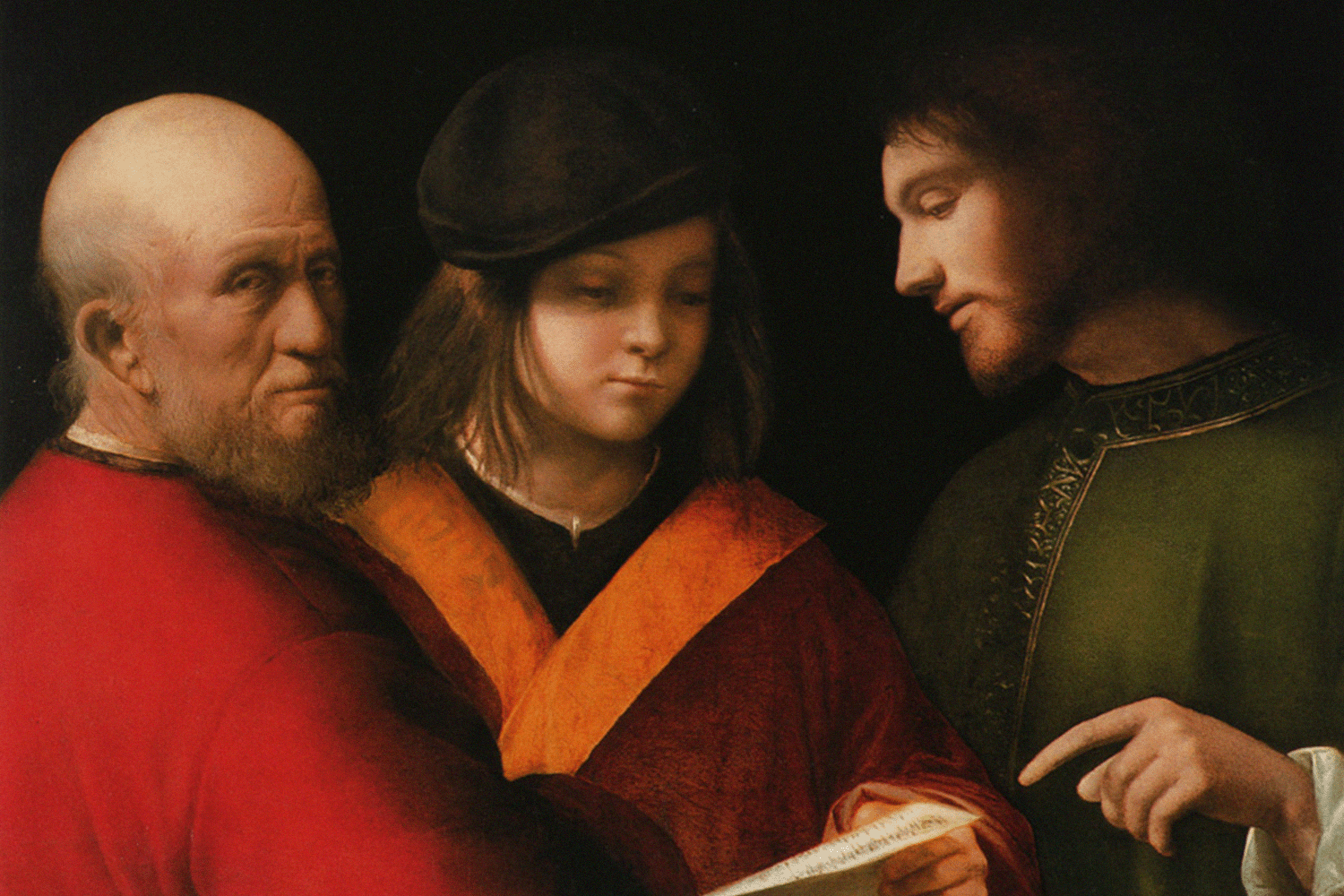
Giorgione, ‘The Three Ages of Man’ Galleria Palatina. By concession of the Ministry of Culture – Gallerie degli Uffizi.
The Fondazione Giorgio Cini presents a program of interdisciplinary activities throughout the year, dedicated to the theme of Humankind and Longevity: a major symposium in November, conferences, and concerts.
Program of activities
Study day and closing concert | 24 February 2026

INSTITUTE OF MUSIC
A study day devoted to the behaviour, reactions, choices and rethinking that characterised the final phase of the life and creativity of some of the most influential composers of the twentieth century: Arnold Schönberg, Igor Stravinsky, Gian Francesco Malipiero, Olivier Messiaen and Dmitri Shostakovich. The theoretical reference is the concept of ‘late style’, which was coined by Theodor W. Adorno for Beethoven’s last works and later taken up and expanded by Edward Said in his book of the same name.
The speakers aim to broaden the conceptual field traced by the two philosophers in the directions of intellectual biography and aesthetic evolution;
longevity is related to the alienating perception of the new age and the response to the challenges coming from it.
SEMINAR AND CONCERT | 16 — 20 March 2026
EARLY MUSIC SEMINARS EGIDA SARTORI AND LAURA ALVINI
Advanced training seminar in early music with final concert Trionfi. Music, poetry and longevity between Guillaume de Machaut
and Francesco Petrarca the seminar intends to investigate a selection of materials by Petrarch and Machaut in search of possible reciprocal influences, but above all the types of influence that both had on music contemporary to them or slightly later.
The main materials of study are the poetic-musical lyrics included in Guillaume de Machaut’s Remède de Fortune and other compositions circulating
in central Europe or Italy around the turn of the fifteenth century.
CONFERENCE | 14 — 15 May 2026
INSTITUTE OF THEATRE AND OPERA
The conference, organised in collaboration with Ca’ Foscari University in Venice and the University of Florence, aims to investigate the figure of Paolo Poli (Florence, 1929 – Rome, 2016), ten years after his death. Florentine by birth, Poli immediately caught the public’s attention as a versatile
and original artist, and built a long and successful career until his retirement from the stage, when well into his eighties. Thee author of a creative,
light but cultured theatre, thanks to his tireless imagination, he was a fine example of life-long creativity. For this important occasion, the Institute of Theatre and Opera will make available to interested scholars the rich archive fond acquired in 2019 from the will of Lucia Poli, the artist’s sister,
and his nephew, the composer Andrea Farri.
CONFERENCE | 3 — 4 July 2026
The Inequalities in Longevity conference is dedicated to specific aspects of longevity: inequalities in average life expectancy and quality of life that results from different economic and social conditions. While disparities in average life expectancy between different income groups are evident, with the wealthiest not only living longer but also enjoying better health, differences between countries are also striking. While education and cultural environment influence life expectancy, social conditions, loneliness and discrimination against the elderly also have a significant impact. Welfare, public and private pension schemes can help to reduce these disparities. The conference will explore these issues over two days of discussion.
CONFERENCE AND CONCERT | 2- 3 July 2026
ITALIAN ANTONIO VIVALDI INSTITUTE
2 July, 6:00 PM – Sala del Chiostro dei Cipressi
The End of the Virtuosi: Notes on the Final Years of Singers Connected with Venice in the Mid-Eighteenth Century
Lecture
Giovanni Polin (“A. Steffani” Conservatory of Castelfranco Veneto / Fondazione Ugo e Olga Levi)
What happened during the final years of the lives of virtuosi and virtuosas? Through a number of exemplary case studies, Professor Giovanni Polin will illustrate the last years of the careers of singers active in the mid-eighteenth century who were connected with Venice and the “Red Priest” (Antonio Vivaldi).
3 July , 6:30 PM – Auditorium “Lo Squero”
Final Concert of the Accademia Vivaldi
The final concert of this masterclass (June 30 – July 4), led by soprano Gemma Bertagnolli, presents a musical journey focused on the representation of old age in the eighteenth century, a period in which improved living conditions led to a gradual increase in life expectancy and to a new perception of advanced age. This social transformation directly influenced musical theatre. Whereas in the seventeenth century elderly characters — especially female ones — were often confined to comic and grotesque roles, in the eighteenth century these figures acquired greater dignity and more complex functions within the plot. Vivaldi’s operas offer an ideal perspective from which to observe this evolution during the first half of the century. The concert program will highlight the various types of elderly characters performed by the students, exploring their vocal roles, gender differences, and the dynamics of intergenerational relationships.
The concert will be preceded by a lecture by Professor Giada Viviani, coordinator of the research group Musical Dramaturgy in Venice (1678–1792) of the Fondazione Ugo e Olga Levi, entitled: Ages in Dialogue: Elderly Characters and Intergenerational Relationships in Vivaldi’s Operas. Vivaldi’s operas do not portray elderly people as fragile or rigid figures, but rather as central characters embodying wisdom, conflict, and reconciliation, encouraging a profound intergenerational dialogue with younger characters. Giada Viviani (University of Genoa / Fondazione Ugo e Olga Levi)
STUDY DAY | 29 October 2026
INSTITUTE OF ART HISTORY
The Institute of Art History promotes a day of conversations led by art historians illustrating some of the most significant ‘case histories’ that have
marked the landscape of the figurative arts in the modern and contemporary age. Famous biographies, with which to interpret longevity not only in terms of biological achievement, but also (and above all) intellectual and creative ones: at the heart of the insights are therefore the final works – the ‘swansongs’– of the selected artists. Such works constitute vital expressions of a continuous renewal, signs of regeneration and experimentation.
Six ‘case histories’ have been selected, bearing witness to examples of ‘creative longevity’ from the sixteenth to the twentieth century: Titian,
Giambattista Tiepolo, Francisco Goya, Pablo Picasso, Giorgio De Chirico and Virgilio Guidi.
SEMINAR | 10 — 12 November 2026
INTERCULTURAL INSTITUTE OF COMPARATIVE MUSIC STUDIES
Demographic change has a strong impact on music production choices and market strategies, from concerts to the media, streaming platforms and social networks, it influences musical aesthetics, leading to the development of new sound production and communication technologies, while creating new professions for care and wellbeing.
SEMINAR AND CONCERT | 2 — 6 November 2026
EARLY MUSIC SEMINARS EGIDA SARTORI AND LAURA ALVINI
Kapellmeister at the Basilica of St Mark from 1527 until his death (1562), Adrian Willaert was one of the most authoritative, prolific and influential composers of the central decades of sixteenth-century Europe. Willaert was also a teacher, and his disciples included some of the best-known composers and theorists of the time, such as Nicola Vicentino, Costanzo Porta, Cipriano de Rore and Gioseffo Zarlino. The last two succeeded the maestro in the prestigious position at the Marciana, so Willaert is generally considered the founder of the ‘Venetian school’.
SIMPOSIO | 19 — 21 novembre 2026
Il simposio sulla longevità invita esperti internazionali delle varie discipline che sono coinvolte nella riflessione intorno all’allungamento della vita – scienziati, filosofi, teologi, economisti. Articolato in tre giornate, si sofferma sulla dimensione scientifica della longevità, sulle implicazioni per la società, la politica, l’economia, le relazioni internazionali e sulle ripercussioni nella sfera antropologica, culturale ed etica.
–
Spanning three days, the meeting will begin by examining the biological dimension of longevity, the scientific and medical reasons for the increase in average life expectancy, the future prospects of ongoing research, the role of artificial intelligence and the consequences of personalised medicine. It will then investigate the social dimension of longevity and its impact on welfare, economics, politics, and international relations, without neglecting the aspects of prevention, education, popular narratives on ageing, and intergenerational equity. Finally, it will address the human dimension of longevity and its anthropological, philosophical and ethical aspects, keeping in mind the implications for family and social relationships, scientific research and artistic creativity, the transmission of knowledge and the spiritual dimension.
CONFERENCE | 1 — 3 dicembre 2026
CENTRE FOR COMPARATIVE STUDIES OF CIVILISATIONS AND SPIRITUALITIES
This conference explores the relationship between longevity and religious phenomena. It will discuss how religious traditions have been concerned with both the care of the body and the soul, examining religious rituals, practices, dietary norms and activities that promote not only harmonious ageing but also spiritual purification. It will study how ageing societies influence religious beliefs and practices, and how religious traditions evolve within them. Finally, it will discuss emerging religious and quasi-religious movements that question the very concept of death and propose transhumanist approaches to life extension. Event co-organised with Ca’ Foscari University Venice, the University of Amsterdam and the Center for the Study of World Religions.
CONFERENCE | 15 — 17 December 2026
INSTITUTE FOR THE HISTORY OF THE VENETIAN STATE AND SOCIETY
The theme of longevity, understood as an individual and social phenomenon, takes on a central role in the contemporary world as we witness a profound redefinition of the stages of life. This is largely unprecedented, according to our historical knowledge. Therefore, can the category of ‘longevity’ also be used for the past? And in what terms on a European scale? What was the cultural meaning of longevity in the sixteenth and seventeenth centuries? The question arises if we think of the ruling class of the Venetian Republic, of the ranks of patricians who remained active in their positions until their seventh decade of life and beyond, or if we think of the election of doges and their lives that usually exceeded the age of eighty. The conference aims to answer these questions. The conference is organised in collaboration with Ca’ Foscari University Venice.

