Isola di San Giorgio Maggiore, Venezia Archives - Page 4 of 8 - Fondazione Giorgio Cini

Venice and Epidemics

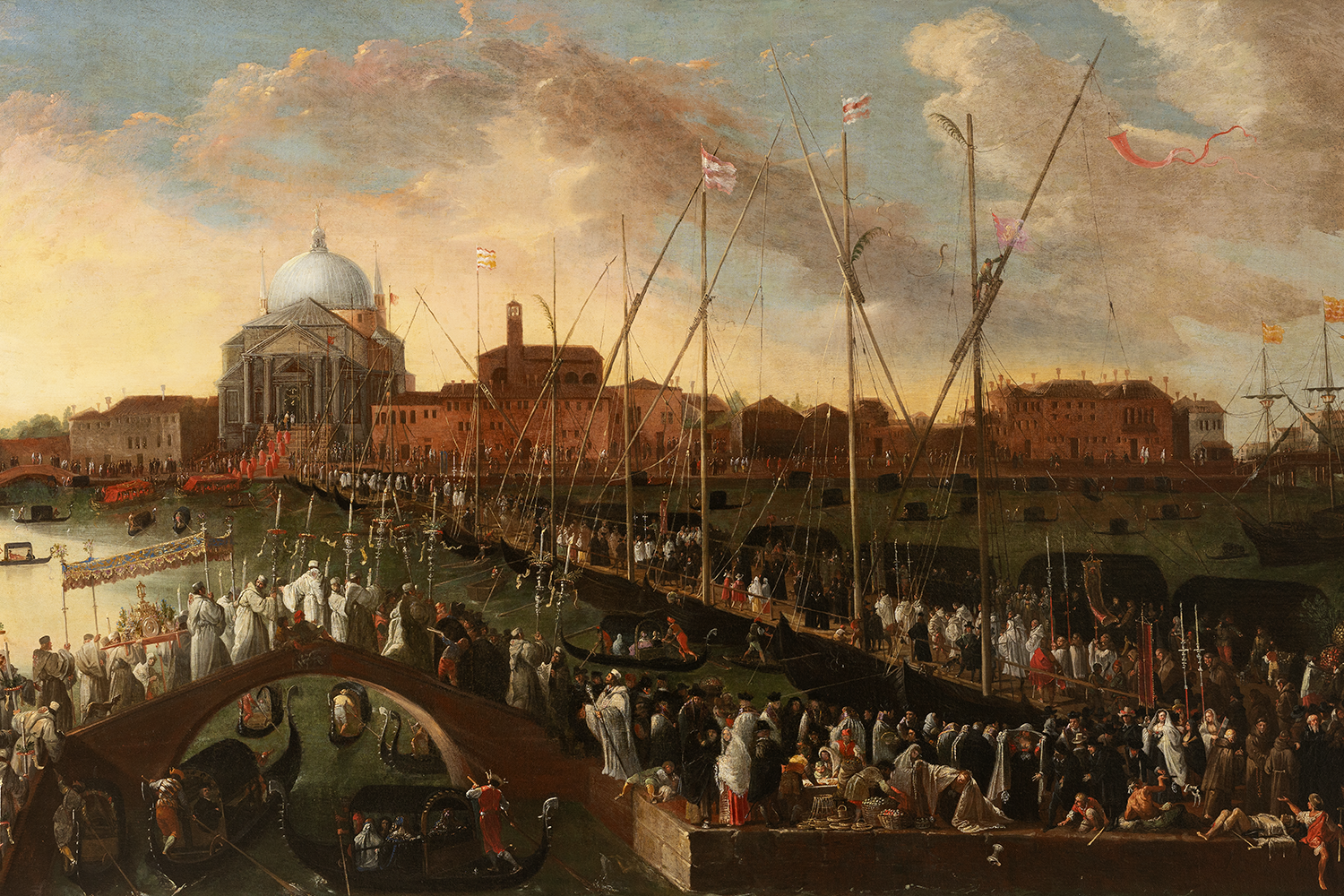
Venice has its own history of dealing with epidemics. It was one of the first places in Europe to develop a health policy to deal with the outbreak of the plague. There is no doubt that the experience of the Serenissima remains extremely significant in the history of healthcare and epidemic emergencies. Venice was at the forefront of crisis management, as seen during the plagues of 1576 and 1630, and was very effective after 1630, both in implementing prophylactic strategies and in implementing a genuine health defense policy, especially in regards to its maritime domains in the Mediterranean, which bordered the Ottoman Empire, an area where the plague was endemic, a hotbed that was more frightening than war.

The conference Venice and Epidemics opens up reflection on what this specific history has been. Experts will discuss the significance of the Venetian experience, starting with epidemic crises and today’s pandemics, and then retracing the most difficult periods in Venetian history, the dramatic years, and grasp the organizational and cultural implications, as well as the relationship with death on a collective scale, taking into account the periodization and how all this was a world with its own connotations, a world that the cultural turning point in Europe between the 18th and 19th centuries, with the age of Napoleon, had changed.

programme
Friday, 17 October
plus

10:00 – 13:00

  • Daniele Franco (Scientific Director, Fondazione Giorgio Cini)

    Introduction

  • Silvio Brusaferro (Università degli Studi di Udine)

    Imparando da Venezia

  • Giuseppe Banfi (Università Vita-Salute San Raffaele Milano)

    Epidemie e infodemie attraverso citazioni citabili

  • Nelli-Elena Vanzan Marchini (Centro Italiano di Storia Sanitaria e Ospedaliera del Veneto)

    La politica sanitaria di Venezia

  • Sabrina Minuzzi (Università degli Studi di Udine)

    La peste a Venezia: invenzioni letterarie e segreti medicinali

15:00 – 18:00

  • Luigi Mascilli Migliorini (Accademia Nazionale dei Lincei, Roma)

    La peste e l’Europa di Napoleone

  • Gino Benzoni (Istituto Veneto di Scienze, Lettere ed Arti, Venezia)

    Venezia: morte e morie

  • Ermanno Orlando (Università per Stranieri di Siena)

    La peste del 1348 a Venezia

  • Gerolamo Fazzini (Archeoclub d’Italia Sede di Venezia ETS) and Francesca Malagnini (Università per Stranieri di Perugia)

    I Lazzaretti veneziani. Le scritture parietali

  • Egidio Ivetic (Institute for Venetian History, Fondazione Giorgio Cini)

    Conclusions

Moderator: Marco Pellegrini (Università degli Studi di Bergamo)
Glass and Decorative Arts at the Venice Biennale

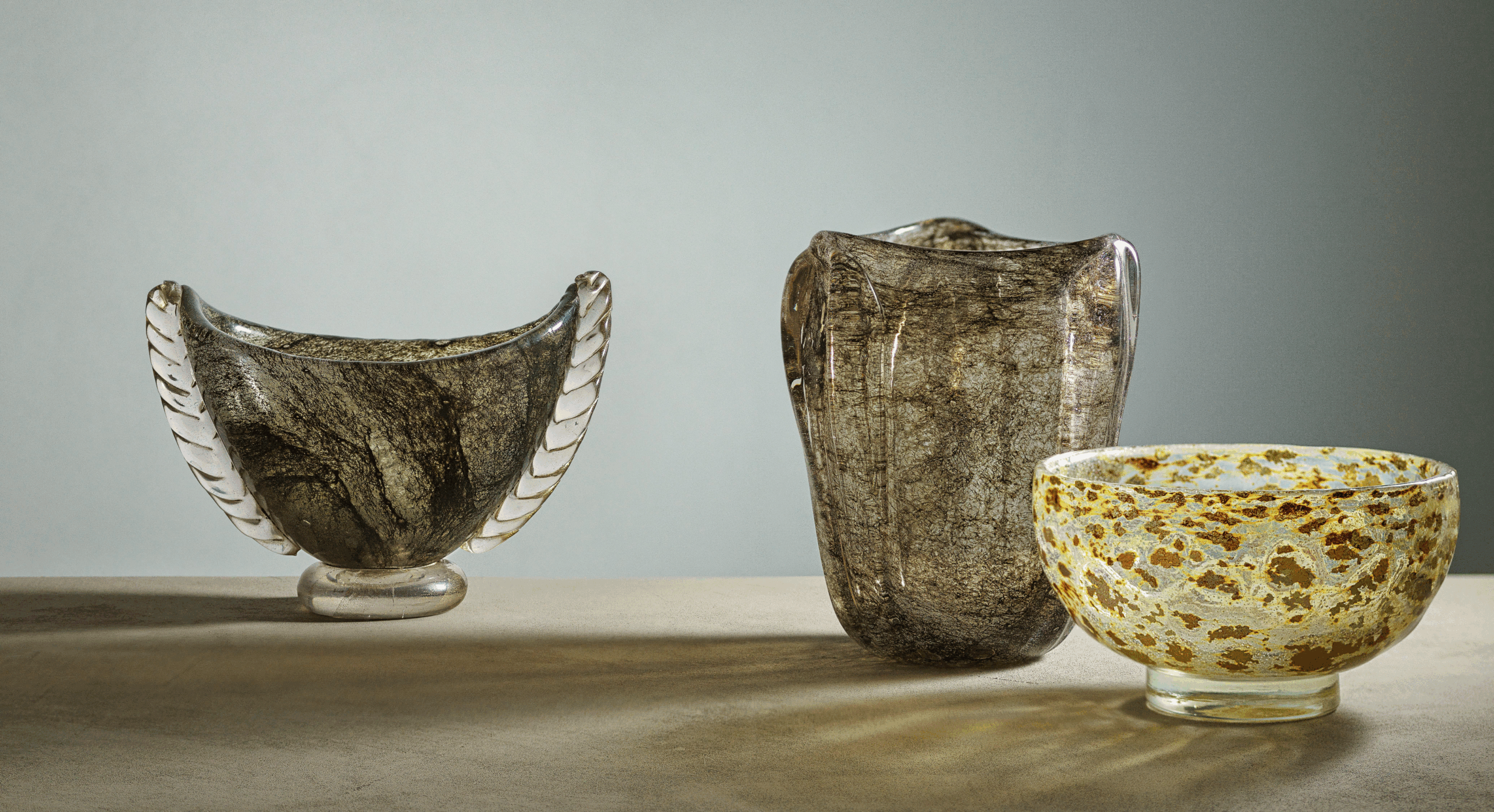
In line with the second exhibition chapter, situated at LE STANZE DEL VETRO on the evolution of Murano’s activity and production at the Venice Biennale in the decade 1932-1942, the Glass Study Center is organizing its usual annual conference. It focus on themes and dynamics during the period in question, thanks in part to the international openness that the lagoon events allowed for experimental progress in glass art in that juncture of time.

In fact, 1932 represented a sort of significant watershed, considering that from that year onwards, for the first time, the International Institution decided to dedicate an autonomous section to Murano glass, giving it a designated space and considerable visibility.

The protagonist of this conceptual and programmatic shift was the then Secretary General Antonio Maraini, who involved architect Brenno Del Giudice in designing and building the Venice Pavilion. An architectural idea that was as coherent as it was functional in terms of promoting the decorative arts, thus also expanding the gardens of the Biennale itself.

This was a forward-looking operation that immediately launched a period of remarkable creativity and experimental momentum, which was unfortunately brought to an abrupt halt in 1942 by the Second World War.

It is precisely thanks to this extraordinary artistic fervor of national and international scope, aided by the synergies between prestigious glassworks and artists and designers of great depth—such as Ercole Barovier, Pietro Chiesa, Flavio Poli, Carlo Scarpa, and Vittorio Zecchin—that experts in glass and decorative arts will explore the context and taste of the design evolution. It was developed both in contemporary, in France, and through other displaying venues, including the Triennale di Milano.

A continuously growing ferment that will mark a decisive leap in quality in the glass art sector, above all thanks to the numerous opportunities for exchange and the expansion of the global collectors’ market, which is, now and then, always open to revisited technical solutions and innovative methods.

The conference will be preceded on Wednesday 5 November by the presentation of the Quaderni del Vetro series, which in this second edition pays tribute to international artists Cristiano Bianchin, Silvano Rubino and Giorgio Vigna. On this occasion, their respective digital archives will be published on the Fondazione Giorgio Cini website, putting approximately 3,500 items online, including photographs, drawings and sketches, accompanied by the relevant catalogue entries.

PROGRAMME

[accordion][/accordion]
[accordion_entry title=”5 novembre| h 12:00″]

Presentazione collana Quaderni del Vetro
[/accordion_entry]
[accordion][/accordion]

[accordion][/accordion]
[accordion_entry title=”6 novembre  | h. 9.30 – 13.00″]

Saluti istituzionali
Luca Massimo Barbero
Direttore dell’Istituto di Storia dell’Arte, Fondazione Giorgio Cini

Paola Cordera
Verre-en-valise: un repertorio per la modernità


Debora Rossi e Lia Durante

Un racconto, attraverso i documenti dell’ASAC, sulla presenza delle arti decorative alla Biennale


Giovanni Bianchi

Il mosaico a Venezia nella prima metà del Novecento, tra produzione e promozione

[/accordion_entry]
[accordion][/accordion]

[accordion][/accordion]
[accordion_entry title=”6 novembre | h. 14.30 – 16.30″]


Carla Sonego

Ricerche e sperimentazioni alla Biennale (1932-1942): Carlo Scarpa ed Ercole Barovier


Rosa Chiesa

Il vetro e Milano


Jean-Luc Olivié

What happened to glass in France between 1932 and 1942?


Lucia Mannini

Dai vetri alle lacche: Pietro Chiesa e le presenze straniere nel Padiglione Venezia alle Biennali 1932-1936

[/accordion_entry]
[accordion][/accordion]


Transcendence in the Small Gestures of Life

The symposium Transcendence in the Small Gestures of Life: Attention and Care for Nature and Humans in Religious Traditions explores how spiritual techniques awaken care and attentiveness towards the natural world, fellow human beings, and creation itself.
Experiences such as Sufi sama ceremonies, the use of fragrance in funeral rites, and the tending of plants and animals serve as examples of how spirituality can be expressed through small, meaningful gestures that foster a connection to transcendence. The symposium also investigates how these spiritual approaches inform the study of religion and address contemporary global challenges, particularly the ecological crisis.

The conference is organized jointly by the Centre for Comparative Studies of Civilisations and Spiritualities (Fondazione Giorgio Cini) the Muslim Worlds Network of the European Association of Social Anthropologists (EASA) and the Centro di Ricerche Etnografiche e di Antropologia applicata “Francesca Cappelletto” (CREAa) of the Department of Human Sciences of the University of Verona.

programme

[accordion][/accordion]
[accordion_entry title=”Tuesday, 2 October”]

9:30 – 10:00 | Welcome Greetings
  • Francesco Piraino (Fondazione Giorgio Cini)
  • Lili Di Puppo (FAU Erlangen-Nürnberg / KU Leuven)
  • Fabio Vicini (University of Verona)
10:00 – 11:00 | Panel: Disarticulating Transcendence in the Everyday

Chair: Francesco Piraino (Fondazione Giorgio Cini)

11:00 – 11:30 | Coffee Break
11:30 – 12:30 | Panel: Everyday Care and the Sacred

Chair: Fabio Vicini (University of Verona)

14:30 – 15:30 | Panel: Experiencing Subtle Forms of Transcendence

Chair: Lili Di Puppo (FAU Erlangen-Nürnberg / KU Leuven)

[/accordion_entry]
[accordion][/accordion]
[accordion][/accordion]
[accordion_entry title=”Friday, 3 October”]

10:00 – 11:00 | Panel: Nature, Body, and Transcendence

Chair: Lili Di Puppo (FAU Erlangen-Nürnberg / KU Leuven)

11:00 – 11:30 | Coffee Break
11:30 – 12:30 | Panel: Transcendence and Beauty in Pilgrimage

Chair: Fabio Vicini (University of Verona)

14:30 – 16:00 | Plenary

[/accordion_entry]
[accordion][/accordion]
The conference will be held in English.

‘Spanish’ Flu and the Great War: the block of artistic creativity

This study day is organised in collaboration with the Laboratorio Soldado de Nápoles, directed by Gabriele Frasca of the University of Salerno.
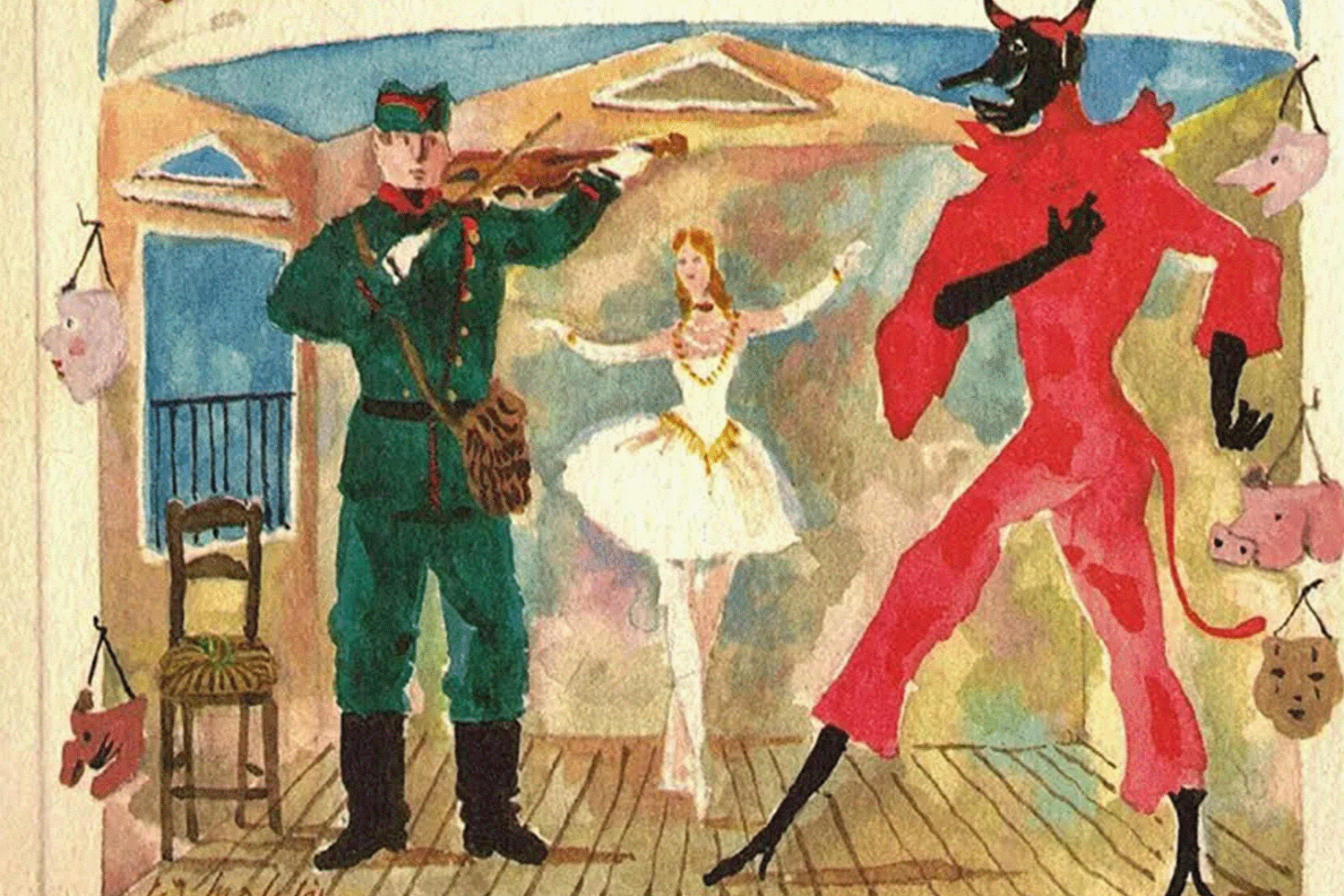
The group investigates the intertwining of the First World War and the pandemic as a determining factor in shaping the artistic and cultural climate of the 1920s. The papers offer a series of critical readings that range across various artistic and disciplinary fields: from the faces of the disease in Egon Schiele to the figures of contagion and contamination in T.S. Eliot’s The Waste Land, to the interweaving of cosmopolitanism and musical nationalism in Igor Stravinsky’s Histoire du soldat, to the impact of the pandemic on the devising of Gian Francesco Malipiero’s Sette canzoni.

Le Concert des Amateurs Joseph Bologne Chevalier de St. George, Concertos and Symphonies, 1770-1780

In conjunction with the Early Music seminar, the Tapestry Room will host a special concert featuring young professional and semi-professional violinists specialising in Baroque repertoire.

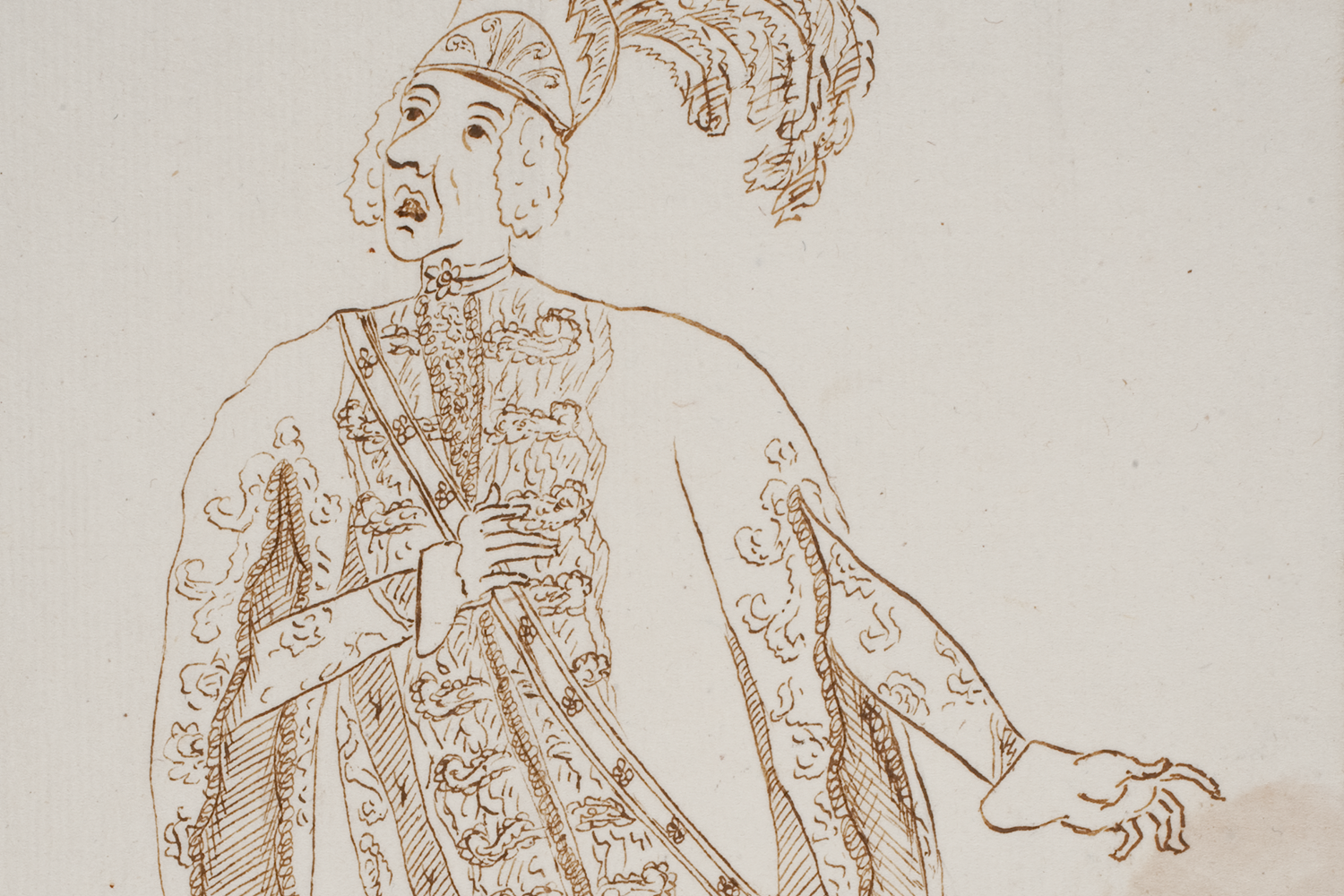
The seminar is part of an important thematic exhibition dedicated to Giacomo Casanova, through the research and study of scores and other musical material that evokes the possible common Parisian acquaintances of Giacomo Casanova and Joseph Boulogne. Twenty years younger, Boulogne shared several biographical traits with the famous Venetian: a regular in other aristocratic circles, a legendary seducer, a violinist, and later also a political agent and Freemason. Boulogne’s work will in fact be put into perspective with his political activities.

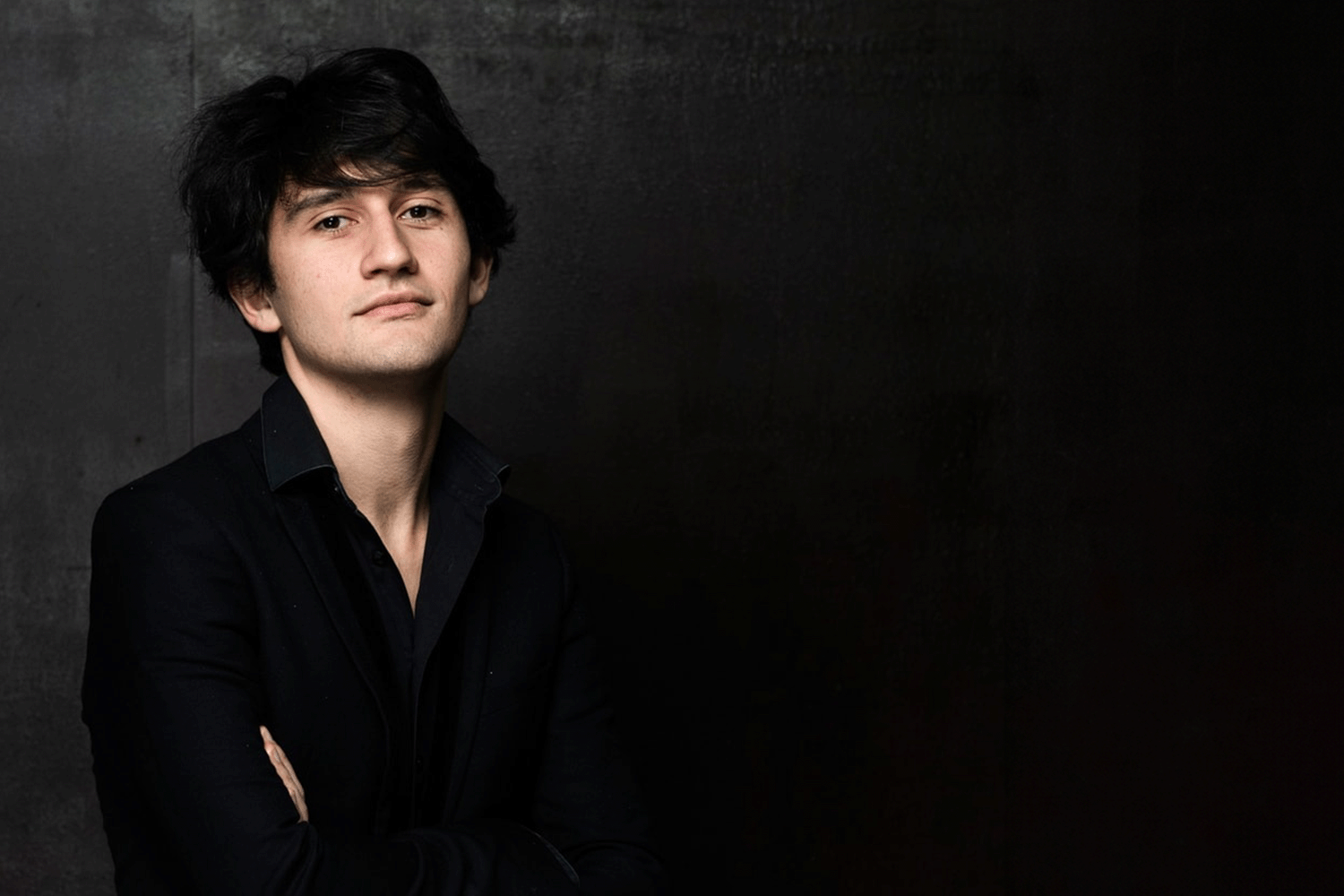
The main teacher will be Théotime Langlois de Swarte, a young star of European and world Baroque violin playing; he will be assisted in the symphony repertoire by the Director of Seminars, Pedro Memelsdorff.

Le Concert des Amateurs
Joseph Bologne Chevalier de St. George, Concertos and Symphonies, 1770-1780

Scholarship performers:
Akdzha Dzhanykova, violin
Laurène Patard-Moreau, violin
Simone Pirri, violin

Accompanists:
Hyngun Cho Choi, cello
Nicola Lamon, organ and harpsichord
Géraldine Roux, viola

Conductors: Théotime Langlois de Swarte and Pedro Memelsdorff

Event organised with the support of:
Regione del Veneto; Concordance Foundations; Irma Merk and L.+ Th. La Roche

Joseph Bologne, Chevalier de St. Georges, born in Guadeloupe in 1745 to settler Georges Bologne and enslaved African descendant Nanon, lived in France from 1753, where he developed a dual career as a martial arts expert – especially in fencing – and as a composer and violinist. Possibly a pupil of François-Joseph Gossec and Antonio Lolli, he first became a member and then conductor of Gossec’s Concert des Amateurs orchestra – later one of the most renowned in Europe – making his debut in 1772 with his own violin concertos. From then on, he composed an important body of instrumental music, including two collections of string quartets (among the first composed in Paris), a dozen extraordinary violin concertos and as many symphonies concertantes, as well as at least six operas and scattered arias. In fact, in 1776 he was proposed as director of the Paris Opera, but his appointment was blocked by some of the ladies of the management, who asked Marie Antoinette not to “degrade their honour by placing them under the orders of a mulatto” – a scandal that convinced Louis XVI to nationalise the Opera. This edition of the seminars focuses on Bologne’s instrumental music, in particular his violin concertos and some of his symphonies.

This will also be the repertoire for the final concert by the scholarship holders selected through an international competition.


Titus Manlius between justice and tyranny: power in Vivaldi’s opera

The September meeting of the Accademia Vivaldi, led by Gemma Bertagnolli, is dedicated to the themes of power, justice, and the legitimacy of command, analyzing the figures of sovereigns—just rulers vs. tyrants—in Vivaldi’s works (in particular Tito Manlio, but also Teuzzone, Bajazet, Ottone, Giustino, Motezuma, etc.), in order to highlight the different styles that characterize their exercise of authority. Attention is also focused on the moral responsibilities of the ruler, the relationship between power and subjects, and the emergence of a new awareness of individual rights, including those of women, a theme that began to gain ground during this period.

The meeting will include an in-depth conference, organized in collaboration with the research group La drammaturgia musicale a Venezia (1678-1792) (Musical Dramaturgy in Venice (1678-1792)) of the Ugo and Olga Levi Foundation, entitled I limiti del potere nel XVIII secolo. The duties of rulers and the rights of subjects in Vivaldi’s works. Held by Giada Viviani, it will take place on Thursday, September 4, at 6:30 p.m. at Palazzo Giustinian-Lolin, headquarters of the Levi Foundation.

The Academy will conclude with a concert-narrative on Friday, September 5, at 6:00 p.m. in San Giorgio, in which the students of the course will present arias from Vivaldi’s opera Tito Manlio, RV 778, performed in Rome during the 1720 carnival at the Antico Teatro della Pace.
The figure of the Consul of Rome, Titus, finds himself at a crossroads: should he apply the law or listen to his heart? A tragic-heroic dilemma, which encounters an inner conflict, unfolds in Republican Rome in the 4th century BC. Titus’ son, Manlius, with the fire of youth animating his valiant warrior spirit, disregards his father’s orders and disobeys the Law of the Senate. His guilt therefore deserves death, and the fatal sentence must be handed down without hesitation by Titus, who, before being a father, is Consul of the Romans and must apply the Law to which even the leader is subject. Justice must be done, and it will be fate, on which the destinies of all human beings, subjects and powerful alike, depend, that will decide.

With the end of the 17th century, the era of great plague epidemics came to an end, and the period in which Vivaldi lived and worked did not see Europe as the scene of real pandemics; consequently, his artistic legacy does not address this issue. Instead, there was lively debate on the different possible forms of state organization (monarchy vs. oligarchic republic) and on the limits to the legitimacy of power, which were indispensable precursors to the subsequent development of European thinking on democracy. In the first half of the 18th century, musical drama dealt mainly with the problem of the absolute sovereign, exploring the distinction between the ‘enlightened’ exercise of this function and its degeneration into tyranny. central to this is the reflection on the responsibilities of rulers towards their subjects and the rights of the latter, with regard to which, in these decades, a new awareness began to develop, also reflected in the incipient attention to women’s issues.

[accordion][/accordion]
[accordion_entry title=”Admission”]
Conference and concert both free admission subject to availability.
[/accordion_entry]
[accordion][/accordion]


Casanova and Europe. An Opera in Several Acts

On the occasion of the 300th anniversary of the birth of Giacomo Casanova, an emblematic figure of eighteenth-century Europe, the Fondazione Giorgio Cini is honouring the celebrated Venetian with an extensive cultural and exhibition project. The initiative is structured in two chapters: the first, Casanova and Venice, will be held at Palazzo Cini at San Vio from 27 September 2025 to 2 March 2026; the second, on the Island of San Giorgio Maggiore, entitled Casanova and Europe. An Opera in Several Acts, will run from 17 October 2025 to 2 March 2026.

Venice, the city from which Casanova, like many others, set off to travel through a Europe in transformation, was one of the continent’s cultural hubs and, during that turbulent period, was experiencing the final stages of the Republic. The challenge undertaken by the Foundation has been to convey the many faces of Casanova and the countless facets of his time.

Casanova and Europe. An Opera in Several Acts has been developed in collaboration with La Fenice Opera House Foundation for the design and realisation of the installations. Staged on the Island of San Giorgio Maggiore, the exhibition offers an extraordinary insight into the wealth of materials preserved and studied by the Institutes of the Fondazione Giorgio Cini, narrated through the figure and era of Casanova.

The project captures the vibrancy of the European cultural landscape, the intensity of intellectual exchange, and the richness of perspectives in a time of great transformation: from the decline of the Ancien Régime to the Napoleonic period, and the dawn of the industrial and liberal revolutions of the nineteenth century.

[accordion][/accordion]
[accordion_entry title=”Opening hours and admission”]
Open daily from 10 a.m. to 6 p.m. (last admission at 5:15 p.m.). Closed on Wednesdays. Free admission.

SPECIAL CLOSURES

The exhibition will be closed on 25 and 26 December 2025 and on 1 January 2026.
[/accordion_entry]
[accordion][/accordion]

Best Secret Place

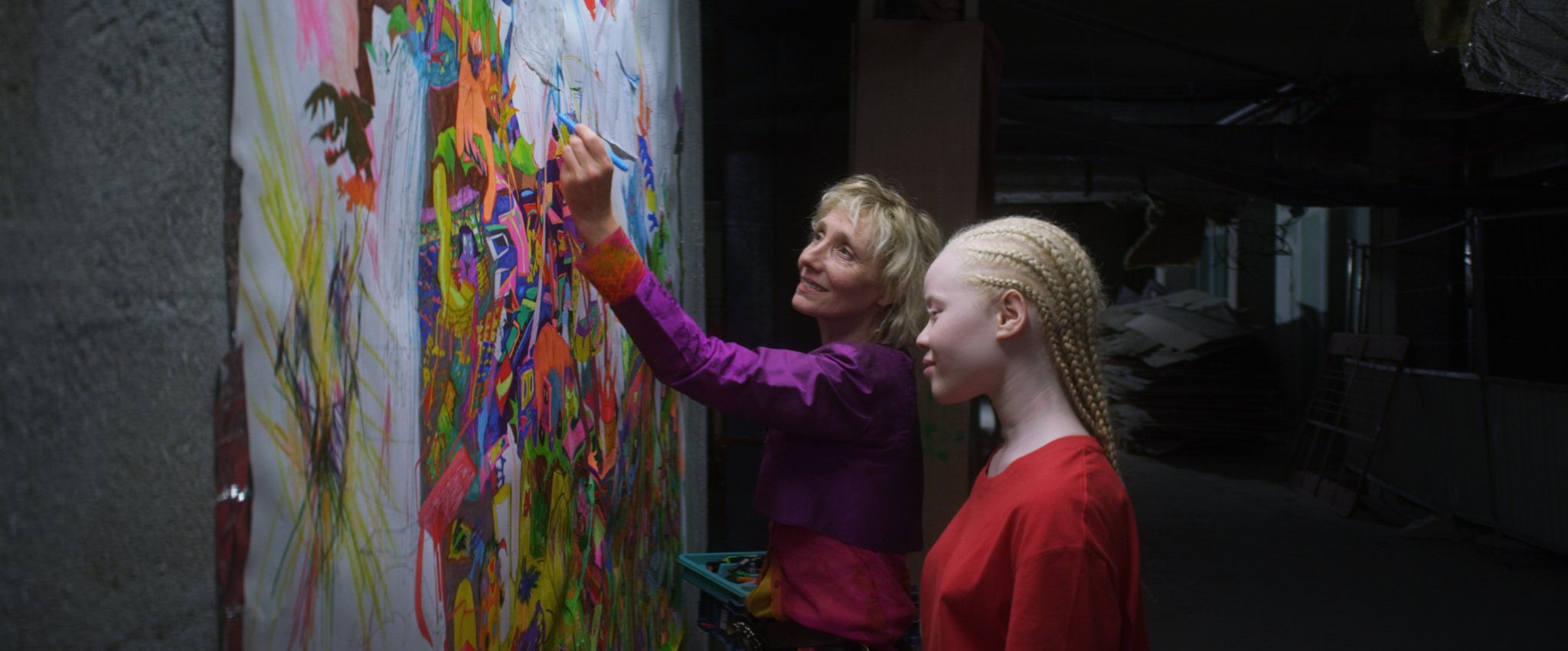
On the occasion of the 82nd Venice International Film Festival, the Fondation Cartier pour l’art comtemporain is screening the film “Best Secret Place” by filmmakers Caroline Poggi and Jonathan Vinel every day at 6.00pm from 31 August to 6 September, in the exhibition spaces at Fondazione Giorgio Cini. The film has been commissioned by the Fondation Cartier and was shot in the building site of the Fondation Cartier’s new spaces at 2, Place du Palais Royal in Paris.

A synopsis of the film

Every night, characters wake up in a secret place. They don’t know where they are or how they got there. In search for clues on the walls, in the graffiti, they populate the space with their fears, desires and dreams. In this unusual dream-like decor, the melancholy gradually turns into light. Caroline Poggi and Jonathan Vinel have been selected to participate in the 2025 Venice International Film Festival’s Venice Immersive section.

[accordion][/accordion]
[accordion_entry title=”Caroline Poggi & Jonathan Vinel”]
Caroline Poggi was born in 1990 in Ajaccio. She studied film editing at the University of Corsica and later graduated from Paris 8 University. Jonathan Vinel was born in 1988 in Toulouse and studied editing at La FÉMIS. They began as solo directors before collaborating on Tant qu’il nous reste des fusils à pompes, which won the Golden Bear for Best Short Film at the 2014 Berlinale. Their first feature film, Jessica Forever (2018), premiered at the Toronto International Film Festival and later screened at Berlinale 2019. Their latest film Eat the Night was shown at the2024 Cannes Directors’ Fortnight. Their film La fille qui explose is part of the Venice Immersive Extended Reality (XR) section of the 82nd Venice International Film Festival.
[/accordion_entry]
[accordion][/accordion]
[accordion][/accordion]
[accordion_entry title=”Time of Screening and Admission”]
Daily at 6pm, from 31 August to 6 September.
Admission to the exhibition is free, and no booking is required to attend the screenings.
[/accordion_entry]
[accordion][/accordion]

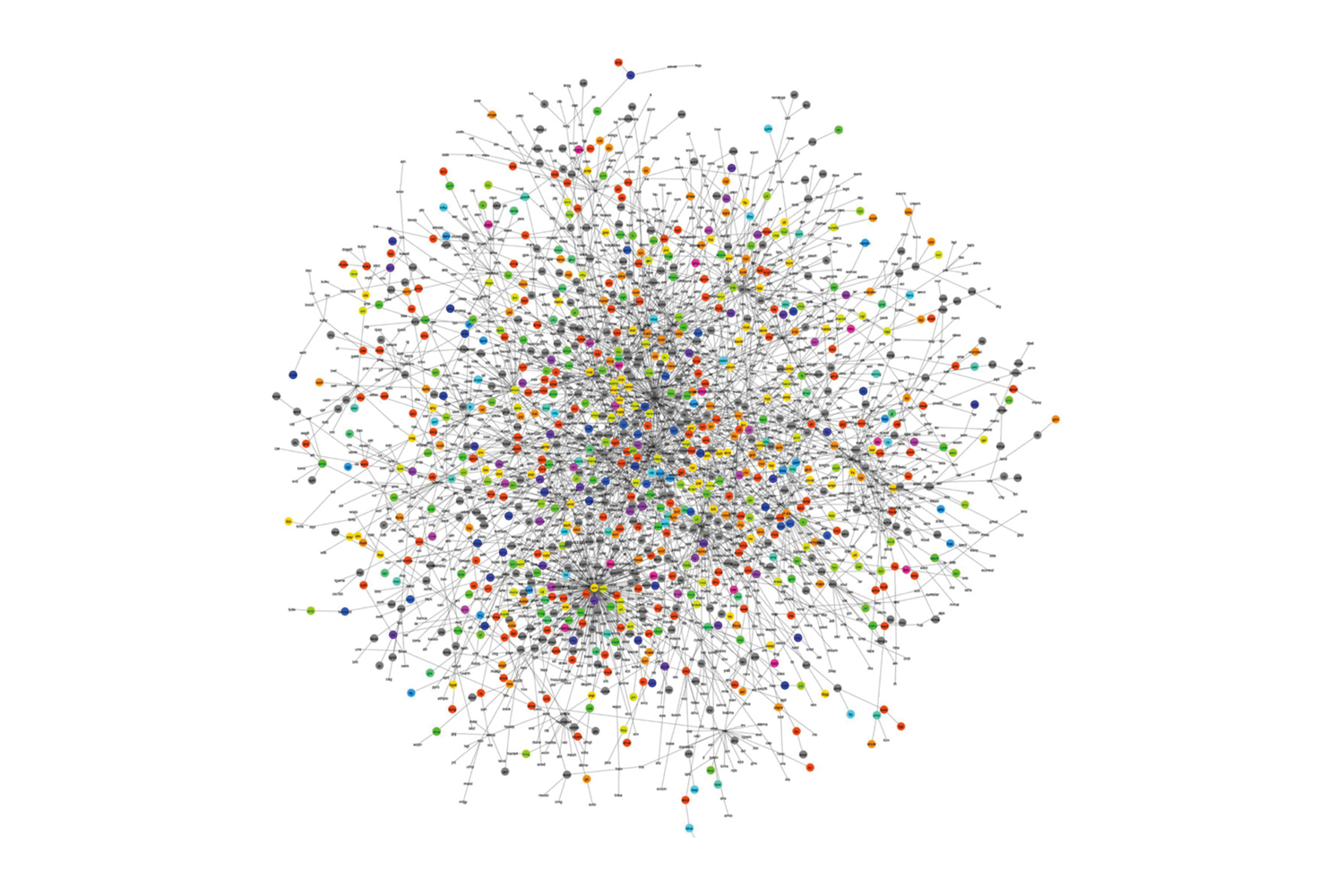
Complex Networks at Statphys29

STATPHYS29 the 29th IUPAP Conference on Statistical Physics, will be held in Florence, Italy (14-17 July 2024). It brings together scientists from around the world to discuss complex networks, active matter, quantum systems and interdisciplinary applications. A key event to discover the frontiers of the discipline, with contributions from physics, biology and data science. Organised by INFN, CNR and the University of Florence, it showcases Italian excellence.

The satellite workshop on Complex Networks will be held at the Giorgio Cini Foundation (Venice, 21-23 July 2025), in connection with STATPHYS29. Focus on networks applied to cultural heritage, socio-technological systems and data-driven models. A bridge between statistical physics, digital humanities and social sciences, with talks by scientists from all over the world.

Activities carried out within the framework of the Project CHANGES – Cultural Heritage Active Innovation for Sustainable Society, project code PE000020 – CUP H53C22000850006, National Recovery and Resilience Plan (NRP).

Casanova before Casanova

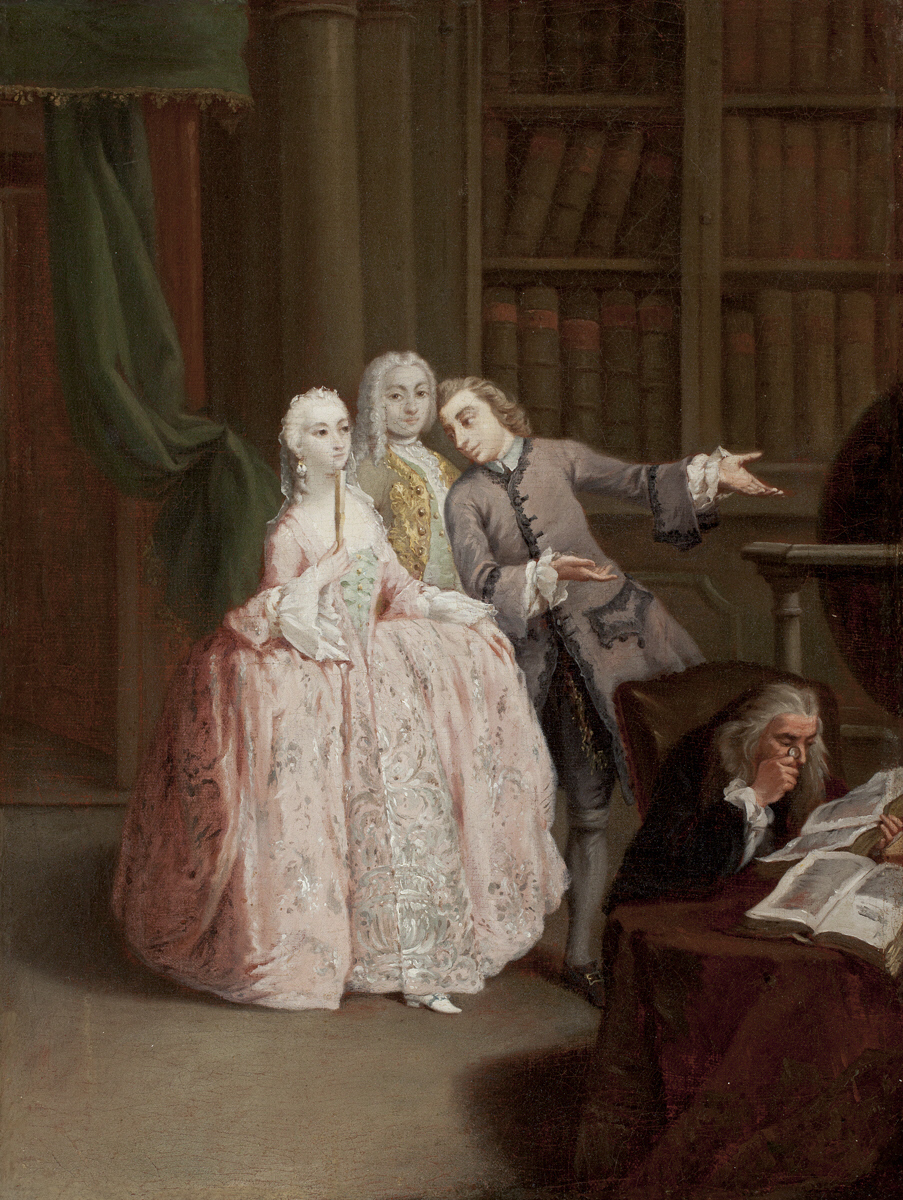
The round table Casanova before Casanova — Cultural construction of the libertine myth, organised in collaboration with the research group La drammaturgia musicale a Venezia (1678–1792) of the Fondazione Ugo e Olga Levi, coordinated by Giada Viviani, aims to explore the contribution of 18th-century dramma per musica to the cultural construction of the libertine myth, with particular attention to themes developed in plots such as L’inganno trionfante in amore.

The figure of the libertine — discussed in particular within 17th-century Venetian academies, yet popular until the end of the 18th century — embodied philosophical and politico-moral issues such as the legitimacy of freedom of thought, even in opposition to Church dogma, the questioning of civil and religious norms, and the subversion of the rigid hierarchical relations upon which the social structure of the Ancien Régime was based. In this context, the erotic or ambiguous situations — particularly regarding gender identity and representation — frequently depicted in Venetian opera of the period, including various works by Vivaldi, should also be understood. It was not sensuality per se that formed the central subject of such representations, but rather its function as a subversive element — capable, as such, of opening up new horizons of possibility in philosophical, moral, and political terms.


Daria Perocco
Ca’ Foscari University of Venice
Se Casanova le avesse conosciute… Alla ricerca delle prime libertine

Nicola Badolato
University of Bologna
Suggestioni libertine nei libretti veneziani di metà Seicento

Lorenzo Mattei
University of Bari Aldo Moro
Altri Don Giovanni. Sulla figura del libertino nell’opera comica del secondo Settecento

Gerardo Tocchini
Ca’ Foscari University of Venice
Romantici e reazionari di età Secondo Impero: la fabbricazione del mito del Settecento libertino

Moderator

Giada Viviani
University of Genoa and Fondazione Ugo e Olga Levi


Discussants

Cesare Fertonani
University of Milan

Olivier Fourés
Madrid Superior Conservatory