Isola di San Giorgio Maggiore, Venezia Archives - Page 3 of 8 - Fondazione Giorgio Cini

Bringing Venice into Space

ARCHiVe Online Academy presents an intensive five-day workshop (30 hours), held by Matteo Tora Cellini of the CamerAnebbia collective. Bringing Venice into Space offers a practical and theoretical exploration of the creative use of advanced technologies in interactive and immersive installations. Participants will explore the design of dynamic environments and innovative narratives, with particular attention to transforming art and cultural content into accessible and engaging experiences.

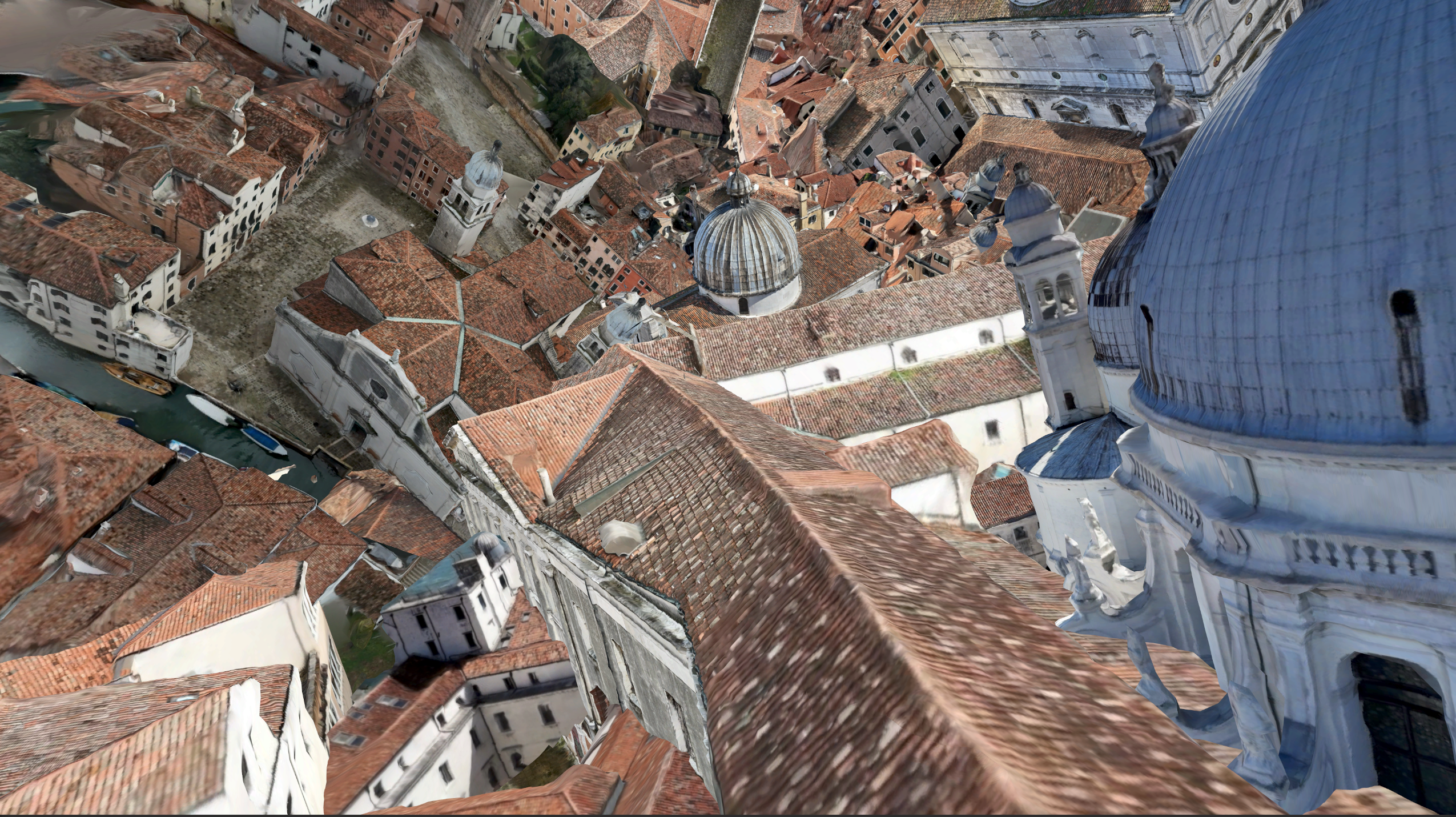
The workshop will focus on part of the digitised cultural heritage of Fondazione Giorgio Cini and will include a photogrammetry session within the Foundation’s spaces and architecture, conceived as a practice of observation, measurement, and critical reading of space. The data collected will become living material for a design laboratory aimed at redesigning and reimagining architectures, transforming real elements into new narrative devices.
The objective of the workshop is to develop creative strategies to enhance historic and cultural spaces, experimenting with languages that combine technology, perception, and the memory of place.

The workshop will be held in Italian and is limited to a maximum of 15 participants. Attendance is free of charge upon registration, which must be completed by 11:59 pm (CET) on 13 January 2026.

Theatre, Democracy and Pandemics

The meeting aims to investigate the role of theatre as the cultural legacy of democracy, starting with examples of contemporary staging of dramat-ic texts that focus on the great pandemics and epidemics of history. A theoretical approach to the theme will be followed by the testimonies of scholars and artists, looking at the most important contemporary plays dedicated to these themes, including Bertolt Brecht’s Life of Galileo, staged by Giorgio Strehler in the 1960s, and The Plague by Albert Camus, staged by Claudio Longhi for the Teatro Stabile in Turin and by Serena Sinigaglia for the Stabile in Bolzano in the 2000s.

Program

[accordion][/accordion]
[accordion_entry title=”9:30″]

Maria Ida Biggi
Introduction

Piermario Vescovo
La peste, il teatro

Oliviero Ponte di Pino
A teatro oltre la peste

Fabrizio Panozzo
Popolo che subisce / popolo che decide

COFFEE BREAK

Matteo Paoletti
Un inaspettato salvavita? Legislazione d’emergenza e finanziamento pubblico

Alessandra Carbonaro
Lavoro e previdenza nello spettacolo dal vivo: quali scenari nel contesto post pandemico

Mimma Gallina
Pandemia e sistema teatrale: un’occasione mancata?

LUNCH BREAK

[/accordion_entry]
[accordion][/accordion]
[accordion][/accordion]
[accordion_entry title=”14:30″]

Paola Bigatto
Didattica teatrale e pandemia: “l’eredità della corona”

Serena Sinigaglia
“La peste” di Camus, una specie di speranza
Projections of some framents from the play produced by da TSV – Teatro Stabile del Veneto, Teatro Stabile di Bolzano e Centro d’Arte Contemporanea Teatro Carcano, 2021/2022 season

COFFEE BREAK

[/accordion_entry]

[accordion][/accordion]

[accordion][/accordion]
[accordion_entry title=”Staged reading 16:30 “]

Paola Bigatto e Massimiliano Speziani
Parole per la peste. Letture in tempo di pandemia

[/accordion_entry]
[accordion][/accordion]


Intersections Between Music and Visual Arts in Europe: 1950-2000

The Institute for Music celebrates its fortieth anniversary by focusing on the relationship between music and other arts, which emerges conspicuously and significantly from the sources preserved in its archives and has characterised the salient phases of its scientific activity. The conference extends the European horizon of a project dedicated to the Italian context, coordinated by Gianmario Borio and Angela Sanna in 2023. Bringing together musicologists and art historians from across Europe, the conference foregrounds original research on collaborative practices, aesthetic convergences, and the circulation of ideas among protagonists engaged in intermedia experimentation. Contributions examine both shared concerns and national particularities, offering nuanced perspectives on the historical development of cross-disciplinary practices. In addition to archival and historiographic analyses, the programme includes theoretical reflections on the aesthetic and
conceptual implications of intermedia projects. The discourse reveals a complex landscape of analogies, appropriations, hybridisations, and synergies; it shows a gradual dissolution of rigid genre boundaries, anticipating the integrative tendencies of the digital age.

[accordion][/accordion]
[accordion_entry title=”3 dicembre”]

9:30 — 13:00
Greetings and Introduction by Gianmario Borio and Charlotte De Mille

Jean-Marc Chouvel
Sorbonne University, Paris
The Eye Listens, But What Does the Ear See? Reflections on the Modalities of a Plural Art

Marina Hervás
Granada University
Beyond the Regime, Before the Canon: Music and Visual Arts in Spain

Iwona Lindstedt
Warsaw University
Zygmunt Krauze’s Unistic Music: Three Experiments in Arts Intersection 1968–1969

15 — 18
Gianfranco Vinay
Paris 8 University, Saint Denis
Boulez’s Mirrors: Compositional Correspondences Between Music and Painting

Jan Butler
Oxford Brookes University
The Roots of the Audiovisual in Popular Music: Psychedelia and the UK in the 1960s

Gianmario Borio
Pavia University / Fondazione Giorgio Cini
The Convergence of Painting and Music: Theses and Philosophical Implications

18:30
Concert mdi ensemble

[/accordion_entry]
[accordion][/accordion]
[accordion][/accordion]
[accordion_entry title=”4 dicembre”]

9:30 — 12:30
Daniela Tortora
Santa Cecila Conservatory, Rome
After Collage, Marcatrè, and Grammatica: the Experience of Achille Perilli’s Gruppo Altro, from Kombinat Joey – 1970 to Dies Irae – 1978

Manon Raoult
The Courtauld Institute of Art, London
‘Is the Painter a Musician?’ The Sonic Foundations of Jean Dubuffet’s Anti-Cultural, Materialist, and Utopian Brut Aesthetic

Jörn Peter Hiekel
Hochschule für Musik, Dresden
Institutional Activities at the Intersection of Music and Visual Arts: Observations on Impulses and Constellations in West Germany

15 — 18
Johannes Holtmon
Kode Art Museums and Composer Homes, Bergen
Harald Sæverud: Music and Architecture, Modernity and Tradition

Michele Leggieri
Pavia University
Aldo Clementi Between Sign and Sound

Charlotte De Mille
The Courtauld Institute of Art, London
Towards a ‘Philosophy for Painting’: Musico-Visual Intersections in Post-War Britain


[/accordion_entry]

[accordion][/accordion]
Libertinism and Spirituality between Desire and Rebellion

Commonly, the term ‘libertinism’ is used with the meaning of licentious-ness in relation to unrestrained and lascivious moral or social behaviour. It actually has a long philosophical history with roots in antiquity, in which sensuality is often only one aspect. The various forms of libertinism when placed in contrast with religious dogmatism and more moderate forms of philosophical reflection – spread through clandestine channels in which we frequently come across intersections with alternative and eso-teric forms of spirituality. Special attention is devoted to Giacomo Casanova, whose intellectual and sensual libertinism was not bereft of interest in the esoteric dimension.

The conference is organized jointly by the Centre for Comparative Studies of Civilisations and Spiritualities at Fondazione Giorgio Cini, the Center for the History of Hermetic Philosophy and Related Currents (HHP) at the University of Amsterdam, and the Center for the Study of World Religions (CSWR) at Harvard Divinity School.
programmE

[accordion][/accordion]
[accordion_entry title=”16 December”]

9:30 – 10:00        Welcome greetings

  • Francesco Piraino (Fondazione Cini / Ca’ Foscari)
  • Charles Marshall Stang (CSWR – Harvard Divinity School)
  • Marco Pasi (HHP – University of Amsterdam)


10:00 – 11:00        Greek and Early Christian Period

  • Matthew J. Dillon (Center for Study of World Religions at Harvard Divinity School), “Libertine Gnosticism and Grant Morrison’s The Invisibles
  • Charles Marshall Stang (Center for Study of World Religions at Harvard Divinity School), “Monastic and Mystical Libertinism: The Anxiety around Apatheia in the Syriac Christian Tradition”


11:00 – 11:30        Coffee break


11:30 – 12:30        Middle Ages

  • Denis Renevey (University of Lausanne), “Richard Rolle (c.1300–49), ermite et libertin avant l’heure: Religious Rebellion and Sensorial Mysticism in North Yorkshire”
  • Gerard Wiegers (University of Amsterdam) “Iberian Converts and Forced Migrants of Jewish and Muslim Descent: Freethought, Atheism, and Libertinism”


14:00 – 15:30        Reinassance

  • Maria Koutsouris (Boston University), “Platonic Libertinism: Esoteric and Erotic Apotheosis in Marsilio Ficino and Aleister Crowley”
  • Adrien Mangili (FNS / University of Toulouse Jean Jaurès) “Mages and Libertines from Pomponazzi to Gaffarel”
  • Federico Barbierato (University of Verona), “Ways of Believing and Unbelieving: Seventeenth-Century Libertinism and the Venetian Experience”

[/accordion_entry]
[accordion][/accordion]
[accordion][/accordion]
[accordion_entry title=”17 December”]

10:00 – 11:00      Judaism

  • Jonathan Cahana-Blum (Hebrew University of Jerusalem), “ ‘They that Prepare the Ground May Have to Wade through the Marshes of Sin’: Susan and Jacob Taubes’s Jewish Gnostic Cult in 1950’s New York and Jerusalem”
  • Elliot R. Wolfson (New York University) “Mystical Nihilism and the Philosophical Skepticism of Faith”


11:00 – 11:30        Coffee break


11:30 – 12:30        “The East”

  • Mark Sedgwick (Aarhus University), “Sufi Libertinism”
  • Paride Stortini(Ghent University), “Desire to Know Desire: Religion, Repression, and Sexuality in the Interwar Japanese Movement ‘Erotic Grotesque Nonsense’ ”


14:00 – 15:30        17th century

  • Elena Grazioli (University of Milan), “Casanova: Libertinism and the Shaping of Autobiographical Identity”
  • Carlo Bosi (Mozarteum University, Salzburg), “Libertinism, Early Venetian Opera and the Power of Eros”
  • Lieven De Maeyer (Ruusbroec Institute at Antwerp University), “Freedom from Sin, or Freedom to Sin? Libertinism and/as Quietism in Late 17th Century France”

[/accordion_entry]

[accordion][/accordion]
[accordion][/accordion]
[accordion_entry title=”18 December”]

10:00 – 11:30      Contemporary

  • Dell Rose (Swedenborg Library Chicago / University of Amsterdam), “The Sacredness of Sin: D’Annunzio amongst the Philosophers of Filth”
  • Piero Latino (CELLF – Sorbonne Université / University of Pisa) “From Couliano’s ‘Erotic Pneumophantasmology’ to Corbin’s ‘Metaphysic of Love’: The Spiritual Nature of Eros between Libertinism and the Religion of Love in Literature”
  • Christina Oakley Harrington (Independent historian of religion) “The Feminist Libertinism of Early Wicca”


11:30 – 12:00        Coffee break


12:00 – 13:00        Contemporary

  • Matouš Mokrý (Masaryk University) “Literary Libertinism in the ‘Deofel Quintet’ of the Order of Nine Angles and Antinomian Esoteric Initiation”
  • Gordan Djurdjevic (Independent scholar) “ ‘The Most Sublimely Austere Ethical Precept’: Aleister Crowley’s Doctrine of ‘Do What Thou Wilt’ and Its Complicated Relationship with Libertinism”


14:30 – 15:30       Plenary

[/accordion_entry]
[accordion][/accordion]
The conference will be held in English.

Giacomo Casanova and the theatre

The study day intends to investigate the theatre scene at the time of Casano va and delve into the echoes of Casanova in twentieth-century Italian thea-tre production, in an attempt to understand by whom and how the myth of Casanova is recounted on Italian stages in contemporary times. Organised in collaboration with the Ca’ Foscari University of Venice and the Sorbonne in Paris, scholars from leading European universities will take part.

PROGRAMME

[accordion][/accordion]
[accordion_entry title=”19 November| 9:30am]

9:30

[accordion][/accordion]

[accordion][/accordion]
[accordion_entry title=”19 November| 9:30am”]

Maria Ida Biggi
Fondazione Giorgio Cini
Università Ca’ Foscari di Venezia
Introduzione

Piermario Vescovo
Università Ca’ Foscari di Venezia
Il processo di rimozione del teatro nella vita di Casanova

Ilaria Crotti
Università Ca’ Foscari di Venezia
Le bautte dell’io. La scena del Mondo nella scrittura casanoviana.

Valeria Tavazzi
Università La Sapienza di Roma
Casanova fra romanzo e teatro

COFFEE BREAK

Andrea Fabiano
Sorbonne Université
Casanova e la parodia

Gerardo Guccini
Università degli Studi di Bologna
Goldoni, Casanova e il problema della monacazione forzata: paradigmi visivi e modelli testuali

PAUSA PRANZO

[/accordion_entry]
[accordion][/accordion]
[accordion][/accordion]
[accordion_entry title=”19 November| 2:30pm “]

Marzia Pieri
Università degli Studi di Siena
Casanova e Voltaire: a proposito di versi e di recitazione

Francesca Bisutti
Università Ca’ Foscari di Venezia
Come parlò Zoroastro a Giacomo Casanova? Traduzione e adattamento di un libretto d’opera

Gilberto Pizzamiglio
Università Ca’ Foscari di Venezia
Casanova “impresario” teatrale: Le Messager de Thalie

COFFEE BREAK

Emanuele De Luca
Université Côte d’Azur
Un teatro di fuochi d’artificio tra realtà scenica e immaginario casanoviano

Lorenzo Mattei
Università Aldo Moro di Bari
Casanova come personaggio nel teatro musicale

[/accordion_entry]
[accordion][/accordion]
 

Accademia Vivaldi

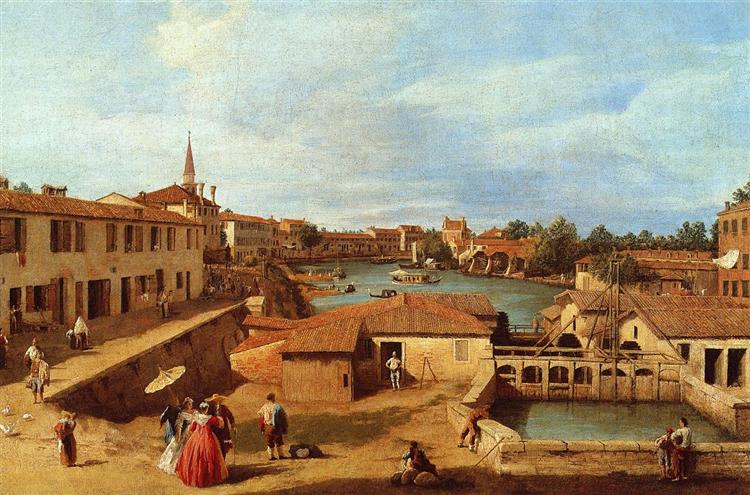
The Italian Institute Antonio Vivaldi, as part of the Vivaldi Academy, is organising a series of in-depth meetings on the performance practice of Antonio Vivaldi’s compositions, dedicated to young singers and instrumentalists. It is organising a conference entitled Il Brenta si fa teatro: the musical scene of the Serenissima on the mainland between the 17th and 18th centuries, held by Ilaria Contesotto, member of the research group “Musical dramaturgy in Venice (1678-1792)” of the Levi Foundation.
The lecture will illustrate theatrical life “in villa”, i.e. in theatres on the mainland, particularly in the Brenta Riviera area, a very complex system closely linked to Venetian theatrical life. The subject is virtually unknown, as it has been ignored by musicological research: the research on the subject and the scenario that has emerged are extremely interesting, also for the interpretation of Vivaldi’s works.

On Friday 28th November at 6 p.m., the students of the Vivaldi Academy will offer a concert to conclude the meeting, led by soprano Gemma Bertagnolli, in which vocal and instrumental pieces from the Red Priest’s catalogue will be performed, with particular reference to the songs portrayed in Zanetti’s caricatures on display in the exhibition at Palazzo Cini: Casanova in Venice.


Both events will take place on the Island of San Giorgio Maggiore and admission will be free.


Who really was Casanova?

Antonio Trampus, professor of Modern History at Ca’ Foscari University in Venice, and Alessandro Marzo Magno, renowned journalist and essayist, discuss who Casanova really was, between historical reality and fiction, culture and imagination, coordinated by Egidio Ivetic, director of the Institute for the History of Venice at the Fondazione Giorgio Cini.

The historians will attempt to take stock, considering the achievements of historiography and taking into account the evolution that the figure of Casanova has undergone in popular culture over the last two centuries. This dialogue comes almost at the end of the Casanova year and represents an opportunity to consider the celebrations at national and international level and to reflect on the future of a character who has contributed to consolidating the myth of Venice.

Casanova al Levante

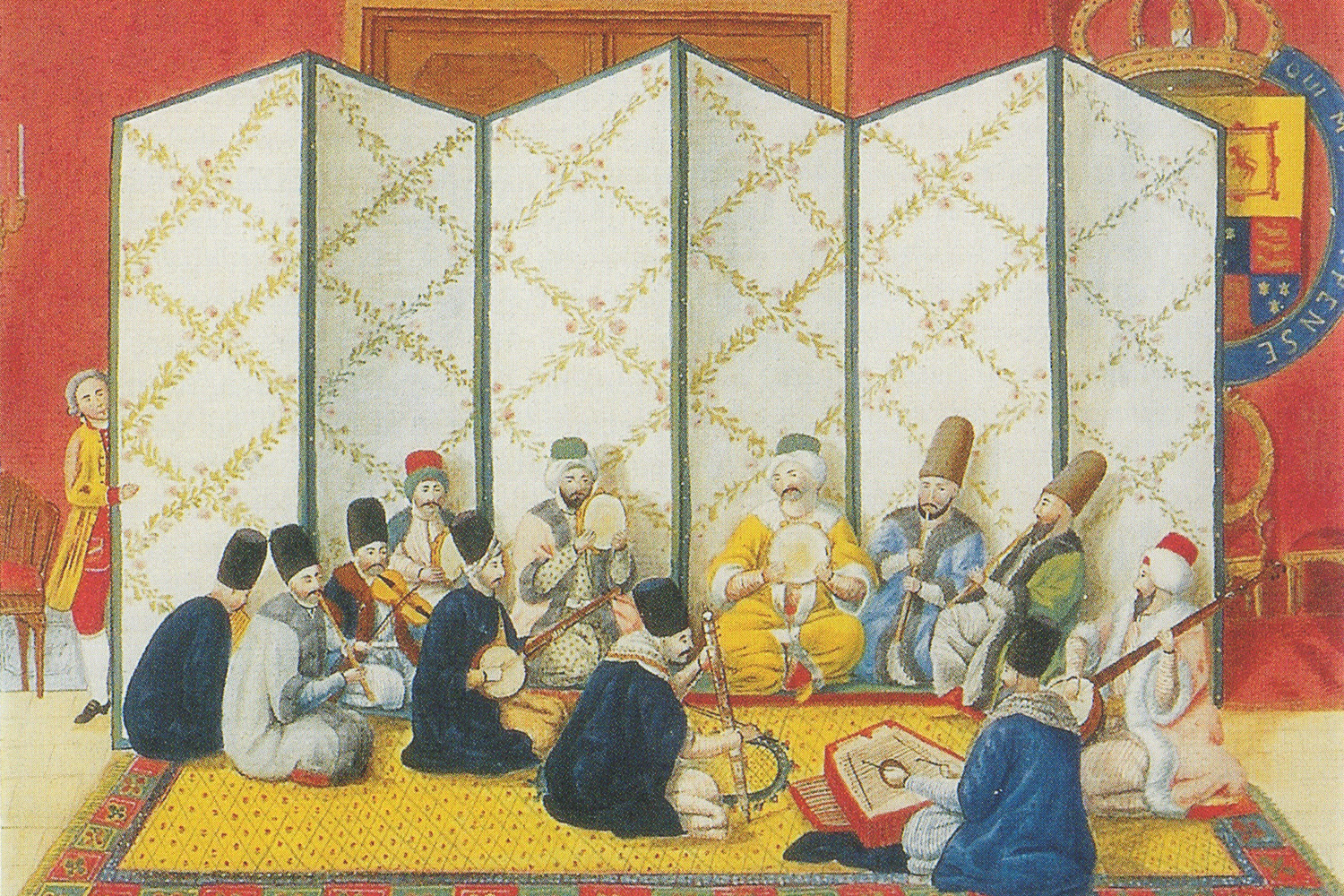
The concert highlights the cosmopolitan profile of Giacomo Casanova through the performance of music in vogue at the time of his travels in Eastern Europe and to Constantinople, both of Venetian and Ottoman derivation, with instruments belonging to both musical traditions. Indeed, among the writings left behind by various ambassadors of the time, we find pieces of music transcribed according to Western criteria, with instru-mental and vocal compositions that might be described as “Turkish-lean-ing. Even the musical instruments used combine the influence of Eastern culture and the ‘Orientalisation’ of the Western instrumental tradition. This is the case of the viola d’amore, later adopted in the Ottoman world under the name sine keman.

Performers: Stefano Albarello (conducting, adnún, baroque guitar), Peppe Frana (lavta lutes and tanbür), Giovanni De Zorzi (ney flute) and Gianfranco Russo (viola d’amore)

Award ceremony for the XII ‘Benno Geiger’ Poetry Transcribe Prize

The annual prize named after Benno Geiger celebrates the figure of this major twentieth-century intellectual, known for his work as a writer, poet, translator and art critic. The prize acknowledges and enhances his liter-ary and artistic contribution through his vast correspondence, which includes exchanges with numerous Italian and European figures, archived among the literary collections on the Island of San Giorgio Maggiore. A jury made up of writers, university lecturers and critics gives an award for a translated work published during the year, and also gives a prize to the best young translator. During the award ceremony, which is open to the public, a prologue is given by a member of the jury on a central theme of the contemporary literary tradition.

Countering the Eclipse of Sound Memories: Workshop on Audio Documents

The Digital Centre ARCHiVe of Fondazione Giorgio Cini, in collaboration with the Centro di Sonologia Computazionale (CSC) of the Department of Information Engineering (DEI) at the University of Padua, is presenting Countering the Eclipse of Sound Memories: Workshop on the Digitisation and Preservation of Audio Documents, a workshop dedicated to scientific methodologies, technologies and international standards for the restoration, active preservation and digitisation of audio documents.
This three-day intensive programme on the Island of San Giorgio Maggiore will introduce participants to the historical and technical aspects of sound carriers, the principles of audio preservation, and the methodologies for their digitisation and restoration. Combining lectures and hands-on sessions, the workshop will cover the preparation and repair of media, analogue-to-digital conversion techniques, metadata creation, and best practices for long-term digital preservation.
Through a learning-by-doing approach, participants will engage directly with equipment and workflows, gaining both theoretical and practical skills in the digitisation and safeguarding of audio heritage. 
 
The workshop is open to a selected group of participants (students and professionals from various backgrounds) who will have the opportunity to learn and interact directly with the CSC team.
Accommodation for two nights at the Vittore Branca Centre Residence on the Island of San Giorgio Maggiore, lunch on the first day, and an ACTV pass for travel within the lagoon for the duration of the workshop are included in the participation fee. A certificate of attendance will be issued at the end of the workshop.

The workshop will be held in Italian.