Isola di San Giorgio Maggiore, Venezia Archives - Fondazione Giorgio Cini

Two New Events at the Teatro Verde

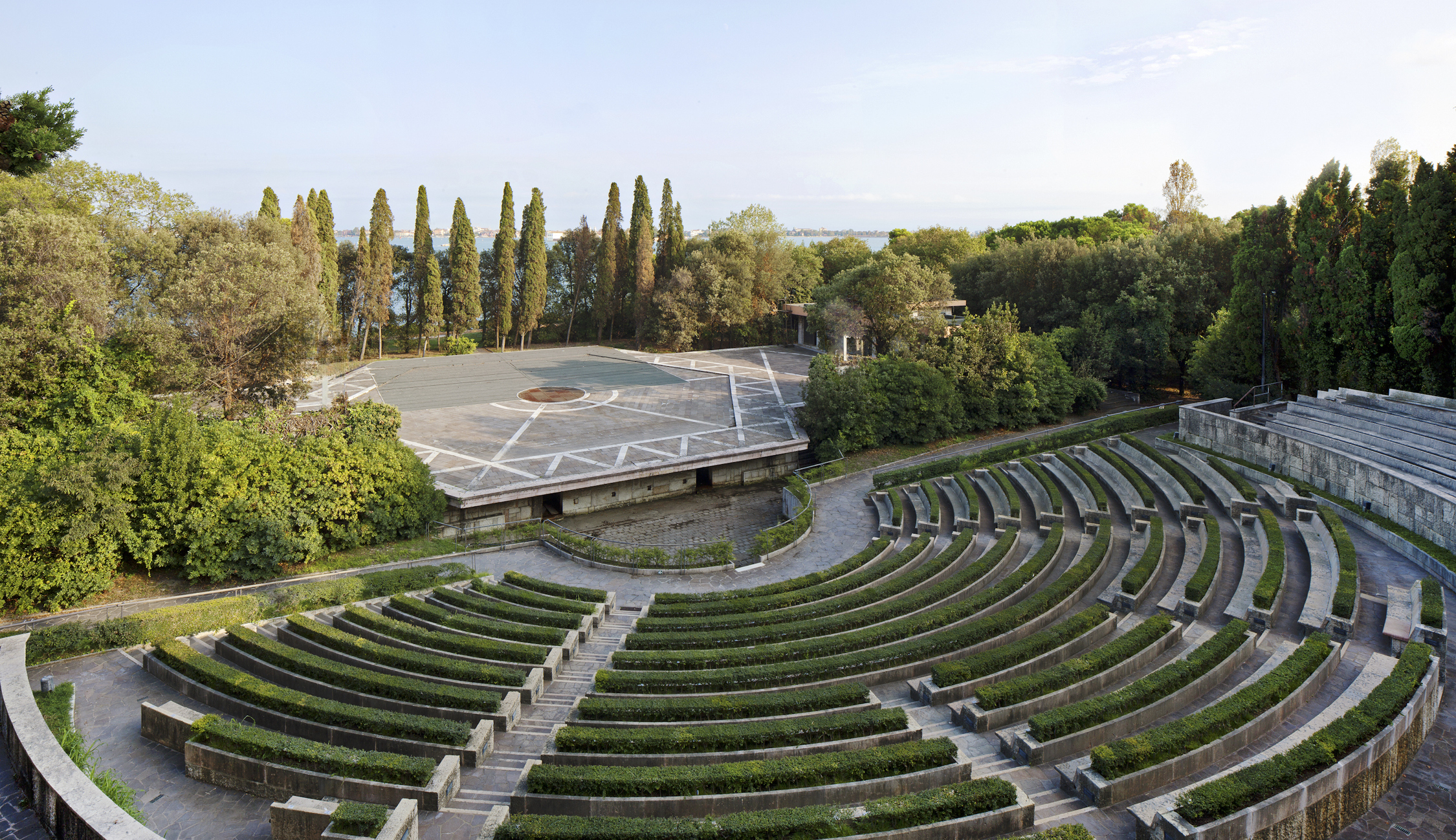
As part of the 54th edition of the International Theatre Festival of La Biennale di Venezia, the Fondazione Giorgio Cini is hosting two performances at the Teatro Verde, built beginning in 1952 and inaugurated in July 1954, based on a design by architect Luigi Vietti. For its time, the theatre represented a major technological challenge: it was constructed on reclaimed land created through the expansion of the Island and extends partially below sea level.

The Teatro Verde boasts a long and distinguished history of live performances and, this June, will once again come alive hosting Cries, the concert-performance by Christos Stergioglou and Alexandros Drakos Ktistakis, presented as part of Biennale Teatro 2026 directed by Willem Dafoe. Cries gives voice to human suffering and to all those who, throughout the centuries, have experienced slavery, displacement, and migration. The performance draws inspiration from ancient and modern poetry and theatre — from the refugee reflections of poet Giorgos Seferis and Hecuba’s lament in The Trojan Women by Euripides to Bertolt Brecht, Manolis Anagnostakis, Nikos Vrettakos, and Warsan Shire, among others.

Discover more in the section dedicated to the restoration of the Teatro Verde.

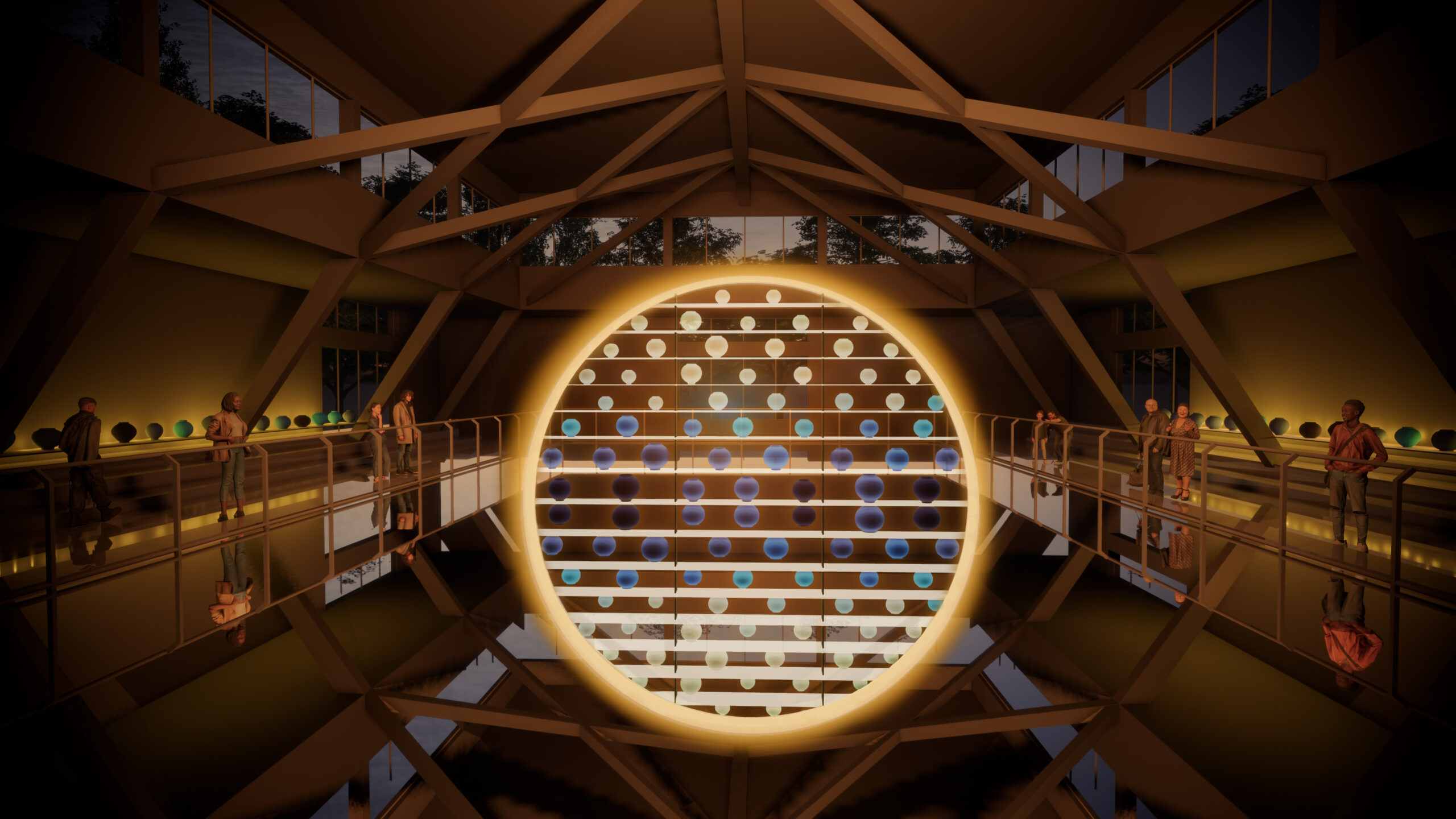
Homo Faber 2026 | An Island of Light

Fondazione Cologni dei Mestieri d’Arte and Michelangelo Foundation, in partnership with Fondazione Giorgio Cini, present the fourth edition of Homo Faber: An Island of Light, an event dedicated to the art of exceptional craftsmanship. Artistic direction has been entrusted to Es Devlin, who will bring her luminous artistic vision to Isola di San Giorgio Maggiore in Venice from 1 to 30 September 2026. The award-winning British artist is renowned for her monumental installations and kinetic sculptures, which have enriched museums, galleries, theatres and Olympic stadiums around the world. Her installation Library of Light attracted 200,000 visitors to Pinacoteca di Brera during the Salone del Mobile in Milan.

Artisans will take centre stage throughout the exhibition spaces and become the focal point of the visitor experience. Photographs, videos, poetry and music will highlight their faces, nationalities and cultures. A recreated artisan workshop will offer an intimate look at their tools, raw materials and working techniques, while several craftspeople will demonstrate their skills live in three of the main exhibition halls. All artworks and installations will be presented by a new group of Young Ambassadors: 90 talented design and applied arts students from around the world selected by Homo Faber to bring the exhibition to life. An Island of Light will offer a profound and inspiring experience exploring the essential relationship between light, materials and craftsmanship.

In addition to the exhibition spaces, the fourth edition will also feature a rich programme of live demonstrations, participatory workshops and unique gastronomic experiences, allowing visitors to immerse themselves even further in the world of craftsmanship and tailor their day according to their own interests.

Finally, alongside the exhibition, Homo Faber in Città will return once again: throughout the month of September, Venetian artisan workshops featured in the Homo Faber Guide will open their doors to visitors, while a programme of fascinating exhibitions dedicated to Venice and its rich artisanal heritage will be hosted across some of the most beautiful sites of the Serenissima.

Find out more on  homofaber.com

[accordion][/accordion]
[accordion_entry title=”Past editions”]

Since 2018, Homo Faber has presented the excellence of craftsmanship from around the world every two years, an initiative organized by Michelangelo Foundation in collaboration with Fondazione Cologni dei Mestieri d’Arte and Fondazione Giorgio Cini. With each edition, the spaces of Isola di San Giorgio are transformed and brought to new life.

14–30 September 2018
Homo Faber. Crafting a more human future

10 April – 1 May 2022
Homo Faber: Crafting a more human future. Living Treasures of Europe and Japan

1–30 September 2024
Homo Faber 2024 – The Journey of Life

[/accordion_entry]
[accordion][/accordion]

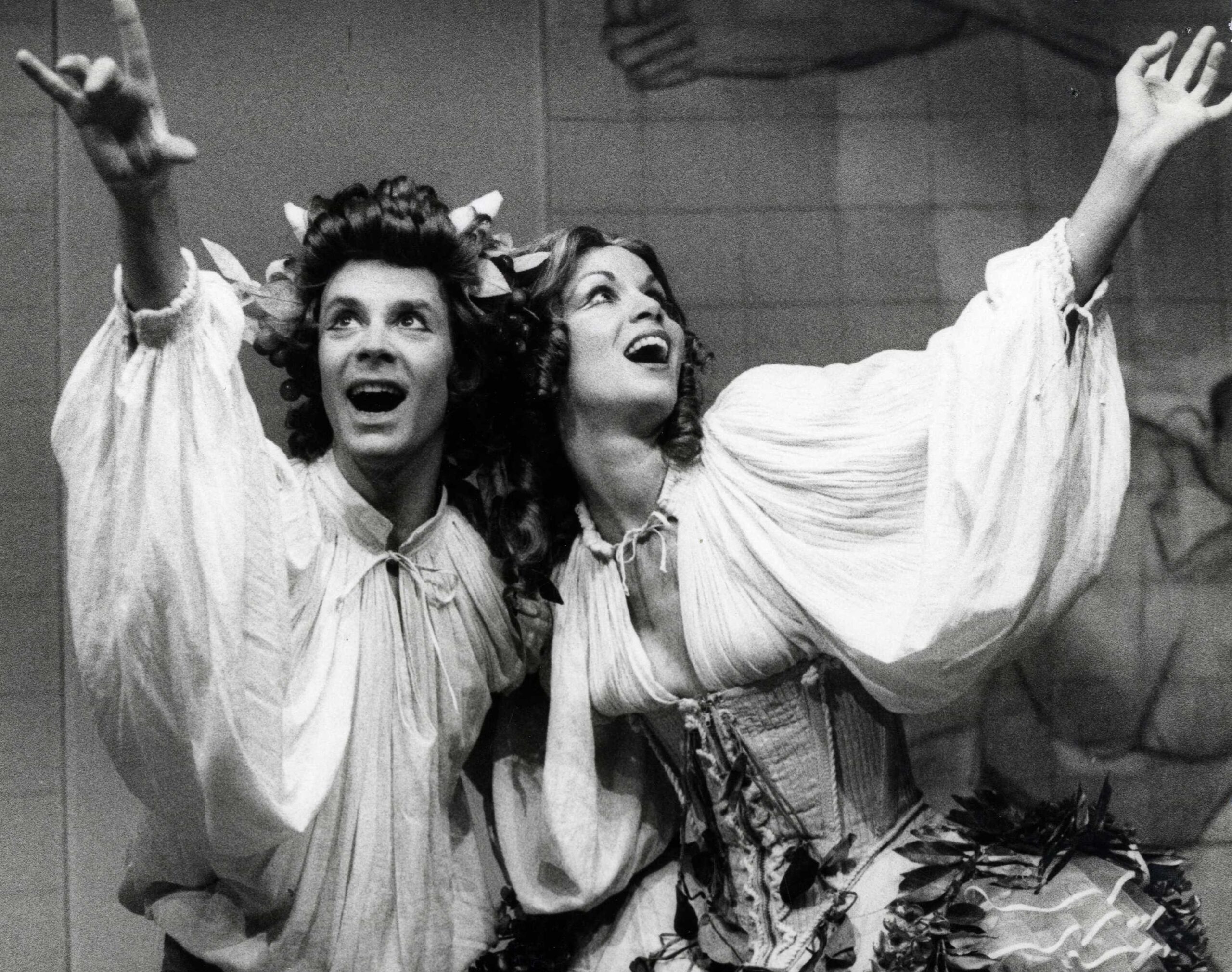
Paolo Poli. Sixty and More Years of Theatrical Ingenuity

The Institute for Theatre and Opera of the Fondazione Giorgio Cini, in collaboration with Ca’ Foscari University of Venice and the University of Florence, is dedicating a scholarly conference to Paolo Poli (Florence, 1929 – Rome, 2016) on the tenth anniversary of his passing.

Florentine by birth, he quickly gained public attention as a prolific and original artist, building a long and brilliant career that lasted until his death in 2016 at the age of eighty-seven. The creator of a theatre that was imaginative, light yet erudite, Poli—thanks to his inexhaustible creativity—was an undisputed protagonist of the Italian stage from the second half of the twentieth century.

As the institution that preserves Paolo Poli’s personal archive, the Institute for Theatre has made available to speakers the many valuable documents it holds, in order to explore previously unexamined aspects of this remarkable chapter in Italian theatre.

The event is part of the initiatives promoted by the Fondazione Giorgio Cini to further explore the theme of Humankind and Longevity. From this perspective, Paolo Poli emerges as an extraordinary example of enduring creativity, capable of overcoming and redefining the stereotype of old age as decline.

Remembering Paolo

On May 14 at 6:00 PM, actress Lucia Poli and the actor-director Arturo Brachetti, in conversation with journalist Anna Bandettini, will meet the public to evoke the multifaceted figure of Paolo Poli. Memories, testimonies, and images from an artistic past will come alive again through the presence of the two guest artists and their stories from the stage.

PROGRAMMe

[accordion][/accordion]
[accordion_entry title=”Thursday, 14 May 2026”]

9:30

Daniele Franco, Maria Ida Biggi

Fondazione Giorgio Cini


Fulvio Cervini, Marco Mangani

Università di Firenze


Saluti istituzionali e introduzione


Marianna Zannoni

Fondazione Giorgio Cini / Università Ca’ Foscari di Venezia

Presentazione archivio Paolo Poli


10:00 — 13:00

I Sessione

Declinazioni dell’attore-autore-regista


CHAIR

Maria Ida Biggi

Fondazione Giorgio Cini / Università Ca’ Foscari di Venezia


Giulia Bravi

Università di Firenze

Albori teatrali: Paolo Poli 

nella Firenze del dopoguerra 


Livia Cavaglieri, Donatella Orecchia

Università di Genova, Università Tor Vergata di Roma

Paolo Poli alla Borsa d’Arlecchino 


Edoardo Camilletti

Università Roma Tre

“Caro Lele”. Il Faust mai realizzato da un carteggio fra Paolo Poli ed Emanuele Luzzati (1964-1965)


Armando Petrini

Università di Torino

Paolo Poli e la ‘linea bis’ del teatro italiano


Paologiovanni Maione

Università della Campania

Le ‘stranezze’ di Satie per ‘l’inquieto’ viaggio di Poli


14:30 — 17:00

II Sessione

Paolo Poli, la censura e la critica sociale


CHAIR

Armando Petrini

Università di Torino


Franco Perrelli

Università di Bari

Paolo Poli: la censura della farfalla


Antonio Audino

Rai Radio Tre

Un Babau per la televisione italiana


Marianna Zannoni

Fondazione Giorgio Cini / Università Ca’ Foscari di Venezia

“C’era una volta il fascismo…”. L’uomo nero di Paolo Poli


Mariagabriella Cambiaghi

Università di Milano

Rosmunda di Alfieri: una ‘rivisitazione’ tra tragico e melodramma


18:00 — 19:00

Lucia Poli e Arturo Brachetti in dialogo con Anna Bandettini

Ricordando Paolo

[/accordion_entry]
[accordion][/accordion]


[accordion][/accordion]
[accordion_entry title=”Friday, 15 May 2026″]

9:30 — 13:00

III Sessione

Fonti della drammaturgia poliana


CHAIR

Franco Perrelli

Università di Bari


Teresa Megale

Università di Firenze

Scritti da Paolo, recitati, cantati e danzati da Poli: invenzioni, affabulazioni, trasformismi del geniale fiorentino 


Giuseppe Crimi

Università Roma Tre

Le voci della letteratura dietro la voce di Paolo Poli


Gabriele Frasca

Scuola Superiore Meridionale di Napoli

L’arte di sorridere versi (e d’irridere in prosa)


Eva Marinai

Università di Pisa

Paolo Poli cantastorie. Il Pinocchio delle Fiabe sonore (1966)


Matteo Tamborrino

Università di Torino

Racconti di fate chiamate Paolo Poli


14:30 — 17:30

IV Sessione

Tempo della vita, tempo del teatro


CHAIR

Teresa Megale

Università di Firenze


Serena Facci

Università Tor Vergata di Roma

“La letteratura delle canzonette”: il flusso narrativo di Paolo Poli dal parlato al cantato


Antonia Liberto

Università di Firenze

Paolo Poli o la misura dell’irriverenza. Sei brillanti. Giornaliste Novecento (2006)


Francesco Cotticelli

Università Federico II di Napoli

Nei primi anni Duemila: Paolo Poli e la solitudine del genio


Maria Ida Biggi

Fondazione Giorgio Cini / Università Ca’ Foscari di Venezia

Quant’è bella la vecchiezza, Il mare e Aquiloni


[/accordion_entry]
[accordion][/accordion]
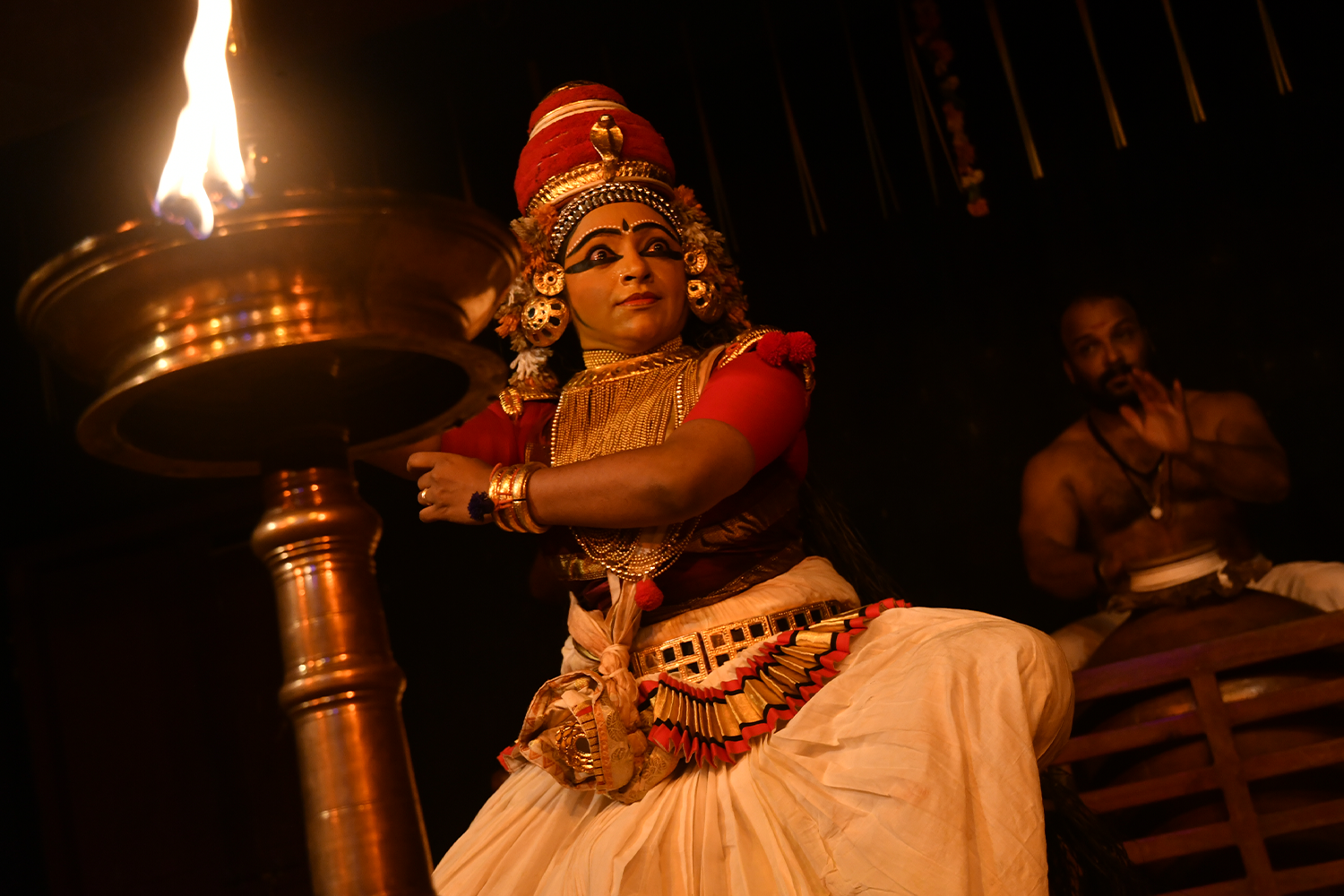
Kapila Venu. Pārvatīviraham

The performance is organized by the Intercultural Institute of Comparative Music Studies and is part of an Italian tour conceived and promoted by Sapienza University of Rome as part of the research project: “TEXT_ACT. TEXTs living on stage: goddesses, queens, and courtesans from Sanskrit theater to the ACTresses of present-day Kutiyattam”. In addition to Venice (Giorgio Cini Foundation) and Rome (Nuovo Teatro Ateneo), the tour includes stops in Bergamo (Teatro Tascabile) and Palermo (Antonio Pasqualino International Puppet Museum).

Kapila Venu is an internationally renowned performer of Naṅṅyār-kūttu and Kūṭiyāṭṭam, which in 2001 became UNESCO Intangible Heritage.

The traditional actress of Kerala is NaṅṅyārNaṅṅyārs are not really dancers and have a very long lineage. Mythologically, we can trace our lineage back to Ghṛtācī, an apsaras, a divine performer, who was sent from heaven. This is very unique because we are still a living tradition and there are not many traditions of female actresses that are so strong around the world.

In Kūṭiyāṭṭam the Naṅṅyār plays specific characters. Kapila Venu will present at the Fondazione Giorgio Cini the Pārvatīviraham, one of the most iconic piece in the Kūṭiyāṭṭam repertoire, traditionally performed by her guru Ammannūr Mādhava Cākyār.

It has been performed exclusively by male actors for centuries. The female version is presented by a woman telling the story of this dynamic of the husband, the wife, and the other wife. Definitely, when a woman performs this sequence, the woman’s empathy for the female characters that appear in the story brings a significant shift in approach. It is the same sequence but there is a difference in nuance. The bhāva, the flavour, is very different.

“Nowadays, because art must reflect the changing times that we live in, I think that women are reclaiming an equal space in the world as well as on stage”.  Kapila Venu

[accordion][/accordion]
[accordion_entry title=”Opening hours and access procedures”]

Free entry subject to availability

[/accordion_entry]
[accordion][/accordion]
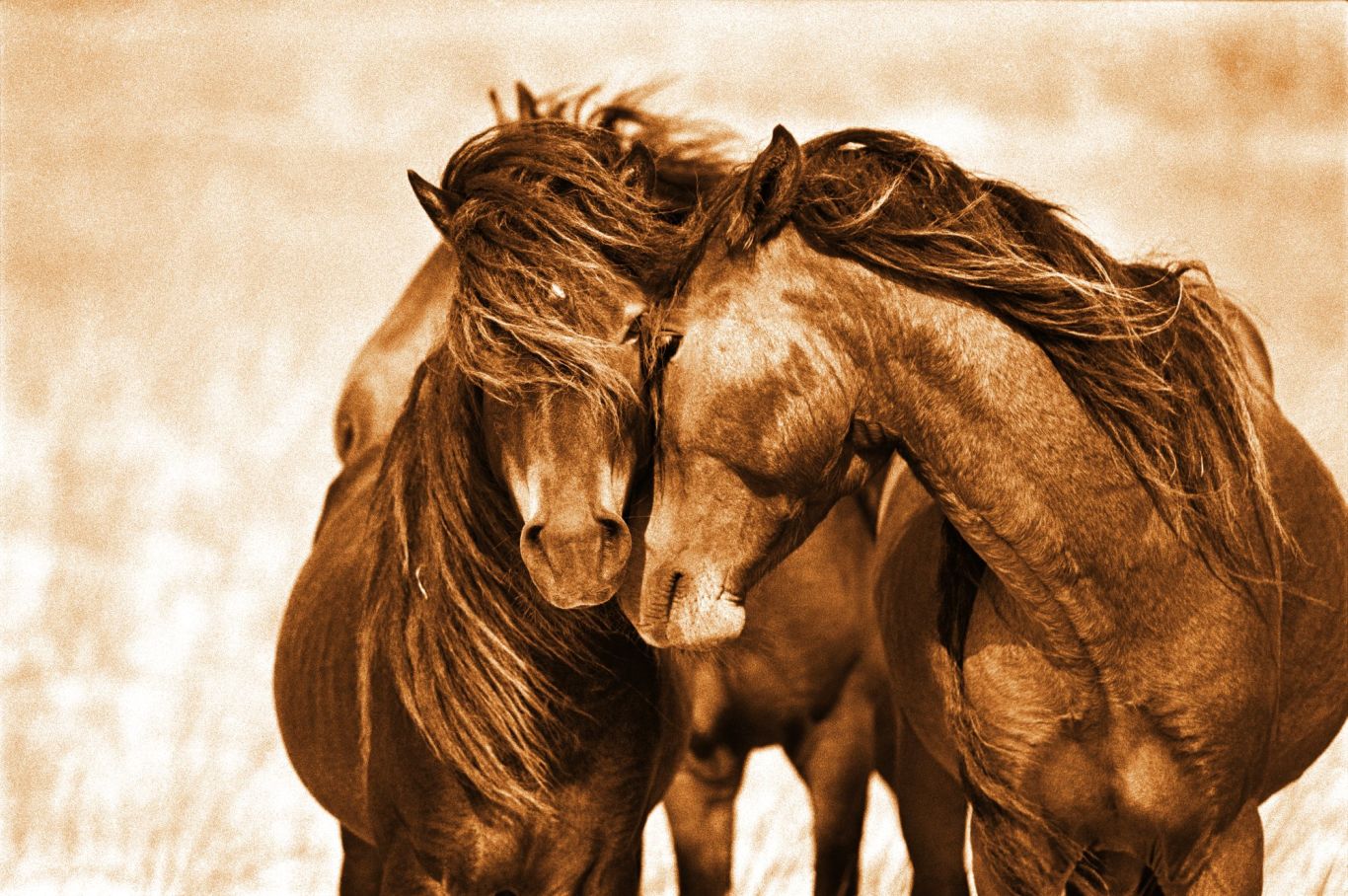
30 Years. The Wild Horses of Sable Island

The exhibition 30 Years. The Wild Horses of Sable Island reveals survival and fragility in a changing world. In Venice, it presents 36 large-format photographs, both black and white and color, dedicated to the wild horses of Sable Island, a remote strip of land in the North Atlantic. In an ideal dialogue with the fragility of the Lagoon, Roberto Dutesco’s images portray a precarious ecosystem where beauty arises from resilience and adaptability.

Hosted at Le Stanze della Fotografia on the Island of San Giorgio Maggiore, the exhibition is part of the symbolic context of the 2026 Venice Biennale, offering an immersive narrative in three acts that guides visitors through origin, adaptation, and future. The horses, photographed without human intervention, become a metaphor for silent dignity and fragile balance, threatened by climate change and the erosion of natural habitats.

The images and films invite a slow and engaged gaze: not mere naturalistic documentation, but an emotional experience that connects the vulnerability of the island with that of Venice itself—a city suspended between water, memory, and resilience.

[accordion][/accordion]
[accordion_entry title=”Orari e modalità d’accesso”]
Open daily from 11:00 AM to 7:00 PM (last admission at 6:30 PM) closed on Wednesdays.

Special openings:
Sunday 5, Monday 6, Wednesday 15, and Saturday 25 April

[/accordion_entry]
[accordion][/accordion]
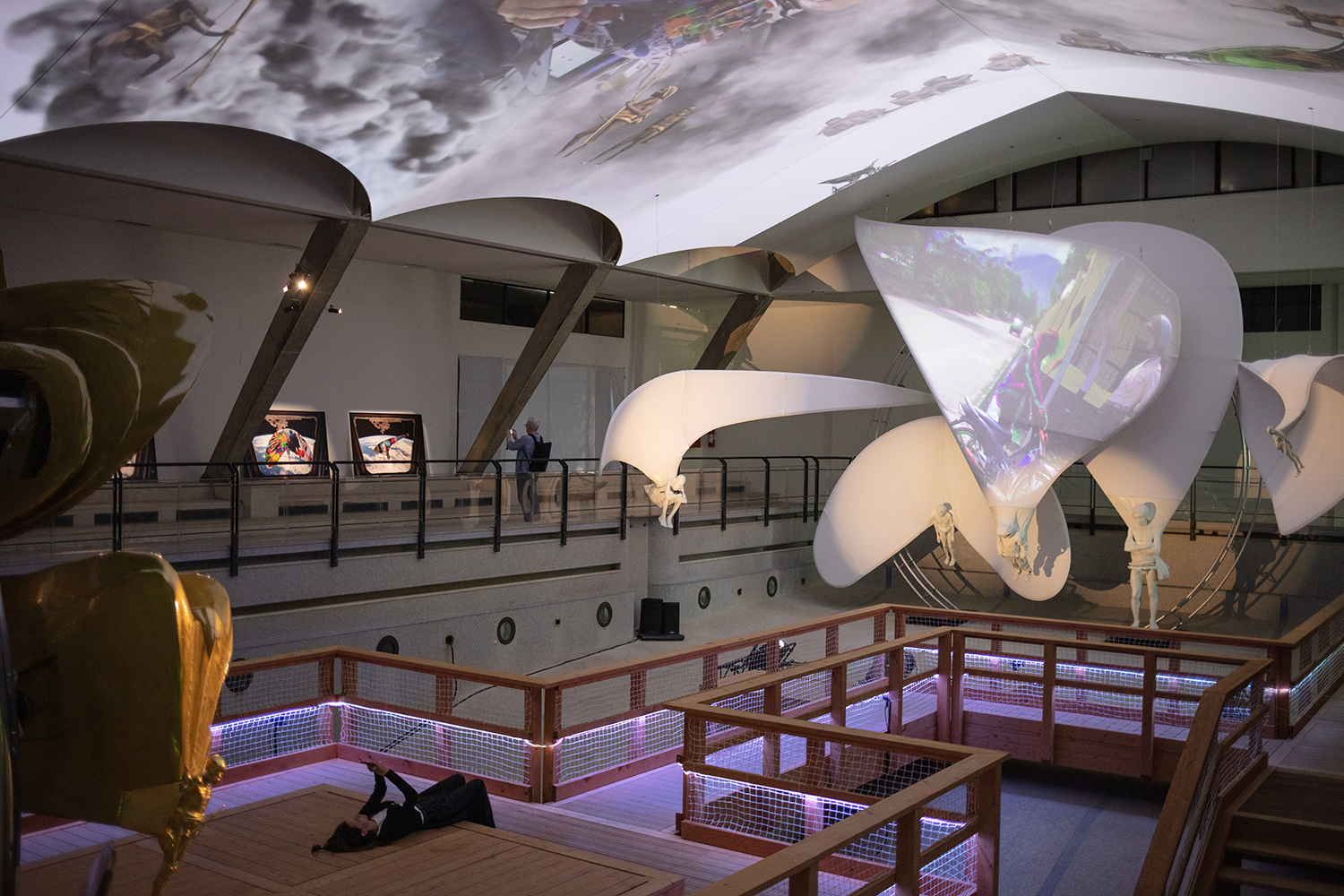
How to Reach the Sky

‘How to reach the sky’, a monumental multimedia project created by Barbora Šlapetová and Lukáš Rittstein, is being hosted in the former Gandini swimming pool on the island of San Giorgio Maggiore in Venice, to coincide with the 2026 Art Biennale, from 18 April to 12 July 2026.

Through a large-scale installation of sculptures, animations, paintings, films, photographs and happenings, the two Czech artists recount the extraordinary and somewhat magical story of the encounter between two worlds: a crew of astronauts and a community of the Yali Mek people of West Papua. Two distant worlds: one on earth and one in the sky, one immersed in hyper-technology and the other drawing strength from its ancestral knowledge. Yet united by a single experience: flying.

The ‘How to Reach the Sky’ project stems from the encounter between the Yali Mek communities of Papua and NASA astronauts, invited to share their experience of ‘space travel’, in parallel with the spiritual vision of local shamans.

From this experience emerges the work of Barbora Šlapetová and Lukáš Rittstein, who have been collaborating with Papuan communities for almost thirty years, documenting their cultures and transformations. The project artistically translates an imagination still untouched by globalisation, offering an authentic glimpse into traditions now at risk of disappearing.

[accordion][/accordion]
[accordion_entry title=”Opening hours and access”]
Open daily from 11am to 6pm. Closed on Wednesdays.

[/accordion_entry]
[accordion][/accordion]
Opera in musica tra intertestualità e intermedialità. In ricordo di Michele Girardi

The conference is split into four sections. The first section aims to explore the intertextual dynamics that arise between the written source and the musical text, examining how the process of transposition and rewriting influences the dramatic and musically construction. The concept of intertextuality is interpreted here in a broad sense, as a critical tool capable of highlighting strategies of assimilation, rewriting and semantic amplification.

The second session is focused on the role of references and stylistic cues, elements that constitute a key semantic repertory in the construction of dramatic arcs and the connotations evoked by the music.

The third session explores the visual aspect, understood as a constitutive dimension of the opera, and stage direction as a practice of interpretation and actualisation of meanings. These two acts of mediation between musical dramaturgy and stage performance are analysed here in relation to the operatic texts, considered as generative matrices of the stage design. The focus is on the ways in which the score and the libretto guide, inspire or are reinterpreted in the visual dimensions, forming a dynamic nexus between musical composition and performance.

Finally, the fourth session explores the relationship between different media in the processes of opera’s creation, dissemination and transformation. The focus is on the ways in which opera interacts with other media – radio, cinema, television and the internet – generating new performance spaces and hybrid forms of representation. From this perspective, remediation becomes not only a technical process, but also an aesthetic and dramaturgical one, capable of redefining the experience of the opera event.

Scientific Committee: Maria Ida Biggi, Gianmario Borio, Giordano Ferrari, Vincenzina C. Ottomano, Emilio Sala, Luca Zoppelli.

PROGRAM

[accordion][/accordion]
[accordion_entry title=”28 April | Intertestualità”]

9:30 AM

Maria Ida Biggi, Gianmario Borio
Introduction


10.00 AM — 1.00 PM

1. Sessione, Dalla letteratura all’opera in musica: estensione o trasformazione?


Introduction e moderator: Luca Zoppelli (Università di Friburgo)

Gabriella Olivero
(Università di Torino)
Figure da paravento: da Iris a Cio-cio-san


Emanuele D’Angelo
(Accademia di Belle Arti di Bari)
Costruire libretti tra macro e micro intertestualità. Casi ottocenteschi

Francesco Fontanelli
(Università eCampus (Novedrate)
“Una tragedia parigina”: riscritture del fatalismo nel Tabarro di Puccini

Discussant: Fabrizio Della Seta
(Università di Pavia)

 –

LUNCH BREAK

 –

3.00 PM — 6.00 PM

2. Sessione, Citazioni, evocazioni e allusioni musicali come fattori della drammaturgia


Introduction e moderator: Giordano Ferrari (Université Paris 8)


Anselm Gerhard
(Università di Berna)
Metro musicale e gradiente drammatico. Convergenze e divergenze tra Verdi e Puccini

Federico Fornoni
(Conservatorio di Novara / Università di Bergamo)
Nedda: una Carmen in miniatura

Federica Marsico
(Università degli studi di Teramo)
Declinazioni dell’intertestualità nel teatro di Bussotti

Discussant: Paolo Fabbri
(Università di Ferrara)


[/accordion_entry]
[accordion][/accordion]
[accordion][/accordion]
[accordion_entry title=”29 April | Intermedialità”]

10:00 AM — 1.00 PM

3.Sessione, Mise en scène, regia e scenografia come dimensioni implicite o esplicite della partitura


Introduction e moderator: Emilio Sala (Università di Milano)

Gerardo Guccini
(Università di Bologna)
Con l’occhio di Puccini e l’orecchio di Carré: Girardi legge la mise en scène della Madama Butterfly


Clemens Risi
(Friedrich-Alexander-Universität Erlangen-Nürnberg)
“La Tosca in teatro”: Puccini e l’arte del performativo


Ruben Vernazza
(Università di Palermo)
Ridere di Verdi: L’enfant trouvère di Offenbach (1857)


Discussant: Alessandro Roccatagliati
(Università di Ferrara)

LUNCH BREAK

3.00 PM — 6.00 PM

4. Sessione, Dialogo tra media: dall’atto compositivo alla rimediazione


Introduction e moderator: Vincenzina Ottomano (Università Ca’ Foscari)

Chiara Casarin
(Università Ca’ Foscari)
La rimediazione di un’opera “fantasma”: la scena del teatro nel Marchese del Grillo di Mario Monicelli

Matteo Giuggioli
(Università Roma Tre)
L’opera ‘in film’ tra ipermediazione e trasparenza

Daniele Palma
(Università di Firenze)

Discussant: Serena Facci (Università di Roma Tor Vergata)

[/accordion_entry]

[accordion][/accordion]
[accordion][/accordion]
[accordion_entry title=”29 April 06:30 PM | Concert at Auditorium “Lo Squero” “]

Program

Concerto In collaborazione con il Conservatorio “Cesare Pollini”, Padova


Ottorino Respighi (1879 – 1936)
Sonata in si minore P 110 (1917) per violino e pianoforte
I. Moderato
II. Andante espressivo
III. Allegro moderato ma energico (Passacaglia)
Giacomo Puccini (1858 – 1924)
Crisantemi, Elegia SC65 (1890) per quartetto d’archi
Andante mesto
Sergej Prokofiev (1891 – 1953)
Sonata op. 119 (1949) per violoncello e pianoforte
I. Andante grave
II. Moderato
III. Allegro, ma non troppo
Sergej Prokofiev
Ouverture su temi ebraici op. 34 (1919) per clarinetto, pianoforte e quartetto d’archi

Miriam Dal Don, violino
Pietro Bosna, violoncello
Luca Lucchetta, clarinetto
Aldo Orvieto, pianoforte
Quartetto d’archi degli studenti del Conservatorio “Cesare Pollini” di Padova
Federica Cassia e Chiara Bosna, violini

Giulia Pasquali, viola
Davide Zuin, violoncello

[/accordion_entry]

[accordion][/accordion]
Solti-Peretti Répétiteur Masterclass XXII Edition

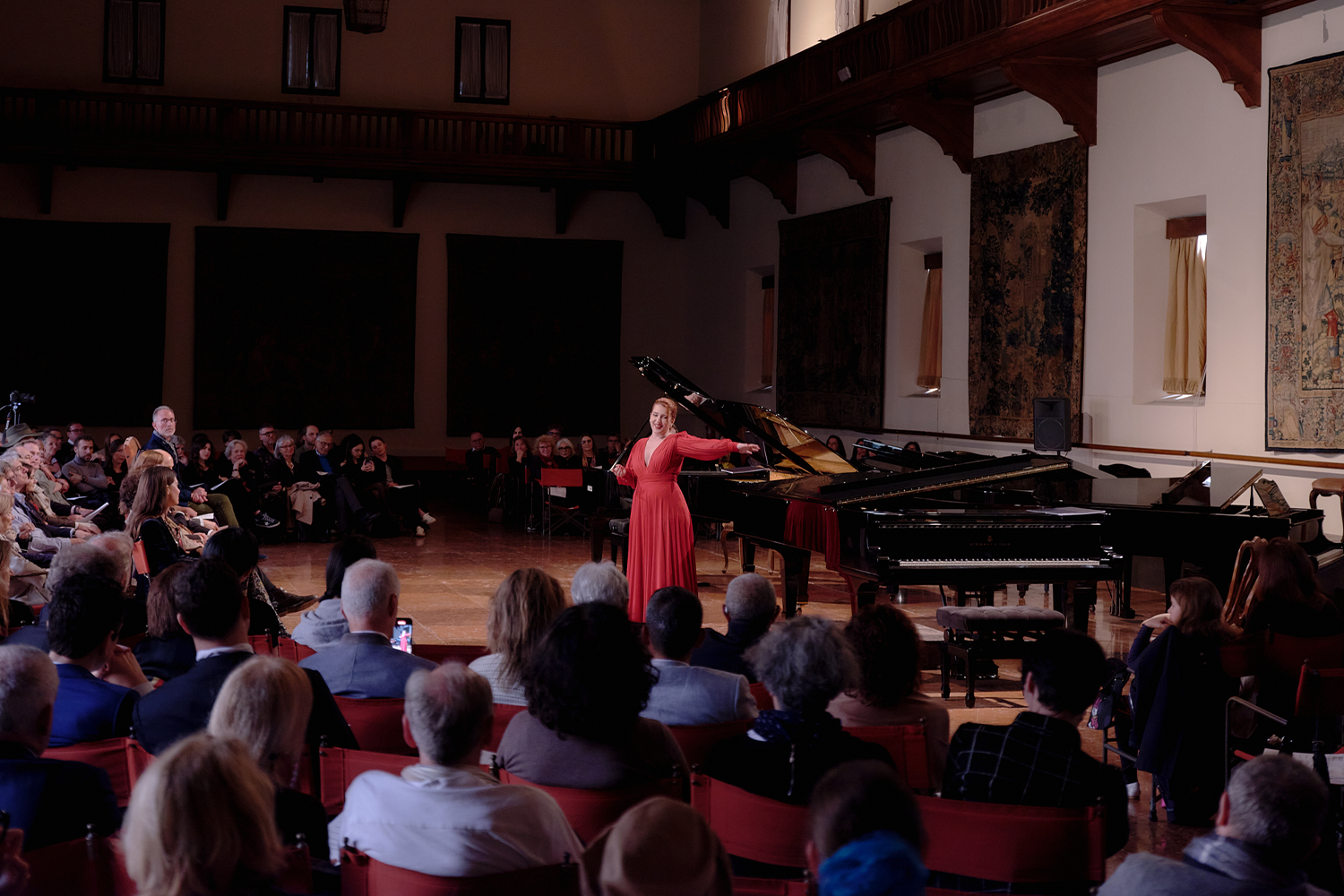
The Georg Solti Academy returns to Venice with the Répétiteurs Solti-Peretti Course. Founded by the legendary conductor Georg Solti, the Accademia is dedicated to training young opera singers and répétiteurs at their first professional experience. The courses are completely free of charge for students, giving them the opportunity to access training at the highest level.

The course allows six selected répétiteurs to hone their skills under the guidance of some of the finest international conductors, vocal coaches and répétiteurs. On 10 April, at the end of the Masterclass, the Sala degli Arazzi hosts the Academy concert with five grand pianos, six pianists and six singers.  The concert is by invitation only. An innovative training course for those aspiring to conduct, constituting a rarity in the Italian musical context.

The concert is by invitation only.

Accademia Vivaldi Advanced courses on the interpretation of Antonio Vivaldi’s music

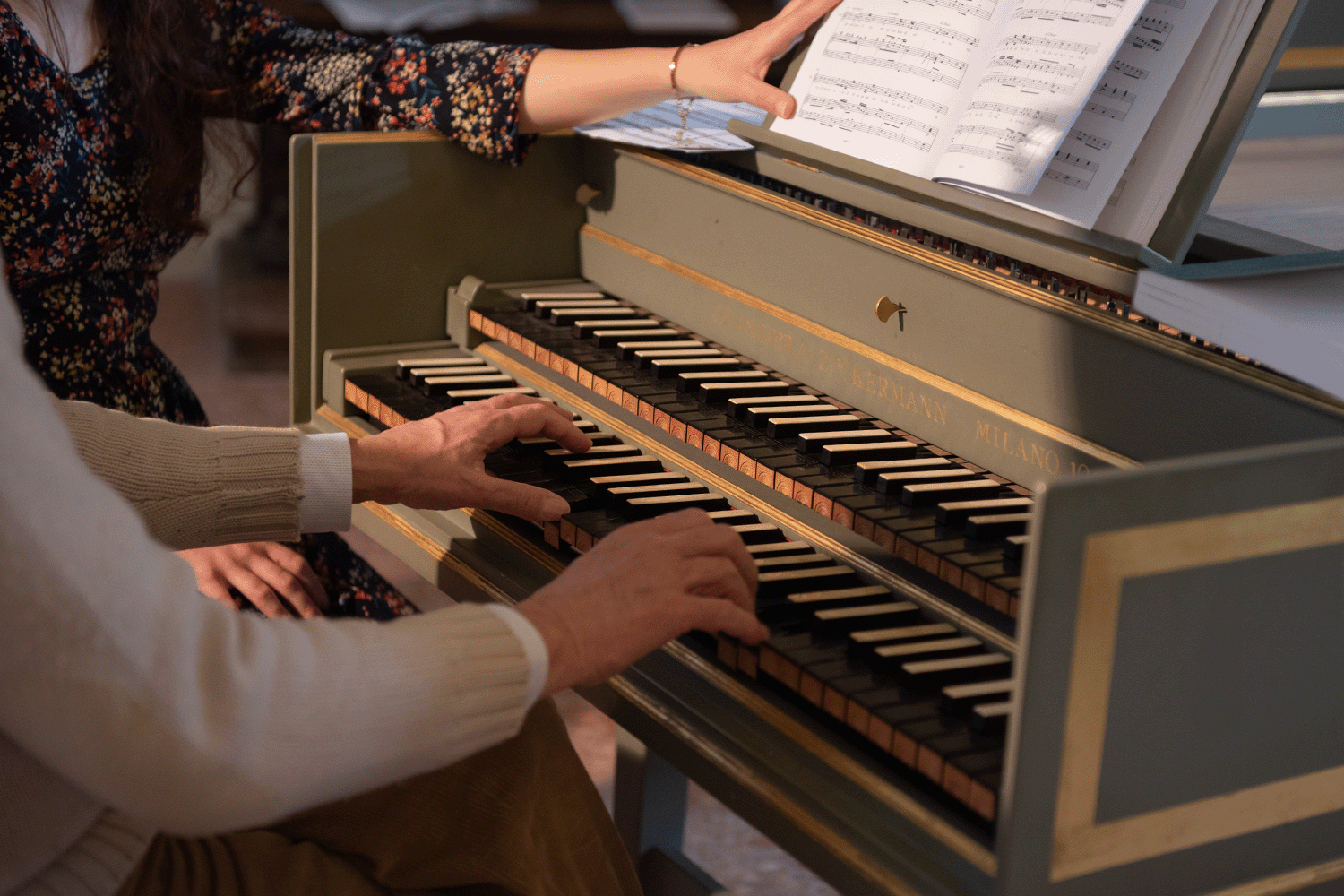
The Vivaldi Academy courses will continue in 2026: five in-depth meetings on the performance practice of Antonio Vivaldi’s compositions, each lasting three to four days, dedicated to young singers and instrumentalists. This season will feature courses in singing (church vocal music, chamber vocal music, musical dramas) and basso continuo performance. A maximum of ten selected students will be admitted to the courses, who will have the opportunity not only to perfect their interpretation skills, but also to explore the musicological aspects of the compositions studied.

Each meeting will be enriched by in-depth presentations by musicologists who collaborate with the Institute and those who are part of the research group La drammaturgia musicale a Venezia (1678–1792) (Musical Dramaturgy in Venice (1678–1792)) of the Ugo and Olga Levi Foundation, with the aim of integrating performance practice with the most up-to-date historical and critical studies.

The course, led by maestro Antonio Frigé and aimed at “basso continuo” instrumentalists (harpsichordists, organists, lutenists, harpists, etc.), will focus on the realisation of the bass in Vivaldi’s compositions and era, with particular attention to the harmonisation of Vivaldi’s recitatives in the opera Il Tito Manlio, RV 738.

The lectures and concerts organised as part of the Academy will be open to the public. Each course consists of three to five days of intensive study, comprising individual lessons and group discussions, and is open to a limited number of participants selected from the applications received. Please refer to the call for applications for details of admission requirements, deadlines and how to apply.

program

[accordion][/accordion]
[accordion_entry title=”25 — 27  March 2026″]

Masterclass dedicated to basso continuo
Teacher: Antonio Frigé

[/accordion_entry]
[accordion][/accordion]
[accordion][/accordion]
[accordion_entry title=”14 — 18 April 2026″]

Masterclass dedicated to singing
Teacher: Gemma Bertagnolli

[/accordion_entry]
[accordion][/accordion]
[accordion][/accordion]
[accordion_entry title=”19 — 23 May 2026″]

Masterclass dedicated to singing
Teacher: Gemma Bertagnolli

[/accordion_entry]
[accordion][/accordion]
[accordion][/accordion]
[accordion_entry title=”30 June — 4 July 2026″]

Masterclass dedicated to singing
Teacher: Gemma Bertagnolli

[/accordion_entry]
[accordion][/accordion]

[accordion][/accordion]
[accordion_entry title=”24 — 28 November 2026″]

Masterclass dedicated to singing
Teacher: Gemma Bertagnolli

[/accordion_entry]
[accordion][/accordion]

Georg Baselitz. Eroi d’Oro

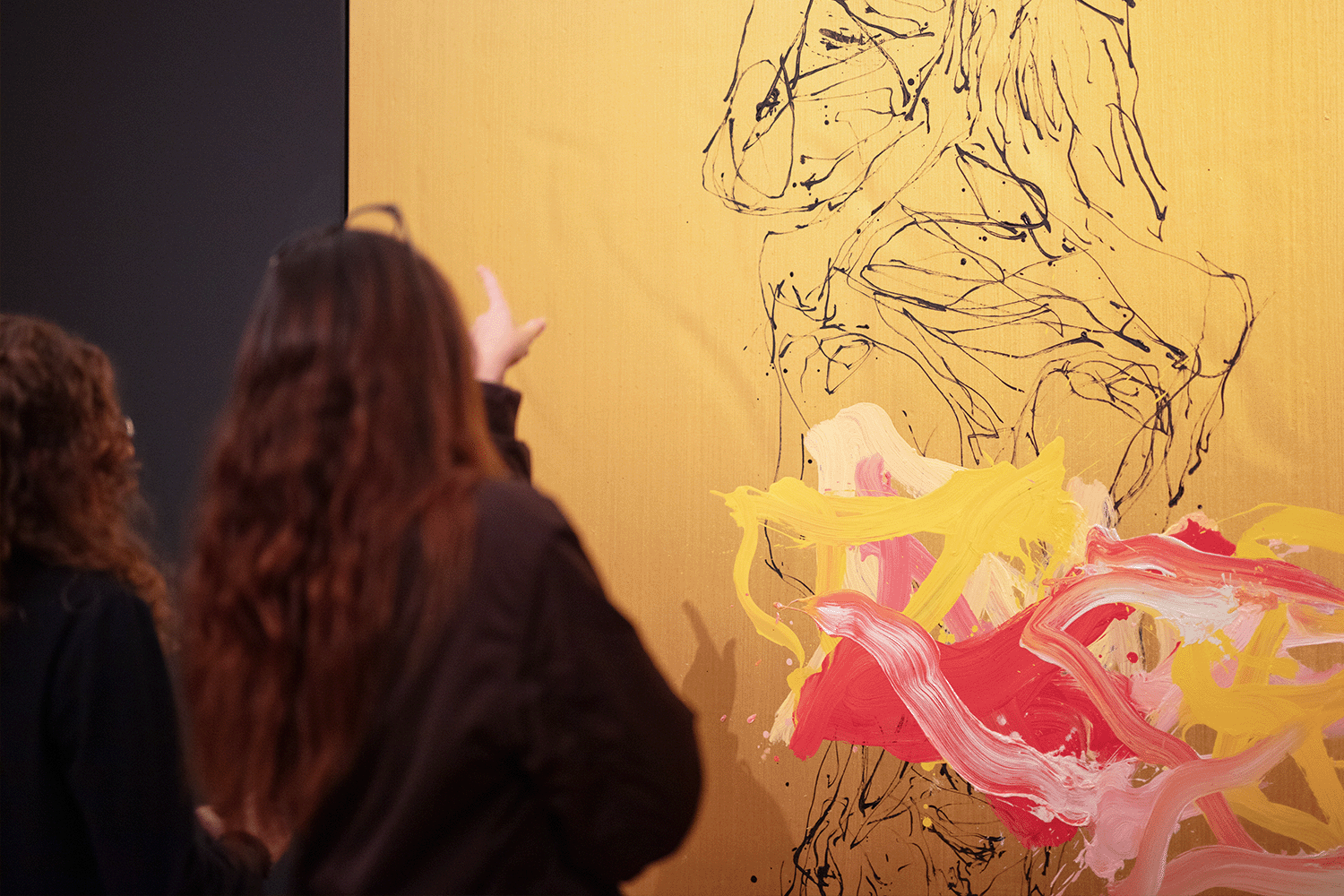
The exhibition Georg Baselitz. Eroi d’Oro, curated by Luca Massimo Barbero, director of the Institute of Art History of the Fondazione Giorgio Cini, features the German artist’s most recent series of large-scale paintings. The golden planes that form the grounds of the works on view, offer no illusion of depth; they creates a flatness reminiscent of medieval icons or the gilded backgrounds of the works of Northern Renaissance painter Stefan Lochner. Georg Baselitz’s painted bodies, executed in sharp lines, lie bare across these grounds as if floating on their surfaces, rendered through an approach that inherits from line drawing. They include larger-thanlife self-portraits, as well as numerous depictions of the artist’s wife, Elke, his lifelong companion and recurring model.

Applied with diluted black paint that resembles ink, the spectral portraits hark back to Hokusai’s portraits and Japanese calligraphy. Several of the canvases incorporate thick, viscous brushstrokes that gather on the figures, associating multiple colours to give a marbled, variegated effect.

While gold has always held diverse connotations and functions within his practice, never before have Baselitz’s paintings borne such a direct resemblance to icon painting.

The exhibition is organised in partnership with Thaddaeus Ropac Gallery.

[accordion][/accordion]
[accordion_entry title=”Opening hours and admission“]
It is open every day (except Wednesdays) from 11:00 a.m. to 7:00 p.m.

[/accordion_entry]
[accordion][/accordion]