Isola di San Giorgio Maggiore, Venezia Archives - Page 6 of 8 - Fondazione Giorgio Cini

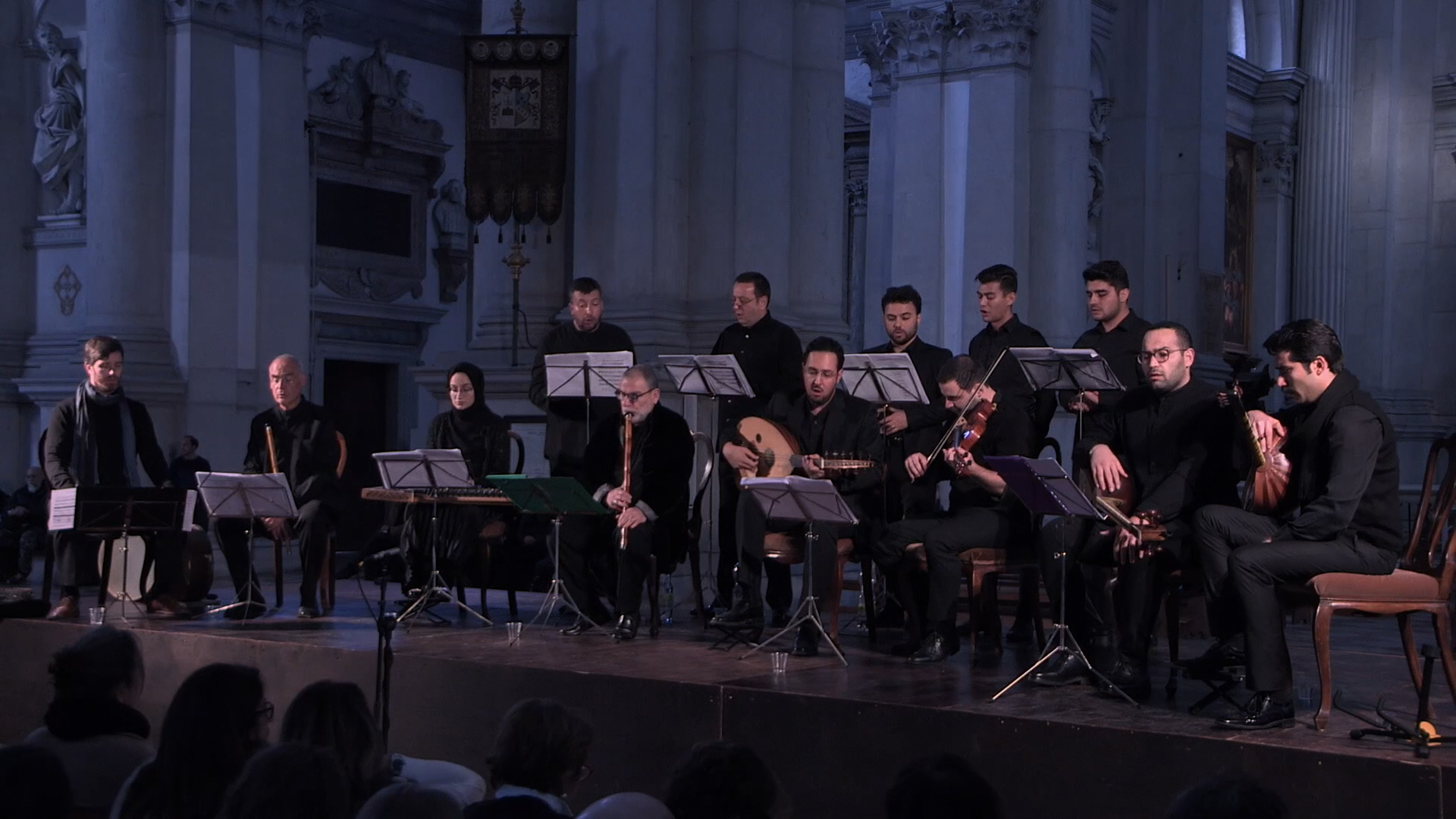
Byzantine and Sufi Chants in Cyprus

Concert | Musical Direction by Kudsi Erguner and Giannis Koutis

Building on a decade-long collaboration with Kudsi Erguner, artistic director of the advanced training project in Ottoman classical music Birûn, the Institute presents an event dedicated to interfaith dialogue.
Two choirs, Byzantine and Ottoman, have been invited to perform in Venice, accompanied on the ney flute by Kudsi Erguner himself. The repertoire includes significant Muslim and Eastern Orthodox Christian musical works, composed within the cosmopolitan context of Constantinople during the Ottoman period.

The event is held thanks to the contribution of the Fondation A.G. Leventis
www.leventisfoundation.org | [email protected]

Free admission until capacity is reached | 18:00

Seminar Singing in the air, with masks

From 3 to 5 March, the seminar Singing in the air, with masks, organised in collaboration with Isabelle Moindrot and Giulia Filacanapa, professors at the Théâtre Performance et Societé of the Université Paris 8 and the École Universitaire de Recherche ArTeC – Nanterre, will be held at the Institute of Theatre and Opera.


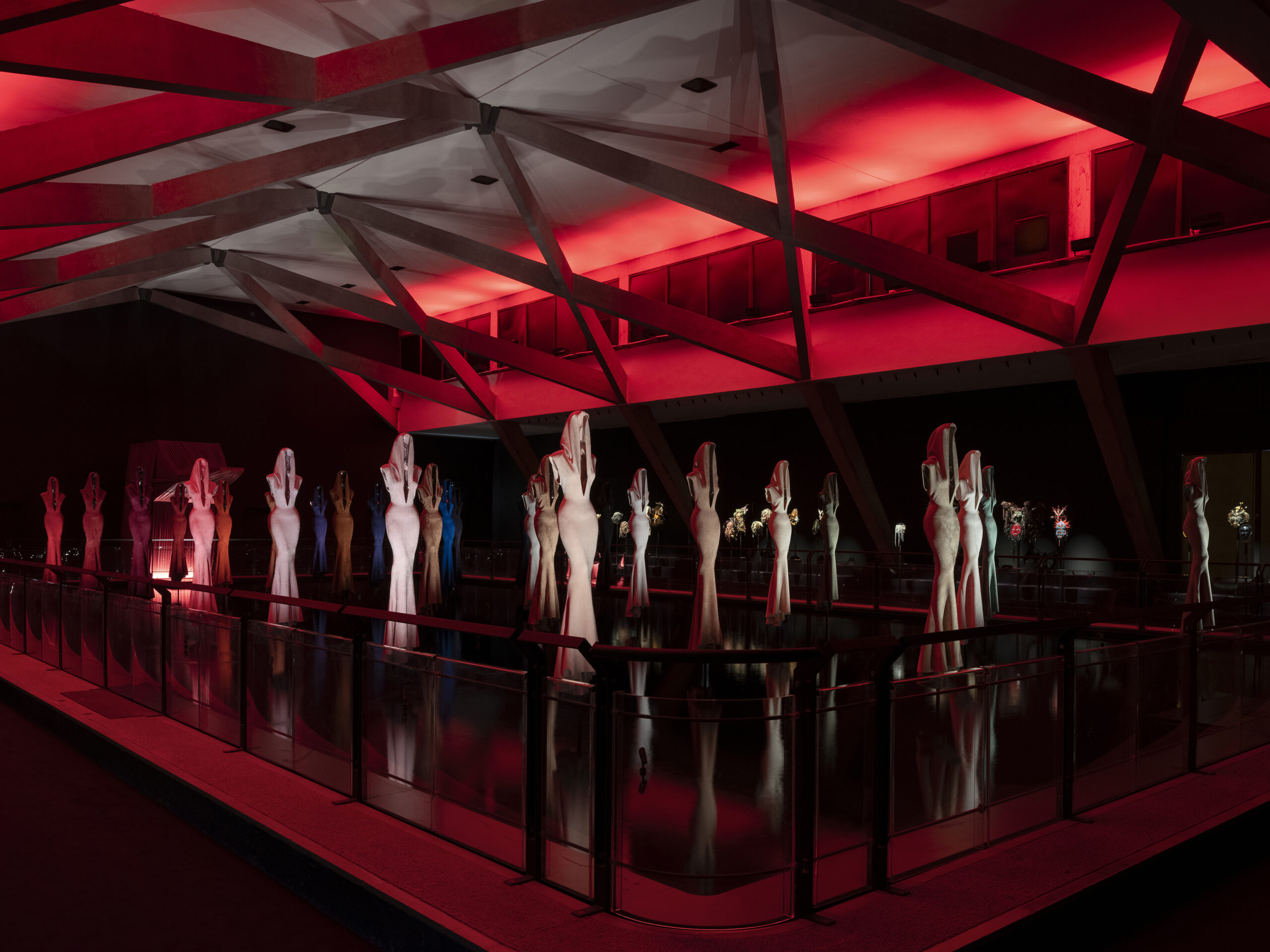
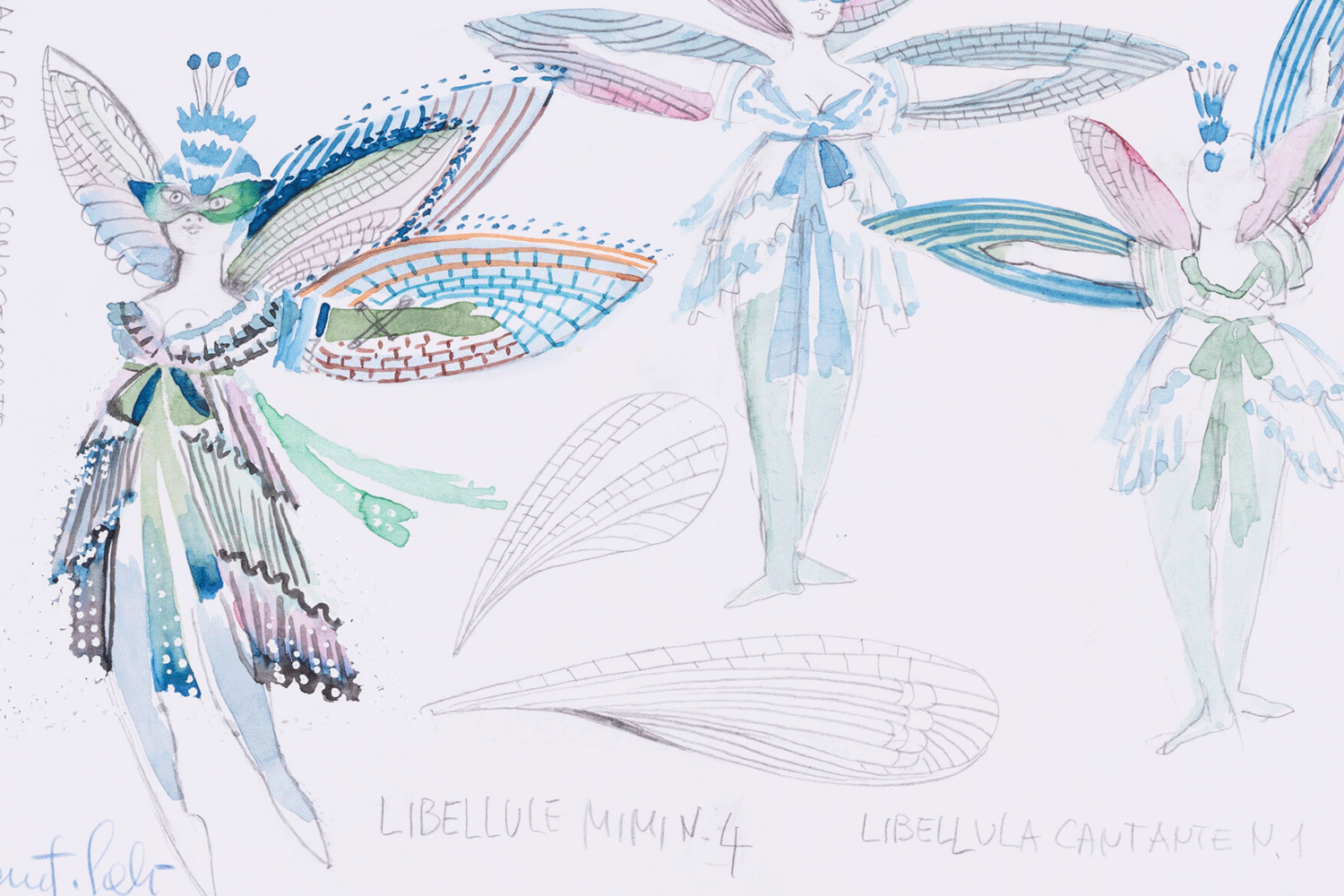
The seminar, a follow-up chapter to the Singing in the pool seminar hosted last year, focuses on the discovery and study of the theatrical mask, with particular reference to the aerial environment. The students attend a lecture on the history of theatrical scenography by the director, Professor Maria Ida Biggi, who gives them an overview of the research carried out by important scenographers. In addition, the students present can view sketches, masks and preparatory materials relating to some of the productions of set designer Santuzza Calì, whose entire documentary archive is preserved at the Institute.

Workshop with Marco Angius and the soloists of the Orchestra di Padova e del Veneto

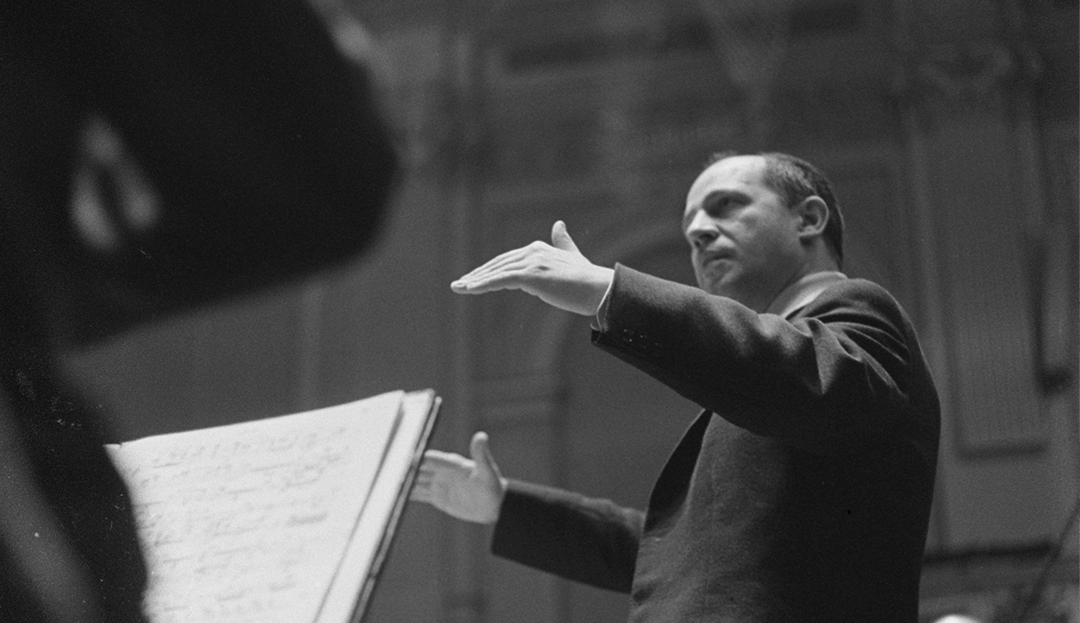
With his threefold activity as composer, conductor and theorist, Pierre Boulez profoundly influenced twentieth-century musical thought.

On the occasion of the hundredth anniversary of his birth, a workshop in the Research- Led Performance cycle focusing on conducting orchestral ensembles is offered. The programme, coordinated by Marco Angius, includes four compositions that reflect Boulez’s sound world: Anton Webern’s Symphony op. 21, Edgard Varèse’s Octandre, Pierre Boulez’s Mémoriale, and Niccolò Castiglioni’s Tropi. Eight young conductors who have shown interest and aptitude for the repertoire in question are to be selected through a call for applications. Practical sessions alternate with theoretical sessions held by Pietro Cavallotti, Paolo Dal Molin, Massimiliano Locanto and Francisco Rocca.

The workshop ends with a concert on 7 March, at 6 p.m., in the Sala degli Arazzi of the Foundation, at the conclusion of a three-day workshop focused on conducting orchestral ensembles, within the Research-led Performance cycle.

The concert programme includes performances of pieces by Niccolò Castiglioni, Tropi (1959, for chamber ensemble), Pierre Boulez, Mémoriale (1985, for solo flute and eight instruments), Edgard Varèse, Octandre (1923, for eight instruments) and Anton Webern, Sinfonia op. 21 (1928).


Concert | 6 p.m.

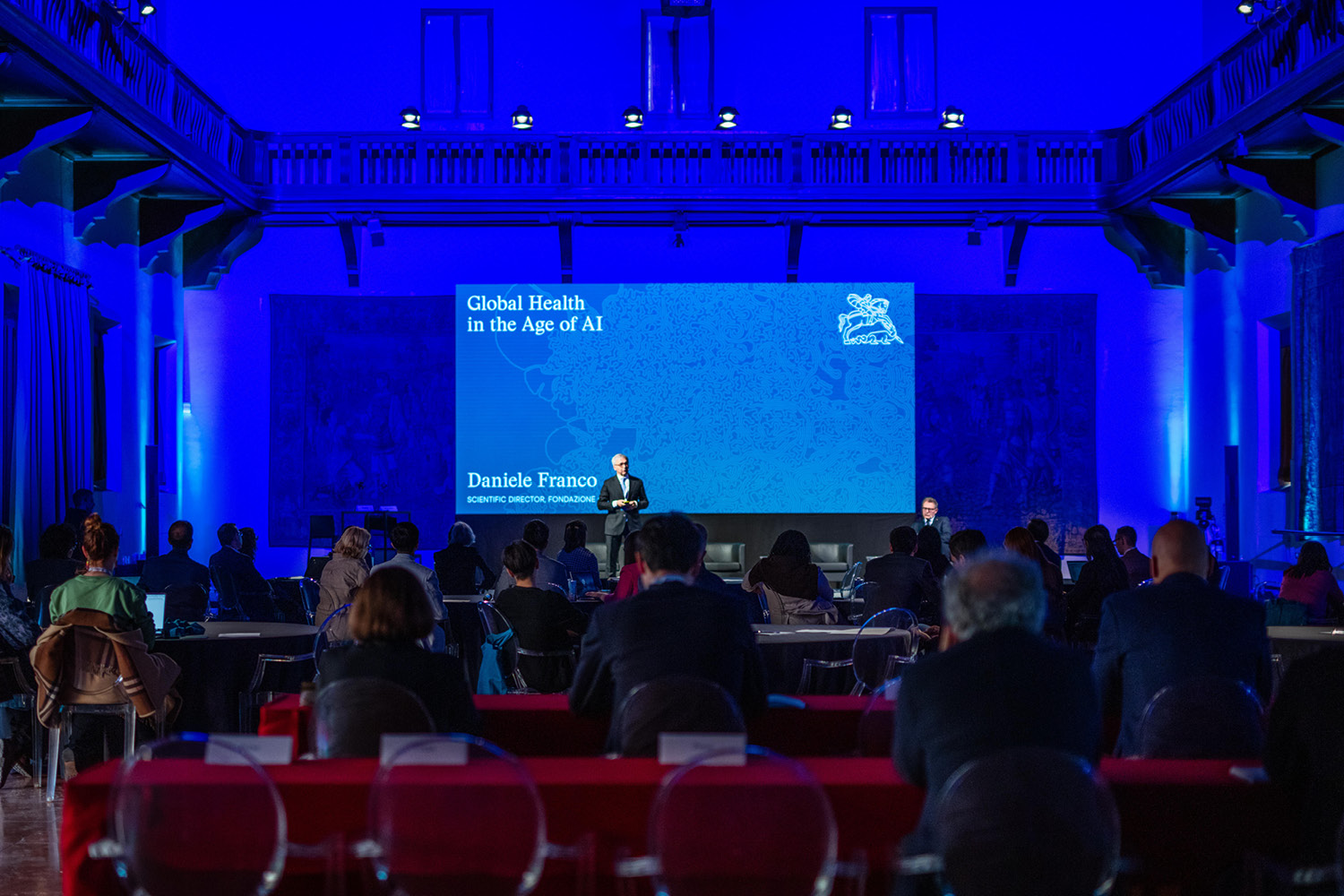
Global Health in the Age of AI: Charting a Course for Ethical Implementation and Societal Benefit

The Fondazione Giorgio Cini is hosting a three-day symposium, entitled “Global Health in the Age of AI”, assessing the societal implications of artificial intelligence (AI) in the healthcare sector, including issues related to accessibility, equity, and potential impacts on healthcare disparities.


Scientific Programme

The scientific program, structured over three days, is developed by Prof. Luciano Floridi, Director of the Digital Ethics Center (DEC) at Yale University and Professor in the Department of Legal Studies at the University of Bologna. Professor Floridi is supported in this work by Dr. Jessica Morley and Ms. Renée Sirbu from Yale University, and two rapporteurs: Ms. Emmie Hine (Universities of Bologna and Yale) and Mr. Huw Roberts (University of Oxford).


Scientific Outputs

A series of papers authored by the conference participants will be disseminated in a series of scientific publications published in an open-access format.


Fellowships

The Fondazione Giorgio Cini is pleased to announce the availability of eight, fully funded fellowships for young researchers interested in attending the three-day symposium “Global Health in the AI Age: Charting a Course for Ethical Implementation and Societal Benefit,” to be held in Venice from November 7th to November 9th, 2024.  The deadline for Applications is September 15th, 2024.


 Download Call for Applications

The call for fellowships has closed.

Go to the Playlist on YouTube 


PROGRAMME

Thursday 7 November 2024

[accordion][/accordion]
[accordion_entry title=”2pm — 2:10pm | Welcome Address”]
Daniele Franco, Scientific Director, Fondazione Giorgio Cini.
[/accordion_entry]
[accordion][/accordion]
[accordion][/accordion]
[accordion_entry title=”2:10pm — 3pm | Opening Remarks”]
Luciano Floridi, Yale University, US, and University of Bologna, Italy.
[/accordion_entry]
[accordion][/accordion]
[accordion][/accordion]
[accordion_entry title=”3pm — 3:30pm | Framing the debate”]
Luciano Floridi, Yale University, US, and University of Bologna, Italy.
[/accordion_entry]
[accordion][/accordion]
[accordion][/accordion]
[accordion_entry title=”15:30 — 17:00 | The Ethics of AI in Health care”]
Although there is plethora of guidance for the ethical development and use of AI in general, specific sectors of application have seen less of this activity. In the domain of global health, the leading voice for the ethics of AI has been the World Health Organization which has issued specific guidance on the ethics and governance for AI for health, and more recently guidance for the development and use of Large Multimodal Models in health. In this talk I will discuss the proposed guidance by WHO, examining the six ethical principles that form the foundation of the documents, and situate it within the broader ecosystem of global governance. As the implementation of the WHO guidance is still ongoing I will then focus on its impact in the development of AI ethics tools and in the revision of institutional approaches such as ethics review boards.


Keynote: Effy Vayena, Swiss Institute of Technology (ETH).

Respondent: Ravi Parikh, University of Pennsylvania, US.

Q&A
[/accordion_entry]
[accordion][/accordion]
[accordion][/accordion]
[accordion_entry title=”17:30 — 19:00 | AI and global health equity: How can we move from promise to practice?”]
Many expect that AI will help to solve complex problems in medicine, whether by improving quality of care and access, improving diagnostic capacities, offering new more targeted therapies, or reducing costs. In particular, AI has been promoted as a means of addressing persistent problems of health equity, including in low and middle income countries. Yet AI is not a silver bullet for medicine. The past decade has seen a growing push to address serious issues with AI in medicine, such as recurrent issues around algorithmic bias. While essential for reducing the risk that AI systems replicate and amplify existing forms of societal inequality and discrimination, a narrow focus on the improvement of algorithm performance misses the broader context required for AI to operate as designed. This talk explores the kinds of investments that are needed, particularly in low and middle income countries and in higher income countries with significant health disparities, in order to ensure that AI systems promote health and equity. Without significant, foundational investments in the social, political, and infrastructural context necessary for AI, critical resources for health will be wasted, perhaps causing more harm than good.


Keynote: Amelia Fiske, University of Munich (TUM), Germany.

Respondent: Enrico Coiera, Australian Institute of Health Innovation, Australia.

Q&A
[/accordion_entry]
[accordion][/accordion]
[accordion][/accordion]
[accordion_entry title=”19:30 – 20:15 | Panel: From Regulation to Standards and Implementation“]

Sophie Van Baalen, Rathenau Instituut, Netherlands.

Alexandre Dias Porto Chiavegatto Filho, University of Sao Paulo, Brazil.

Federica Mandreoli, University of Modena and Reggio Emilia, Italy.

Moderator: Glenn Cohen,  Harvard Law School, US.
[/accordion_entry]
[accordion][/accordion]
[accordion][/accordion]
[accordion_entry title=”20:15 – 20:30 | Closing Remarks“]
Luciano Floridi, Yale University, US, and University of Bologna, Italy.
[/accordion_entry]
[accordion][/accordion]


Friday 8 November 2024

[accordion][/accordion]
[accordion_entry title=”9:20 – 9:30 | Greetings from President Fondazione Giorgio Cini, Gianfelice Rocca.”]
[/accordion_entry]
[accordion][/accordion]
[accordion][/accordion]
[accordion_entry title=”Opening Remarks”]
Luciano Floridi, Yale University, US, and University of Bologna, Italy.
[/accordion_entry]
[accordion][/accordion]
[accordion][/accordion]
[accordion_entry title=”9:30 – 11:00 | AI and Public Trust.”]
Trust has emerged as a central issue in the context of data driven research and innovation, including AI. From trust in the institutions and companies that develop AI tools, to trust in the technology itself, there has been a lot of attention on how to secure, engender and maintain trust. Trust is perceived as fundamental for the development and introduction of new data-based technologies, such as AI, but also for the acceptability of the conditions and infrastructures that would enable the development of these technologies. And yet, how to ensure or foster trust remains elusive.  In this talk, I will engage with the issue of public trust in AI. Drawing from theoretical and empirical studies, I will examine questions such as, what does it mean for the public to trust AI? Is the concept of trust appropriate or relevant in this context, and what kind of normative implications arise for those who seek public trust? I will close by offering some reflections on why the ‘deficit of trust’ in AI seems to persist, and even increase, despite efforts to ensure trustworthiness, and what could be done about it.


Keynote: Elaine Nsoesie, Boston University School of Public Health, US.

Respondent: Kee Yuan Ngiam, National University Hospital, Singapore.

Q&A
[/accordion_entry]
[accordion][/accordion]
[accordion][/accordion]
[accordion_entry title=”11:30 – 13:00 | AI and the Social Determinants of Health.”]
Social determinants of health are the conditions of the places where we live, play, work and gather. These include a wide range of factors, such as socioeconomic status, neighborhood and physical environment, healthcare access and quality, social support networks, education and literacy, employment conditions, food environment, cultural and social norms, early childhood experiences, social exclusion and discrimination, access to transportation, and stress and psychosocial factors. The importance of studying social determinants of health to create effective public health policies and healthcare interventions is well-established. However, data is not always at the ready. Advances in artificial intelligence and the availability of massive datasets generated from digital and remote sensing tools offer opportunities for capturing granular details on the conditions of the spaces people occupy. This talk will highlight how data from social media, mobile phones, street images, and satellite images can be used to study social determinants of health and the impact of policies that impact health.


Keynote: Elaine Nsoesie, Boston University School of Public Health, US.

Respondent:  Kee Yuan Ngiam, National University Hospital, Singapore.

Q&A
[/accordion_entry]
[accordion][/accordion]
[accordion][/accordion]
[accordion_entry title=”14:30 – 16:00 | The Challenges of real-world Implementation – Turbocharging AI in Clinical Practice.”]
Leveraging large datasets and identifying complex underlying patterns in well curated data allows the technological advances in machine learning to offer products that enhance clinical accuracy, reduce health costs, improve efficiency, save time and resource, whilst minimising human errors. Whilst key applications include automated diagnostics, clinical decision support and predictive and pre-emptive personalized medicine for whole populations, the current reality of adopted products falls in diagnostic and descriptive domains.

The successful implementation of machine learning in these domains requires a structured approach grounded in implementation science and the TURBO framework – testable, useable, reliable, beneficial and operable platforms, adhering to national research ethics, clinical and research guidelines such as STARD-AI, QUADAS-AI, local governance frameworks, national regulatory adherence and thorough health-system research approvals. Utilizing the UK’s NHS as a case example, tangible solutions include developing clear guidelines for AI integration, conducting pilot studies to demonstrate efficacy, and establishing multidisciplinary teams to oversee implementation. Here, collaborations with industry will become increasingly visible as clinical AI advances are realised.

If AI is the ‘new electricity’, it will bring both foreseeable applications and unexpected innovations. It is crucial to identify which platforms can seamlessly integrate with existing clinical pathways and which ones will necessitate disrupting current care models to enable their optimal adoption for patient benefit.


Keynote: Hutan Ashrafian, Imperial College London.

Respondent: Sara Gerke, College of Law, University of Illinois Urbana-Champaign

Q&A
[/accordion_entry]
[accordion][/accordion]
[accordion][/accordion]
[accordion_entry title=”16:30 – 18:00 | Open AI meets Open Notes: Generative AI and clinical documentation.”]
In this presentation, I discuss two innovations – patient online record access (‘ORA’) and its relationship to generative AI tools. Reviewing the challenges and opportunities that ORA invites, I explore the range of ‘traditional’ solutions proposed to deal with these challenges. I then discuss how generative AI could assist clinicians with documentation by reviewing findings that clinicians are already deploying this tool, and exploring current evidence of its effectiveness, including the benefits and risks of using it generative AI for clinical documentation purposes.


Keynote: Charlotte Blease, Uppsala University, Sweden.

Respondent: Alexandre Dias Porto Chiavegatto Filho, University of Sao Paulo, Brazil.

Q&A
[/accordion_entry]
[accordion][/accordion]
[accordion][/accordion]
[accordion_entry title=”18:30 – 19:15 | Panel:The Geopolitics of Global Health and AI.“]
Sandeep Reddy, Queensland University of Technology, Australia.
Jessica Morley, Digital Ethics Center, Yale University, US.
Tamara Sunbul, John Hopkins Aramco Healthcare, Saudi Arabia.

Moderator: Naomi Lee, BMJ Global Health.
[/accordion_entry]
[accordion][/accordion]
[accordion][/accordion]
[accordion_entry title=”19:15 – 19:30 | Closing Remarks“]
Luciano Floridi, Yale University, US and University of Bologna, Italy.
[/accordion_entry]
[accordion][/accordion]


Saturday 9 November 2024

[accordion][/accordion]
[accordion_entry title=”9:20 – 9:30 | Opening Remarks“]
Luciano Floridi, Yale University, US and University of Bologna, Italy.
[/accordion_entry]
[accordion][/accordion]
[accordion][/accordion]
[accordion_entry title=”9:30 – 11:00 | Medical AI: Legal, Ethical, and Regulatory Considerations.”]
Policies to regulate AI focused on safety are unfolding. In the healthcare arena, there is movement towards holding health systems and providers accountable for AI-based discriminatory decisions. From an AI perspective, it will be extremely challenging to prove when an algorithm makes a mistake. For diagnosis, it is seldom that biopsies and autopsies are performed, so errors are not easily discovered. For predictions, the counterfactual is not available so it’s impossible to prove that an algorithmic decision wronged a patient. Tracking errors made by AI sounds great in principle but cannot be operationalized by current data and modeling limitations. In addition, there is plenty of evidence that health systems have etched long standing structural inequity in the way care is delivered, predating adoption of any AI algorithm. It is odd that they will be held accountable for discrimination caused through their use of an algorithm but are not held accountable for other forms of discrimination. We have a long way to go.
[/accordion_entry]
[accordion][/accordion]
[accordion][/accordion]
[accordion_entry title=”11:30 – 13:00 | Harmonizing regulation of AI in healthcare globally.”]
Integrating AI in healthcare raises concerns about safety, reliability, and ethical use, highlighting the urgent need for a harmonized global regulatory framework. The current regulatory landscape for AI in healthcare varies significantly across jurisdictions, with countries and regions adopting different approaches based on their specific needs and priorities. In this talk, I argue that while these efforts (e..g, the EU AI Act) are commendable, the lack of a unified global approach to AI regulation in healthcare can lead to inconsistencies, confusion, and potential risks for patients and healthcare providers. To address these challenges, fostering international collaboration and working towards a harmonized regulatory framework for AI in healthcare is crucial. This harmonization would ensure that AI systems adhere to consistent safety standards, transparency, accountability, and fairness, regardless of where they are developed or deployed. By establishing a standard set of principles and guidelines, regulators can promote the responsible development and use of AI technologies in healthcare while facilitating cross-border collaboration and innovation. Moreover, global harmonization of AI regulation in healthcare would benefit all stakeholders, including regulators, healthcare providers, AI developers, and patients. Through collaborative efforts, these stakeholders can establish comprehensive and efficient regulatory frameworks that prioritize patient safety, privacy, and ethical considerations in the development and deployment of AI technologies. This collaborative approach would foster greater trust in AI-driven healthcare solutions, encouraging wider adoption and improving patient outcomes worldwide.
[/accordion_entry]
[accordion][/accordion]
[accordion][/accordion]
[accordion_entry title=”14:30 — 15:00 | Summary of the Symposium”]
Luciano Floridi, Yale University, US and University of Bologna, Italy.
[/accordion_entry]
[accordion][/accordion]
[accordion][/accordion]
[accordion_entry title=”15:00 — 15:10 | Closing Remarks and goodbye”]
Gianfelice Rocca, President Fondazione Giorgio Cini.
[/accordion_entry]
[accordion][/accordion]
Accademia Vivaldi 2025 | Masterclass on the performance practice of the music of Antonio Vivaldi

The Istituto Italiano Antonio Vivaldi organizes six masterclasses on the performance practice of the compositions by Antonio Vivaldi, dedicated to young singers (max 39 years) and players.


Each meeting of three/five day each will take place at Fondazione Giorgio Cini, on the island of San Giorgio Maggiore, in Venice.


Deadlines for presentation of requests: 20 January, 3 March 28 April 13 June, 8 August and 24 October.


Teachers are Gemma BertagnolliVerónica Cangemi, e Antonio Frigé.

In cooperation with Fondazione Ugo and Olga Levi Foundation, lectures by musicologists from the research group La drammaturgia musicale a Venezia (1678-1792) are scheduled at each meeting.


Download Accademia Vivaldi 2025


Calendar

19-22 February

Singing masterclass: Gemma Bertagnolli

2-4 April

Basso continuo masterclass: Antonio Frigé

4-7 June

Singing masterclass: Verónica Cangemi

15-19 July

Singing masterclass: Gemma Bertagnolli

2-6 September

Singing masterclass: Gemma Bertagnolli

26-29 November

Singing masterclass: Gemma Bertagnolli

Fondazione Giorgio Cini’s 2025 programme of activities approved

More than ninety events and two main thematic focus points around which all the Foundation’s Institutes and Research Centres will work in synergy: an international and interdisciplinary symposium on ‘Democracy and Pandemics’ and a programme of events on Giacomo Casanova marking the 300th anniversary of his birth.


The General Council of the Fondazione Giorgio Cini has approved the programme of activities for 2025, which embraces and reflects the spirit of institutional renewal expressed by President Gianfelice Rocca, while implementing the multi-year interdisciplinary working guidelines laid out by Scientific Director Daniele Franco.

The programme features over ninety events that will showcase the seven Institutes and three Research Centres operating within the Foundation. Thirty-two seminars and conferences, twenty-seven educational events and workshops, eight exhibitions, six hosted events, thirty-two concerts as well as a number of publications will fill the Foundation’s annual event calendar.

The programming includes two themes that will foresee the participation of all the Institutes, with the aim of integrating methods, research, materials and a diverse range of imaginaries. The first thematic focus is ‘Democracy and Pandemics’which will be the topic of an international symposium from 13 to 16 November, with the presence of experts and scholars from all around the world. The second focus explores Giacomo Casanova and eighteenth-century Venice, a theme with which the Foundation will participate in the celebrations for the 300th anniversary of the birth of this iconic and restless figure of the Serenissima. The journey will culminate in an exhibition project that will be open to the public from October 2025 to February 2026.

Gianfelice Rocca, president of the Fondazione Giorgio Cini, explains the vision that accompanies the activity programme as follows: “We are living through a historical moment of profound change, characterised by heightened geopolitical and social fragmentation, with new protagonists and communities bearing divergent values and often polarised worldviews. At the same time, scientific and technological knowledge is advancing rapidly, profoundly affecting all of humanity.”


“We must refer to these challenges when interpreting the future role of the Fondazione Giorgio Cini,” the President added, “while maintaining the strong appeal to humanistic thought on which our civilisation is founded and which the Foundation is committed to preserving, fostering an open and constructive cultural dialogue that facilitates international relations. Of vital importance is the Foundation’s link with Venice, with its millennial history, as a constitutive element of our mission.”


The Scientific Director Daniele Franco underlines: “Over the past seventy years, the Foundation has organised countless events and meetings of a cultural nature, so as to bring scientific and humanistic fields into dialogue on an international level. Next year, with renewed commitment, it will set about addressing the issue of pandemic management in democracies with the participation of experts from all around the world. The Foundation must remain a place of dialogue, hosting figures from different backgrounds as well as research from different geopolitical systems.”

Lucio Fontana: Origins and Imagination

The symposium, a collaboration between the Fondazione Giorgio Cini Institute of Art History and the Fondazione Lucio Fontana, with the support of Intesa Sanpaolo, will be held on December 5th and 6th on the Island of San Giorgio Maggiore in Venice.

Lucio Fontana’s vital and inventive work extends and develops over a wide span of time from the 1920s to the end of the 1960s. A career studded with constant experimentation that placed him, from the very beginning, among the pioneers of contemporary art.

In the History of Art of recent decades, the centrality of his figure and work has increasingly emerged, and the new studies, multiple exhibitions and publications dedicated to him have thus been able to restore, especially to new generations of scholars, but also to a wider public, the variety and coherent continuity of his entire creative career. The international conference Lucio Fontana: Origins and Imagination, promoted by the Giorgio Cini Foundation Institute of Art History and the Lucio Fontana Foundation, intends for the first time to take stock of recent and ongoing studies, as well as to promote, at this significant and rich moment, a discussion between scholars who have dealt directly with the artist or whose in-depth studies have touched on Fontana themes that are useful for offering new readings and avenues of investigation: from those more strictly historical-artistic to research concerning the material and conservation aspects of the works.

[accordion][/accordion]
[accordion_entry title=”International Conference: Lucio Fontana: Origins and Imagination”]

Over the course of the two days of study, scheduled for 5 and 6 December 2024, there will be the opportunity to explore the imagery and context within which Lucio Fontana’s activity developed, as well as aspects, moments and themes pertinent to his research and critical reception in Italy and abroad.


The futurist roots of his work, the relationship with the sculpture of his contemporaries, the very early creative phase strained between Italy and Argentina, are some of the investigative paths that will be tackled and that will probe the reasons for the author’s current position. A section of the symposium will also be devoted to an in-depth examination of case studies: exhibitions, selected from among the many, that have contributed to building Fontana’s fortune or to promoting particular aspects of his creative parabola, reaffirming his role as a pioneer and the vitality of his research.


The symposium also highlights the interest shown by the Giorgio Cini Foundation in the Italian-Argentine master, the protagonist of several in-depth events hosted and promoted by the Venetian institution: the Exhibition of Drawings and Graphic Works by Lucio Fontana  in 1972; the 2014 conference Figurative Art and Abstract Art. 1954 – 2014 and the scholarship Lucio Fontana, Argentinean period: monuments projects and works announced in 2022 once again in close synergy with the Fondazione Lucio Fontana, which confirms its increasing commitment to supporting and encouraging scientific projects on the artist.

[/accordion_entry]
[accordion][/accordion]
PROGRAMMe

[accordion][/accordion]
[accordion_entry title=”Thursday, 5 December 2024”]

Join the live streaming on the Giorgio Cini Foundation YouTube channel


9:45 | Saluti istituzionali
Luca Massimo Barbero
Direttore dell’Istituto di Storia dell’Arte Fondazione Giorgio Cini


Silvia Ardemagni
Presidente della Fondazione Lucio Fontana


10:00 | Sessione I
Immaginario e contesto dell’avanguardia fontaniana


PRESIEDE:


Luca Massimo Barbero

Fondazione Giorgio Cini


Ester Coen

Università degli Studi dell’Aquila
Radici futuriste nel pensiero fontaniano


Nico Stringa
Università Ca’ Foscari Venezia
Arturo Martini e Lucio Fontana: dentro e oltre la scultura


Francesco Tedeschi
Università Cattolica del Sacro Cuore, Milano
L’“astrazione creativa” di Lucio Fontana nei progetti e nelle sculture di metà anni Trenta


Valerio Terraroli
Università degli Studi di Verona
La ceramica italiana degli anni Trenta e Quaranta tra arte e decorazione


Giovanni Bianchi
Università degli Studi di Padova
Intorno allo Spazialismo veneziano: il richiamo dell’ombra in Mario Deluigi e in Lucio Fontana


14:30 | Sessione II
“Luoghi fontaniani” tra Argentina e Italia


PRESIEDE:

Maria Villa
Fondazione Lucio Fontana


Daniela Alejandra Sbaraglia
Storica dell’arte
Anni Venti: opere d’esordioe formazione tra Argentina e Italia


Lorena Mouguelar
Universidad Nacional de Rosario
Lucio Fontana e la “nuova sensibilità” nell’arte argentina


Luca Bochicchio
Università degli Studi di Verona “La ruota nell’antro”: la fornace di Albisola come fucina creativa e motivo poetico


Sileno Salvagnini
Accademia di Belle Arti di Venezia
Lucio Fontana alle Biennali


Giorgina Bertolino
Storica dell’arte
Il “Devenir de Fontana” a Torino negli anni Sessanta

[/accordion_entry]
[accordion][/accordion]
[accordion][/accordion]
[accordion_entry title=”Friday, 6 December 2024″]

Join the live streaming on the Giorgio Cini Foundation YouTube channel


10:00 | Sessione III
Fortuna internazionale: anni Cinquanta e Sessanta


PRESIEDE:

Francesco Tedeschi
Università Cattolica del Sacro Cuore, Milano


Paolo Campiglio
Università degli Studi di Pavia
Il rapporto con Charles Damiano e il suo ruolo nella promozione internazionale di Fontana tra Inghilterra e Stati Uniti


Silvia Bignami
Università degli Studi di Milano
“Douche froide” a Parigi. Lucio Fontana tra mostre e critica


Stefano Turina
Università degli Studi di Torino
Un rivoluzionario quieto e fervente. Lucio Fontana e il Giappone (1953–1968)


Francesca Pola
Università Vita-Salute San Raffaele, Milano
Lucio Fontana e ZERO: attorno alla retrospettiva di Leverkusen (1962)


Barbara Ferriani
Restauratrice
Fontana e la materia


14:30 | Sessione IV
Esporre Lucio Fontana: criteri espositivi come letture critiche


PRESIEDE:
Francesca Pola
Università Vita-Salute San Raffaele, Milano


Luca Pietro Nicoletti
Università degli Studi di Udine
“Omaggio a Fontana” 1963-1972. Enrico Crispolti interprete di Fontana, prima e dopo


Francesco Guzzetti
Università degli Studi di Firenze
Intorno al 1966: Lucio Fontana negli Stati Uniti


Chogakate Kazarian
Curatrice e storica dell’arte
Curare la mostra “Lucio Fontana, rétrospective”, al MAM di Parigi, 2014


Marina Pugliese
Mudec, Milano
“Lucio Fontana. Ambienti/Environments”, Pirelli HangarBicocca 2017/2018. Ragioni di una mostra


Cristina Beltrami
Storica dell’arte
“Lucio Fontana: Sculpture” alla galleria Hauser & Wirth di New York: la prima mostra di sculture dell’artista negli Stati Uniti


Gianni Caravaggio
Artista
Concetto spaziale – un dispositivo per performare immagini prime

[/accordion_entry]
[accordion][/accordion]
[accordion][/accordion]
[accordion_entry title=”Opening hours and admission”]

Admission free subject to availability

[/accordion_entry]
[accordion][/accordion]
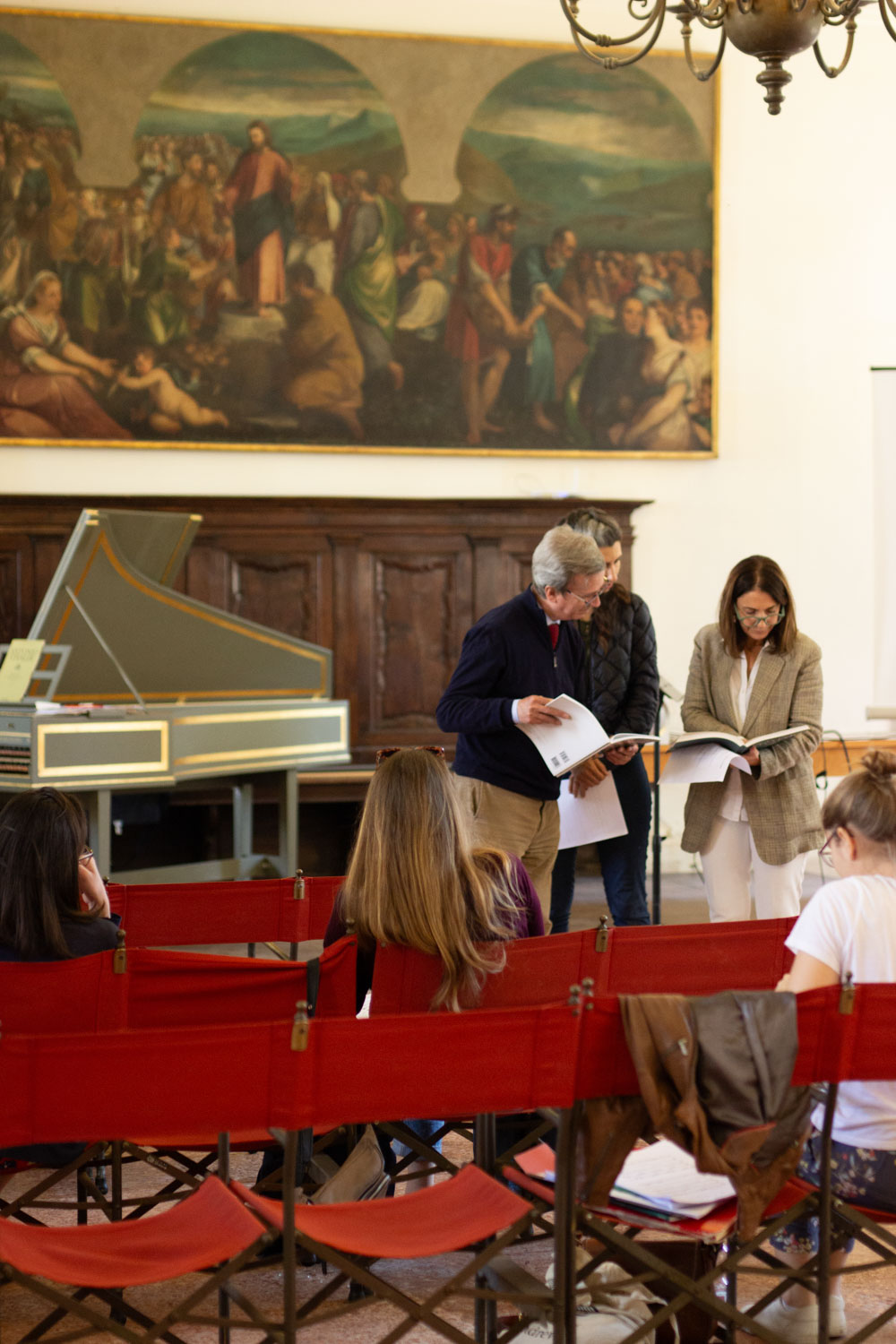
Workshop Research-led Performance | Composer – Instrument – Performer | Violoncello Solo in the Second Half of the 20th Century

This workshop is part of the Research-led Performance series, one of the most popular and esteemed activities at the Institute for Music since its inaugural edition in 2016.

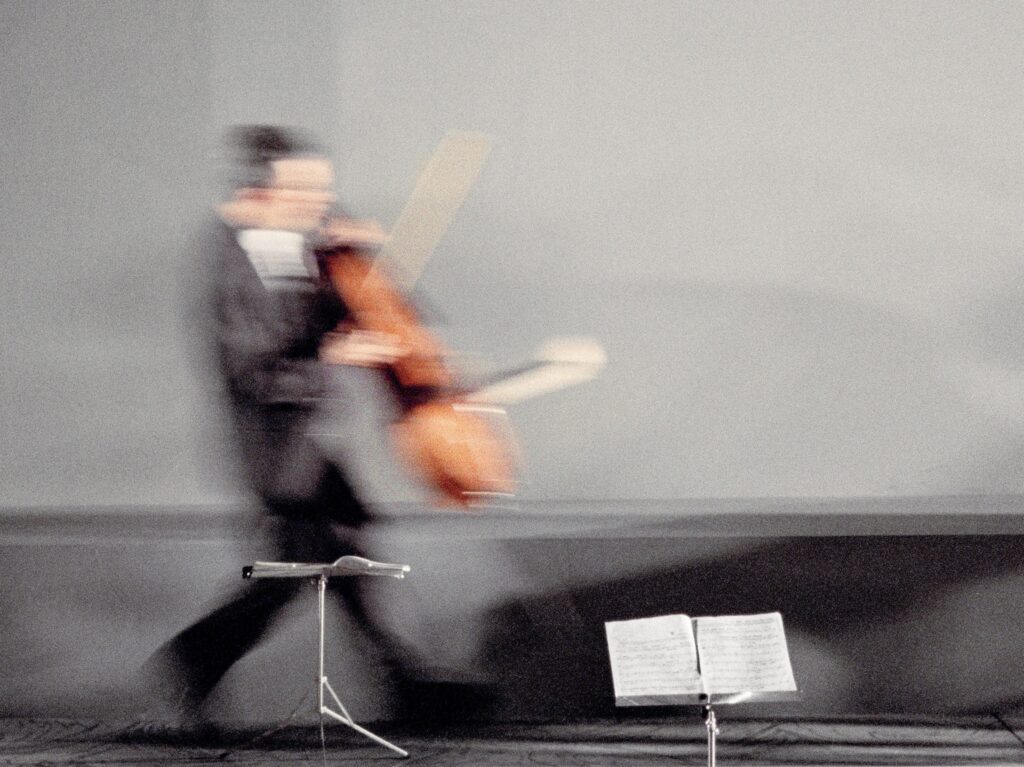
Our guest lecturer for 2024 is Lucas Fels, cellist of the Arditti String Quartet and professor at the Frankfurt University of Music and Performing Arts. A masterful musician, Fels combines his expertise with a keen interest in philological aspects and theoretical reflection. The workshop will focus on works for solo cello by Italian composers, with particular attention to the collections preserved at the Institute for Music. The following compositions will be studied:

  • Luigi Dallapiccola, Ciaccona, Intermezzo e Adagio (1945);
  • Renato de Grandis, Serenata seconda (1970);
  • Giacomo Manzoni, Freedom (2001);
  • Ernesto Rubin de Cervin, Omaggi (2002).

The workshop is aimed at young cellists with a strong ability to understand and interpret research and experimental music. The program includes both practical and theoretical sessions, as well as a final concert featuring performances by a select group of workshop participants. The practical sessions will be led by Lucas Fels, while the theoretical sessions, open to the public, will be given by musicologists Gianmario Borio (Director of the Institute of Music and Professor at the University of Pavia), Francisco Rocca (scientific collaborator at the Institute of Music) and Francesca Scigliuzzo (doctoral student at the University of Udine) they will address various aspects of the works being studied. Giacomo Manzoni’s participation is expected.

Call for applications for 8 cellists with scholarships

Download WorkshopVioloncelloBandoING_DEF (dec)

Application deadline: 25 October 2024

Johann Adolf Hasse at the Ospitale degli Incurabili

Sanctus Petrus et Sancta Maria Magdalena
Johann Adolf Hasse at the Ospitale degli Incurabili (1758)


Early Music Seminars Egida Sartori and Laura Alvini

Director: Pedro Memelsdorff


Master classes and lectures by Vivica Genaux and Raffaele Mellace

Venice, Giorgio Cini Foundation, November 25-29, 2024


Concert

Auditorium “Lo Squero”, Venice, November 28, h. 18 | Free entrance until seats last


Singers and musicians:


Jin Sophia, soprano
Ott Polly, soprano
Yuneeva Sofya, mezzoprano
Danta Maximiliano, countertenor
Cravino Raquel, violin
Gérard Stefano, violin
Cho Choi Hyngun, cello
Dijoux Jean-Christophe, organ and harpsicord


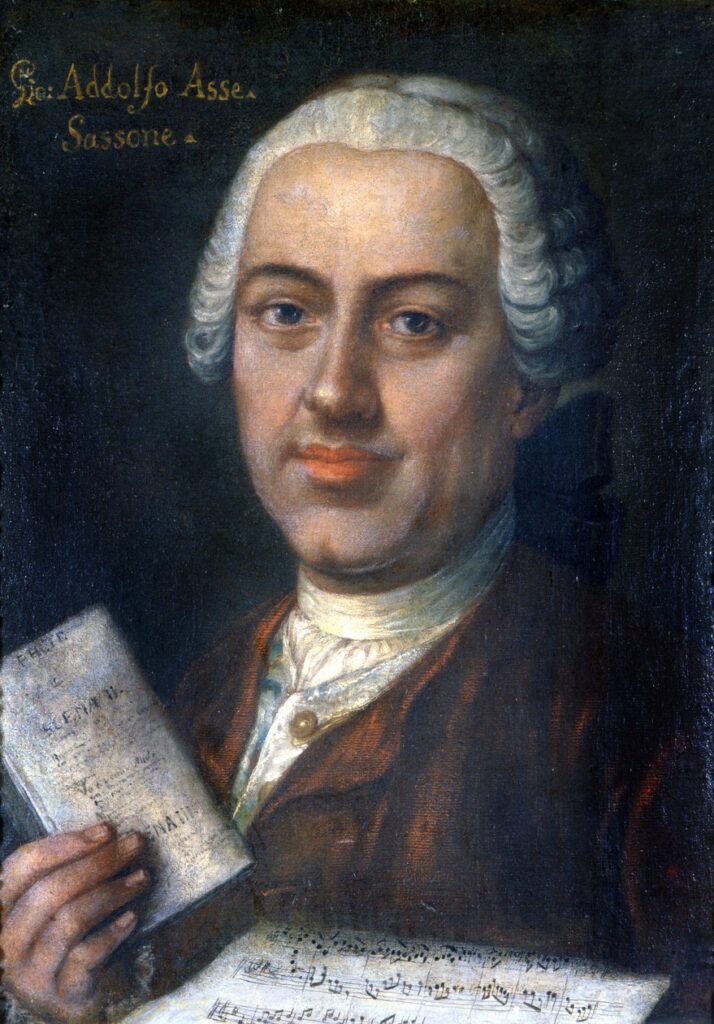
Just as in the other Venetian hospitals ‒ ‘dei Derelitti’, ‘dei Mendicanti’ or ‘della Pietà’ ‒ also in that ‘degli Incurabili’ the extreme importance given to music education in the seventeenth and eighteenth century is proportioned to the renown of the composers engaged to teach and direct public performances. These included great names such as Pallavicino, Porpora, Jomelli, Galuppi and ‒ perhaps the most famous among them all ‒ Johann Adolf Hasse.


Hasse composed two large motets on the fiftieth psalm Miserere mei Deus (one in C and one in D minor) for the ‘Incurables’’s ‘pute’ (maidens), to be performed during the celebrations of the Holy Week in the hospital church, consecrated to the Holy Saviour. And by way of introduction for each of them, he also composed two oratorios: Serpentes in deserto (introduction of the Miserere in C) and Sanctus Petrus et Sancta Maria Magdalena (introduction of the Miserere in D). Their function was didactic-moral: to exhort the girls and their audience to compassion, that is, identification with the utmost sorrow, as a prelude to the de profundis expressed by the subsequent penitential psalm.


The seminar will focus on one of those oratorios, Sanctus Petrus et Sancta Magdalena, composed for the ‘pute’ in 1758. Its poetic interest lies mainly in the narrative’s perspective: the Passion of Jesus seen not only by Peter and Magdalene, but also by three ‘minor’ characters in the Gospels ‒ Mary the mother of James, Salome, and Joseph of Arimathea. Its musical interest, conversely, resides in the variety and intensity of rhetorical structures and figures with which Hasse enriches and indeed exacerbates that narrative.


The seminar’s main teacher will be mezzo-soprano Vivica Genaux, a celebrated specialist in the Hassian repertoire, who will be assisted by Raffaele Mellace, one of the leading musicologists in the field. As traditionally, the seminar will be concluded with a public concert.

The event is organized with the contribution of the Regione Veneto and the Swiss foundations Concordance,Irma Merk and L.+Th. La Roche, and the Johann Adolf Hasse Foundation (Hamburg).


Scholarships available for singers and musicians (violin and continuo players)

Application deadline: 8th October, 2024

Download the call for scholarships

Homo Faber 2024 | The Journey of Life

The Fondazione Giorgio Cini, in partnership with the Fondazione Cologni dei Mestieri d’Arte and the Michelangelo Foundation presents the third edition of Homo Faber: an event dedicated to the art of craftsmanship.

For this third edition, visitors will be taken on a journey through a human life, from birth to afterlife – celebrating life’s standout moments and everyday simplicities, all viewed through the lens of craft. Meaningful milestones will be celebrated with special objects, crafted by skilled artisans according to specific techniques. From childhood to travel, romance to dreams, Homo Faber 2024 will showcase the craftsmanship behind the objects that accompany life’s most precious moments. 

Luca Guadagnino and architect Nicolò Rosmarini will bring their vision and creativity to the art direction of this event. Exploring and developing The Journey of Life, a concept by Hanneli Rupert (Vice Chair of the Michelangelo Foundation), their staging will immerse visitors in a rich human narrative that weaves its way through Fondazione Giorgio Cini located on San Giorgio Maggiore island, in Venice. It is a unique opportunity to visit the magnificent spaces of this world-renowned cultural institution, a long term partner of the Michelangelo Foundation. 

Exceptional scenography, bespoke handmade creations and live artisan demonstrations will make Homo Faber 2024 a truly sensory voyage. Inspired by the ten themes which articulate The Journey of Life, the showcase will unveil hundreds of outstanding handcrafted objects made by talented artisans from all over the world, highlighting the diverse skills, techniques and innovative approaches behind their creations. 

A special selection of bespoke experiences encompassing craftsmanship, entertainment and gastronomy will be available to book in advance. Beyond the walls of the Fondazione Giorgio Cini, the hidden gems of Venice will be revealed through Homo Faber in Città, a programme developed in partnership with Fondazione Cologni dei Mestieri d’Arte. Participants can discover a treasure trove of artisanal addresses, offering a new way to visit the city. 

Discover more on homofaber.com 

By your ticket

[accordion][/accordion]
[accordion_entry title=”All editions”]

Since 2018, Homo Faber has presented the excellence of craftsmanship from around the world every two years, an initiative organized by Michelangelo Foundation in collaboration with Fondazione Cologni dei Mestieri d’Arte and Fondazione Giorgio Cini. With each edition, the spaces of Isola di San Giorgio are transformed and brought to new life.

14–30 September 2018
Homo Faber. Crafting a more human future

10 April – 1 May 2022
Homo Faber: Crafting a more human future. Living Treasures of Europe and Japan

1–30 September 2024
Homo Faber 2024 – The Journey of Life

1–30 September 2026
Homo Faber 2026 | An Island of Light 

[/accordion_entry]
[accordion][/accordion]