Isola di San Giorgio Maggiore, Venezia Archives - Page 7 of 8 - Fondazione Giorgio Cini

Concert mdi ensemble

In concomitance with the Conference Occultural Transfers between North and South, organised by the Centre for Comparative Studies of Civilisations and Spiritualities, there will be a concert of mdi ensemble curated by the Institute of Music. The concert focuses on three composers whose works have multiple references to the Conference’s themes, particularly the spiritual, mystical and esoteric aspects of cultural and religious exchanges between Northern and Southern Europe.


Giorgio Cini Foundation,  18:00 – 19:00


Program:


Introduction by Gianmario Borio, director of the Institute of Music, Giorgio Cini Foundation


Jean Sibelius,

Malinconia for cello and piano op. 20 (12’)


Kaija Saariaho,

Cendres for flauto, cello and piano (10’)


Franco Oppo,

Trio III per flute, violin and piano (13’)


Kaija Saariaho,

Light and matter for violin, cello and piano (18’)


mdi ensemble:
Sonia Formenti, flute
Corinna Canzian, violin
Giorgio Casati, cello
Luca Ieracitano, piano


For more information visit the page of the Conference Occultural Transfers between North and South (1-2 November 2023).


This event is financed by the Giorgio Cini Foundation, the University of Oslo (UiO:Norden and NordForsk through ReNEW), and by the Centre for History of Hermetic Philosophy and Related Currents (HHP) of the University of Amsterdam.

The Teatro Verde. The Mask of Time

Book your seat for September 29, 2022 6:00 p.m., at Fondazione Giorgio Cini to the link.


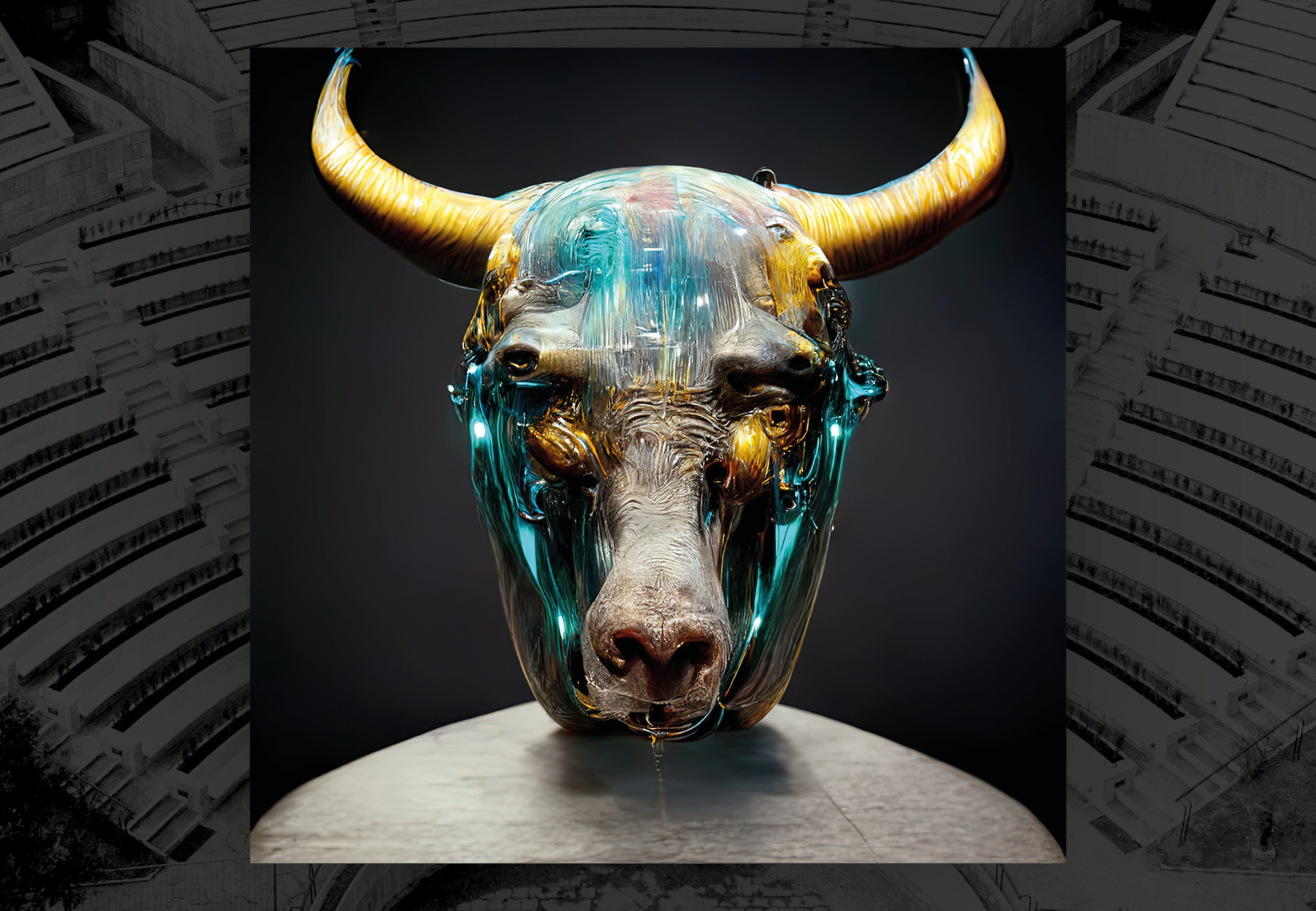
Digitisation practices are peerless and now irreplaceable tools for the preservation and enhancement of cultural heritage, but they can also be used to produce new works. This is the case with The Mask of Time, an audio-visual creation made for the Fondazione Giorgio Cini by Mattia Casalegno and the sound artist Maurizio Martusciello aka Martux_M, announced with a trailer launched for the reopening of the Teatro Verde on the Island of San Giorgio on 10 April 2022.


Inaugurated in 1954 by Vittorio Cini, the theatre is the focus of a major campaign to restore the island’s monumental architecture and a fascinating subject of study for the artists who have chosen to feature it in the four-part film. In The Mask of Time, the theatre is seen through its history of constructions and glorious past productions but also through the future in a distant, utopian post-anthropocentric age, in which nature has regained its spaces, now inhabited by high-definition digital humans. Experimental technologies were used to create the film, such as Midjourney, a text-based image generator derived from Open AI DALL-E, and Unreal Engine 5, the major platform for gaming and for the future development of a metaverse with increasingly realistic avatars.


The overall project will bring one of Venice’s most suggestive theatres back to life, also virtually, and connect contemporary creativity with innovations involved in producing sophisticated narratives for audiences both near and far. By starting from considering the theatre as a place of fiction and representation, its potential will be explored further. To do so, Mattia Casalegno has adopted digitisation tools and processed the images taken by scanner drones. Moreover, by exploring the archive documents in the Institute of Theatre and Opera, he became familiar with historical Teatro Verde performances: the classics of Greek tragedy, Ariadne, Pasiphae and the Minotaur, but also the mythologies of religious symbols closest to his Neapolitan culture; all of this would then be accompanied by original music from sound artist Maurizio Martusciello aka Martux_M.


Together they have created a work of great artistic and communicative significance, which will be presented to the public on 29 September as a symbol of the regeneration of the Teatro Verde and of a culture increasingly interested in the latest, fast-evolving technological-scientific developments.


Homo Faber 2022 | Crafting a More Human Future. Living Treasures of Europe and Japan

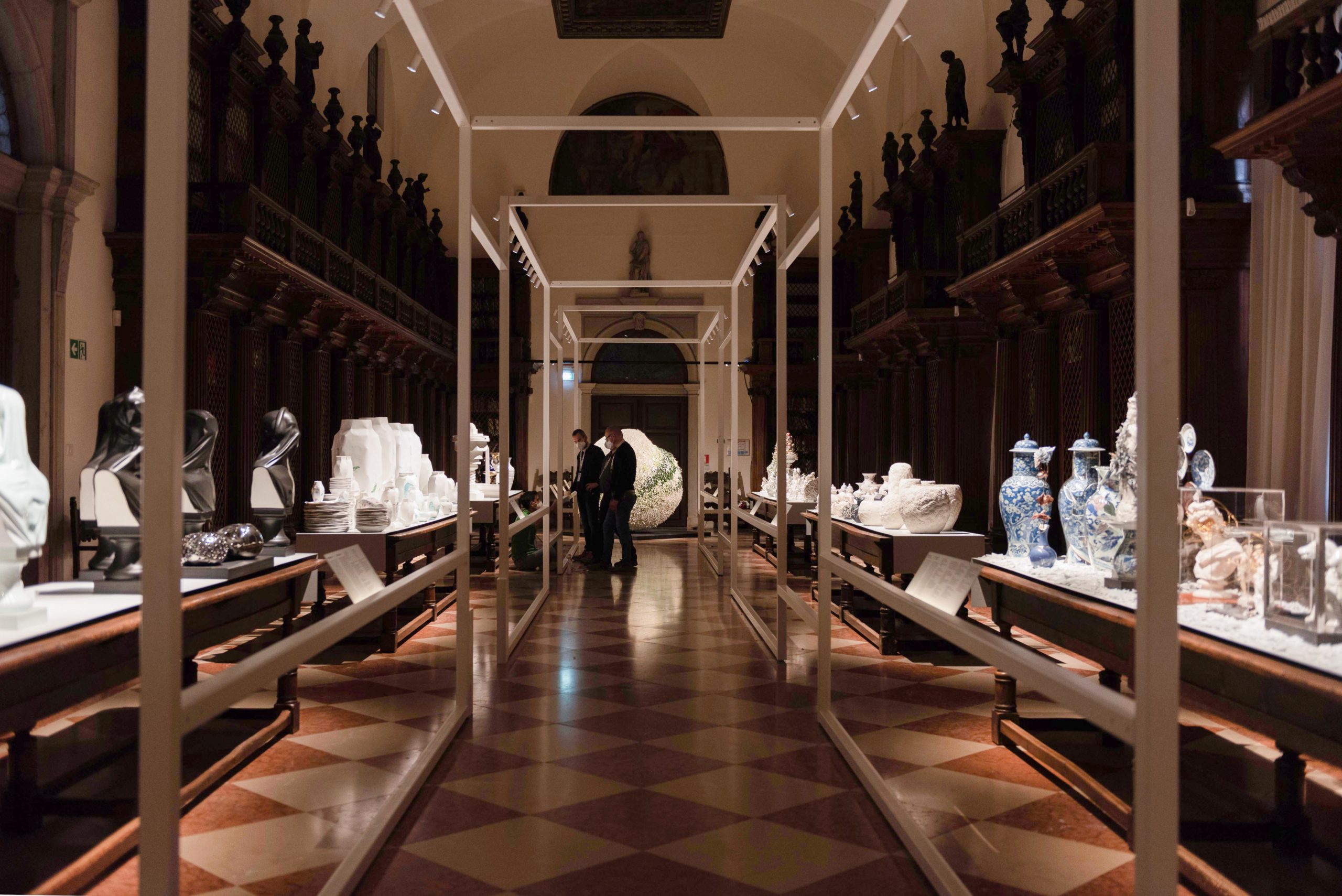
Homo Faber: Crafting a More Human Future” returns to San Giorgio from 10 April to 1 May 2022. This year’s edition is devoted to the Living
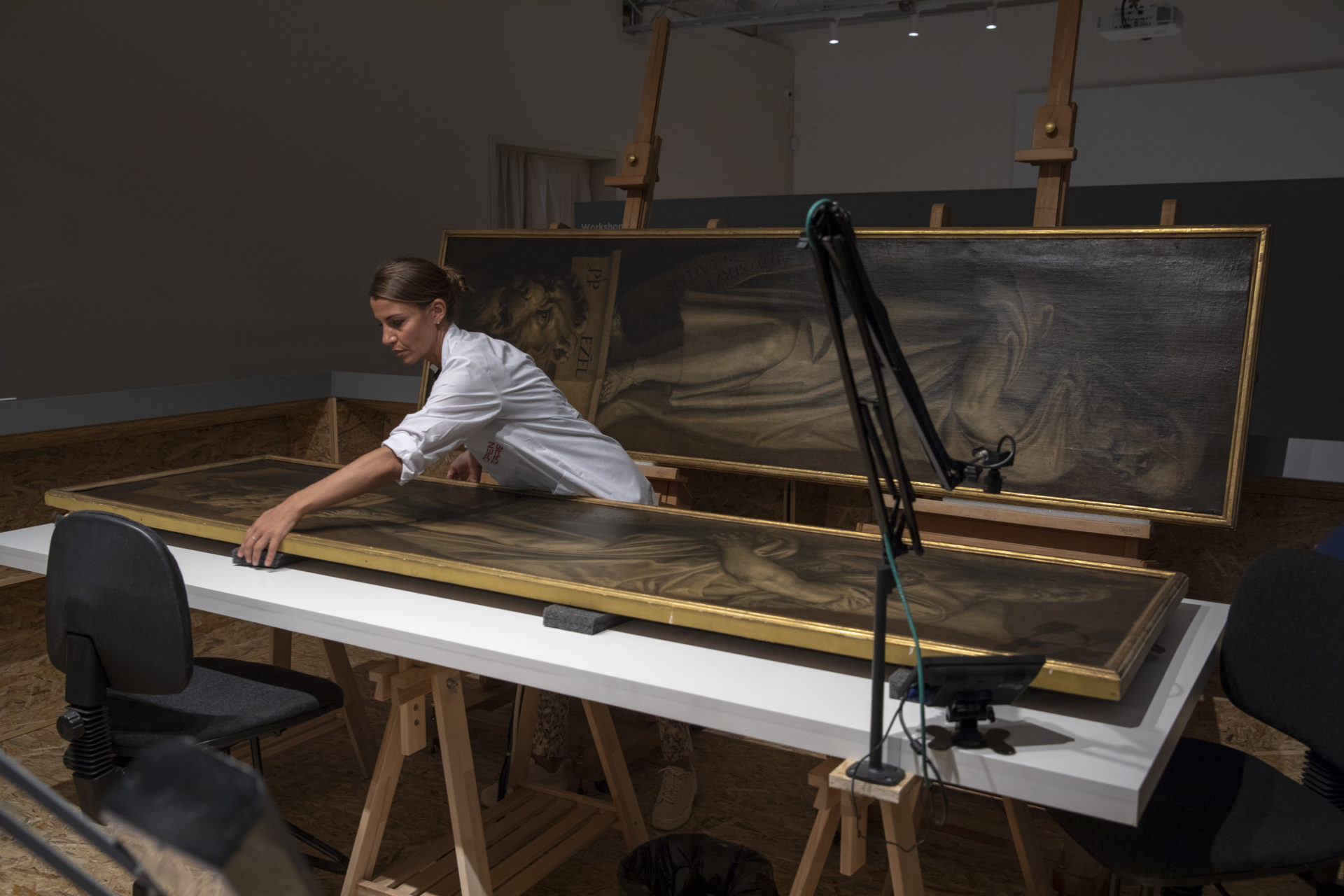
Treasures of Europe and Japan, a major project for the promotion of excellent artistic craftsmanship organised by the Michelangelo Foundation for Creativity and Craftsmanship, in partnership with the Fondazione Giorgio Cini, the Fondazione Cologni Mestieri d’Arte, Milan, the Japan Foundation and the Fondation Bettencourt Schueller, France, with the patronage of UNESCO. On the Island of San Giorgio Maggiore, visitors will be able to explore masterpieces, exhibitions, installations and workshops showcasing the art of great European master artisans and creatives and a selection of “Japanese National Living Treasures”. The exhibitions and events have been designed by a team of international curators, coordinated by Alberto Cavalli, executive director of the Fondazione Cologni and director of the Michelangelo Foundation.
A cultural experience of craftsmanship:

15 exhibitions, 22 curators and designers, 12 Japanese National Living Treasures, over 850 unique works crafted by more than 400 designers and artisans from 43 countries.

[accordion][/accordion]
[accordion_entry title=”All editions”]

Since 2018, Homo Faber has presented the excellence of craftsmanship from around the world every two years, an initiative organized by Michelangelo Foundation in collaboration with Fondazione Cologni dei Mestieri d’Arte and Fondazione Giorgio Cini. With each edition, the spaces of Isola di San Giorgio are transformed and brought to new life.

14–30 September 2018
Homo Faber. Crafting a more human future

10 April – 1 May 2022
Homo Faber: Crafting a more human future. Living Treasures of Europe and Japan

1–30 September 2024
Homo Faber 2024 – The Journey of Life

1–30 September 2026
Homo Faber 2026 | An Island of Light 

[/accordion_entry]
[accordion][/accordion]

Homo Faber 2018 | Crafting a More Human Future

The Michelangelo Foundation for Creativity and Craftsmanship, an institution based in Switzerland dedicated to the promotion of master craftsmanship on an international scale, is holding its first major cultural event dedicated to art crafts in Europe: Homo Faber. Crafting a More Human Future.

The exhibition has been conceived by a highly select team of renowned designers, curators and architects. It aims to showcase the excellence of European craftsmanship, offering visitors a memorable unique experience. Homo Faber has relied on the collaboration of an exceptional team to infuse the show with extraordinary creativity and energy, including leading figures in the design field, such as Michele De Lucchi, Stefano Boeri, India Mahdavi, Judith Clark, Jean Blanchaert and Stefano Micelli. The partners of the Michelangelo Foundation who have collaborated in the organisation all share the same vision: the Fondazione Giorgio Cini, the Fondation Bettencourt Schueller, the Triennale Design Museum and the Fondazione Cologni dei Mestieri d’Arte. The exhibition will feature a wide selection of materials and disciplines, from jewellery to custom bicycles, from near extinct artisan skills to some of the most representative examples of European art crafts. Covering an area of 4,000 square metres, Homo Faber will be the largest ever exhibition to be held at the Fondazione Cini; visitors are required to register in advance on the website www.homofaberevent.com.

[accordion][/accordion]
[accordion_entry title=”All editions”]

Since 2018, Homo Faber has presented the excellence of craftsmanship from around the world every two years, an initiative organized by Michelangelo Foundation in collaboration with Fondazione Cologni dei Mestieri d’Arte and Fondazione Giorgio Cini. With each edition, the spaces of Isola di San Giorgio are transformed and brought to new life.

14–30 September 2018
Homo Faber. Crafting a more human future

10 April – 1 May 2022
Homo Faber: Crafting a more human future. Living Treasures of Europe and Japan

1–30 September 2024
Homo Faber 2024 – The Journey of Life

1–30 September 2026
Homo Faber 2026 | An Island of Light 

[/accordion_entry]
[accordion][/accordion]

Bîrûn Ottoman Music Seminars

New announcement for scholarships offered by Fondazione Giorgio Cini onlus

 Bîrûn Ottoman Music Seminars

Director: Kudsi Erguner

Religious music and songs of the Istanbul Armenians

Venice, Fondazione Giorgio Cini, 19-24 March 2018

Deadline for presentation of requests: 15 January 2018
10 Scholarships 
addressed to: solo singers,‘ûd players, tanbûr players, kanûn players, kemençe players and percussionists.

The Intercultural Institute for Comparative Music Studies is offering ten scholarships to young professional or semi-professional musicians to take part in the latest Bîrûn, advanced seminar on Ottoman music directed by the maestro Kudsi Erguner, in 2018 dedicated to the religious music of the Istanbul Armenians.

The liturgical chants known as Sharagan and religious hymns in Armenian composed in the maqâm of the Ottoman modal system will be studied. The two genres together make up a precious, unexplored repertoire.

There is often some confusion between the Armenian cultural music of the Caucasus and the music that developed in the big cities of the Ottoman Empire, from Constantinople to Istanbul and not only, but these are two fairly different musical aesthetics. Immediately after the taking of Constantinople in 1453, Sultan Mehmet II established an Armenian patriarchate and there was already an active presence of Armenian composers in Ottoman musical art by the seventeenth century. Some works in Armenian by the celebrated composer Hamparsum Limonciyan (Constantinople, 1768-1839) will be looked at in particular during the seminar, along with some of his instrumental compositions.

The selected Ensemble will be made up of five singers and five expert players of the typical instruments of cultivated Ottoman musictanbûr lute, kanûn zither, ‘ûd lute, keman or kemençe vielle and percussion. The seminar will end with a public concert of the Ensemble Bîrûn, conducted by Kudsi Erguner, on Saturday 24 March 2018.


Scholarships

The Fondazione Giorgio Cini is offering 10 scholarships for singers and musicians who will make up an ensemble with voice, ‘ûd short-necked lute, tanbûr long-necked lute, kanûn zither, kemençe vielle and percussion.

The scholarships will cover the enrolment fee, accommodation in a single room from 18 to 25 March (at the Centro Vittore Branca residence) and breakfasts and lunches (not dinners). Travel and urban transport costs will be paid by the participants.

To take part in the selection, candidates must send the following materials to the seminar secretary

(via email to: [email protected])  by no later than 15 January 2018: 

  • Enrolment request
  • Copy of the passport or identity card
  • Detailed CV with clear reference to the candidacy sought (e.g. voice; tanbûr,);
  • 1 music recording in mp3 or mp4 format

 Candidates must be able to read music in eurocolta notation and, especially, must study in advance the repertoire that will be sent before the start of the seminar.

Only requests for admission sent in Italian or English will be accepted.


For information:

Istituto Interculturale di Studi Musicali Comparati – Fondazione Giorgio Cini onlus – Isola di San Giorgio Maggiore, 30124 Venice – Email: [email protected] – www.cini.it  – Tel +39 041 2710357


For information on the International Vittore Branca Center and its facilities:

https://www.cini.it/en/vittore-branca-center/the-residence

[email protected] | Tel. 39 041 2710253


Enrolement request Birun 2018
Study Day The Mirror of Taste. Vittorio Cini and Historical Art Collecting in the 20th Century

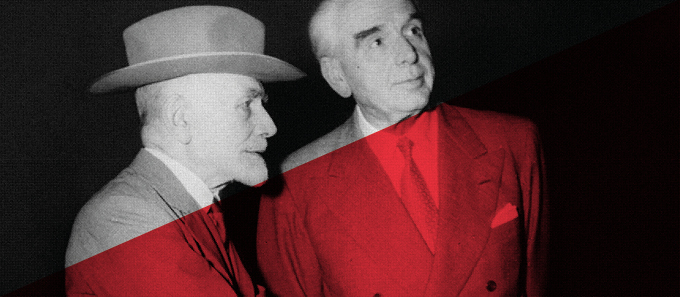
“The Cini Collection is the most important collection put together in Italy in the last fifty years.” That is how, in 1984, the great art historian Federico Zeri – a former advisor to Count Cini –
began celebrating one of the greatest Italian collectors in the first half of the 20th century. That same year, a permanent exhibition of a group of the most significant items in his collection, donated in 1981 by his daughter Yana Cini Alliata of Montereale, was installed in what had been Vittorio Cini’s Venetian home – the Palazzo Cini. The great monument to his patronage remained, however, Monselice Castle, where some sections of his collections, such as the famous Armory, had been brilliantly laid out by the
ingenious Nino Barbantini.
Forty years after Vittorio Cini’s death, the Foundation named after his son is celebrating its founder by focusing on his intense activity as one of the greatest and most enlightened collectors of historical art works in the 20th century. The celebrations will include a study day, November 14, dedicated to what Zeri described as the “last Doge of Venice”. The morning session will tackle various aspects of the collector’s personality, focusing on art historians and antique dealers who were collaborator or consultant friends, such as Nino Barbantini, Federico Zeri and Bernard Berenson. The afternoon papers, on the other hand, will illustrate Vittorio Cini’s affinities and differences with other contemporary collectors, such as Angelo Costa, Riccardo
Gualino, Guido Cagnola and Aldo Crespi.

 Download the program

Thirteenth World Conference on the Future of Science The Lives to Come

How will the life of humankind change over the next twenty years? How will we be nourished
and how will we care for ourselves? What new horizons will open up for scientific research?
How will health change and how will it impact on our quality of life?

The thirteenth Future of Science conference, being held just under a year after the death of Umberto Veronesi, aims to celebrate his scientific and political legacy and his vision of the future, as well as consider the challenges we are facing, the opportunities that we will have to grasp, and the commitment to a free and democratic science in the awareness of an increasingly difficult and complex society. This is an extraordinary opportunity to launch a high-standard debate involving students, universities, researchers, representatives of institutions and the  economy and the whole of civil society.

The Future of Science is an annual series of conferences jointly organised by the Fondazione Umberto Veronesi, the Fondazione Silvio Tronchetti  Provera and the Fondazione Giorgio Cini, with the aim of exploring the importance of scientific progress as a means to improving the quality of our lives as we outline a new role for science in the society of the third millennium.

More info on

https://futureofscience.org/

Conclusive Concert of the Early-Music Seminars 2017 | Maestros Napolitanos. Francesco Durante – José de Nebra. Neapolitan Music in Baroque Spain. 1730-1760

Maestros Napolitanos. Francesco Durante – José de Nebra. Neapolitan Music in Baroque Spain. 1730-1760

Venice, Giorgio Cini Foundation, 7-10 February 2017

Francesco Durante’s celebrity as a composer and music teacher spread over continents and lasted for centuries. Among his pupil were Pergolesi and Paisiello — who influenced the musical aesthetics of the whole of Europe — and his solfeggi and partimenti, still owed by Vincenzo Bellini, were copied and reworked in the Western Indias, in Mexico and Brazil.

The seminar will explore the dissemination of Durante’s school and style in Spain, comparing some of his chamber-music works — Duetti da camera and Concerti a quartetto — with those by José de Nebra, a fervid supporter of the Neapolitan school in Madrid and himself a follower of Pergolesi.

Two vocal soloists (a soprano and an alto) and a string quartet will be accompanied by a thoroughbass, coached and directed by Eduardo López Banzo and assisted by the musicologist Dinko Fabris.

 This year’s Early Music Seminar, directed by Pedro Memelsdorff, is entitled Maestros Napolitanos. Francesco Durante – José de Nebra. Neapolitan Music in Baroque Spain. 1730-1760. Organised by the Fondazione Giorgio Cini in collaboration with and supported by the Fondation Concordance, Basel (Switzerland), the Seminar will end with a concert at 6 pm on 10 February 2017 in the new auditorium of the Fondazione Cini. The programme will feature music from the repertoires analysed during the seminar, to be held from 7 to 10 February. The concert is open to the public with free admission while seats last. The masterclasses are also open to the public but registration is required by applying by email to the seminar secretary’s office: [email protected]

Music by Francesco Durante and José de Nebra

Eduardo Lopez Banzo (conductor)

David De Jesus Torres Rodriguez (violin)

Hyunkun Cho (cello)

Alaia Ferran (viola)
Ignacio Ramal Viejo (violin)

Dalma Krajnyák ​ (mezzo soprano)​

Alicia Amo (soprano)

Nicola Lamon (harpsichord)


Free admission while seats last

Twelfth World Conference On the Future of Science. Digital Revolution: what is changing for humankind?

The pervasive “digital revolution” is one of the most topical phenomena of our age and has brought about profound changes in social, cultural, medical and scientific terms. Each stage of our life is undergoing deep transformations as traditional roles and phases evolve, while the greater human-machine collaboration may have largely unexplored consequences.

The twelfth edition of the World Conference on the Future of Science will attempt to reveal the secrets of the digital age. From 22 to 24 September, some of the world’s leading experts on science will gather on the Island of San Giorgio Maggiore in Venice to discuss the most pressing issues arising from this revolution. They will express their own points of view on questions of crucial importance for the destiny of our society before an audience of scientists, philosophers, theologians, industrialists, politicians, economists, journalists, students and Others interested in the social, economic and political consequences of continuous scientific progress.

The “Future of Science” is a series of annual international conferences jointly organised by the Fondazione Umberto Veronesi, the Fondazione Silvio Tronchetti Provera, and the Fondazione Giorgio Cini. The aim of the conferences is to examine the importance of scientific development as a mean of improving the quality of our lives and to delineate a new role for science in the society of the third millennium. The underlying idea arises from an awareness that the problems and  dilemmas generated by unrelenting scientific and technological progress are not being adequately discussed in terms of their social, economic and cultural consequences, while society seems to be ill-informed about the ongoing technological revolution and its short- and long-term implications.

More info on

http://www.thefutureofscience.org/


The Stage as ‘Sensitive Space’: Scores and Stage Direction after Verdi and Wagner

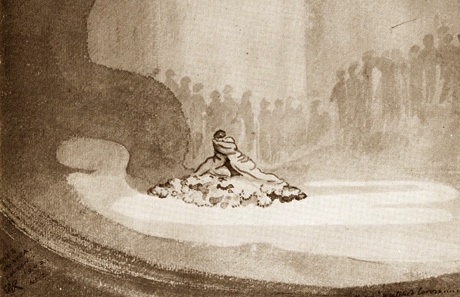
Edward Gordon Craig, drawing for the first scene of the second act of Acis and Galatea by Handel, London, 1902. 

Fondazione Giorgio Cini onlus


The aim of the conference is to examine the way that opera scores envisage or rather prescribe the stage setting. Evidence of the development of an awareness of stagecraft in 19th-century composers is found not only in the writings of Wagner and the letters of Verdi but also in the increasingly important use of the spatial dimension in opera stage designs. This trend grew in the first half of the 20th century in concomitance with the advent of stage directing as a specific art form, which became an indispensable reference point for studies on opera.

Although the close relationship between word, music and image has been recognised as essential, essays on the subject still have several lacunas. In particular there is a lack of a systematic, well-tuned perspective at the theoretical level able to provide a solid base for identifying and assessing the musical elements that influence the organisation of the stage space in its various components (images, requirements, movements and gestures). The conference sets out to offer a contribution to the development of this historical and theoretical approach. The first session (Composing the Stage between Verdi and Wagner) includes papers by Luca Zoppelli, Gundula Kreuzer and Riccardo Pecci; the second (The Normative Ear: New Stages for the Opera) will feature presentations by Maria Ida Biggi, Donatella Gavrilovich and Clemens Risi; the participants of the third session (The Composer’s Eye: The Stage Space in three Scores) will be Marie Lavieville Angelier, Dörte Schmidt and Tommaso Sabbatini. The conference will be coordinated by the scientific committee, including Maria Ida Biggi, Gianmario Borio, Giordano Ferrari, Michele Girardi and Isabelle Moindrot.

The event has been created thanks to collaboration between the Institute of Music and the Study Centre of Documentary Research in European Theatre and Opera at the Fondazione Giorgio Cini with EA Esthétique, musicologie, danse et création musicale, Université Paris 8 and with Università Ca’ Foscari in Venice. The initiative is part of the project Vers le présent de la dramaturgie musicale à travers l’idée d’espace ‘sensible’, coordinated by Giordano Ferrari in the Laboratoire d’excellence Arts-H2H (programme Investissements d’avenir, ANR-10-LABX-80-01) directed by Isabelle Moindrot, which brings together the art research workshops of the Université Paris 8 and Université Paris Ouest with some kindred art institutions, including the Centre Georges Pompidou, the Conservatoire National Supérieur d’Art Dramatique and the Bibliothèque Nationale de France.

DOWNLOAD THE COMPLETE PROGRAM