Glass Study Centre Archives - Fondazione Giorgio Cini

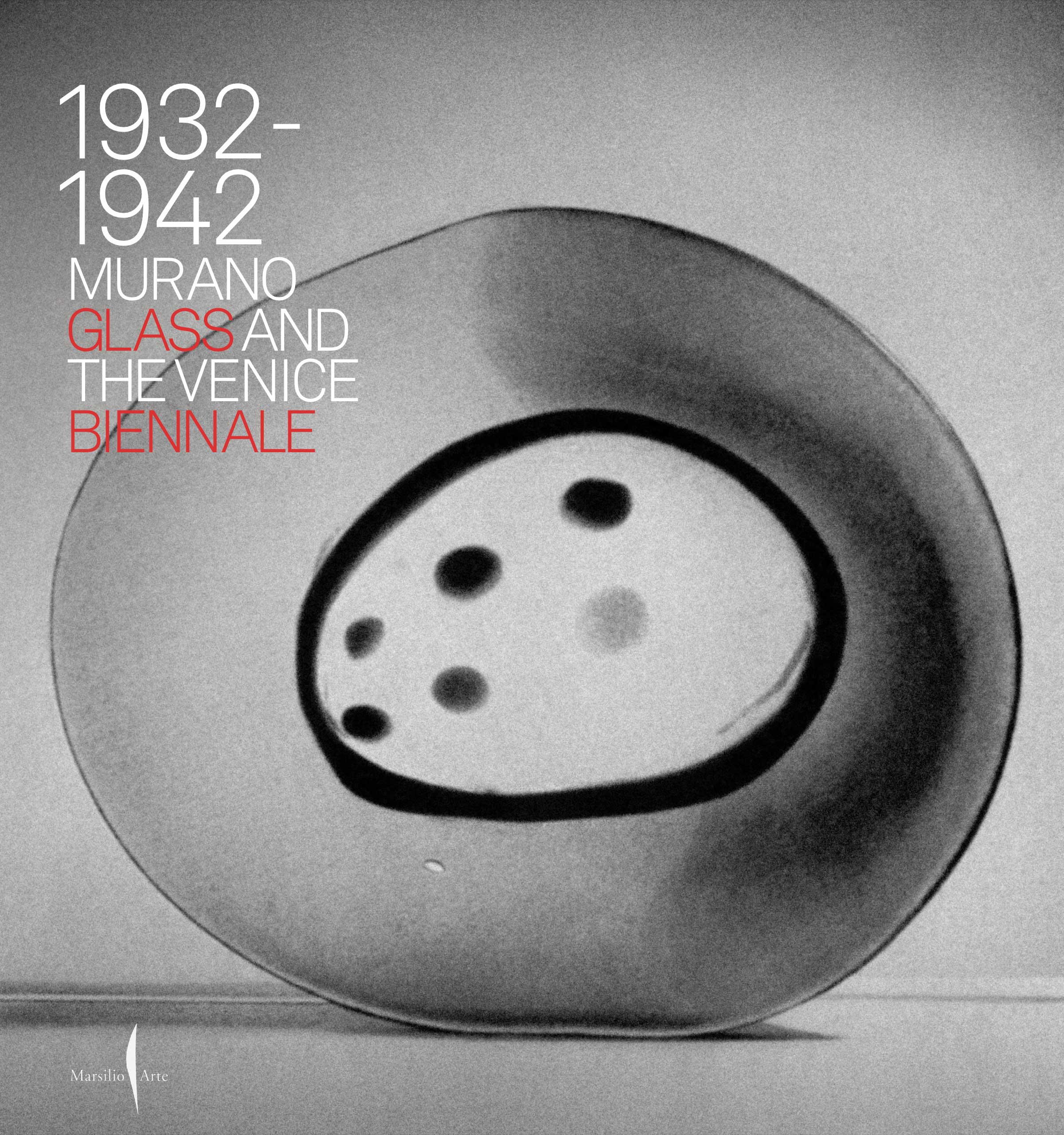
1932–1942 Il vetro di Murano e la Biennale di Venezia

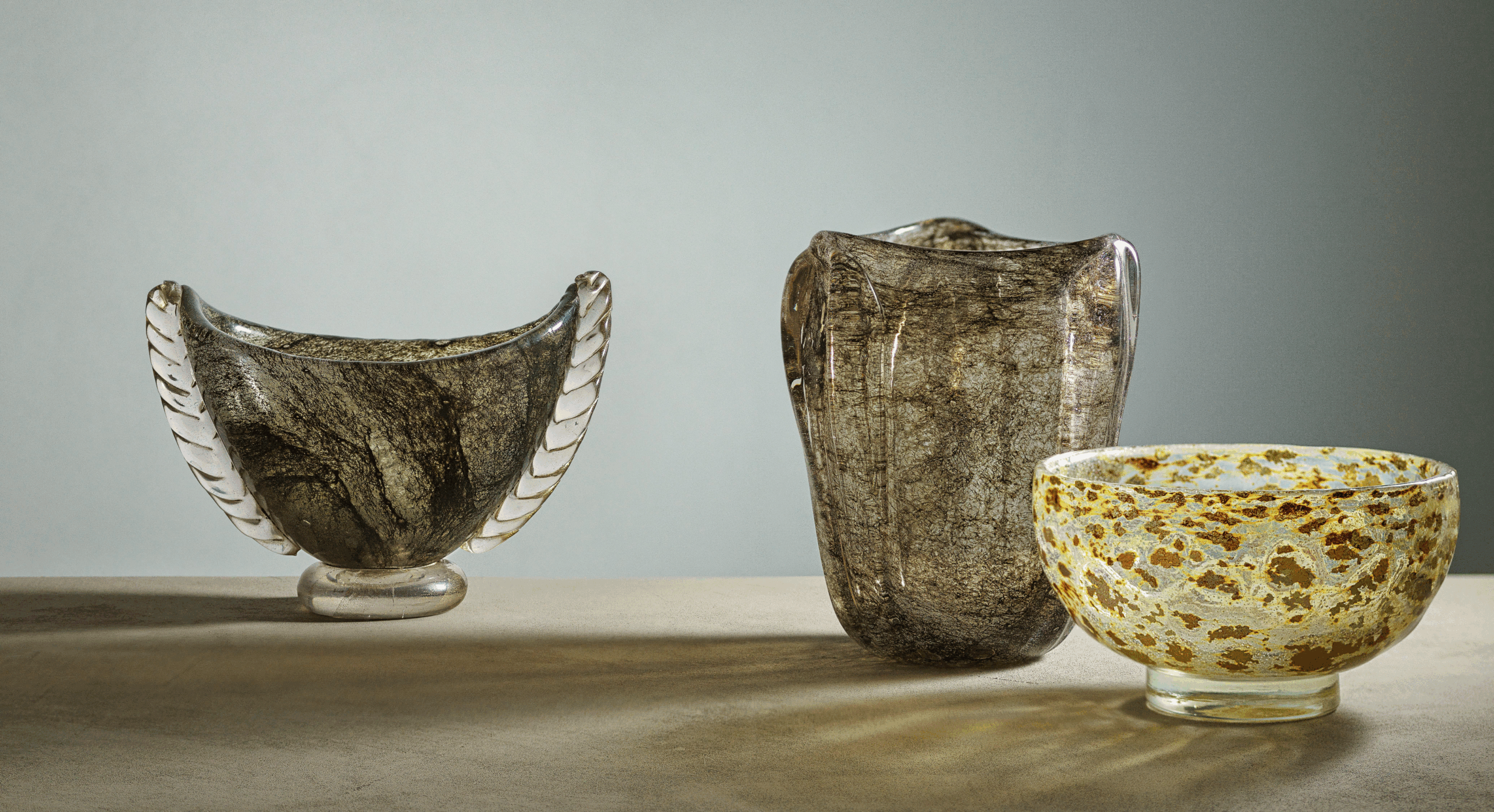
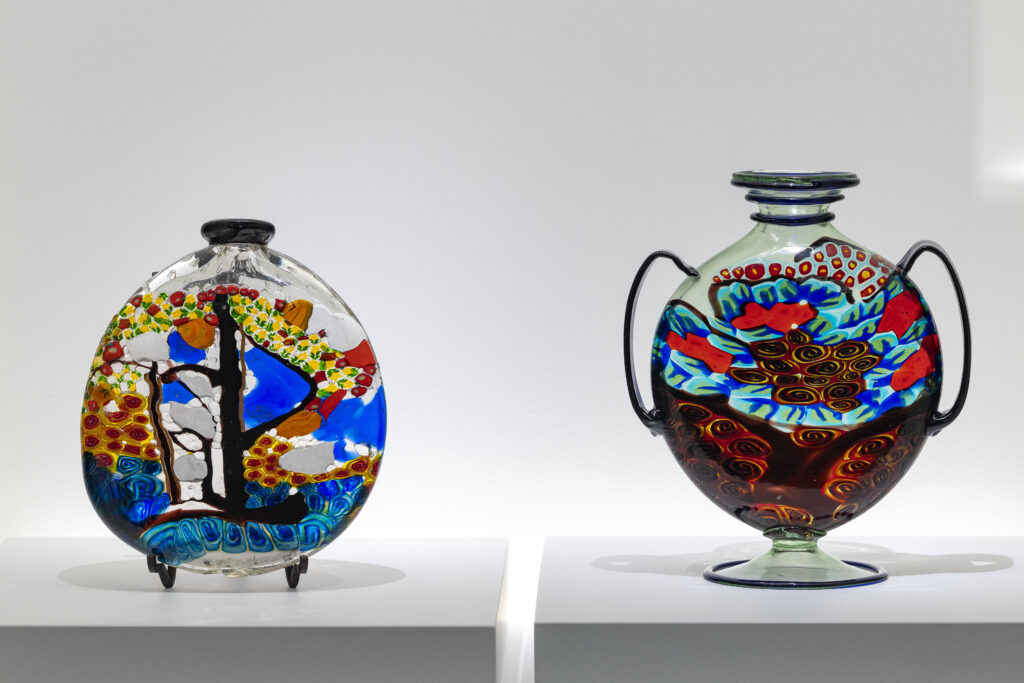
The volume, edited by Marino Barovier and Carla Sonego, examines the exhibitions that took place between 1932 and 1942, from the inauguration of the Venice pavilion to the XXIII Biennale, the last before its interruption due to the outbreak of WWII. These were years of great creativity and experimentation with materials and colours, both through the reappraisal of ancient techniques and the development of new processes.


Numerous glass furnaces and companies participated in the Venetian event during these years, including: AVEM, Barovier (later Ferro Toso-Barovier and Barovier-Toso & C.), Barovier Seguso & Ferro (later Seguso Vetri d’Arte), Cirillo Maschio, Moretti Ulderico & C., S.A.I.A.R. Ferro Toso & C., S.A.L.I.R., Salviati & C., Successori Andrea Rioda S.A., Aureliano Toso, Fratelli Toso, V.A.M.S.A., Venini S.A., and Zecchin Martinuzzi. Among the leading figures active in the various furnaces during this fertile period in Murano, the following are particularly noteworthy: Carlo Scarpa, Guido Bin (Mario De Luigi), Ercole Barovier, Flavio Poli, Dino Martens, Vittorio Zecchin, Franz Pelzel, etc.


The result of in-depth bibliographic and documentary research into the historical archives of the Biennale as well as public and private archives, with often unpublished period photographs, drawings and documents, the catalogue documents what was exhibited in the six editions of the Biennale between 1932 and 1942. A careful selection of 160 works, illustrated with photographic plates, testifies to the remarkable quality of Murano’s extraordinary production.

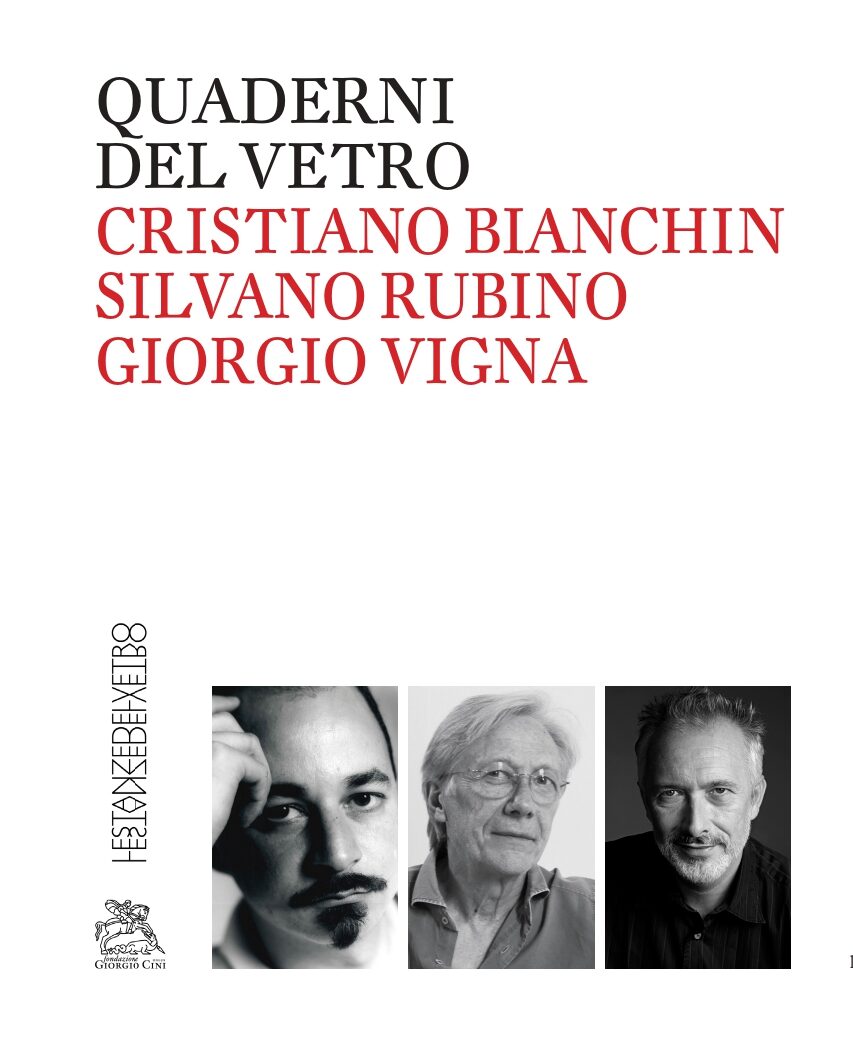
Quaderni del Vetro

1. Cristiano Bianchin

2. Silvano Rubino

3. Giorgio Vigna


The Quaderni del Vetro series, promoted by the Glass Study Centre of the Institute of Art History, has been expanded with three new issues added to the first publications released in 2016. These volumes are dedicated to three contemporary glass artists: Cristiano Bianchin, Silvano Rubino and Giorgio Vigna – with critical contributions by Luca Massimo Barbero,
Marzia Scalon and Cristina Beltrami – who donated their archives to the Fondazione Giorgio Cini in 2021.

Alongside this new publication, the collections of the three artists have been made available online on the Foundation’s website: projects, sketches, notes and annotations, production albums, photographic prints, correspondence and monographs may now be consulted.

Glass and Decorative Arts at the Venice Biennale

In line with the second exhibition chapter, situated at LE STANZE DEL VETRO on the evolution of Murano’s activity and production at the Venice Biennale in the decade 1932-1942, the Glass Study Center is organizing its usual annual conference. It focus on themes and dynamics during the period in question, thanks in part to the international openness that the lagoon events allowed for experimental progress in glass art in that juncture of time.

In fact, 1932 represented a sort of significant watershed, considering that from that year onwards, for the first time, the International Institution decided to dedicate an autonomous section to Murano glass, giving it a designated space and considerable visibility.

The protagonist of this conceptual and programmatic shift was the then Secretary General Antonio Maraini, who involved architect Brenno Del Giudice in designing and building the Venice Pavilion. An architectural idea that was as coherent as it was functional in terms of promoting the decorative arts, thus also expanding the gardens of the Biennale itself.

This was a forward-looking operation that immediately launched a period of remarkable creativity and experimental momentum, which was unfortunately brought to an abrupt halt in 1942 by the Second World War.

It is precisely thanks to this extraordinary artistic fervor of national and international scope, aided by the synergies between prestigious glassworks and artists and designers of great depth—such as Ercole Barovier, Pietro Chiesa, Flavio Poli, Carlo Scarpa, and Vittorio Zecchin—that experts in glass and decorative arts will explore the context and taste of the design evolution. It was developed both in contemporary, in France, and through other displaying venues, including the Triennale di Milano.

A continuously growing ferment that will mark a decisive leap in quality in the glass art sector, above all thanks to the numerous opportunities for exchange and the expansion of the global collectors’ market, which is, now and then, always open to revisited technical solutions and innovative methods.

The conference will be preceded on Wednesday 5 November by the presentation of the Quaderni del Vetro series, which in this second edition pays tribute to international artists Cristiano Bianchin, Silvano Rubino and Giorgio Vigna. On this occasion, their respective digital archives will be published on the Fondazione Giorgio Cini website, putting approximately 3,500 items online, including photographs, drawings and sketches, accompanied by the relevant catalogue entries.

PROGRAMME

[accordion][/accordion]
[accordion_entry title=”5 novembre| h 12:00″]

Presentazione collana Quaderni del Vetro
[/accordion_entry]
[accordion][/accordion]

[accordion][/accordion]
[accordion_entry title=”6 novembre  | h. 9.30 – 13.00″]

Saluti istituzionali
Luca Massimo Barbero
Direttore dell’Istituto di Storia dell’Arte, Fondazione Giorgio Cini

Paola Cordera
Verre-en-valise: un repertorio per la modernità


Debora Rossi e Lia Durante

Un racconto, attraverso i documenti dell’ASAC, sulla presenza delle arti decorative alla Biennale


Giovanni Bianchi

Il mosaico a Venezia nella prima metà del Novecento, tra produzione e promozione

[/accordion_entry]
[accordion][/accordion]

[accordion][/accordion]
[accordion_entry title=”6 novembre | h. 14.30 – 16.30″]


Carla Sonego

Ricerche e sperimentazioni alla Biennale (1932-1942): Carlo Scarpa ed Ercole Barovier


Rosa Chiesa

Il vetro e Milano


Jean-Luc Olivié

What happened to glass in France between 1932 and 1942?


Lucia Mannini

Dai vetri alle lacche: Pietro Chiesa e le presenze straniere nel Padiglione Venezia alle Biennali 1932-1936

[/accordion_entry]
[accordion][/accordion]
 

The Venice Glass Week | #The Magic Of Glass

The ninth edition of The Venice Glass Week, the international festival created in 2017 to celebrate, support and promote the art of glass, will take place from 13 to 21 September 2025 in Venice, Murano and Mestre. It will be a week packed with more than 200 events organised by over 300 participants in 130 different venues.

For this new edition, the event invites you to be captivated by the magic that has accompanied the transformation of artistic glass for centuries, a process as ancient as it is surprising, which continues to generate wonder.

A rich programme including a tribute to Casanova at the Glass Museum, a historical retrospective at LE STANZE DEL VETRO, and then many workshops, tastings, meetings and workshops dedicated to beads that tell the story of tradition, innovation and heritage. The Venice Foundation Prize for The Venice Glass Week for the best project of the festival has been confirmed, joined for the first time by The Venice Glass Week Hub Under 35 Scholarship Prize at The Studio of The Corning Museum of Glass and the Arterìa Prize for The Venice Glass Week HUB.

Go to The Venice Glass Week Programme

OPEN ARCHIVES

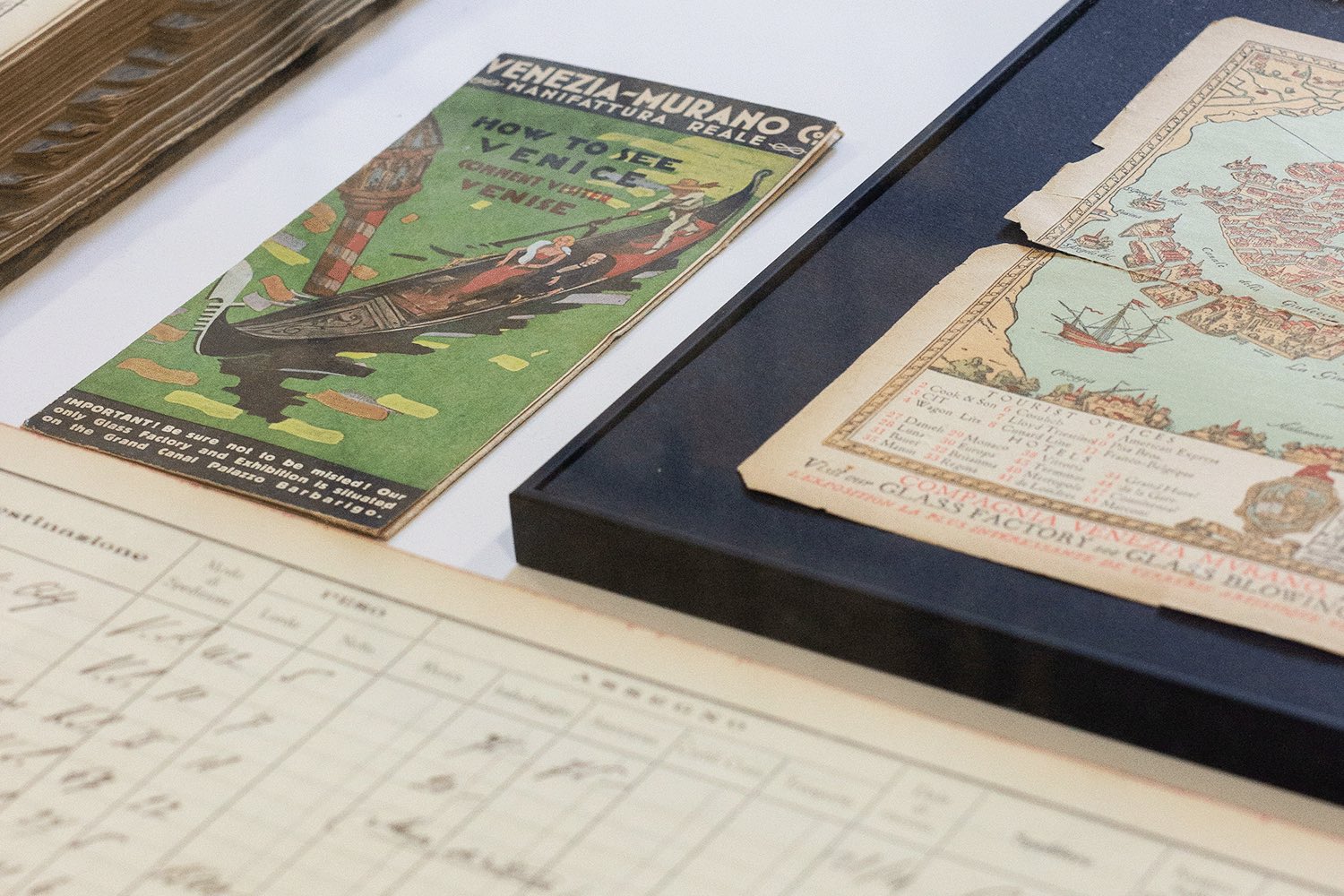
On the occasion of The Venice Glass Week 2025, the Fondazione Giorgio Cini’s Glass Study Centre is opening its archives for guided tours of drawings, designs, photographs and documents related to the history of Murano glass art. Thanks to new spaces inaugurated in 2023, the Archive, with over 250,000 items, offers a unique experience for scholars and enthusiasts, showcasing an extraordinary heritage of precious documentary sources and study materials.

For information and opening hours of the Glass Study Centre’s Open Archives event, visit The Venice Glass Week website.

Glass Study Centre Scholarship

Scholarship for the reorganisation and cataloguing of the archival collections of the Glass Study Centre

Deadline for applications: 31 August 2025


The Centro Studi del Vetro is promoting a scholarship for the reorganisation, inventorying and cataloguing of its archival funds, with the aim of enhancing and making accessible the rich documentary heritage dedicated to the history, production and culture of glass.

The scholarship is addressed to graduates and/or specialists in the archival, historical-artistic or cultural heritage fields, with proven experience in dealing with historical or artists’ archive.

Glass Study Centre

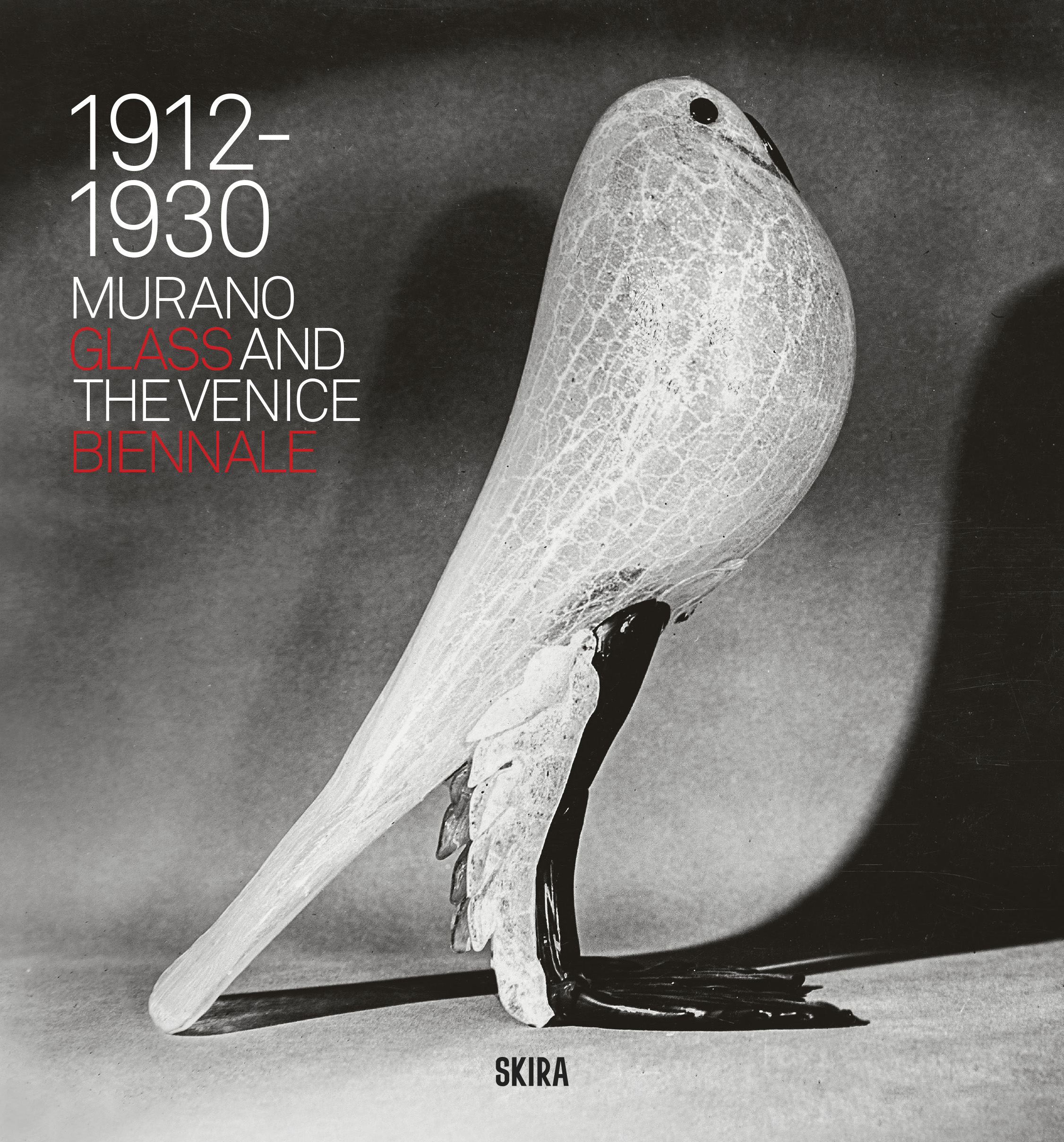
Vetro e Arti Decorative alla Biennale di Venezia. 1912–1930

In conjunction with the exhibition at Le Stanze del Vetro on the presence of Murano art at the Venice Biennale from the start of the twentieth century, the Glass Study Centre brings together glass historians and experts to explore various aspects of this extraordinary event. At the centre of the conference are not only the key figures of Venetian glass art and the critical
success of some of the most iconic works, but also the choice of colours and shapes made by the likes of Hans Stoltenberg Lerche, Teodoro Wolf Ferrari, Guido Balsamo Stella and Vittorio Zecchin.


h 9:30am | Free entry until capacity is reached
Download the program

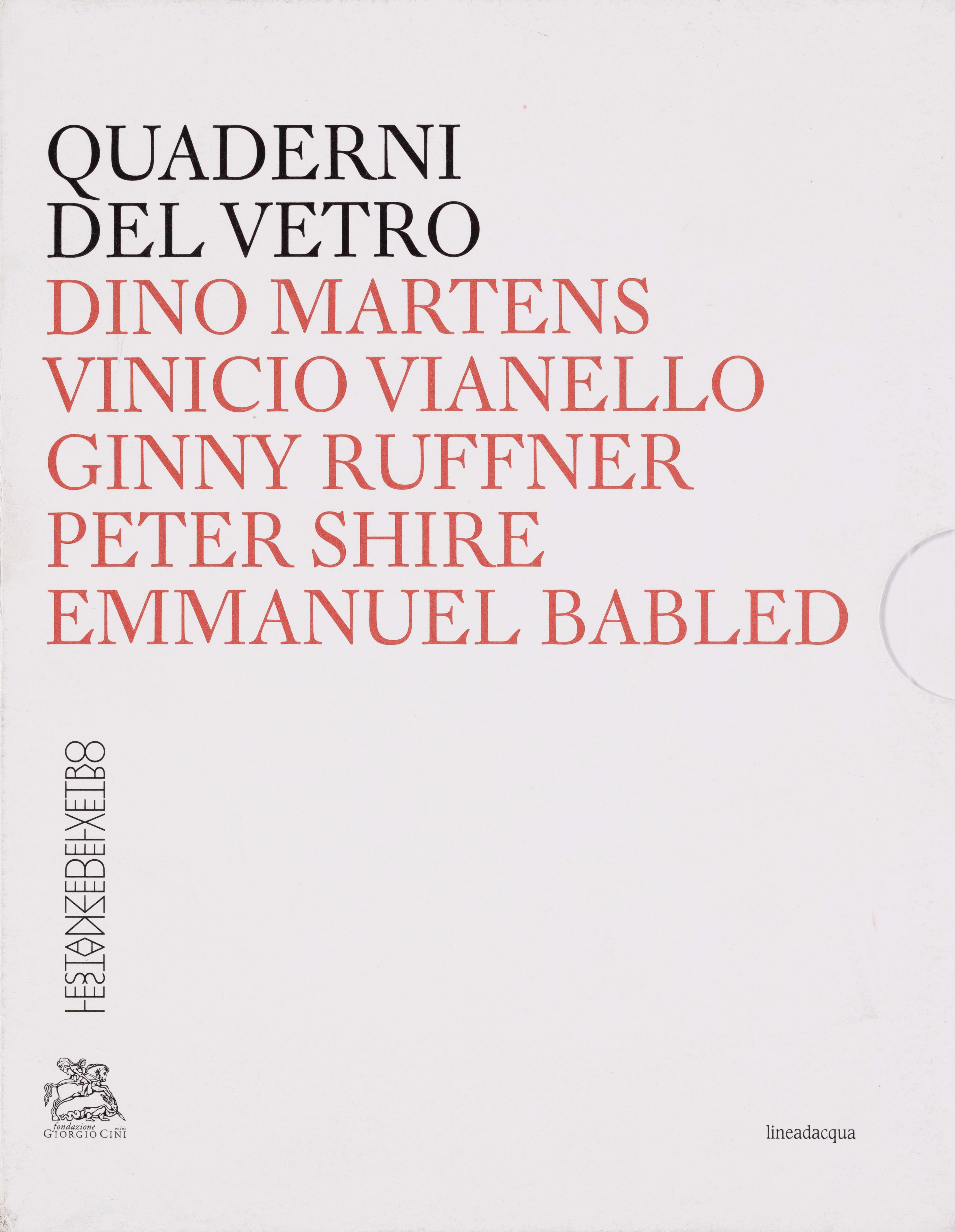
Series “Glass Notebooks”

  1. Dino Martens
  2. Ginny Ruffner, Peter Shire, Emmanuel Babled
  3. Vinicio Vianello

The series “Glass Notebooks”, created to provide a tangible expression of a concise yet monographic editorial initiative, serves as a tool for disseminating and collecting critical and biographical contributions dedicated to the archival collections housed at the Glass Study Center. Established in 2012 as part of the Institute of Art History at the Giorgio Cini Foundation, this initiative was promoted by the Foundation itself in collaboration with Pentagram Stiftung.

The Glass Archive represents a hub for research, preservation, and consultation of valuable memories, functioning as an active study center within an Institute of Art History committed to a continuous and multifaceted investigation of decorative arts as a whole. Its approach embraces diverse research programs and fields of study. The creation of this series is driven by the recognition of the significant role that in-depth exploration and dissemination of Venetian glass art play within the broader context of modern and contemporary art history. This importance is exemplified by numerous exhibitions hosted at Le Stanze del Vetro.

The Glass Study Center preserves drawings, sketches, albums, production catalogs, technical projects, and varied documentation spanning from the early 20th century to the 1990s, making it a treasure trove of material that positions it as the General Archive of Venetian Glass.

Each Notebook contains a concise biographical essay paired with a carefully curated and previously unpublished selection of images, showcasing the remarkable artistic achievements of the individuals featured in each volume. The initial three volumes highlight contributions by Marc Heiremans on Dino Martens, Rosa Barovier Mentasti on Ginny Ruffner, Peter Shire, and Emmanuel Babled, and Luca Massimo Barbero on Vinicio Vianello.

The “Glass Notebooks” series is designed as a concise and exemplary collection aimed at an international audience, including younger readers, offering them a glimpse into the depth and richness of the archival collections that vividly illustrate the extraordinary activities of the Venetian glassmaking world. By doing so, it aims to foster research, knowledge, and the education of new, increasingly passionate glass scholars to join the ranks of the already distinguished researchers who have so far shaped this foundational framework of sources and documentation.

    Glass Study Centre

    Thanks to a joint initiative between the Fondazione Giorgio Cini and Pentagram Stiftung, the Glass Study Centre was established within the Institute of Art History in 2012. 

    Now a crucial point of reference for the study of art glass, the archive has progressively collected invaluable documentary materials from the major historic glassworks of Murano. These collections mainly consist of drawings, plans, correspondence, and period photographic reproductions, which now represent irreplaceable resources available to the scientific community to promote the safeguarding, research, and enhancement of modern and contemporary glass art.

    Among the archives housed at the Centre are those of Aureliano Toso, Barovier Seguso and Ferro, M.V.M. Cappellin & C., Pauly & C. – C.V.M, Seguso Vetri d’Arte,  Società Veneziana di Conterie e Cristallerie, and Vetrerie Antonio Salviati. The collection also includes works by some of the most renowned glass designers, including Emmanuel Babled, Fulvio Bianconi, Luigi Scarpa Croce, Dino Martens, Flavio Poli, Ginny Ruffner, Carlo Scarpa, Peter Shire, and Vinicio Vianello. More recently, the prestigious archives of notable contemporary artists such as Cristiano Bianchin, Silvano Rubino, Giorgio Vigna, and the great master glassmaker Pino Signoretto have been added.

    The Centre also organises temporary exhibitions, conferences, and seminars, designed as in-depth explorations of the exhibitions in the Stanze del Vetro. It is actively engaged in the systematic cataloguing of its archival heritage and the implementation of digitisation campaigns. To date, the digital registry includes materials from the extensive archive, both graphic and photographic, of the Seguso Vetri d’Arte glassworks, which provides a comprehensive record of the rich production line of the historic furnace from 1932 to 1973. Additionally, the archive of artist Vinicio Vianello, a central figure in Spatialism and a pioneering experimenter in the field of glass art, has been digitised. His renowned Atomici vases, along with his lighting and design models, are part of this collection.

    Among the digital collections available are those of prominent contemporary artists active in Murano, including Ginny Ruffner, Peter Shire, and various significant projects by Emmanuel Babled. Finally, the Dino Martens archive has also been digitised.

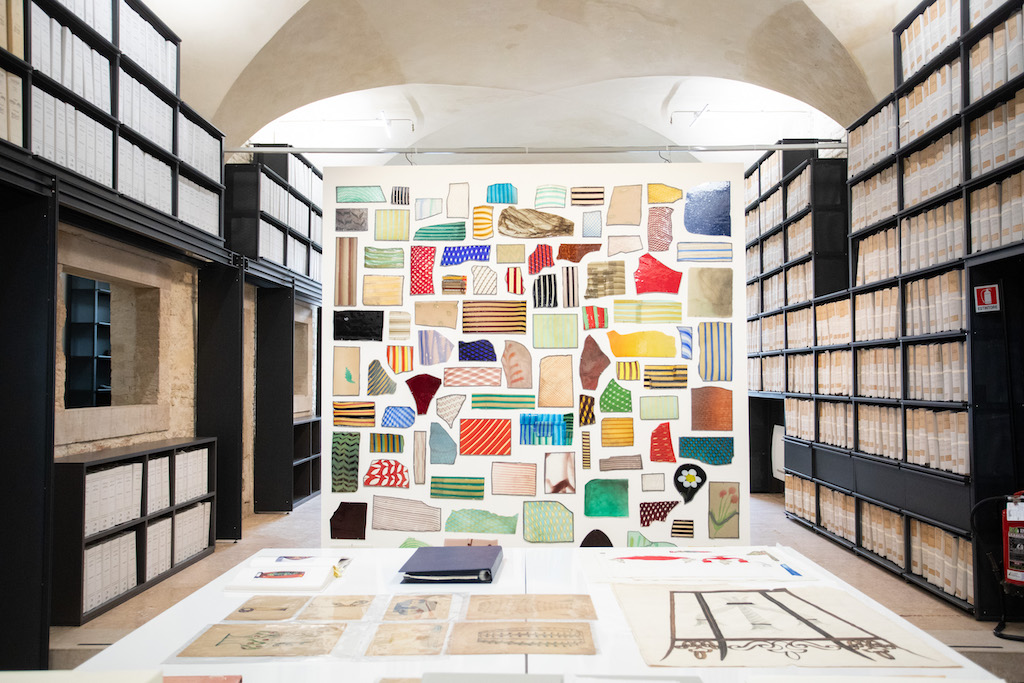
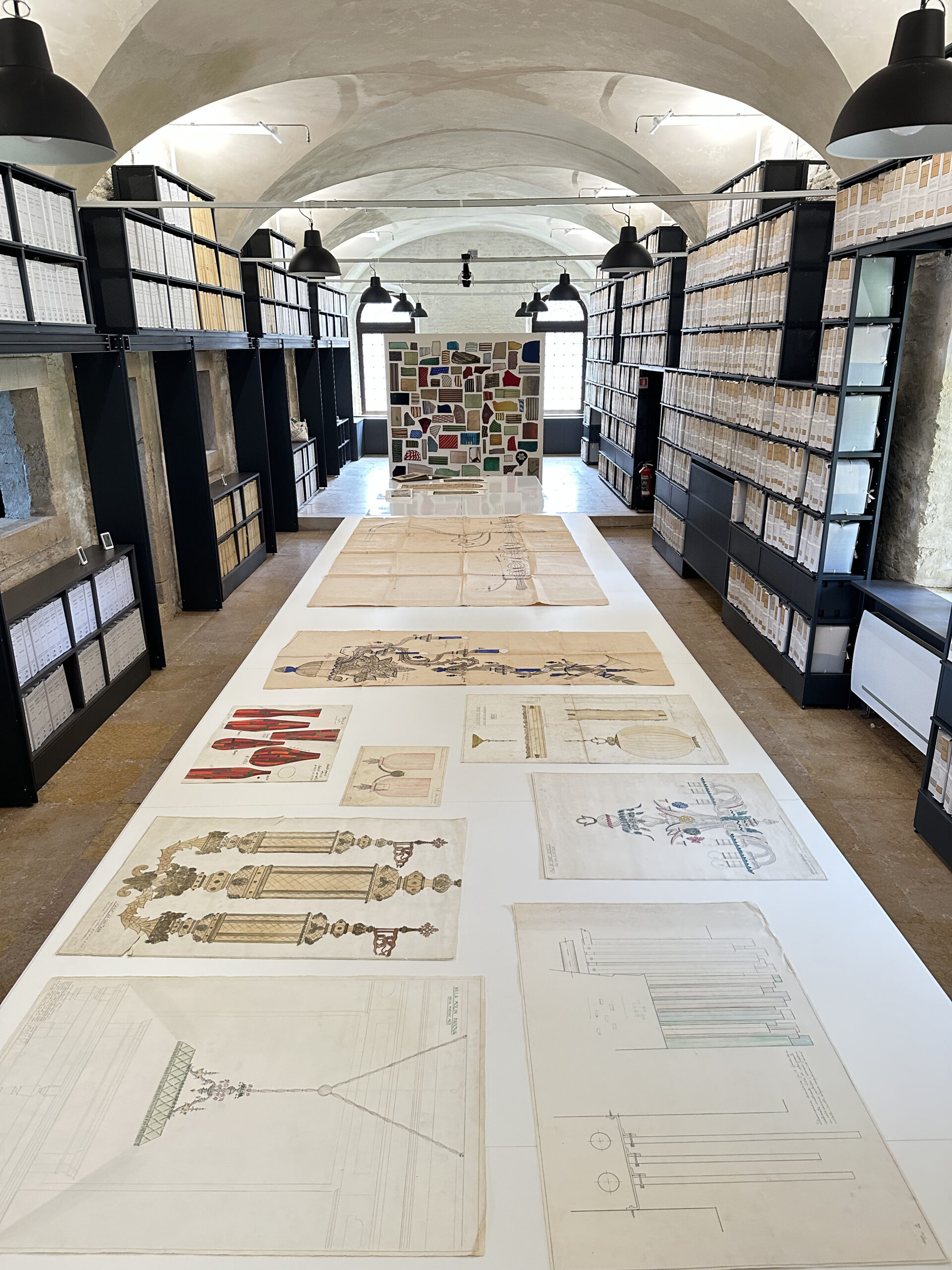
    Glass Study Centre, Sala Messina. © Fondazione Giorgio Cini

    With over 200.000 original documents and a specialised library comprising 2.300 volumes, the Glass Study Centre is currently the most important general archive of Venetian glass.

    The Centre’s archive, which draws from the heritage of art collections and historical archives of the Murano Venetian glassworks, is primarily composed of drawings and plans, correspondence and documentation, production catalogues, press reviews, and period photographic reproductions.

    Glass Study Centre

    DIRECTOR
    Luca Massimo Barbero