Comparative Studies of Civilisations and Spiritualities Archives - Fondazione Giorgio Cini

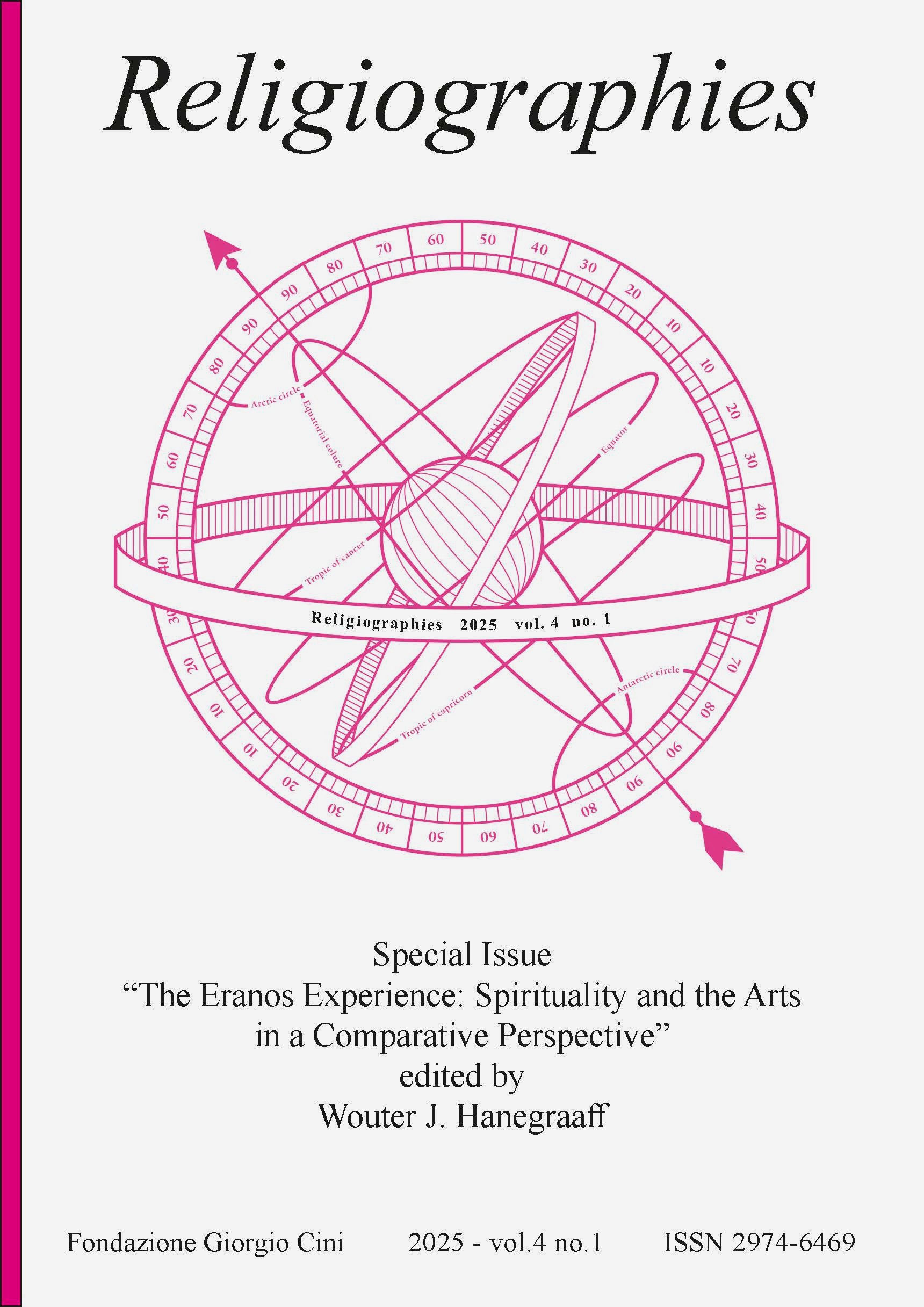
Religiographies vol.5 n.1

Open-access and peer-reviewed journal, curated by the Centre for Comparative Studies of Civilisations and Spiritualities at the Fondazione Giorgio Cini.

Religiographies is dedicated to the study of religious phenomena, fostering an interdisciplinary dialogue among historians, sociologists, anthropologists, philosophers, and psychologists. Mysticism, esotericism, and spirituality are the three main themes of the journal, which are explored within their historical and cultural contexts, challenging traditional categories of religion. The heterographie section, dedicated to artistic and visual works, expands the understanding of the phenomena discussed.

Religion after Longevity: Between Religious Traditions and Post-Humanism

Deadline 30 May 2026


The conference will be held from 1 to 3 December 2026 and is organized jointly by the Centre for Comparative Studies of Civilisations and Spiritualities (Fondazione Giorgio Cini), The Centre for History of Hermetic Philosophy and Related Currents – HHP (University of Amsterdam), the Center for the Study of World Religions (Harvard Divinity School), and the Centre for Environmental Humanities – NICHE (Ca’ Foscari University of Venice).

This conference will begin by examining how religious traditions have historically been connected to the care of both the body and the soul. We will discuss religious rituals, practices, dietary norms, and activities that promote not only graceful aging but also spiritual purification. Secondly, the conference will consider how aging societies influence religious beliefs and practices. Thirdly, we will address how religions accompany individuals through the process of dying. Finally, we will examine emerging religious and quasi-religious movements that challenge the very concept of death, proposing transhumanist approaches to life extension.

Abstracts and Texts

Abstracts up to 300 words, accompanied by a short CV, should be submitted in English by the 30th of May to [email protected]. A notification of acceptance will be forwarded by the 15th of June.

Timetable

The call for papers is open from 3 April 2026.
Abstracts (300 words maximum) and CVs to be received by 30 May 2026.
Notifications of acceptance will be given by 15 June 2026.
The conference will be held from 1 to 3 December 2026.


Academic Freedom and the Challenges of Humanism(s)

The conference aims to explore the evolution of the concept of academic freedom from a global and interdisciplinary perspective. To start with, it will clarify how academic freedom differs from freedom of expression.

The conference will then pursue three main objectives: to assess the status of academic freedom in different geopolitical contexts; to examine its political dimensions, and lastly to question its epistemological foundations. Finally, in an era increasingly characterised by artificial intelligence, it asks what the benefits and risks of it might be for academic freedom and for the pluralism of humanistic research.

An event co-organised with the Department of Asian and North African Studies at Ca’ Foscari University of Venice and the KIFO – Institute for Church, Religion, and Worldview Research in Oslo.

programmE

[accordion][/accordion]
[accordion_entry title=”Tuesday, 21 April 2026“]

9:30 – 10:00 

Welcome Greetings

  • Francesco Piraino (Fondazione Giorgio Cini, Ca’ Foscari University of Venice)
  • Laura De Giorgi (Ca’ Foscari University of Venice)
  • Sindre Bangstad (KIFO – Institute For Church, Religion & Worldview Research)


10:00 – 11:00

Keynote speaker Pippa Norris (Harvard University), “ ‘Professors Are the Enemy’? Two Faces of Academic Freedom in the USA”


11:00 – 11:30 Coffee Break


11:30 – 12:30  Panel: Academic Freedom in Israel

  • Mordechai (Mordy) Miller (Ben-Gurion University of the Negev), “Theological Roots of Anti-Academic Sentiment in Contemporary Religious Zionism”
  • Nir Avieli (Ben-Gurion University of the Negev), “The Impossible Academic Freedom of Israeli Critical Social Scientists: ‘Lefty Arab-lovers’ or ‘Genocidal Maniacs’?”

14:00 – 15:30  Panel: Academic Freedom in Africa

  • Sindre Bangstad (KIFO – Institute For Church, Religion & Worldview Research), “Academic Freedom vs Academic Freedom: A South African Case”
  • Kwadwo Appiagyei-Atua (Africa Coalition for Academic Freedom), “A Critical Review of African Documents on Academic Freedom”
  • Erica Bellia (University of Cambridge), “ ‘The Striptease of Our Humanism’: Questioning European Culture from Africa in the Early 1960s”

[/accordion_entry]

[accordion][/accordion]
[accordion][/accordion]
[accordion_entry title=”Wednesday, 22 April 2026“]

10:00 – 11:30 Panel: Academic Freedom in Russia, Iran, and in Diaspora

  • Giovanni Savino (University of Naples Federico II), “Universities and Academic Freedom in Wartime Russia: A Genealogy of Authoritarian Control”
  • Lidia Yatluk (University of Groningen), and Sofya Smyslova (University of Cambridge), “Reclaiming the Right to Research: Academic Freedom, Tacit Knowledge, and Exile”
  • Shirin Zakeri (Unitelma Sapienza University of Rome), Minoo Mirshahvald (University of Copenhagen), and Ehsan Kashfi (University of Copenhagen) “Academic Freedom Beyond the State: Diasporic Pressure, Digital Intimidation, National Identity, and Iranian Scholars after ‘Woman, Life Freedom’ ”


11:30 – 12:00 Coffee Break


12:00 – 13:00 Panel: Academic Freedom in Asia

  • Ala Uddin (University of Chittagong), “The Political Economy of Knowledge: Market Forces, Funding Pressures, and the Limits of Academic Autonomy in Bangladesh”
  • Simon Yin (Hefei University of Technology in China), “Academic Freedom in China’s Hong Kong since 1997”


14:30 – 16:00 Panel: Academic Freedom in Europe

  • Annelies Moors (University of Amsterdam), “Politicizing the Academy: Academic Freedom in the Netherlands”
  • Maja van der Velden (University of Oslo), “Academic Freedom and Academic Boycott: An Analysis of the Debate in Norway”
  • Maryna Lakhno (Swiss Federal Institute of Aquatic Science and Technology), “The Invisible Governance of Knowledge: Rethinking de facto Academic Freedom in Switzerland”


[/accordion_entry]

[accordion][/accordion]

[accordion][/accordion]
[accordion_entry title=”Thursday, 23 April 2026“]

10:00 – 11:30 Panel: The Epistological Challenge of Academic Freedom

  • Peter Dziedzic (Harvard University), “Akbarian Humanism: The Perfected Human, Perpetual Self-Disclosure, and an Islamic Epistemology of Serendipity”
  • Joseph L. Clarke (University of Toronto), “Showing, Not Saying: Academic Freedom beyond the Logocentric Paradigm”
  • Federico Dal Bo (University of Modena and Reggio Emilia), “Leo Strauss and the Post-Liberal Return to Esotericism: Academic Freedom in an Age of Compulsory Engagement”


11:30 – 12:00 Coffee break


12:00 – 13:00 Panel: Academic Freedom and the Impact of AI

  • Arie Perliger and  Randi Froude (University of Massachusetts), “The Double-Edged Algorithm: Artificial Intelligence, Digital Technologies, and the Transformation of Academic Freedom”
  • Andrea Alessandro Gasparini (University of Oslo), “Rethinking the Role of Academic Libraries in the Age of ChatGPT”


14:30 – 15:30 Panel: Law and Policies for Academic Freedom

  • Alessandra Lazzarini (University of Padua), “Defining Academic Freedom in Europe: Courts, Soft Law and Integration Tools in Higher Education”
  • Silvia Zabeo and Dario Pellizon (Ca’ Foscari University), “Research Freedom as a Foundational Value of the European Epistemic Communities: Policy Frameworks, Stakeholder Responses, and Institutional Practices”


15:30 – 16:00 Plenary

[/accordion_entry]
[accordion][/accordion]
The conference will be held in English.

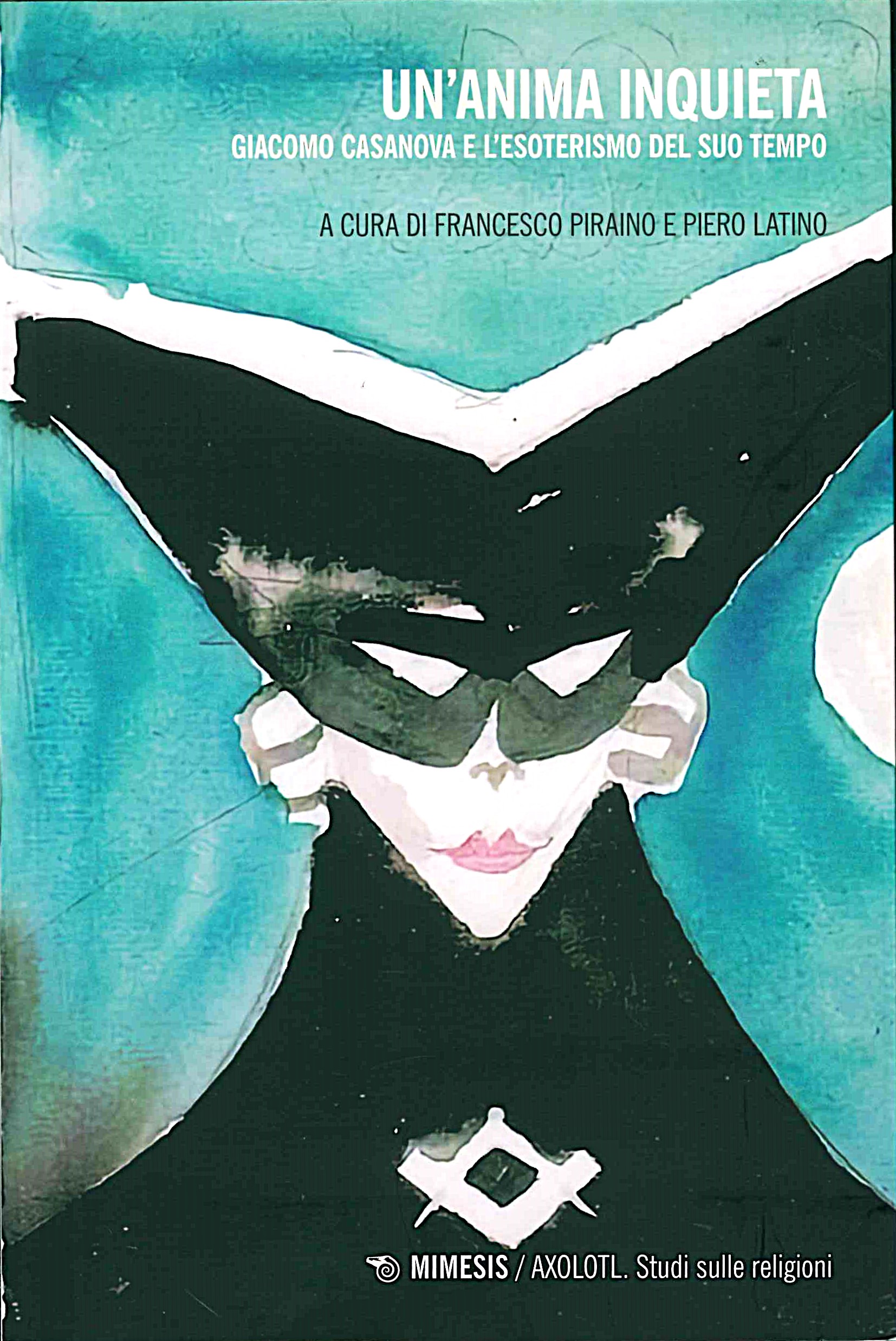
Un’anima inquieta. Giacomo Casanova e l’esoterismo del suo tempo

Casanova is known for being an eclectic figure: writer, libertine, adventurer, and diplomat. However, perhaps less well known is his passion for esotericism, occultism, Kabbalah, and Freemasonry, to which he was affiliated and which allowed him not only to make important political connections but also to deepen his knowledge of esoteric doctrines. Casanova practiced a form of Kabbalah for divination purposes, based on the correspondence between numbers and letters (gematria), and in his daring adventures, he met figures such as Cagliostro and Count Saint-Germain, key figures in the occultism of the time. Yet his relationship with esotericism was contradictory. On the one hand, he showed a curiosity that led him to explore various occult doctrines; on the other, he revealed a decidedly pragmatic, opportunistic, and disenchanted approach, detached from any doctrine. In his autobiography, he did not hide how he used esotericism to exploit people’s credulity in order to obtain wealth, prestige, and social power, showing himself once again to be a modern, if not post-modern, character.

Table of contents:

Introduction by Daniele Franco

Jean-Marc Mandosio, “Una buona dose di superstizione”: Giacomo Casanova e le forze occulte

Mauro Ruggiero, Appunti per una mappa “esoterica” dell’Europa casanoviana

Federico Barbierato, Manoscritti inquieti. Libri, cultura magica e società nella Venezia di Casanova

Gian Mario Cazzaniga, Casanova e la massoneria

Tom Fischer, Gli ultimi bagliori dell’alchimia, ovvero il declino di una scienza nella Francia dell’Illuminismo

Simona Cigliana, Casanova tra libertinage érudit ed esoterismo. Percorsi e resistenze di una ricezione

Francesca Guglielmi, Giacomo Casanova tra sapere scientifico ed esoterico

Matteo Leta, Casanova, gli impostori e i ciarlatani nella letteratura della prima età moderna

Piero Latino, La religione nelle venti giornate dell’Icosameron di Casanova

Piero Latino, Metafisica dello spirito nella letteratura europea dell’età della ragione, da Swedenborg a Blake fino agli illuminati di Nerval

Francesco Piraino, A mo’ di conclusione: arte ed esoterismo, cosa ci dicono le scienze umane e sociali?

Workshop on suiboku

The Centre for Comparative Studies of Civilisations and Spiritualities is pleased to announce a new workshop dedicated to the Japanese art of suiboku.
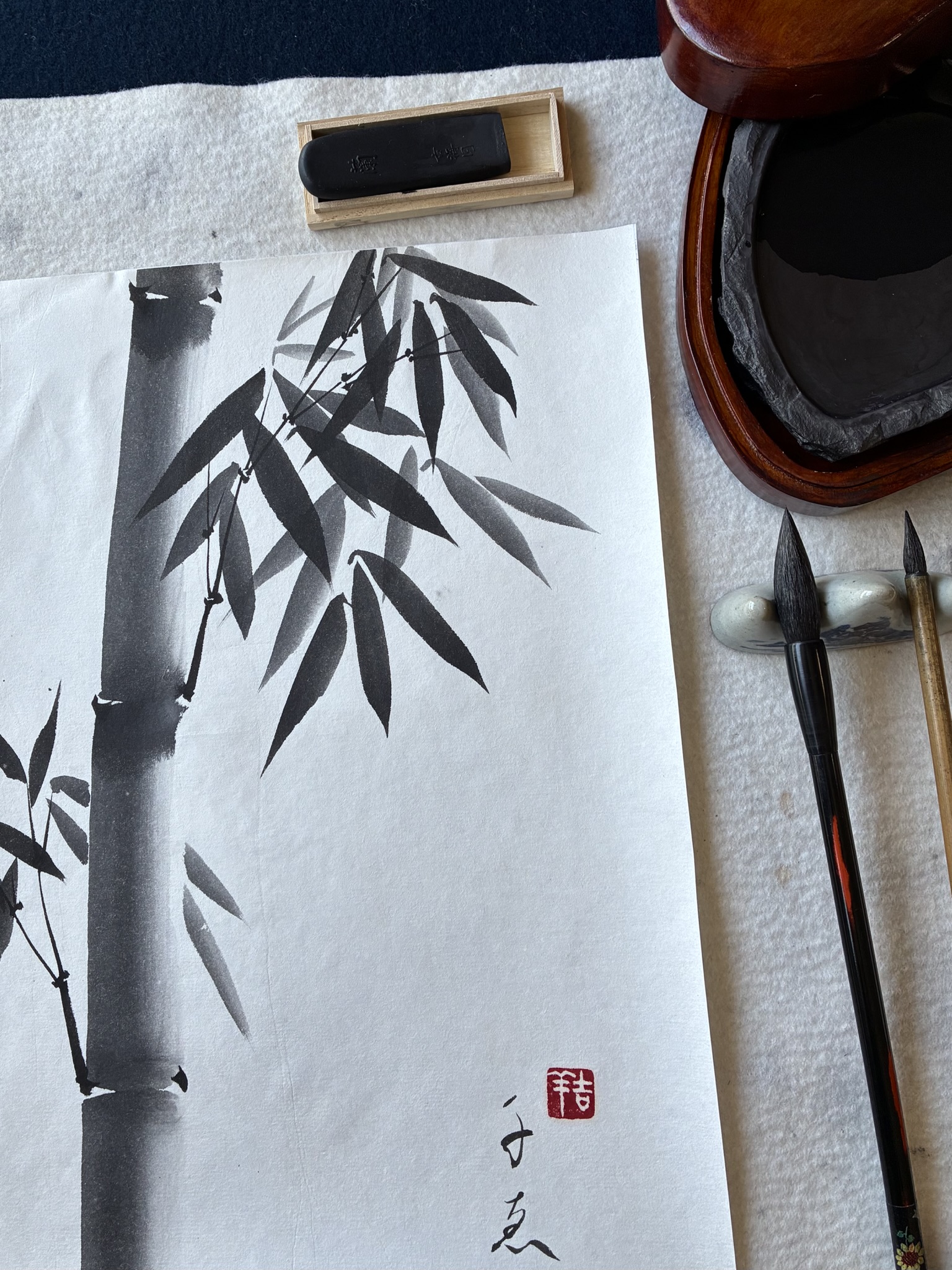
The event will offer an immersive experience in the traditional Japanese art of ink painting, a practice that combines gesture, contemplation, and aesthetic sensitivity. Participants will be guided in the preparation of the materials. This initial, slow and ritualistic moment promotes a state of concentration and inner calm. Subsequently, the fundamental strokes will be explored through exercises that reproduce fine lines, broad brushstrokes, and nuances created with variations in pressure and quantity of water. The emphasis will be on simplicity and spontaneity: a single gesture, if authentic, can encapsulate an entire landscape. The workshop will also introduce typical suiboku subjects, such as bamboo, orchids, plum blossoms, and mist-shrouded mountains, encouraging each participant to find their own personal interpretation.

Workshop schedule and booking
The students will be guided through this experience by the Artist Chie Iwakiri, who will lead three workshop days (4-5-6 March) for a maximum of 15 students per day, from approximately 15:00 to 17:00.
Participants may register for only one day. On the first day only, March 4 from 14:00 to 15:00, an introductory lecture in Italian will be held by Prof. Silvia Vesco (Department of Asian and Mediterranean African Studies, Ca’ Foscari University, Venice) for all registered participants.


programmE

[accordion][/accordion]
[accordion_entry title=”4 March”]

14:00-15:00
Silvia Vesco
introductory lecture in Italian

 15:00-17:00
Teacher Chie Iwakiri
Workshop in English

[/accordion_entry]
[accordion][/accordion]
[accordion][/accordion]
[accordion_entry title=”5 March “]


 15:00-17:00
Maestra Chie Iwakiri
Workshop in English


[/accordion_entry]
[accordion][/accordion]

[accordion][/accordion]
[accordion_entry title=”6 March”]

 15:00-17:00
Maestra Chie Iwakiri
Workshop in English

[/accordion_entry]
[accordion][/accordion]

The workshop is free of charge, but registration is required.

To register, please send an email to [email protected] indicating your chosen day and the following details: first name, last name, telephone number, and affiliation (if you are a student). 

Please note: Registration will only be effective upon receipt of a confirmation email from the secretariat. 

As there are 15 places available per day, please note the following:

  • Registration requests with missing information cannot be accepted.
  • You can only register for one day.
  • The email must be for a single participant; multiple registrations will not be accepted.  

In case of cancellation, please notify the secretariat as soon as possible to give another person the opportunity to participate.

Please also notify us of any delays.

[accordion][/accordion]
[accordion_entry title=”Short Bio of Chie Iwakiri”]

Artist / Master Instructor of the International Sumi-e Association

Born in Yokohama, I graduated from the Graphic Design department of Tama Art University in 1985. From 1989 to 1991, I stayed in Venice, where I practiced lithography at the Scuola Internazionale di Grafica and held a solo exhibition.

Since 2000, my work has been selected for exhibitions such as the Kochi International Triennial Exhibition of Prints. Later, I focused my practice on Suibokuga. Currently, I hold a Master Instructor qualification from the International Sumi-e Association and have received awards including the China Art News Award and the Association’s Chairman’s Award. 

March 2025: Conducted a workshop at Ca’ Foscari University of Venice and held a Sumi-e exhibition at SG Gallery.

Alongside my own creative work, I teach classes, lead workshops, and give private lessons. I continue to explore the history and the future of ink wash painting, valuing the discipline required for its irreversible process.

[/accordion_entry]
[accordion][/accordion]
[accordion][/accordion]
[accordion_entry title=”Short bio of Silvia Vesco “]

Silvia Vesco is a professor of Japanese art history at the Department of Asian and Mediterranean African Studies at Ca’ Foscari University in Venice. After completing a Master’s degree in East Asian Art and Archaeology at the University of London and a PhD (joint degree Italy-Japan), she lived and studied in Japan for many years. She has organized several international conferences and curated important exhibitions of Japanese art in prestigious venues in Italy and Japan.
Her scientific interests focus on ukiyo-e prints and paintings (images of the ‘floating world’), with particular reference to the work of Katsushika Hokusai (1760-1849), Japonism and textiles, as well as Japanese art collections in public and private collections in Italy. His latest publications include contributions dedicated to prints by Andō Hiroshige (1797-1858) and Utagawa Kunisada (1786-1865) and the refined iconography of Genji monogatari (The Tale of the Shining Prince), as well as Haori: Gli abiti maschili del primo Novecento narrano il Giappone, as well as the first translation into a Western language of two manuals on painting by Katsushika Hokusai. In addition, Einaudi has published the first of two volumes on the history of Japanese art from prehistory to the modern era. The second volume on the history of Japanese art and its developments up to the contemporary era is currently being published.

[/accordion_entry]
[accordion][/accordion]

[accordion][/accordion]
[accordion_entry title=”ABSTRACT Introductory lecture“]

Shodō and Suiboku as paths to self-cultivation

Shodō (calligraphy) and suiboku (ink painting) are not simply artistic techniques, but true “ways” () aimed at spiritual perfection and self-knowledge. Through historical and philosophical analysis, some fundamental points emerge, such as:

The unity between Body and Spirit, since the practice requires absolute consistency between inner energy and concrete action. The brush is not merely a tool, but an extension of the body that must act with the spontaneity of the “heart-mind” (kokoro).

Learning takes place through a long apprenticeship based on repetition and imitation of models (kata). This apparent lack of individual freedom is, in reality, a prerequisite for internalizing the technique and achieving “living” creativity.

To produce authentic beauty, the practitioner must act without artificial intent, reaching a state of “empty mind” (mushin) that allows identification with the whole and, ultimately, even enlightenment.

Calligraphy and ink painting share concepts such as wabi, sabi, and yūgen with Japanese aesthetics, valuing sobriety, the charm of time, and ineffable depth.

These disciplines represent an ethical and aesthetic path where the ultimate goal is not to “possess a skill” but to “be” by overcoming individual selfishness.

[/accordion_entry]
[accordion][/accordion]
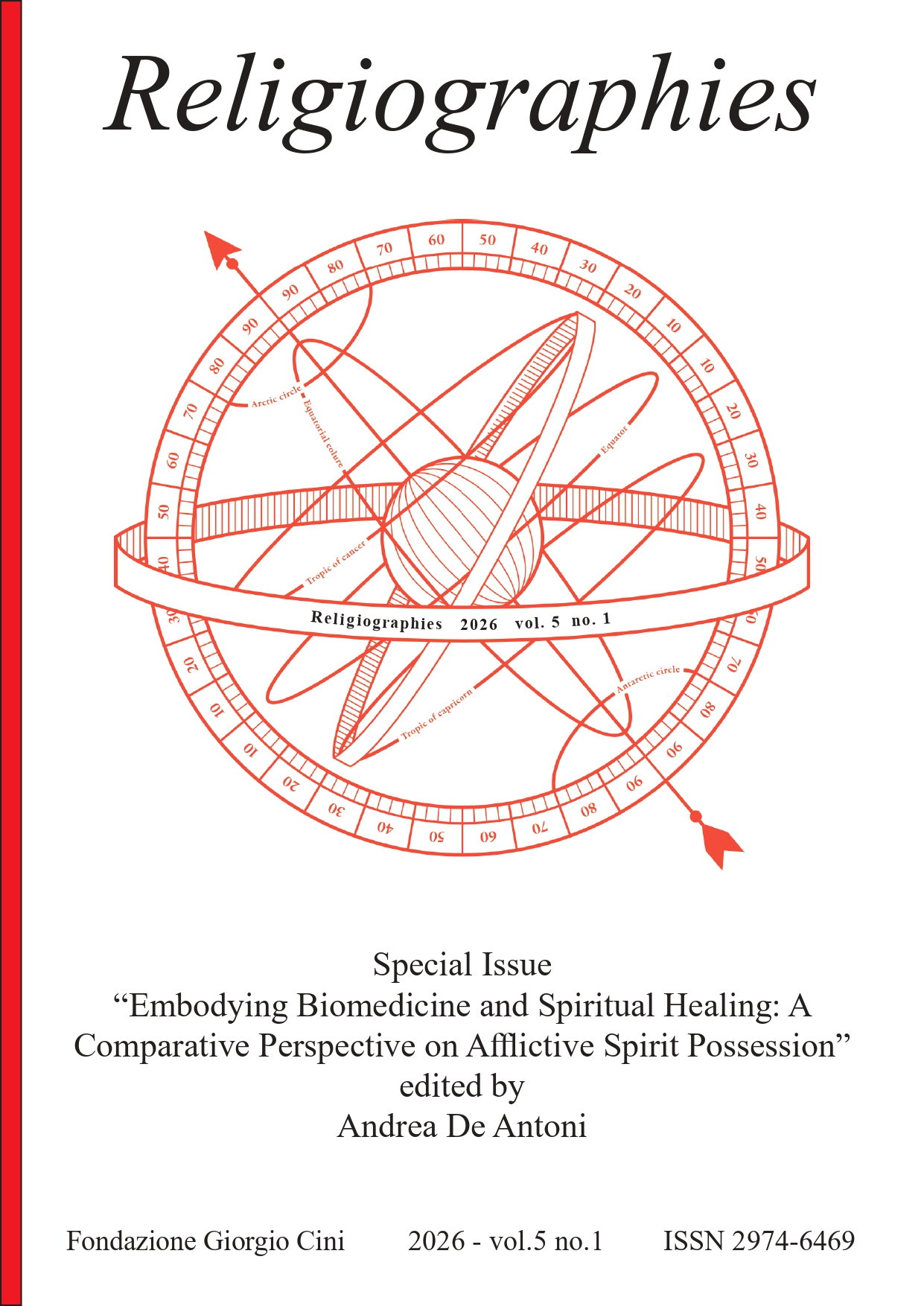
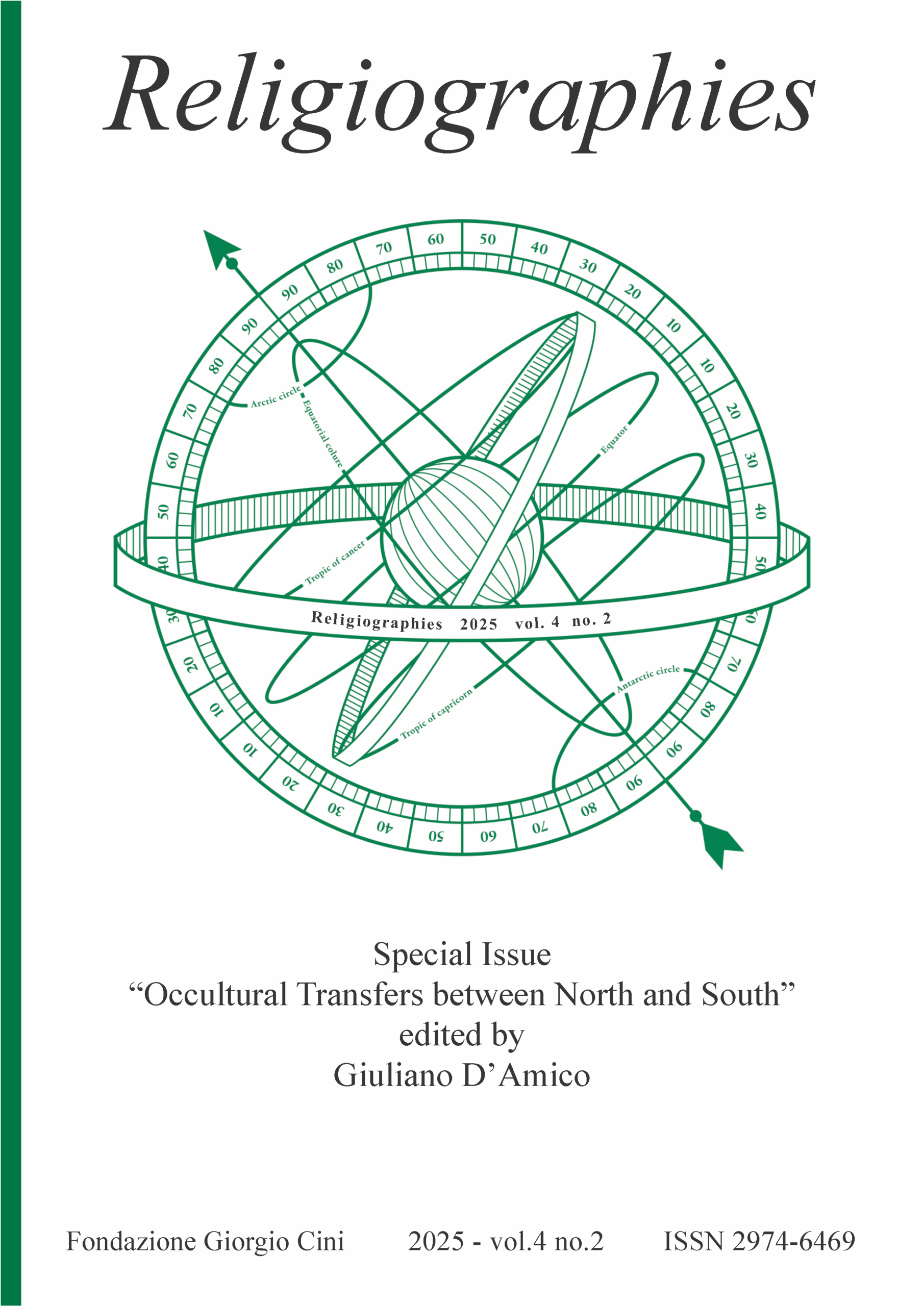
Religiographies, vol. 4, n. 2

Open-access and peer-reviewed journal, curated by the Centre for Comparative Studies of Civilisations and Spiritualities at the Fondazione Giorgio Cini. With an interdisciplinary approach, Religiographies fosters dialogue between historians, sociologists, anthropologists, philosophers, and psychologists on three main themes: mysticism, esotericism, and spirituality.

In this special issue, the literary, artistic and spiritual influences between Northern and Southern Europe are explored, questioning established geographical conceptualisations. The relationship between esoteric/occult and artistic discourse, which scholars have called ‘occultism’, has largely been studied from a national perspective, and drawing on case studies from the last sixty years. However, this volume examines case studies from the nineteenth century onwards, and opts for a transcultural and transnational perspective. This new approach makes it possible to better grasp negotiations and mutual influences in the literary, musical and artistic world in general.


Libertinism and Spirituality between Desire and Rebellion

Commonly, the term ‘libertinism’ is used with the meaning of licentious-ness in relation to unrestrained and lascivious moral or social behaviour. It actually has a long philosophical history with roots in antiquity, in which sensuality is often only one aspect. The various forms of libertinism when placed in contrast with religious dogmatism and more moderate forms of philosophical reflection – spread through clandestine channels in which we frequently come across intersections with alternative and eso-teric forms of spirituality. Special attention is devoted to Giacomo Casanova, whose intellectual and sensual libertinism was not bereft of interest in the esoteric dimension.

The conference is organized jointly by the Centre for Comparative Studies of Civilisations and Spiritualities at Fondazione Giorgio Cini, the Center for the History of Hermetic Philosophy and Related Currents (HHP) at the University of Amsterdam, and the Center for the Study of World Religions (CSWR) at Harvard Divinity School.
programmE

[accordion][/accordion]
[accordion_entry title=”16 December”]

9:30 – 10:00        Welcome greetings

  • Francesco Piraino (Fondazione Cini / Ca’ Foscari)
  • Charles Marshall Stang (CSWR – Harvard Divinity School)
  • Marco Pasi (HHP – University of Amsterdam)


10:00 – 11:00        Greek and Early Christian Period

  • Matthew J. Dillon (Center for Study of World Religions at Harvard Divinity School), “Libertine Gnosticism and Grant Morrison’s The Invisibles
  • Charles Marshall Stang (Center for Study of World Religions at Harvard Divinity School), “Monastic and Mystical Libertinism: The Anxiety around Apatheia in the Syriac Christian Tradition”


11:00 – 11:30        Coffee break


11:30 – 12:30        Middle Ages

  • Denis Renevey (University of Lausanne), “Richard Rolle (c.1300–49), ermite et libertin avant l’heure: Religious Rebellion and Sensorial Mysticism in North Yorkshire”
  • Gerard Wiegers (University of Amsterdam) “Iberian Converts and Forced Migrants of Jewish and Muslim Descent: Freethought, Atheism, and Libertinism”


14:00 – 15:30        Reinassance

  • Maria Koutsouris (Boston University), “Platonic Libertinism: Esoteric and Erotic Apotheosis in Marsilio Ficino and Aleister Crowley”
  • Adrien Mangili (FNS / University of Toulouse Jean Jaurès) “Mages and Libertines from Pomponazzi to Gaffarel”
  • Federico Barbierato (University of Verona), “Ways of Believing and Unbelieving: Seventeenth-Century Libertinism and the Venetian Experience”

[/accordion_entry]
[accordion][/accordion]

[accordion][/accordion]
[accordion_entry title=”17 December”]

10:00 – 11:00      Judaism

  • Jonathan Cahana-Blum (Hebrew University of Jerusalem), “ ‘They that Prepare the Ground May Have to Wade through the Marshes of Sin’: Susan and Jacob Taubes’s Jewish Gnostic Cult in 1950’s New York and Jerusalem”
  • Elliot R. Wolfson (New York University) “Mystical Nihilism and the Philosophical Skepticism of Faith”


11:00 – 11:30        Coffee break


11:30 – 12:30        “The East”

  • Mark Sedgwick (Aarhus University), “Sufi Libertinism”
  • Paride Stortini(Ghent University), “Desire to Know Desire: Religion, Repression, and Sexuality in the Interwar Japanese Movement ‘Erotic Grotesque Nonsense’ ”


14:00 – 15:30        17th century

  • Elena Grazioli (University of Milan), “Casanova: Libertinism and the Shaping of Autobiographical Identity”
  • Carlo Bosi (Mozarteum University, Salzburg), “Libertinism, Early Venetian Opera and the Power of Eros”
  • Lieven De Maeyer (Ruusbroec Institute at Antwerp University), “Freedom from Sin, or Freedom to Sin? Libertinism and/as Quietism in Late 17th Century France”

[/accordion_entry]

[accordion][/accordion]
[accordion][/accordion]
[accordion_entry title=”18 December”]

10:00 – 11:30      Contemporary

  • Dell Rose (Swedenborg Library Chicago / University of Amsterdam), “The Sacredness of Sin: D’Annunzio amongst the Philosophers of Filth”
  • Piero Latino (CELLF – Sorbonne Université / University of Pisa) “From Couliano’s ‘Erotic Pneumophantasmology’ to Corbin’s ‘Metaphysic of Love’: The Spiritual Nature of Eros between Libertinism and the Religion of Love in Literature”
  • Christina Oakley Harrington (Independent historian of religion) “The Feminist Libertinism of Early Wicca”


11:30 – 12:00        Coffee break


12:00 – 13:00        Contemporary

  • Matouš Mokrý (Masaryk University) “Literary Libertinism in the ‘Deofel Quintet’ of the Order of Nine Angles and Antinomian Esoteric Initiation”
  • Gordan Djurdjevic (Independent scholar) “ ‘The Most Sublimely Austere Ethical Precept’: Aleister Crowley’s Doctrine of ‘Do What Thou Wilt’ and Its Complicated Relationship with Libertinism”


14:30 – 15:30       Plenary

[/accordion_entry]
[accordion][/accordion]
The conference will be held in English.

Call for Papers | Academic Freedom and the Challenges of Humanism(s)

The conference is organized jointly by the Centre for Comparative Studies of Civilisations and Spiritualities (Fondazione Giorgio Cini), the Center for the Study of World Religions (Harvard Divinity School) the Department of Asian and North African Studies (Ca’ Foscari University), and the KIFO Institute for Church, Religion, and Worldview Research.

This conference explores the evolving concept of academic freedom from a global and interdisciplinary perspective. It begins by clarifying that academic freedom is distinct from freedom of speech. Academic freedom entails the right to critically examine the very structures and categories that shape our societies. It includes the liberty to pursue research not necessarily aligned with market logic or state interests, but grounded in the curiosity, creativity, and serendipity that drive the pursuit of knowledge.

Abstracts and Texts

Abstracts up to 300 words, accompanied by a short CV, should be submitted in English by the 15 th of January to [email protected]. A notification of acceptance will be forwarded by the 31 st of January.

Timetable

  1. The call for papers is open – 7 November 2025.
  2. Abstracts (300 words maximum) and CVs to be received by 15 January, 2026.
  3. Notifications of acceptance will be given by 31 January, 2026.
  4. The conference will be held 21-22-23 April 2026.

Transcendence in the Small Gestures of Life

The symposium Transcendence in the Small Gestures of Life: Attention and Care for Nature and Humans in Religious Traditions explores how spiritual techniques awaken care and attentiveness towards the natural world, fellow human beings, and creation itself.
Experiences such as Sufi sama ceremonies, the use of fragrance in funeral rites, and the tending of plants and animals serve as examples of how spirituality can be expressed through small, meaningful gestures that foster a connection to transcendence. The symposium also investigates how these spiritual approaches inform the study of religion and address contemporary global challenges, particularly the ecological crisis.

The conference is organized jointly by the Centre for Comparative Studies of Civilisations and Spiritualities (Fondazione Giorgio Cini) the Muslim Worlds Network of the European Association of Social Anthropologists (EASA) and the Centro di Ricerche Etnografiche e di Antropologia applicata “Francesca Cappelletto” (CREAa) of the Department of Human Sciences of the University of Verona.

programme

[accordion][/accordion]
[accordion_entry title=”Tuesday, 2 October”]

9:30 – 10:00 | Welcome Greetings
  • Francesco Piraino (Fondazione Giorgio Cini)
  • Lili Di Puppo (FAU Erlangen-Nürnberg / KU Leuven)
  • Fabio Vicini (University of Verona)
10:00 – 11:00 | Panel: Disarticulating Transcendence in the Everyday

Chair: Francesco Piraino (Fondazione Giorgio Cini)

11:00 – 11:30 | Coffee Break
11:30 – 12:30 | Panel: Everyday Care and the Sacred

Chair: Fabio Vicini (University of Verona)

14:30 – 15:30 | Panel: Experiencing Subtle Forms of Transcendence

Chair: Lili Di Puppo (FAU Erlangen-Nürnberg / KU Leuven)

[/accordion_entry]
[accordion][/accordion]
[accordion][/accordion]
[accordion_entry title=”Friday, 3 October”]

10:00 – 11:00 | Panel: Nature, Body, and Transcendence

Chair: Lili Di Puppo (FAU Erlangen-Nürnberg / KU Leuven)

11:00 – 11:30 | Coffee Break
11:30 – 12:30 | Panel: Transcendence and Beauty in Pilgrimage

Chair: Fabio Vicini (University of Verona)

14:30 – 16:00 | Plenary

[/accordion_entry]
[accordion][/accordion]
The conference will be held in English.

Religiographies, vol.4 n.1

Open-access and peer-reviewed journal, curated by the Centre for Comparative Studies of Civilisations and Spiritualities at the Fondazione Giorgio Cini. With an interdisciplinary approach, Religiographies fosters dialogue between historians, sociologists, anthropologists, philosophers, and psychologists on three main themes: mysticism, esotericism, and spirituality.

This issue of Religiographies offers an excursus into the legacy of Eranos: the series of encounters held in Ascona starting in 1933 that brought together some of the most stimulating minds of the time, organised by the Dutch activist, painter and researcher Olga Fröbe-Kapteyn on the inspiration of Rudolf Otto and Carl Gustav Jung. The articles explore the influence of the meetings on the social sciences, humanities, performing and visual arts, in particular music, dance, theatre and painting.