Institute of Theatre and Opera Archives - Page 7 of 11 - Fondazione Giorgio Cini

Exhibition Eleonora Duse and Arrigo Boito

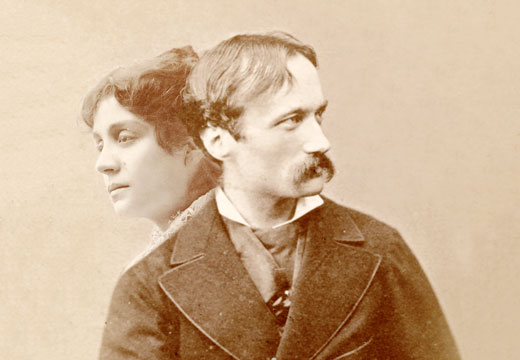
Part of the celebrations for the centenary of the death of Arrigo Boito (1842-1918), this exhibition reconstructs the artistic and personal relationship of Eleonora Duse with the famous Veneto librettist, poet and composer – a man of great learning who was for long a guide for the actress and her theatre. The Institute of Theatre and Opera is thus showing to the public the Boito documents acquired through the Carandini Albertini, Sister Mary Mark and Nardi donations: these materials including fascinating items, such as autograph drafts and sketches for his opera Nerone, original photographs, the captivating correspondence consisting of letters that the two exchanged from 1884 to 1890, and the scripts of the Shakespearean plays Antony and Cleopatra, Romeo and Juliet, and Macbeth, which Boito translated and adapted with Eleonora’s specific acting skills in mind. There is also a portrait of the actress by the German painter Franz von Lembach, which Boito had always kept at his bedside: on his death, in keeping with his will, it was returned to Duse.
Opened to the public in 2011, “Eleonora Duse’s Room” was created with the idea of making accessible the valuable heritage of the Duse Archives to anyone interested.
The original materials from the archive are exhibited on rotation in a series of temporary exhibitions aimed at exploring one or more aspects of the actress’s life and art.


Arrigo Boito, about 1895

Presentation The Giovanni Poli Archive

Following the recent acquisition of the personal archive of the playwright and stage director Giovanni Poli (1917-1979), the Institute of Theatre and Opera has organised a public presentation of the donation. Presented to the Fondazione Giorgio Cini at the behest of his sons Stefano and Massimo, the Giovanni Poli Archive consists of a great variety of documents, many of them unpublished, including theoretical writings, notes and director’s notes, essays on theatre, playbills and posters, stage photos, videos and press releases.
The archive is thus of key importance in reconstructing and studying the theatre of the Veneto director. Poli was the founder of the Ca’ Foscari University Theatre and the Teatro a l’Avogaria. A prominent
personality on the Venetian theatrical scene in the second postwar period, his work, strongly rooted in the Veneto, was focused on reviving the Venetian theatrical tradition but constantly bearing in mind contemporary developments. For the presentation, a selection of materials from the archive will be on show in the Sala Barbantini in the Fondazione Cini: scripts and director’s notes, sketches, designs, playbills, posters, stage photos and press releases. They will document the heart of an archive of great importance for the Institute and for its role in developing cultural relations with the local Veneto area.

Books at San Giorgio

Books at San Giorgio, a series of meetings presenting the latest publications concerning or
published by the Fondazione Cini, will resume this autumn.
At the first meeting, on 4 October, the featured book is La giovinezza di Tintoretto, containing
the proceedings of the conference on Jacopo Tintoretto, the great Venetian painter considered
to be one of the most original Mannerist artists, ahead of the fifth centenary of his birth.

The second date, October 10, will be devoted to the presentation of La scena di Mariano Fortuny.
Atti del Convegno Internazionale di Studi, edited by Maria Ida Biggi, Claudio Franzini, Cristina
Grazioli and Marzia Maino. The book contains the proceedings of the conference on Mariano
Fortuny y Madrazo’s theatre work and poetics, held in Padua and Venice in November 2013.
Scholars and experts explore the work of the multi-faceted Spanish artist, such as his experiments
with stage lighting and stagecraft, and his relations with the great early 20th-century
directors and leading figures in the fields of dance, the visual arts, music and photography.

The last date, on 18 October, will see the launch of two online books by the Institute of Music:
Variazioni in sviluppo. I pensieri di Giovanni Morelli verso il futuro, edited by Giada Viviani,
and Teatro di avanguardia e composizione sperimentale per la scena in Italia: 1950-1975, edited
by Gianmario Borio, Giordano Ferrari and Daniela Tortora.

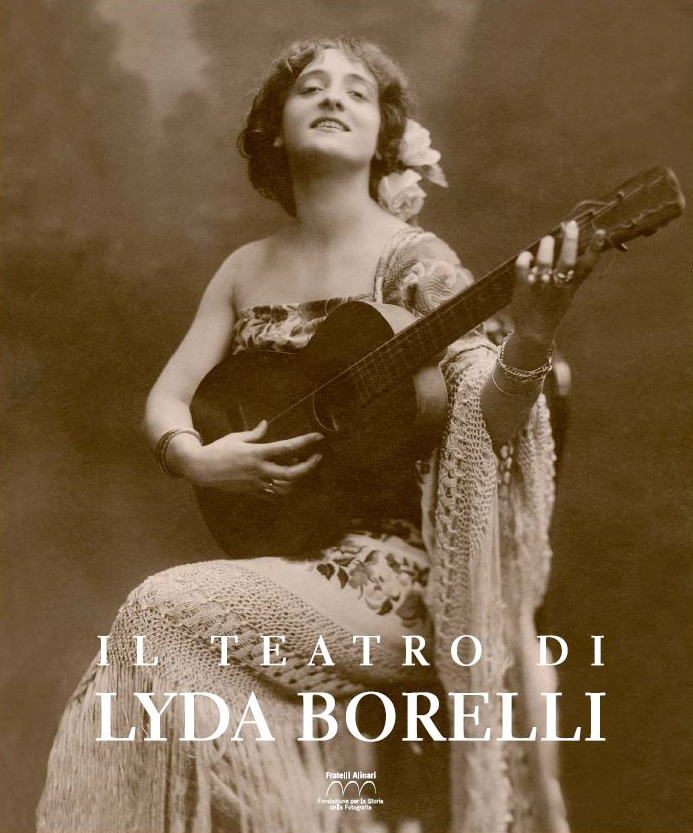
Il Teatro di Lyda Borelli

Il Teatro di Lyda Borelli
Edited by Maria Ida Biggi and Marianna Zannoni
Fratelli Alinari, Florence 2017

This book is the first monograph on the actress Lyda Borelli’s theatrical career, from her youthful beginnings until she retired in 1918. The result of lengthy research work, the essays by Maria Ida Biggi, Marianna Zannoni and Maria Dolores Cassano enable us to retrace the brilliant career of a captivating
actress, one of the first female theatre company leaders in Italy, loved and celebrated by the public and the press, even before her name was indistinguishably linked to the image of a silent-film diva who entered history.
Lyda Borelli perfectly embodies the modern woman of the early 20th century: her image as being emancipated, also constructed through the female characters that she played on the stage, contributed to creating the icon of the belle époque diva. Often the subject of life-style articles in the society columns
of periodicals and newspapers, she caught the public eye for the sophistication of her toilettes. A forerunner of incipient modernity, she was also the muse of contemporary Futurist thinkers. Letters, newspaper articles, first-hand accounts and many unpublished documents have enabled the authors to analyse Lyda Borelli’s stage career in relation to the cultural and social context of her time, in a hitherto unpublished, unique story.

Exhibition Lyda Borelli: A Leading Lady of the 20th Century

This exhibition is a key part of the series of events aimed at reviving interest in the actress Lyda Borelli (1887-1959). Entitled Lyda Borelli: A Leading Lady of the 20th Century, the show has been curated by Maria Ida Biggi, the director of the Fondazione Cini Institute of Theatre and Opera, and installed in the elegant setting of the house-museum of the Palazzo Cini at San Vio, now open again thanks to a partnership with Assicurazioni Generali.

Through a remarkable series of photographs and rare archive documents, the exhibition tells the story of one of the most fascinating Italian stars of the early 20th century, her great achievements on the stage in Italy and worldwide, and her enormous success in cinema. Daughter of the actors Napoleone Borelli and Cesira Banti, Lyda was already often on the stage as child, and she officially debuted alongside Virginia Reiter in 1901. In 1903, she joined Virgilio Talli’s company and, until she retired in 1918, she worked with the greatest actors of the day and was the greatly acclaimed leading lady in plays by writers such as Gabriele D’Annunzio, Oscar Wilde and Sem Benelli. Her image as a theatre actress paved the way to her status as an Art Nouveau icon of style and gracefulness created by her subsequent film roles that were enormously popular with wider audiences.

The exhibition project, organised in agreement with Lyda Borelli’s heirs, has been produced in collaboration with institutions such as the SIAE-Biblioteca e Raccolta Teatrale del Burcardo, Rome; Fratelli Alinari. Fondazione per la Storia della Fotografia, Florence; ICCD – Istituto Centrale per il Catalogo e la Documentazione, Rome; Biblioteca e Archivio storico di Casa Lyda Borelli, Bologna; and the Fondazione Cineteca Italiana, Milan.

International Conference. Monteverdi’s Venetian Operas: New Ideas for Interpretation and Mise en Scène

16 June 2017
Fondazione Giorgio Cini, Island of San Giorgio Maggiore

17 June 2017
Teatro La Fenice, Sale Apollinee


Part of the celebrations of 450 years since the birth of Claudio Monteverdi, this conference has been organised by the Institute of Theatre and Opera and the Institute of Music in collaboration with the Teatro La Fenice. Coordinated by Ellen Rosand and Stefano La Via, the event will bring together scholars and performers with diverse skills and backgrounds. The intense two-day conference is divided into three sessions. The first two sessions ‒ entitled L’Incoronazione di Poppea: from Busenello to Monteverdi and Poppea vs. Ulisse: keys for interpretation and performance ‒ will held at the Fondazione Giorgio Cini on 16 June, while the last session, History and criticism of stage productions, will take place in the Sale Apollinee of the Teatro La Fenice on 17 June.

After the conference and a performance of the “Monteverdi Trilogy”, conductor Sir John Eliot Gardiner will meet Tim Carter and the other speakers. Among those invited to take part are Guillaume Bernardi, Mauro Calcagno, Jane Glover, Wendy Heller, Mario Infelise, Jean-François Lattarico, Maria Martino, Magnus Schneider, Hendrik Schultze, Anna Tedesco and Nicola Usula.

In concomitance with the conference at the Teatro La Fenice, Sir John Eliot Gardiner at the head of the Monteverdi Choir and Orchestras will stage the Monteverdi Trilogy: OrfeoIl ritorno d’Ulisse in patria and L’incoronazione di Poppea. For its world première in Venice, this production will have a cast of young singers selected by Gardiner from among the students who came from Italy, Britain and France to take part in a series of preparatory workshops for the operas entitled the Accademia Monteverdiana. The workshops were held at the Fondazione Giorgio Cini in April 2016 and organised by the Institute for theatre and Opera.


Download the program


Image: 

Francesco Primaticcio, Ulysses and Penelope, c. 1560, Toledo Museum of Art (Toledo, Ohio). Purchased with the contribution of the Libbey Endowment, gift of Edward Drummond Libbey, 1964.60


The Music of the Merchant: Musical Life in and around the Venetian Ghetto from Shylock’s Era

From 24 al 30 July 2017, the Fondazione Giorgio Cini Institute of Theatre and Opera is hosting a workshop entitled The Music of the Merchant: Musical Life in and around the Venetian Ghetto from Shylock’s Era, held by the Lucidarium Ensemble. The workshop is the next stage in a large three-year project, Shakespeare in and beyond the Ghetto: staging Europe across cultures, chosen by the European Commission following a 2016 call for proposals for Creative Europe Culture Cooperation Projects. Besides Ca’ Foscari University, Venice, and the Fondazione Giorgio Cini, the international partners in the European project include the University of Warwick and Queen Mary University of London (England), Ludwig-Maximilians-Universität, Munich (Germany), and the Teatrul Municipal Tony Bulandra, Targoviste (Romania).

The workshop will explore the colourful variety of repertoires that characterised the 16th-Century Venetian soundscape: dances and mascherate associated with Commedia dell’Arte and Carnival; Jewish songs in Yiddish, Italian and Spanish, borrowed from 16th-century sources; and liturgies, paraliturgies and piyyutim (liturgical chanted poems) from the Jewish oral tradition in Italy. In a week of intensive studies, there will be an analytical focus on the music that ordinary people listened to in their daily lives or during celebrations and festivities, and especially in the Ghetto. In addition to studying vocal, instrumental and mixed ensembles, the workshops will tackle the Jewish repertoire in sessions on singing and early percussion instruments. There will also be lessons on the lute, wind instruments, tambourines, percussions and the dulcimer. Another important area of study will concern how to study and perform music repertoires that have only survived in partial form.

The workshop  is organized in collaboration with Haute école de musique, Genève, and is addressed  to singers and instrumentalists interested in Jewish and Renaissance music.


The deadline for applications is 15 April 2017.

For further information:

[email protected]

[email protected]

http://www.lucidarium.com/summer-course-music-of-the-merchant/


attachment       


HEM_logo_couleur


Workshop: Masks of Shylock

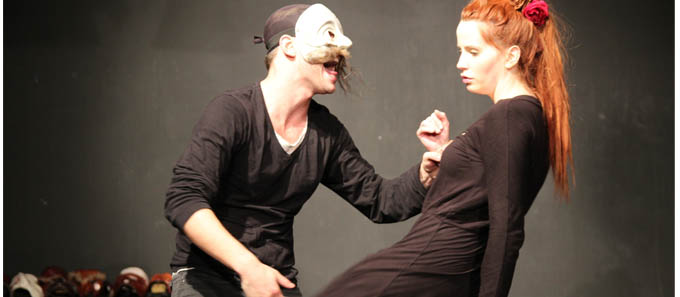
From 17 to 26 January 2017, the Teatrul Municipal Tony Bulandra, Targoviste, hosted Masks of Shylock, a workshop held by the theatre company Pantakin. The event continued and completed the work begun by Pantakin at the Fondazione Giorgio Cini in November 2016, in the workshop entitled Shylock after Shylock  Shakespeare’s Masks.

The Romanian workshop was another stage in the large three-year project entitled Shakespeare in and beyond the Ghetto: staging Europe across cultures, chosen by the European Commission following a 2016 call for proposals for Creative Europe Culture Cooperation Projects. Besides Ca’ Foscari University, Venice, and the Fondazione Giorgio Cini, the international partners in the European project include the University of Warwick and Queen Mary University of London (England), Ludwig-Maximilians-Universität, Munich (Germany), and the Teatrul Municipal Tony Bulandra, Targoviste (Romania).

The sixteen workshop participants were selected through a call for applications followed up by an audition. The analysis of movement and improvisation were the two main areas of study in the workshop. Starting from the discovery of the mask as an expressive instrument, the students explored actors’ movements in space and techniques of acting and stylization. The workshop enabled the participants to acquire expressive languages as the basis for building character improvisations.
The workshop was also part of the preparations of a production based on a re-interpretation of Shakespeare’s Andronicus Titus, due to be completed by September 2017. The first performance will be staged in October as part of the 2017-2018 season at the Teatrul Bulandra.

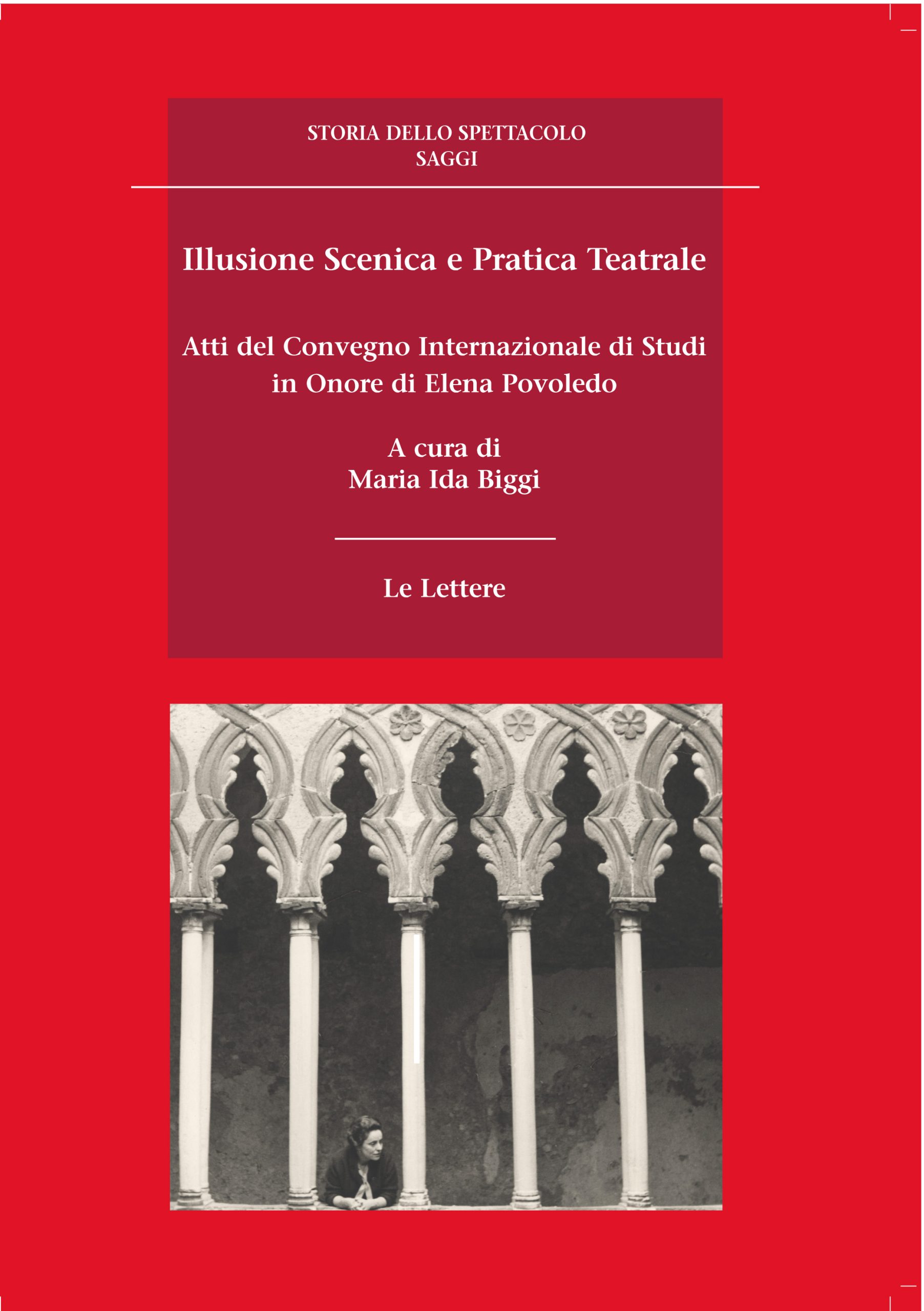
Illusione scenica e pratica teatrale. Atti del Convegno Internazionale di studi in onore di Elena Povoledo

Illusione scenica e pratica teatrale. Atti del Convegno Internazionale di studi in onore di Elena Povoledo
Edited by Maria Ida Biggi
Le Lettere, Florence, 2016

This book contains the proceedings from an international conference organised in honour of Elena Povoledo, held at the Fondazione Giorgio Cini on 16 and 17 November 2015.
Thanks to papers by international lecturers and scholars, the Institute of Theatre and Opera has commemorated this scholar who pioneered studies on the relations between the figurative arts and theatre, in research fields ranging from the history of theatre to stage design and theatre iconography. An internationally renowned scholar, Elena Povoledo was one of the best loved teachers at the Accademia d’Arte Drammatica “Silvio D’Amico”, Rome, chief editor and illustrations editor of the Enciclopedia dello Spettacolo, and an authoritative collaborator with the Fondazione Giorgio Cini for its exhibitions on theatre.

SHAKESPEARE IN AND BEYOND THE GHETTO: STAGING EUROPE ACROSS CULTURES

To mark the 400th anniversary of the death of William Shakespeare and 500 years since the creation of the Ghetto in Venice, the European Union approved a three-year project entitled Shakespeare in and beyond the Ghetto: Staging Europe across Cultures. The project was chosen in a 2016 call for proposals for Creative Europe Culture Cooperation Projects.

In addition to Ca’ Foscari University, Venice (project leader) and the Fondazione Giorgio Cini, the highly prestigious international partners supporting the project are Warwick University and Queen Mary University of London (United Kingdom), Ludwig-Maximilians-Universität, Munich (Germany) and the Teatrul Municipal Tony Bulandra Targoviste (Romania).

The aim of the project is to further knowledge about the life and work of William Shakespeare by framing his dramaturgy in its creative relationship with the settings described in his works. In this case the reference is to The Merchant of Venice.

The project consists of a series of various events – symposia, meetings, creative and performers’ workshops – designed and staged by the various partners involved.

The Theatre and Opera Study Centre has thus been and still is involved in promoting a series of activities at the Fondazione Giorgio Cini for the three-year period (2016-2018):


Shakespeare in Venice Summer School. The Shylock Project – Second Edition
Venice, Island of San Giorgio Maggiore, 18-29 July 2016

Following on from the success of Summer del 2015, the Theatre and Opera Study Centre organised the second edition of the Shakespeare in Venice Summer School. The Shylock Project, in collaboration with Ca’ Foscari University, Venice and under the Patronage of the Committee for Five Hundred Years of the Venice Ghetto. The two-week programme of intensive studies involved many internationally renowned experts and university lecturers, and several events were open to the public. Moreover, the Summer School was held at the same time as the first ever production of The Merchant in Venice in the Venice Ghetto. Performed by the Compagnia de’ Colombari (Campo del Ghetto Novo, 26 July – 1 August 2016), the play was the second stage of the activities in the European project.


Shylock after Shylock –Shakespeare’s Masks
Venice, Island of San Giorgio Maggiore, 14-18 November 2016

From 14 to 18 November 2016, the Fondazione Giorgio Cini Theatre and Opera Study Centre hosted a workshop entitled Shylock after Shylock – Shakespeare’s Masks, held by the theatre company Pantakin. Part of the third stage of the three-year project Shakespeare in and beyond the Ghetto: Staging Europe across Cultures, the workshop also served the purpose of selecting professional actors for a new theatre production as well as exploring the origins of Shakespearean characters and shedding light on the influence of maschere (“masks” or stock characters from Commedia dell’Arte) in the construction of the characters in his plays.


The Music of the Merchant
Venice, Island of San Giorgio Maggiore, 24-30 July 2017

From 24 to 30 July 2017, the Fondazione Giorgio Cini Theatre and Opera Study Centre will take part in the fourth stage of the European Project by hosting a workshop entitled The Music of the Merchant, organised by Lucidarium Ensemble. The workshop sets out to explore the typical 16th-century “soundscape” in Venice. Dances and mascherate associated with Commedia dell’Arte and Carnival, Hebrew songs, liturgies and paraliturgies from the Jewish oral tradition will be the subject of a series of workshop sessions for singers and instrumentalists. There will also be classes on singing, woodwind instruments, tambourines and historic percussion instruments, with a special focus on musical repertories that have survived at least partially to the present day and the methods required to study and interpret them.


Shakespeare in Opera. Rewritings and Productions of Romeo and Juliet and The Merchant of Venice

Venice, Island of San Giorgio Maggiore, 23-24 April 2018

On 23-24 April 2018, as part of the European project entitled Shakespeare in and beyond the Ghetto: Staging Europe across Cultures, the Institute of Theatre and Opera has organised an international conference entitled “Shakespeare in Opera. Rewritings and Productions of Romeo and Juliet and The Merchant of Venice”. The conference thus sets out to explore operatic versions of the two Shakespearean plays. Musicologists, drama historians and playwrights will analyse the contexts in which the musical productions of Shakespeare’s play developed. In fact, from the early 17th century to the present day, they have inspired librettists and composers.


Shakespeare all’Opera. Riscritture e allestimenti di “Romeo e Giulietta”
edited by  Maria Ida Biggi e Michele Girardi, Edizioni di Pagina, Bari 2018
This book brings together the proceedings from the international conference entitled “Shakespeare in Opera. Rewritings and Productions of Romeo and Juliet and The Merchant of Venice” held at the Fondazione Giorgio Cini on 23-24 April 2018. The conference thus focused on operatic versions of the two Shakespearean plays. Musicologists, drama historians and playwrights analysed the contexts of musical productions based on the two texts, which have inspired librettists and composers from the early 17th century to the present day. During the conference, an abridged version of Shakespeare’s Merchant of Venice was put on by the cultural production company Tournée da Bar. The conference is another stage in the three-year project Shakespeare in and beyond the Ghetto: Staging Europe across Cultures (2016-2018), selected by the European Commission in a 2016 call for proposals for Creative Europe Culture Cooperation Projects. This book brings together the papers on the operatic versions of Romeo and Juliet, whereas those concerning The Merchant of Venice will be published in a second volume to be produced also as part of the European project.