Institute of Theatre and Opera Archives - Page 8 of 11 - Fondazione Giorgio Cini

The Scaparro Archive at the Fondazione Giorgio Cini

23 February 2017, 11am Island of San Giorgio Maggiore, Venice

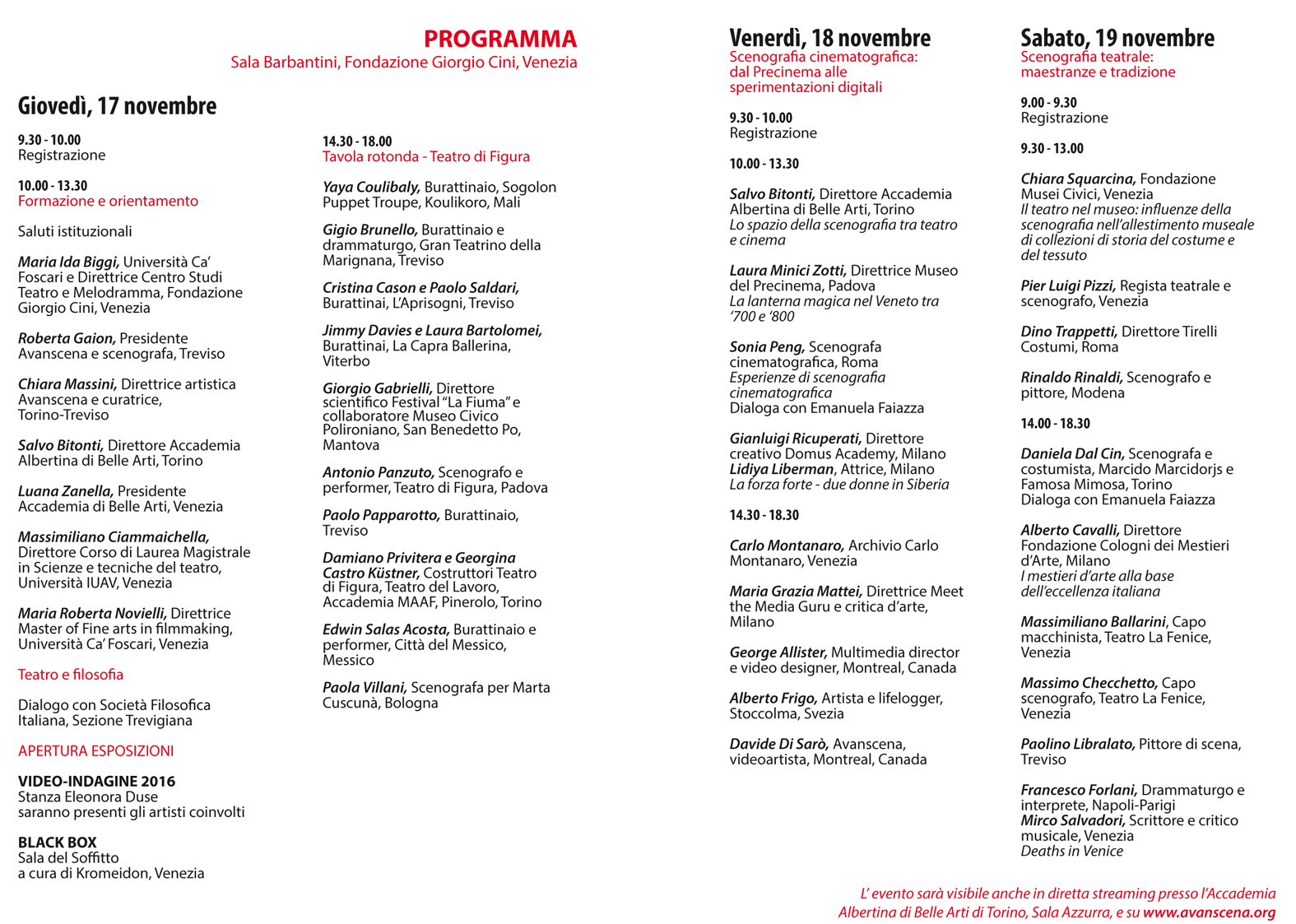
With the Venice Carnival in full swing, the Theatre and Opera Study Centre will make a public presentation of the Maurizio Scaparro Archive, donated by the great theatre and film director to the Fondazione Giorgio Cini.

The Archive brings together material concerning Scaparro’s theatrical activities from the 1960s to the present day. An invaluable resource for the study of contemporary theatre and the overall Italian cultural world, the archive is divided into several sections, reflecting the various fields in which Scaparro worked. Along with an important collection of materials, such as scripts, director’s notes, letters, sketches, and set and costume designs, there are a large number of posters and playbills for various kinds of events and performances, a useful, detailed press section, and a rich photographic collection.

Maurizio Scaparro is a theatre, film and television director with a worldwide reputation. During his career he has directed some ground-breaking plays and events on the Italian and European cultural scene. He was has been the director of major theatres, including the Théâtre de l’Europe, Paris (as directeur adjoint to Giorgio Strehler), the Teatro di Roma, the Teatro Eliseo, Rome, and the Théâtre des Italiens, Paris. From 1980 onwards Scaparro made a reputation in international culture for his creation of the “Carnival of Theatre”, devised and launched during his first four-year period as the director of the Venice Biennale theatre section. The Venetian Carnival tradition, which he revived, is as popular as ever today.

To mark the presentation, a small selection of materials from the Scaparro Archive will be on view in the elegant rooms of the Longhena Library.

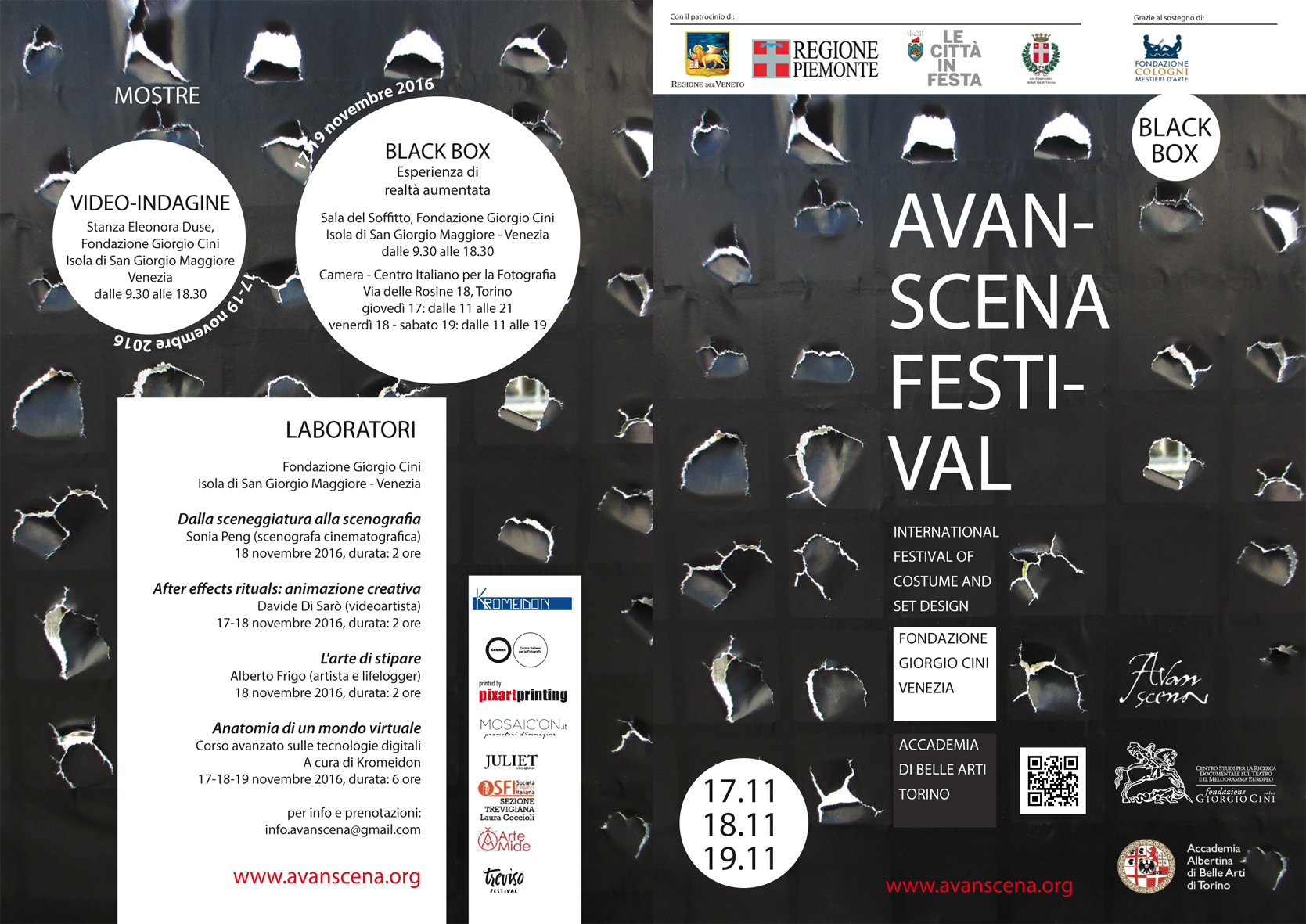
Dal ritratto all’icona. Il fascino di un’attrice attraverso la fotografia

Dal ritratto all’icona. Il fascino di un’attrice attraverso la fotografia
Edited by Marianna Zannoni
Fondazione Giorgio Cini, Venice, 2016
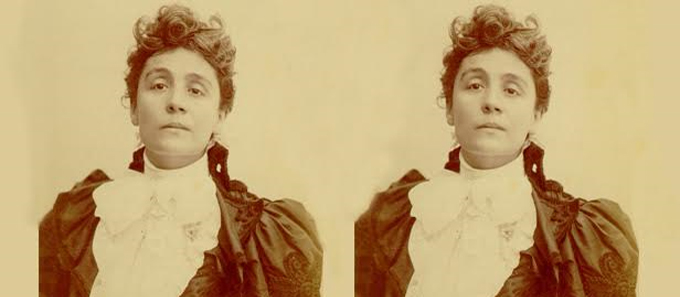
To accompany the Duse exhibition entitled From portrait to icon. The charm of an actress in photography, curated by Marianna Zannoni (Fondazione Giorgio Cini, 18 March 2016 – 31 March 2017), the Institute of Theatre and Opera has published the first catalogue in a series on temporary exhibitions staged in Eleonora Duse’s Room. The exhibition is dedicated to the rich photographic collection resource for reconstructing the history of actor portraits at the turn of 19th and 20th centuries. Through the selection of private portraits and pictures of Duse posing in stage costumes, the exhibition offers visitors the opportunity to explore images that contributed to making her such a celebrity and have preserved her memory to the present day.
This series of exhibition catalogues follows on from a volume published in 2013 describing
Duse’s Room with its invaluable Archive, and the life and work of the great diva.

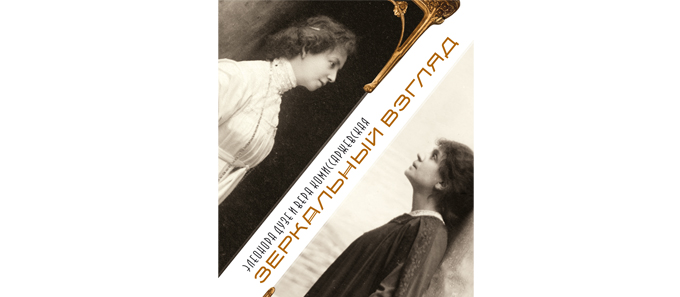
Eleonora Duse and Vera Komissarzhevskaya. Two Divas in the Mirror.

The Fondazione Giorgio Cini Duse Archive in Moscow

From Thursday 24 November, the Centre for Study and Documentary Research into European Theatre and Opera of the Fondazione Giorgio Cini is showing a selection of precious documents from the Duse Archive in a fascinating exhibition entitled Eleonora Duse and Vera Komissarzhevskaya. Two Divas in the Mirror.

The exhibition is open to the public from 25 November until 8 January 2017 in the State Central Museum of Contemporary History of Russia, Moscow (Tverskaya, 21).

The exhibition explores the links between the great Italian actress Eleonora Duse and her Russian counterpart Vera Komissarzhevskaya, a contemporary who was often likened to Duse. The exhibition compares the lives and art of these two leading ladies of the European stage at the turn of the 19th and 20th centuries (they actually met in St Petersburg in 1896 and enjoyed relations of considerable mutual respect).

Maria Ida Biggi, director of the Theatre and Opera Study Centre, and Marianna Zannoni, a researcher at the Centre, have curated the section devoted to Eleonora Duse (1858-1924), which reconstructs the world of the great Italian diva through her autograph writings, photographs and other memorabilia. The exhibition is further enhanced by a selection of Duse’s beautiful costumes and dresses made in the early 20th century by leading fashion designers, such as Mariano Fortuny and Paul Poiret.

In the course of her career Eleonora Duse often performed abroad and was resoundingly acclaimed wherever she went. Of her foreign tours, those to major Russian cities (1891, 1896 and 1908) were particularly successful and enable us to chart the development of her performing practice and her rise to fame. Her Russian admirers produced dozens of reviews and personal accounts. In 1891 Anton Chekhov wrote to his sister: “I have just seen the Italian actress Duse in Shakespeare’s Cleopatra. I have no Italian but she performed so well that I seemed to understand every word: what a marvellous actress!” Other leading figures from the world of theatre who expressed their admiration included the directors Vsevolod Emilevich Meyerhold and Konstantin Sergeyevich Stanislavsky, who claimed to have been inspired by Duse when he created the Moscow Art Theatre.

The exhibition also includes a showing of Cenere (Ash, 1916), the only film starring Eleonora Duse, who also collaborated on the script and direction. Based on the homonymous short short by Nobel prizewinner Grazia Deledda and produced by the Ambrosio studios in Turin, Cenere has recently been restored thanks to funding from the Veneto Region.

The section of the exhibition dedicated to Vera Komissarzhevskaya (1864-1910), curated by Dmitry Rodionov of the Bakhrushin State Central Theatre Museum, Moscow, consists of documents, photographs and objects that belonged to the Russian actress.

The exhibition is completed by a multimedia display curated by the Centre of Studies of Russia Arts (CSAR), Venice, specially designed for the spaces of the Moscow exhibition and based on iconographic documents and materials from the Fondazione Giorgio Cini Theatre and Opera Study Centre and various Russian museums.

The exhibition, Eleonora Duse and Vera Komissarzhevskaya. Two Divas in the Mirror, has been organised by major Italian and Russian institutions and museums, including the Ministry of Culture of the Russian Federation, the State Central Museum of Contemporary History of Russia, the Italian Institute of Culture, Moscow, the Centre for Study and Documentary Research into European Theatre and Opera of the Fondazione Giorgio Cini, Venice, the Centre of Studies of Russia Arts at Ca’ Foscari University, Venice, the Bakhrushin State Central Theatre Museum, Moscow, the St Petersburg State Museum of Theatre and Music, and the Centre of Film Festivals and International Programmes, Moscow.
 

Workshop “Shylock after Shylock – Shakespeare’s Masks”

From 14 to 18 November 2016, the Fondazione Giorgio Cini Theatre and Opera Study Centre is hosting a workshop entitled Shylock after Shylock – Shakespeare’s Masks, held by the Compagnia Pantakin.

After the second edition of Shakespeare in Venice Summer School – The Shylock Project (Fondazione Giorgio Cini, 18-29 July 2016) and the production of The Merchant in Venice, by the Compagnia de’ Colombari (Campo del Ghetto Novo, 26 July – 1 August 2016), this workshop is the third stage in a large three-year project entitled Shakespeare in and beyond the Ghetto: staging Europe across cultures.The project was chosen by the European Commission in the 2016 call for proposals as one of the Creative Europe Culture Cooperation Projects. In addition to Ca’ Foscari University, Venice, and the Fondazione Giorgio Cini, the international partners supporting the European project are Warwick University and Queen Mary University of London (United Kingdom), Ludwig-Maximilians-Universität, Munich (Germany) and the Teatrul Municipal Tony Bulandra Targoviste (Romania).

Shylock after Shylock –Shakespeare’s Masks is being held by the Compagnia Pantakin, a theatre company founded in Venice in 1995 with the aiming keeping alive the tradition of Commedia dell’Arte. By highlighting the connections between Commedia dell’Arte and Shakespeare’s theatre, the workshop will explore the origins of Shakespearean characters and shed light on the influence of maschere(“masks” or stock characters) in the construction of the characters in his plays.

The workshop is also for the purposes of selecting professional actors for a new theatre production to be staged in Venice in 2017 at the Teatro Universitario di Ca’ Foscari, at Santa Marta.

The deadline for workshop applications is 30 October 2016.

Download the application form

Information
Centro Studi Teatro e Melodramma
Tel.+39 041 2710236
E-mail [email protected]


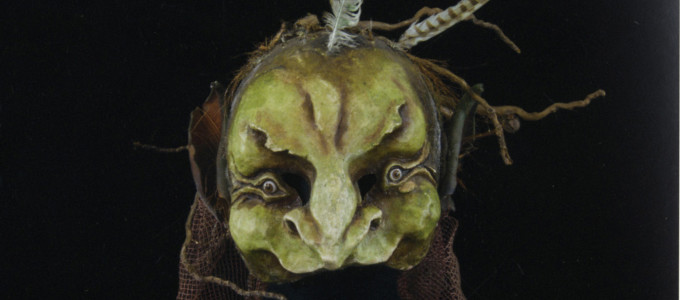
Image:
Frédéricka Hayter, mask for the character of Puck in A Midsummer Night’s Dream, Footsbarn Théâtre, 2002.


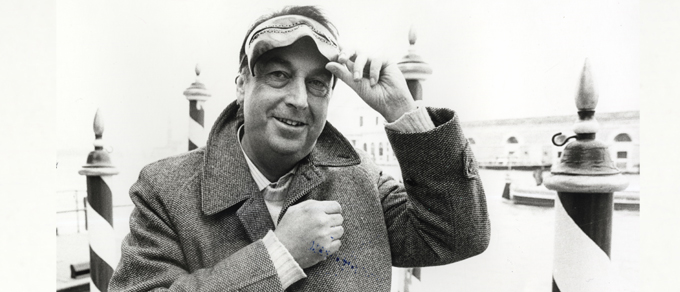
AVANSCENA FESTIVAL 2016. International Festival of Costume and Set Design

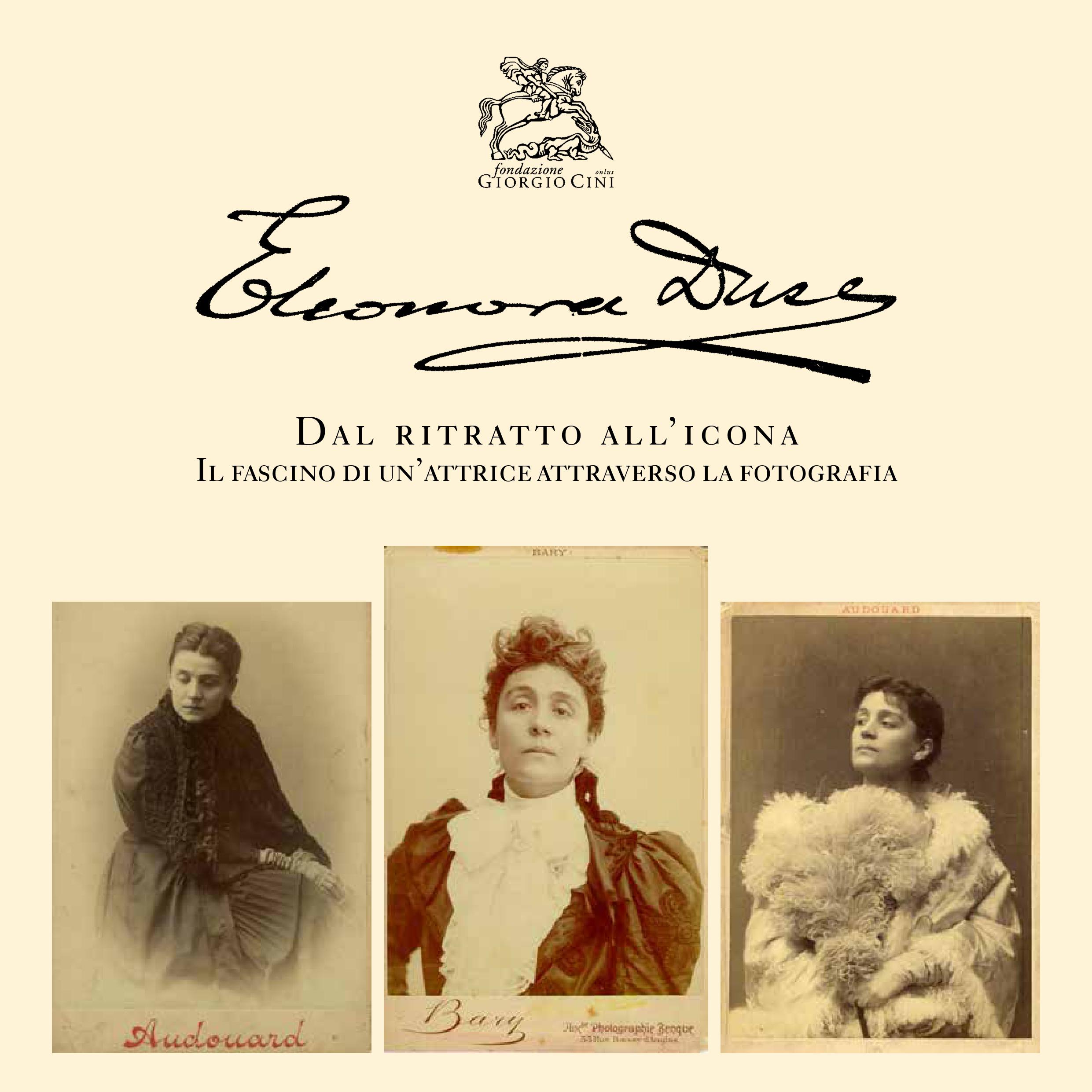
From 17 to 19 November, the Fondazione Giorgio Cini will host the fourth edition of Avanscena. International Festival of Costume and Set Design. Organised in collaboration with the Foundation’s Study Centre for Theatre and Opera, the festival will provide a unique opportunity to explore new developments in the field of stage and costume design, with a special focus on the expert artisans who work behind the scenes.

The main theme of this fourth edition is entitled Black Box | Scatola Nera, and as such encapsulates a twofold meaning: it alludes, on one hand, to one of the many ways of referring to the stage and, on the other, to a device capable of storing memories and, if required, reconstructing sequences of the past.

In a rich series of lectures, performances, workshops and roundtables, the many invited experts will explore what underlies and shapes today’s performing arts and theatre. There will be several in-depth sessions plumbing various subjects: from philosophy to aesthetics, the forerunners of film to contemporary cinema, digital stage setting to Italian craft excellence, and painting sets to figure theatre.

Two exhibitions accompanying the main event will provide some extra interest: Video-Indagine 2016 (Fondazione Giorgio Cini, Stanza Eleonora Duse) is a film surveying contemporary theatre as seen by artists, actors, dancers, choreographers and actors attempting to address the question: what is stage design today?

Black Box (Sala del Soffitto, Fondazione Giorgio Cini, and Camera-Centro Italiano per la Fotografia, Turin) will be an experiment in augmented reality in which the audience-actor relationship may be modulated and weighted in various ways.

Further information

Centro Studi Teatro e Melodramma
Tel. +39 041 2710236
E-mail [email protected]


DOWNLOAD THE CONFERENCE PROGRAMME

DOWNLOAD THE PROGRAMME OF EXHIBITIONS AND WORKSHOPS


Il Teatro di Pierluigi Samaritani

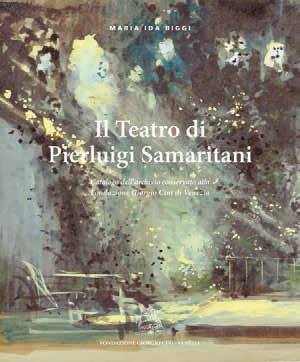
Il Teatro di Pierluigi Samaritani. Catalogo dell’Archivio conservato alla Fondazione Giorgio Cini di Venezia


Following Simona Marchini’s donation of the Pierluigi Samaritani Archive and the production of an inventory of the material in it, the Theatre Studies Centre has published a monograph exploring the art of the Piedmont stage designer.

Samaritani was the last Italian exponent of painted stage sets and his work offers fascinating insights into the history of theatre in the second half of the 20th century. In addition to his designs for the principal Italian theatres and festivals, Samaritani worked for leading international opera houses and his was style was highly successful in major theatres in Europe and North and South America.

The archive consists of a large quantity and great variety of documents: over 400 designs for sets, costume designs, a large photographic collection, his library and a vast catalogue of technical drawings and study documents of various kinds.


From Portrait to the icon: the charm of an actress through photography

From portrait to icon. The charm of an actress in photography.

The Duse Archive photographic collection is a treasure trove of an inestimable value.

The quantity and variety of the photographic prints in the collection capture all the charm exercised by Eleonora Duse in her long career in the late 19th and early 20th centuries.

A selection of private portraits and images of Duse posing in stage costumes will enable visitors to explore the world of this extraordinary actress, woman and sublime artist as well as her theatre. On the exhibition itinerary visitors can admire some of the finest photographs of Duse: images that contributed to creating her great reputation and have preserved her memory to the present day.

In addition to a large number of youthful portraits, the works in the exhibition include photographs by the Florentine photographer Mario Nunes Vais, the Spaniard Pau Audouard and some prominent American photographers, such as Aimé Dupont, Joseph Byron, Arnold Genthe and Edward Steichen.


Open to the public since 2011, Eleonora Duse’s Room was created with the aim of providing access for anyone interested in the valuable heritage preserved in the Duse Archive. The original materials in the archive will be exhibited by rotation in a series of temporary exhibitions aimed at exploring one or several aspects of the actress’s life and work.

Created in 1968 with a donation by Eleonora Duse’s granddaughter, Eleonora Ilaria Bullough, later Sister Mary Mark, the archive has gradually been enhanced by significant bequests, including the most recent donation, in June 2015, by the Lee Strasberg Theatre & Film Institute, New York.

Eleonora Duse’s Room can be visited by booking only.

For information
tel. 041.2710236 email: [email protected]
Poster
Flyer

International Conference Decoration of Performance Space: Meaning and Ideology

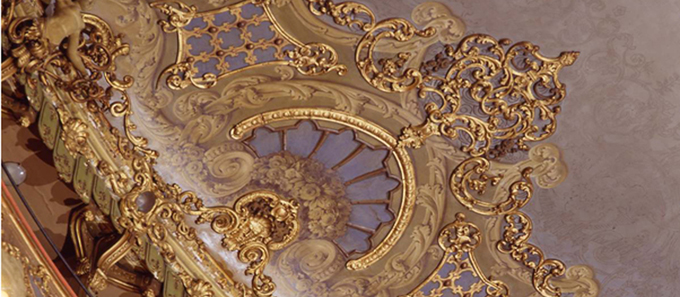
Detail of the ceiling in the Teatro La Fenice, Venice, before the fire of 1996

The Study Centre for Documentary Research into European Theatre and Opera  has organised, in collaboration with the International Council for Traditional Music (ICTM) and Research Centre for Music Iconography at the City University of New York, the 13th Symposium of the ICTM Study Group on Iconography of the Performing Arts.

The conference will address issues related to the study of theatrical and musical iconography with special reference to the documentation concerning the Decoration of Performance Space. Thinking of performances, we usually consider the action happening on the theatre or concert stage, in front of spectators. However, performance space surrounding the spectators, its interior and exterior architectural decoration, as well as fashion of spectators and their habits are also constituent elements of a performance, supplementing the experience of a live event.

The conference will focus on visual aspects and decorations of spaces in which theatrical and musical performances occur, the self-representation of audiences attending performances and the political and ideological context.


Accademia Monteverdi

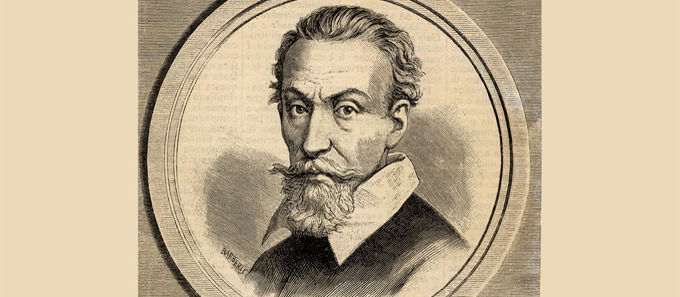
Giuseppe Barberis, Ritratto di Claudio Monteverdi. Fondo Rolandi, Fondazione Giorgio Cini

Ahead of the 450th anniversary of the birth of Claudio Monteverdi in 2017, the Theatre and Opera Study Centre has organised a concert in collaboration with the Monteverdi Choir and Orchestra, London, directed by Sir John Eliot Gardiner. Entitled Monteverdi 450, the concert will be held in the Sala degli Arazzi, at the Fondazione Giorgio Cini, at 7.30 pm on Saturday, 30 April.

The concert will bring to a close the third edition of the Accademia Monteverdi to be held in the Fondazione Cini from 25 to 30 April 2016. Personally taught by Sir John, the series of workshops will take the form of preparation for a performance of the Monteverdi trilogy (L’Orfeo, Il ritorno di Ulisse in patria, and L’incoronazione of Poppea), planned for the 2017 theatre and concert season. During the week of intensive work, the singers selected for the principal parts will have the opportunity to explore specialist themes and techniques of performance practice in order to explore the links between philological studies and historically informed performances in a contemporary context.

At the final concert the soloists chosen for the project will perform a selection of madrigals and excerpts from the Monteverdi trilogy.

Admission by invitation to be shown on entry, while seats last.

For further information: [email protected] | +39 041 2710236

Lina Bo Bardi’s contribution to theatre architecture and stage design in Brazil

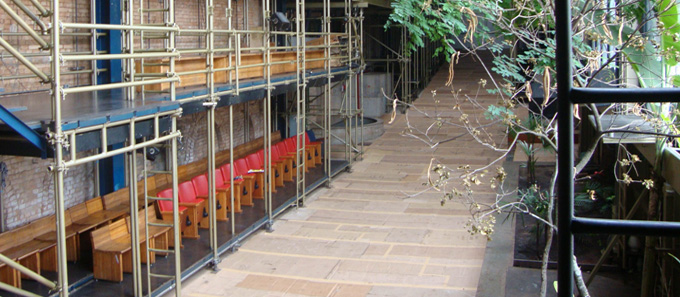
Il Teatro Oficina di São Paolo, progettato da Lina Bo Bardi e Edson Elito. Fondo del Laboratorio de Estudos do Espaço Teatral e Memória Urbana, 2011

As part of a cooperation project involving the Università di Padova and the Universidade Federal do Estado do Rio de Janeiro (UNIRIO) – VI Missione Lavoro, the Theatre Study Centre is hosting a lecture on the architect Lina Bo Bardi by Professor Evelyn Furquim Werneck Lima from the Universidade Federal do Estado do Rio de Janeiro – Laboratório de Estudos do Espaço Teatral e Memória Urbana.

Entitled Lina Bo Bardi’s contribution to theatre architecture and stage design in Brazil, the lecture will consider examples of Bardi’s projects for redesigned or refurbished theatre interiors as well as stage designs. Prof. Lima will also discuss the architect’s Marxist outlook and her work for theatre and the cultural heritage in general.

Born in Rome in 1914, Lina Bo Bardi moved to Brazil with her husband Pietro Maria Bardi after the war. In São Paulo and Salvador she practiced as a professional architect and was also a university lecturer. From the 1970s to the 1980s she regularly worked on stage designs for theatre and cinema.

Lina Bo Bardi’s contribution to theatre architecture and stage design in Brazil, Sala Barbantini, 10.30 am.

Centro Studi Teatro: [email protected] | +39 041 2710236

Download the poster

Download the brochure