
The catalogue of Martha Jungwirth’s solo exhibition at Palazzo Cini – curated by Luca Massimo Barbero, director of the Fondazione Giorgio Cini’s Institute of Art History, and made possible with the support of the Thaddaeus Ropac Gallery – features new works by the Austrian artist. Over the course of her six-decade career, Jungwirth has forged a singular approach to abstraction that is rooted in the body and close observation of the world around her. The artist draws inspiration from ‘pretexts’ to create her vivid and expressive paintings. In the case of Herz der Finsternis, Jungwirth borrows the title of Joseph Conrad’s 1899 novella Heart of Darkness as the starting point for her recent body of work.
Publisher: Fondazione Giorgio Cini, Venice
Religiographies vol.3 n.1
Open-access and peer-reviewed journal, curated by the Centre for Comparative Studies of Civilisations and Spiritualities at the Fondazione Giorgio Cini.
With an interdisciplinary approach, Religiographies fosters dialogue between historians, sociologists, anthropologists, philosophers, and psychologists on three main themes: mysticism, esotericism, and spirituality.
Religiographies vol.2 no.2
Open-access and peer-reviewed journal, curated by the Centre for Comparative Studies of Civilisations and Spiritualities at the Fondazione Giorgio Cini.
With an interdisciplinary approach, Religiographies fosters dialogue between historians, sociologists, anthropologists, philosophers, and psychologists on three main themes: mysticism, esotericism, and spirituality.
Religiographies vol.2 no.1
Open-access and peer-reviewed journal, curated by the Centre for Comparative Studies of Civilisations and Spiritualities at the Fondazione Giorgio Cini.
With an interdisciplinary approach, Religiographies fosters dialogue between historians, sociologists, anthropologists, philosophers, and psychologists on three main themes: mysticism, esotericism, and spirituality.
Archival Notes No. 7
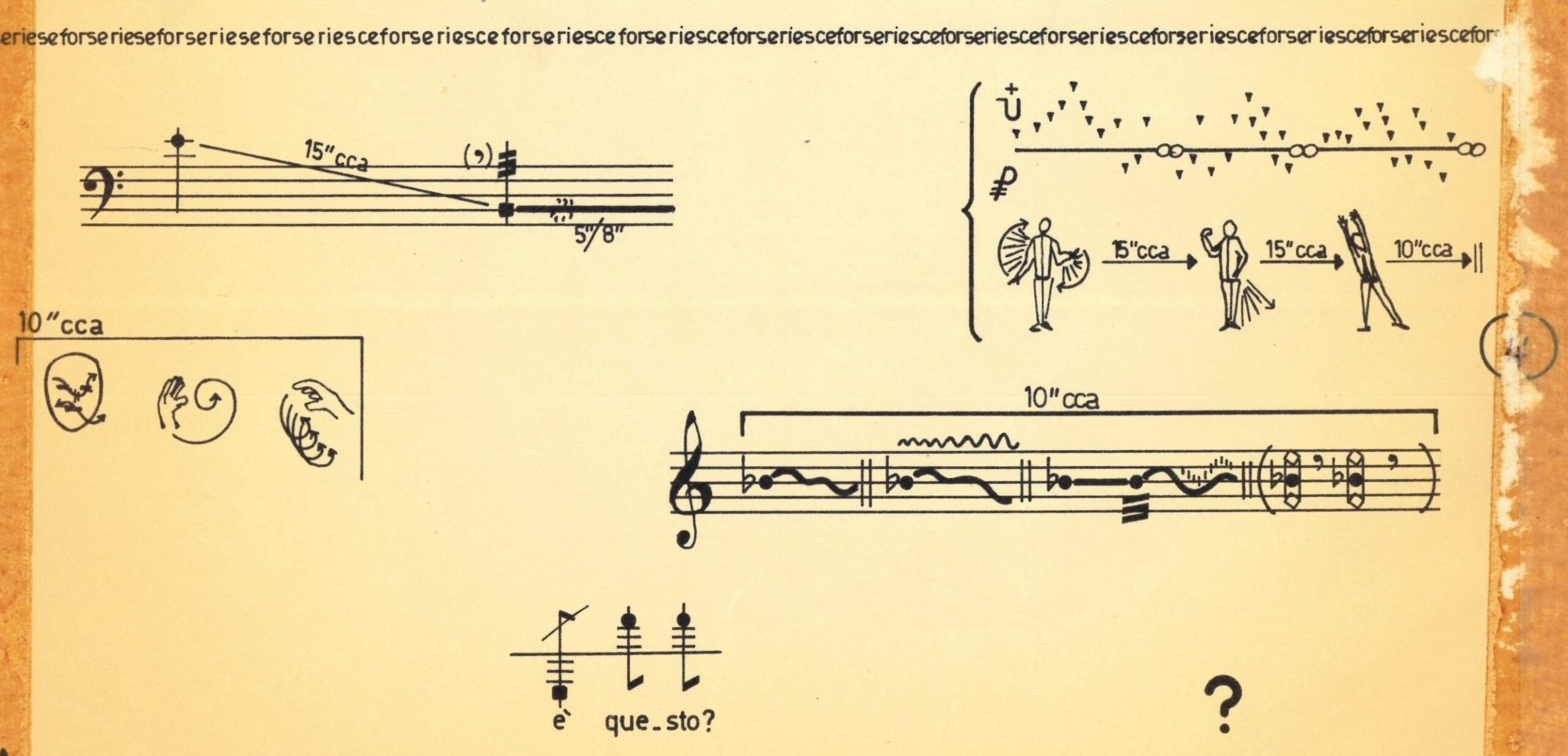
An open-access, peer-reviewed journal, curated by the Institute for Music of the Giorgio Cini Foundation. With an interdisciplinary approach, Archival Notes. Source Studies in Twentieth and Twenty-First-Century Music is dedicated to the research of musical sources from the twentieth and twenty-first centuries.
Articles
- Luk Vaes, «Aus dem Nachlaß»: Sedimentation in Mauricio Kagel’s «Tactil» and «Unter Strom»
- Marco Cosci, Altering «A(lter)A(ction)»? Egisto Macchi Then and Now
- Filipa Magalhães, Constança Capdeville’s Personal Archive: Difficulties in Describing and Documenting Performative Practices
- Luisa Santacesaria e Valentina Bertolani, «Suite “colori”» by Mario Bertoncini: From Performance to Archival Research
- Marco Fusi, Fingers to Sounds, Sounds to Fingers: Creative Interaction with Giacinto Scelsi’s Archival Materials as Means to Devise Performance Practices of His Music
- Landon Morrison, On the Horizon of Digital Technics in Kaija Saariaho’s «IO» and «Nymphéa»
Perspectives
- Marco Angius, ‘E la mente annullata naufraga nel vento’: A New Appraisal of Giacomo Manzoni’s «Parole da Beckett» from the Perspective of a Conductor
Documents and Reports
- Gianmario Borio, «Research-led Performance»: Report on an Ongoing Project
- Luisa Santacesaria e Giulia Sarno, Ctrl+s | Conversations on the survival of electronic music
“Multa renascentur”. Tammaro De Marinis studioso, bibliofilo, antiquario, collezionista.
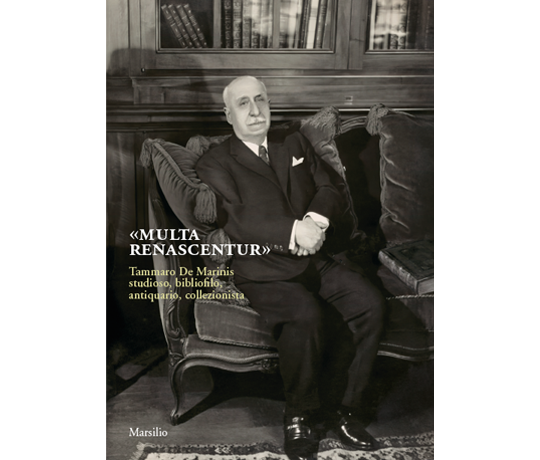
This volume provides an account of the conference held at the Fondazione Giorgio Cini and organised by the Institute of Art History to mark the fiftieth anniversary of the death of Tammaro De Marinis (1878–1969), Neapolitan by birth and Florentine by adoption.
The publication brings together the contributions of over twenty speakers who have studied the figure of De Marinis: an early and tireless scholar of bindings, manuscripts and illustrated books, a bibliophile and collector of refined taste, not to mention a very active and cultured antiquarian. Both as a result of his research work and his own antiquarian activity, there is evidence of his passage through the most prestigious Italian and European cultural institutions, with some traces left even overseas. His close ties with the Fondazione Giorgio Cini, given by the presence at San Giorgio of his working library, a significant portion of his antique book collection and numerous archival and study documents form the basis of new research promoted by the Foundation.
ARCHiPub 01/001
Interdisciplinary series edited by the Digital Centre – ARCHiVe of the Fondazione Giorgio Cini, dedicated to contemporary research in the Digital Humanities.
In the first contribution to this new publishing series, Chiara Casarin pays homage to the illustrious research precedents, conditions, needs and urgencies that led to the birth of ARCHiPub. On Cultural and Digital Matters as part of ARCHiVe at the Fondazione Giorgio Cini.
Religiographies vol.1 n.1
Open-access and peer-reviewed journal, curated by the Centre for Comparative Studies of Civilisations and Spiritualities at the Fondazione Giorgio Cini.
With an interdisciplinary approach, Religiographies fosters dialogue between historians, sociologists, anthropologists, philosophers, and psychologists on three main themes: mysticism, esotericism, and spirituality.
ISSN 2974-6469
Rivisitazioni e innovazioni
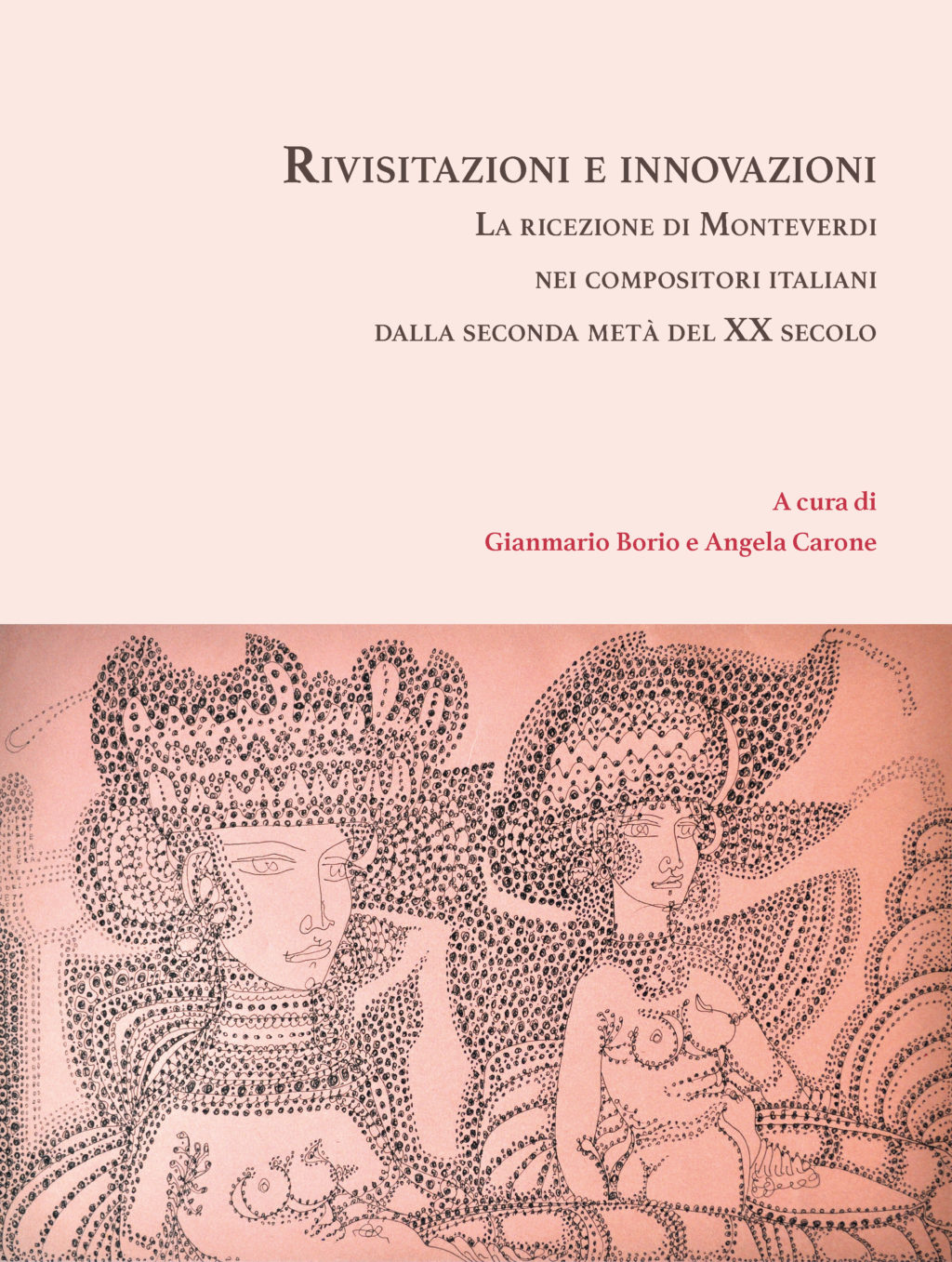
Around the mid-20th century there was a significant change of perspective among Italian composers interested in the production of Claudio Monteverdi. The preceding phase, dominated by the figure of Gian Francesco Malipiero, had been characterised by a gradual approach to Monteverdi’s music through transcriptions and productions of the works that pursued to varying degrees the ideal of reconstructing the original, with a strong tendency to historical accuracy, but which nevertheless did show some reworkings in the instrumentation. From the 1950s onwards, the approach became much more “creative” and took the form of structural reinterpretations of some of the Cremonese composer’s masterpieces and the updating of the original instrumentation. Monteverdi is no longer revived with the overarching nationalistic intentions of the immediately preceding generations, who saw him as the father of Italian opera, but for the modernity of his thought and his compositional technique.
The essays in this book, which focus on compositions that have not been investigated in musicological literature to date or on repertoire pieces that are now approached from a new perspective, show how, from Luigi Dallapiccola’s transcription of Ritorno di Ulisse in patria in 1942 up to the dawn of the new millennium, we have witnessed a varied process of both inte-gration and transcription of Monteverdi’s works making use of traditional instruments (Luciano Berio, Fausto Razzi) and of rewriting, also with the aid of new technologies (Bruno Maderna, Giorgio Battistelli, Ivan Fedele). In all cases, the work of “readapting” the music is underpinned by a careful analysis of Monteverdi’s production, also with a view to transferring features of his craft into works that are completely independent from it in terms of content and poetics (Luigi Nono). Composers who have directed Monteverdi’s operas have achieved equally diverse results (Sylvano Bussotti, Egisto Macchi) as have those who have enhanced the original model with prequels and sequels (Domenico Guaccero, Claudio Ambrosini).
The seven essays are by Rodolfo Baroncini, Angela Carone, Michele Chiappini, Paolo Dal Molin, Mila De Santis, Alessandro Maras and Federica Marsico.
Music of the Twenty-First Century Diasporas: Research and Methods
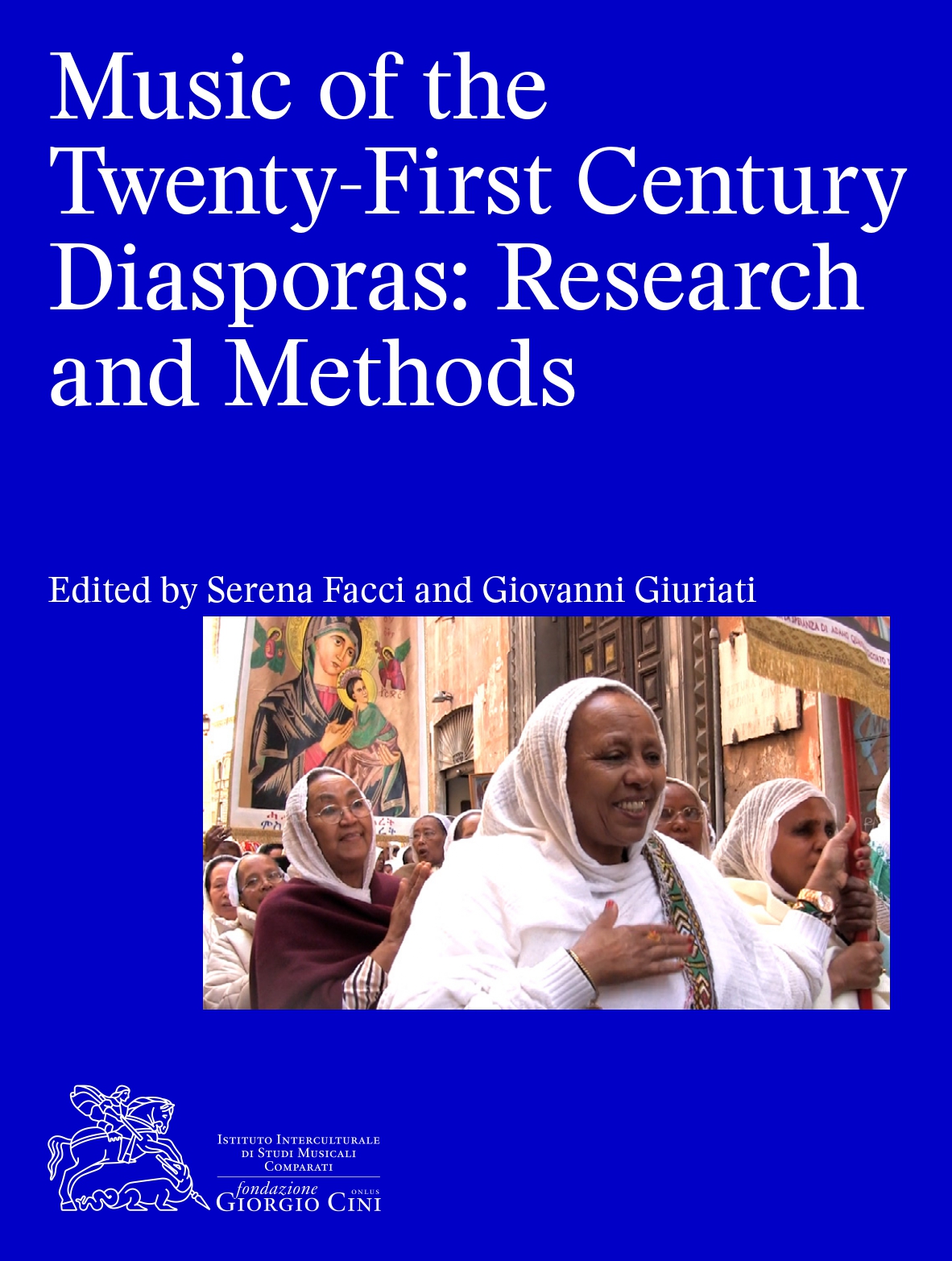
The volume Music of the Twenty-First Century Diasporas: Research and Methods is the third in a series of online publications by the IISMC, stemming from the international ethnomusicology seminars that the Institute organises each year. It is a series that addresses current and original research topics, contributing to an international debate on the discipline and at the same time constituting an important educational tool, especially at university level. Edited by Serena Facci and Giovanni Giuriati, the volume derives from the seminar bearing the same title organised in San Giorgio in 2020, just before the outbreak of the pandemic. Through the contributions of various authors, mostly Italian, it aims at providing a multi-voiced reflection on the musical life of the many migratory contexts that can be observed in Italy.
A vivid and varied picture emerges from the contributions, both in terms of the particularities of the musical cultures called into play and of the research themes: interaction with Italians, transmission of musical knowledge among second generations, role of musicians and their dynamic relationship with the ‘motherland’, transnationalism of sacred musics, use of technologies that are increasingly involved in – and determining – the construction of feelings of belonging in the broad and everchanging diasporic borders.
An extensive introduction by Serena Facci and two important chapters by Adelaida Reyes and Francesco Remotti lucidly contribute to tackling the theoretical issues underlying the volume. This initial theoretical part is followed by the presentation of original research conducted by young scholars on the musical practices of various diasporic communities that have settled in Italy recently or for a long time, including Armenians, Chinese, Ukrainians, Eritreans and Sikhs. The last part of the volume takes up, in the light of the research presented, questions of method concerning this peculiar and intrinsically transnational object of research.
In the papers the reader may find several links to audio and video examples that illustrate the research by means of audiovisual documentation, making this volume fully multimedia.

