Fondazione Giorgio Cini, Venice Archives - Page 3 of 3 - Fondazione Giorgio Cini

Religiographies

Open-access and peer-reviewed journal, curated by the Centre for Comparative Studies of Civilisations and Spiritualities at the Fondazione Giorgio Cini.

Religiographies is dedicated to the study of religious phenomena, fostering an interdisciplinary dialogue among historians, sociologists, anthropologists, philosophers, and psychologists. Mysticism, esotericism, and spirituality are the three main themes of the journal, which are explored within their historical and cultural contexts, challenging traditional categories of religion. The heterographie section, dedicated to artistic and visual works, expands the understanding of the phenomena discussed.

Aims and Scope
plus

Religiographies is an open-access, peer-reviewed, scholarly journal dedicated to the field of religious studies and published under the auspices of the Centre for Comparative Studies of Civilisations and Spiritualities of the Giorgio Cini Foundation. Since 2025, it has been recognised by ANVUR (the agency of the Ministry of Education) as a scientific journal for Area 11 (Historical, Philosophical, Pedagogical and Psychological Studies); Religiographies wishes to foster an interdisciplinary approach to religious phenomena, promoting dialogue between historians, sociologists, anthropologists, literary scholars, philosophers, and psychologists.

We aim at promoting an anthropological history and at the same time a socio-anthropology with a strong historical emphasis, intending to avoid both socio-anthropological presentism and history only focused on ideas and institutions, while ignoring materiality, emotions, everyday lives.

We encourage at deconstructing and challenging categories (including the very word “religion”) not as a theoretical exercise, a proof of concept, but as a practice, showing with fieldwork data, the porosity and frailty of our categories.

We aim at discussing those topics that are often neglected by social and human sciences – such as mysticism, esotericism, spirituality – which, in the words of Michel de Certeau, “haunt scientific epistemology”. Our aim is not to create another journal on alternative spiritualities, but to bring these themes back into mainstream discussions of religious and cultural phenomena.

Finally, with the concept of heterographies– we intend to give space to other forms of representations, such as photography, comics, video, and artwork. These other languages will allow contributors – scholars and artists – to explore dimensions beyond the social sciences frame of objectiveness and coherence. This section, called heterographies, is not strictly scientific: it will not be peer-reviewed, but will receive feedback from the editors and invited commentators.


We invite submission on all religious phenomena, with a special focus on:

  • comparative approaches;
  • cultural transfers: acculturation, appropriation, imagination;
  • continuities and discontinuities between religious discourses and everyday life practices;
  • transhistorical perspective, stressing the connections between old and new trends;
  • liminal phenomena between the secular and the religious;
  • the relationship with alterity, understood not only as religious, but also in terms of gender, sexual orientation, and ethnicity;
  • phenomenology of the religious body: perceptions, emotions, sensations and construction of the body;
  • epistemological and methodological debates about the transferability and translatability of religious studies categories.
Editorial board
plus

Editor-in-chief

Francesco Piraino, Fondazione Giorgio Cini / Harvard Divinity School


Editors

Mark Sedgwick , University of Aarhus

Dionigi Albera, CNRS-IDEMEC


Assistant editors

Elena Bernardinello, Fondazione Giorgio Cini

Eva Salviato, Fondazione Giorgio Cini


Copy editor and proofreader

Anna Fitzgerald


Book Reviews

Valentina Gaddi, Université de Montréal


Editorial board

Stefano Allievi, University of Padua

Egil Asprem, University of Stockholm

Katell Berthelot, CNRS–Aix-Marseille University

Francesco Cerchiaro, Radboud University

Andrea De Antoni, University of Kyoto

John Eade, University of Roehampton

Diana Espírito Santo, Universidad Catholica de Chile

Fabrizio Ferrari, University of Padua

Mattia Fumanti , University of St. Andrews

Giuseppe Giordan, University of Padua

Alberta Giorgi, University of Bergamo

Boaz Huss, Ben Gurion University

Salvatore La Mendola, University of Padua

Marco Pasi, University of Amsterdam

Enzo Pace, University of Padua

Stefania Palmisano, University of Turin

Vadim Putzu, Missouri State University

Khalid Razzhali, University of Padua

Antonio Rigopoulos, University of Ca’ Foscari

Armando Salvatore, University of McGill

Chiara Tommasi, University of Pisa

Fabio Vicini, University of Verona

Religiographies vol.5
plus
Religiographies vol.4
plus
Religiographies vol.3
plus
Religiographies vol.2
plus
Religiographies vol.1
plus

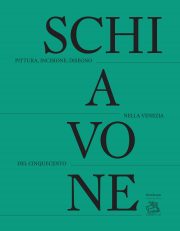
Andrea Schiavone. Pittura, incisione, disegno nella Venezia del Cinquecento

This volume in the series dedicated to Fondazione Cini conference proceedings brings together papers discussed during the international conference on “Andrea Schiavone. Painting, Engraving and Disegno in 16th-century Venice”, held at the Fondazione Giorgio Cini and in the monumental rooms of the Biblioteca Nazionale Marciana, Venice in spring 2016.
Staged during the exhibition “Renaissance Splendours in Venice. Schiavone between Parmigianino, Tintoretto and Titian” (Venice, Museo Correr), the conference shed light on some new aspects of the production of the great master originally from Dalmatia and explored his intellectual and artistic complexity from the perspective of his critical profile, as well as his unique role as a catalyst on the highly varied Venetian art scene at the height of the Cinquecento.

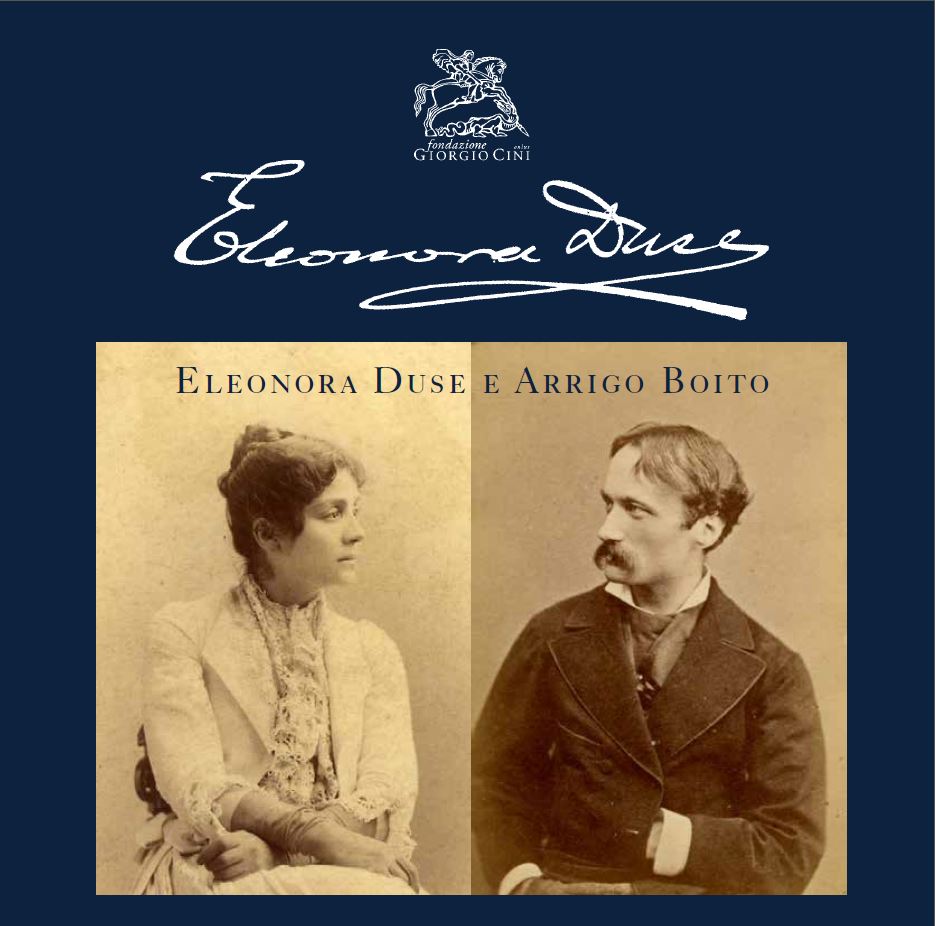
Eleonora Duse e Arrigo Boito

The Fondazione Giorgio Cini Institute of the eatre and Opera is playing a leading role in the celebrations to mark the centenary of the death of Arrigo Boito (1918-2018). The commemorations of the great Italian intellectual, writer and composer have already begun with the ongoing exhibition Eleonora Duse and Arrigo Boito. Installed in Eleonora Duse’s Room at the Fondazione Cini (23 November 2017- 20 December 2018), the exhibition consists of documents from the archives kept on San Giorgio. The itinerary of little-known Boito material includes the Duse-Boito correspondence, his annotated scripts of Shakespeare, translated and adapted for Duse, and materials related to the genesis of his operas, such as Nero and Mefistofele. In this way both the human and artistic aspects of the relationship between Boito and Duse are explored. Having met in 1884, they fell in love in 1887, thus marking the beginning of an intense, passionate love story documented by hundreds of letters. The love affair continued through ups and down until 1894, after which they remained lifelong friends. Boito remained an important presence in the great diva’s life even after his death, as is evidenced by the references to the writer in a large number of her autograph documents.


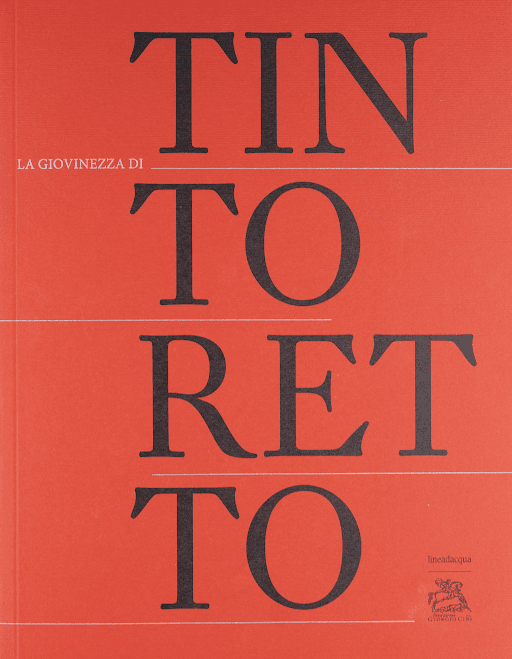
La giovinezza di Tintoretto

To mark the fifth centenary of Jacopo Tintoretto’s birth, the Fondazione Giorgio Cini Institute of Art History has published the proceedings of a conference devoted to the great Venetian artist, one of the most original interpreters of the Mannerist period.
In line with a rich tradition of studies on Veneto art and continuing research going back to Rodolfo Pallucchini’s seminal studies, the Institute wished to contribute to the Tintoretto celebrations – ahead of the anniversary in 2018 – by engaging in critical reflection capable of fully rendering the cultural and artistic complexity of his youthful period.
It seemed important to make a practical institutional contribution on the scene of art-historical studies by hosting an international symposium (28-29 May 2015) and then publishing the papers, collected here according to the themes defined during the event. The book thus presents the salient features that animated the exchanges between scholars: the redefinition of Tintoretto’s youth style, a detailed investigation of the historical documentary contexts, and some suggested new iconographic and iconological interpretations. Following the publication of a book on Paolo Veronese, this is the second part of a project which, in line with the Institute’s distinguished history, has taken the form of a series dedicated to conference proceedings, presented in 2016 with a new aesthetic and graphic design, produced by Lineadacqua Edizioni.

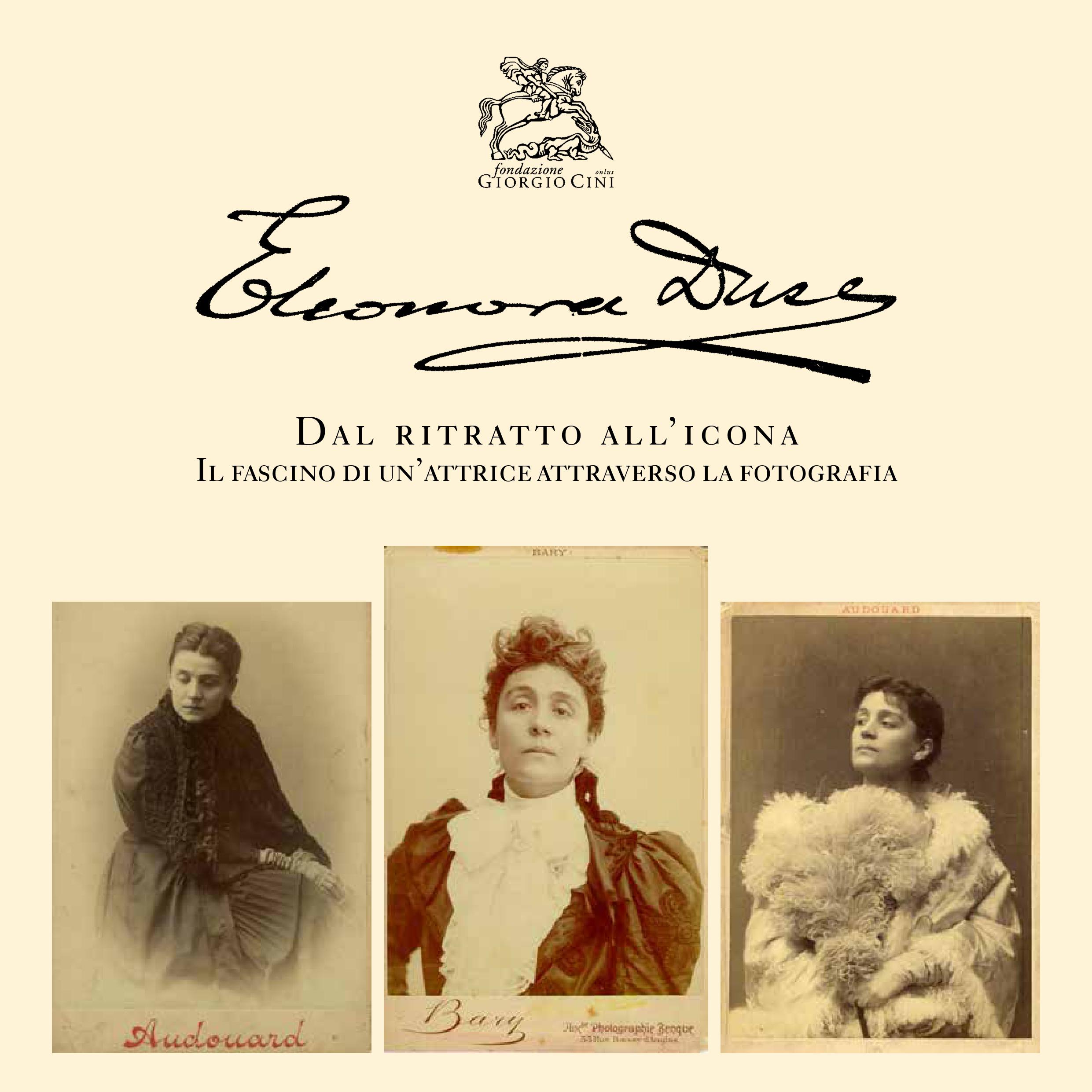
Dal ritratto all’icona. Il fascino di un’attrice attraverso la fotografia

Dal ritratto all’icona. Il fascino di un’attrice attraverso la fotografia
Edited by Marianna Zannoni
Fondazione Giorgio Cini, Venice, 2016
To accompany the Duse exhibition entitled From portrait to icon. The charm of an actress in photography, curated by Marianna Zannoni (Fondazione Giorgio Cini, 18 March 2016 – 31 March 2017), the Institute of Theatre and Opera has published the first catalogue in a series on temporary exhibitions staged in Eleonora Duse’s Room. The exhibition is dedicated to the rich photographic collection resource for reconstructing the history of actor portraits at the turn of 19th and 20th centuries. Through the selection of private portraits and pictures of Duse posing in stage costumes, the exhibition offers visitors the opportunity to explore images that contributed to making her such a celebrity and have preserved her memory to the present day.
This series of exhibition catalogues follows on from a volume published in 2013 describing
Duse’s Room with its invaluable Archive, and the life and work of the great diva.

Saggi e Memorie di Storia dell’Arte

Founded in 1957 under the direction of Giuseppe Fiocco, Saggi e Memorie di Storia dell’Arte stands as one of the most important scholarly publications in the field of Art History with a historical-critical approach. The journal is distinguished by an interdisciplinary framework that extends beyond the confines of Venetian art, allowing for an in-depth exploration of topics related to Italian and European art.

The journal is directed by Luca Massimo Barbero and coordinated by the Institute of Art History. It is recognised by ANVUR as a Class A scientific journal for Ancient Sciences, Philological-Literary Studies, and Historical-Artistic Research.

[accordion][/accordion]
[accordion_entry title=”Editorial Board”]

EDITOR-IN-CHIEF
Luca Massimo Barbero


EDITORIAL COMMITTEE

Simone Guerriero
Sileno Salvagnini
Marzia Scalon
Sabina Tutone
Loredana Pavanello, segreteria
Camilla Fattore, segreteria


EDITORIAL COORDINATION

Caterina Vettore


SCIENTIFIC COMMITTEE

Rosa Barovier
Ester Coen
Francesca Flores d’Arcais
Caterina Furlan
Lauro Magnani
Jean-Luc Olivié
Nico Stringa
Francesco Tedeschi
Giovanna Valenzano

[/accordion_entry]
[accordion][/accordion]

[accordion][/accordion]
[accordion_entry title=”Code of Ethics”]

CODE OF ETHICS OF THE JOURNAL “SAGGI E MEMORIE DI STORIA DELL’ARTE” 


“Saggi e Memorie di storia dell’arte” is a peer-reviewed scholarly journal that is informed by the guidelines of the Committee on Publication Ethics (COPE), Best Practice Guidelines for Journal Editors. The Editor-in-Chief and the Editorial Board are committed to adopting all possible measures to ensure ethical standards throughout the publication process. All parties involved—Editor-in-Chief, Editorial Board, External Reviewers, and Authors—are aware of and share the following principles.

EDITOR-IN-CHIEF AND EDITORIAL BOARD

The Editor-in-Chief and the Editorial Board are responsible for deciding whether submitted manuscripts should be published. Their decision is based on an initial internal assessment followed by an anonymous double-blind peer review conducted by expert referees affiliated with universities, research institutions, cultural organizations, or recognized independent scholars with proven international expertise and experience.


The Editor-in-Chief and the Editorial Board evaluate submissions solely on the basis of their scholarly merit, relevance, and originality, without discrimination regarding gender, sexual orientation, religion, ethnicity, nationality, or political beliefs of the Authors. They also take into account the recommendations provided by the Reviewers when making their decisions.


In the event of conflicting reviews, the Editor-in-Chief and the Editorial Board may submit the manuscript for anonymous evaluation by a third expert reviewer. The final decision, however, always rests with the Editor-in-Chief and the Editorial Board.


The Editor-in-Chief and the Editorial Board may request that Authors make corrections or additions deemed necessary, including those arising from the anonymous peer-review process. Authors may submit comments and/or objections regarding such requests, which will then be considered by the Editor-in-Chief and the Editorial Board. The Editor-in-Chief also reserves the right to make editorial modifications to ensure consistency throughout the journal.


The Editor-in-Chief and the Editorial Board undertake not to disclose any information regarding submitted manuscripts to individuals other than those directly involved in the publication process, such as Authors, Reviewers, and the Publisher. They are also prohibited from using or disseminating unpublished materials contained in submitted manuscripts without the Authors’ prior and explicit consent.

REVIEWERS

The anonymous double-blind peer-review process must be conducted fairly and objectively. Reviewers receive manuscripts in anonymous form and are required to decline the assignment if the subject matter overlaps with their own research interests or if any conflict of interest may arise.


Reviewers undertake to support their evaluations with appropriate and well-documented comments and observations, avoiding judgments based on personal or ideological considerations.


Reviewers are encouraged to identify any errors, omissions, or overlaps found in the manuscripts and to specify the relevant sources.


Reviewers undertake not to disclose any information regarding submitted manuscripts to individuals other than those directly involved in the publication process, such as the Editor-in-Chief, Editorial Board, Authors, and Publisher. They are also prohibited from using or disseminating unpublished materials contained in the manuscripts without the Authors’ prior and explicit consent.


AUTHORS

Authors guarantee the originality of the submitted manuscript and its exclusive submission to the journal, unless otherwise expressly agreed upon by the Editor-in-Chief and the Editorial Board.


Authors are required to acknowledge and cite correctly all sources used, in accordance with the journal’s editorial guidelines, clearly identifying both direct and indirect quotations from other authors.


Authorship of the manuscript must be clearly stated, and all individuals who have made a significant contribution to the research or writing of the article must be listed as co-authors. In the case of jointly authored submissions, the corresponding author must specify the names of all Authors and/or the sections contributed by each, while also guaranteeing the unanimous consent of all co-authors to publication in the journal.


Authors must disclose any funding sources that supported the research or project from which the article derives.


Authors undertake to provide images that are free of copyright restrictions or, alternatively, accompanied by all necessary permissions for publication. They guarantee that such materials do not infringe the rights of third parties, including copyright and related rights. The journal declines any responsibility for possible infringements.

[/accordion_entry]
[accordion][/accordion]

[accordion][/accordion]
[accordion_entry title=”Guidelines for authors”]

Critical contributions—whether submitted spontaneously by authors or commissioned by invitation—are subject to evaluation by the Scientific Committee, the Editorial Board, and the journal’s anonymous peer reviewers.


Essential requirements for acceptance are the originality of the manuscript and its exclusive submission to Saggi e Memorie di storia dell’arte.


Manuscripts, prepared in accordance with the journal’s Editorial Guidelines, must be submitted in Word format (1 folder = 2,000 characters). Accompanying images should be provided in a separate file, together with their captions, in digital format (minimum resolution: 300 dpi for 15 × 15 cm). Texts in English, French, German, and Spanish should be submitted in the author’s native language.


Authors are responsible for obtaining and paying any copyright fees required for the images illustrating their text.


The author’s name and contact details (postal address, telephone number, and e-mail address) must be provided in a separate file.


Submission materials must be received by 31 March of each year in order to be considered for inclusion in the volume scheduled for publication at the end of the same year. All materials must be addressed and sent exclusively to the Editorial Office of the journal ([email protected]).

[/accordion_entry]
[accordion][/accordion]

[accordion][/accordion]
[accordion_entry title=”Complete List”]
Saggi e Memorie di Storia dell’Arte 1 (1957)
Saggi e Memorie di Storia dell’Arte 2 (1959)

Saggi e Memorie di Storia dell’Arte 3 (1960)
Saggi e Memorie di Storia dell’Arte 4 (1965)
Saggi e Memorie di Storia dell’Arte 5 (1966)
Saggi e Memorie di Storia dell’Arte 6 (1968)

Saggi e Memorie di Storia dell’Arte 7 (1970)
Saggi e Memorie di Storia dell’Arte 8 (1972)
Saggi e Memorie di Storia dell’Arte 9 (1974)
Saggi e Memorie di Storia dell’Arte 10 (1976)
Saggi e Memorie di Storia dell’Arte 11 (1978)

Saggi e Memorie di Storia dell’Arte 12 (1980)
Saggi e Memorie di Storia dell’Arte 13 (1982)
Saggi e Memorie di Storia dell’Arte 14 (1984)
Saggi e Memorie di Storia dell’Arte 15 (1986)
Saggi e Memorie di Storia dell’Arte 16 (1988)
Saggi e Memorie di Storia dell’Arte 17 (1989)

Saggi e Memorie di Storia dell’Arte 18 (1993)
Saggi e Memorie di Storia dell’Arte 19 (1995)
Saggi e Memorie di Storia dell’Arte 20 (1996)
Saggi e Memorie di Storia dell’Arte 21 (1997)
Saggi e Memorie di Storia dell’Arte 22 (1998)
Saggi e Memorie di Storia dell’Arte 23 (1999)

Saggi e Memorie di Storia dell’Arte 24 (2000)
Saggi e Memorie di Storia dell’Arte 25 (2001)
Saggi e Memorie di Storia dell’Arte 26 (2003)
Saggi e Memorie di Storia dell’Arte 27 (2005)
Saggi e Memorie di Storia dell’Arte 28 (2004)
Saggi e Memorie di Storia dell’Arte 29 (2005)
Saggi e Memorie di Storia dell’Arte 30 (2008)
Saggi e Memorie di Storia dell’Arte 31 (2009)
Saggi e Memorie di Storia dell’Arte 32 (2008)

Saggi e Memorie di Storia dell’Arte 33 (2011)
Saggi e Memorie di Storia dell’Arte 34 (2012)
Saggi e Memorie di Storia dell’Arte 35 (2011)
Saggi e Memorie di Storia dell’Arte 36 (2012)
Saggi e Memorie di Storia dell’Arte 37 (2013)
Saggi e Memorie di Storia dell’Arte 38 (2014)
Saggi e Memorie di Storia dell’Arte 39 (2015)
Saggi e Memorie di Storia dell’Arte 40 (2016)
Saggi e Memorie di Storia dell’Arte 41 (2017)
Saggi e Memorie di Storia dell’Arte 42 (2018)
Saggi e Memorie di Storia dell’Arte 43 (2019)
Saggi e Memorie di Storia dell’Arte 44 (2020)
Saggi e Memorie di Storia dell’Arte 45 (2021)
Saggi e Memorie di Storia dell’Arte 46 (2022)
Saggi e Memorie di Storia dell’Arte 47 (2023)
Saggi e Memorie di Storia dell’Arte 48 (2026)

[/accordion_entry]
[accordion][/accordion]

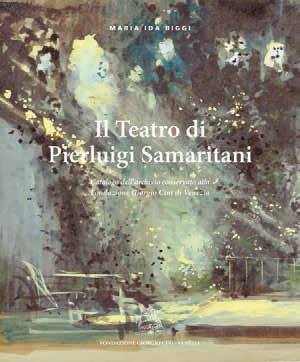
Il Teatro di Pierluigi Samaritani

Il Teatro di Pierluigi Samaritani. Catalogo dell’Archivio conservato alla Fondazione Giorgio Cini di Venezia


Following Simona Marchini’s donation of the Pierluigi Samaritani Archive and the production of an inventory of the material in it, the Theatre Studies Centre has published a monograph exploring the art of the Piedmont stage designer.

Samaritani was the last Italian exponent of painted stage sets and his work offers fascinating insights into the history of theatre in the second half of the 20th century. In addition to his designs for the principal Italian theatres and festivals, Samaritani worked for leading international opera houses and his was style was highly successful in major theatres in Europe and North and South America.

The archive consists of a large quantity and great variety of documents: over 400 designs for sets, costume designs, a large photographic collection, his library and a vast catalogue of technical drawings and study documents of various kinds.


Luigi Squarzina Schoolar, Playwright and Stage Director

Proceedings from the International Conference

Accademia Nazionale dei Lincei, Rome, 2013

In collaboration with the Accademia Nazionale dei Lincei, Rome, the Theatre Study Centre has published the proceedings from the conference entitled “Luigi Squarzina. Schoolar, playwright and stage director”, held at the Fondazione Giorgio Cini from 4 to 6 October 2012. Published two years after his Death, this book is an opportunity to commemorate, analyse and reflect on Luigi Squarzina’s role in theatre and his writings.

The book brings together papers by Gerardo Guccini, Alessandro Tinterri, Mango, Elena Randi, Claudio Vicentini, Gregori, Maria Ida Biggi, Ginette Herry, Giacomo Pedini, Claudio Longhi, Anna Barsotti, Palazzo, Federica Mazzocchi, Isabella Innamorati, Katia Angioletti, Ilaria Gariboldi, Maurizio Giammusso, Franco Vazzoler, Paolo Bosisio, Roberto Alonge, Pier Mario Vescovo, Franco Perrelli, Paolo Puppa, Eugenio Buonaccorsi, Camilla Guaita, Roberto Cuppone, Leonardo Mello, Francesca Bisutti, Marianna Zannoni, Stefano Locatelli, Matteo Paoletti, Maricla Boggio, Masolino d’Amico, Giovani Agostinucci and Matteo d’Amico.

Accompanying the book is a DVD with a film of Paolo Puppa’s interview with Luca Ronconi, who recounts his experiences with Squarzina, plus video recordings of the afternoon sessions in the Palladian Refectory with Omero Antonutti,  Maricla Boggio, Matteo d’Amico, Ivo Garrani, Paola Gassman, Franco Graziosi, Gabriele Lavia, Paola Mannoni, Ugo Pagliai, Carlo Quartucci, Giuliano Scabia, Tullio Solenghi, Lamberto Trezzini and Giancarlo Zanetti.