Istituto di Storia dell’Arte Archives - Page 4 of 5 - Fondazione Giorgio Cini

Piranesi Rome Basilico


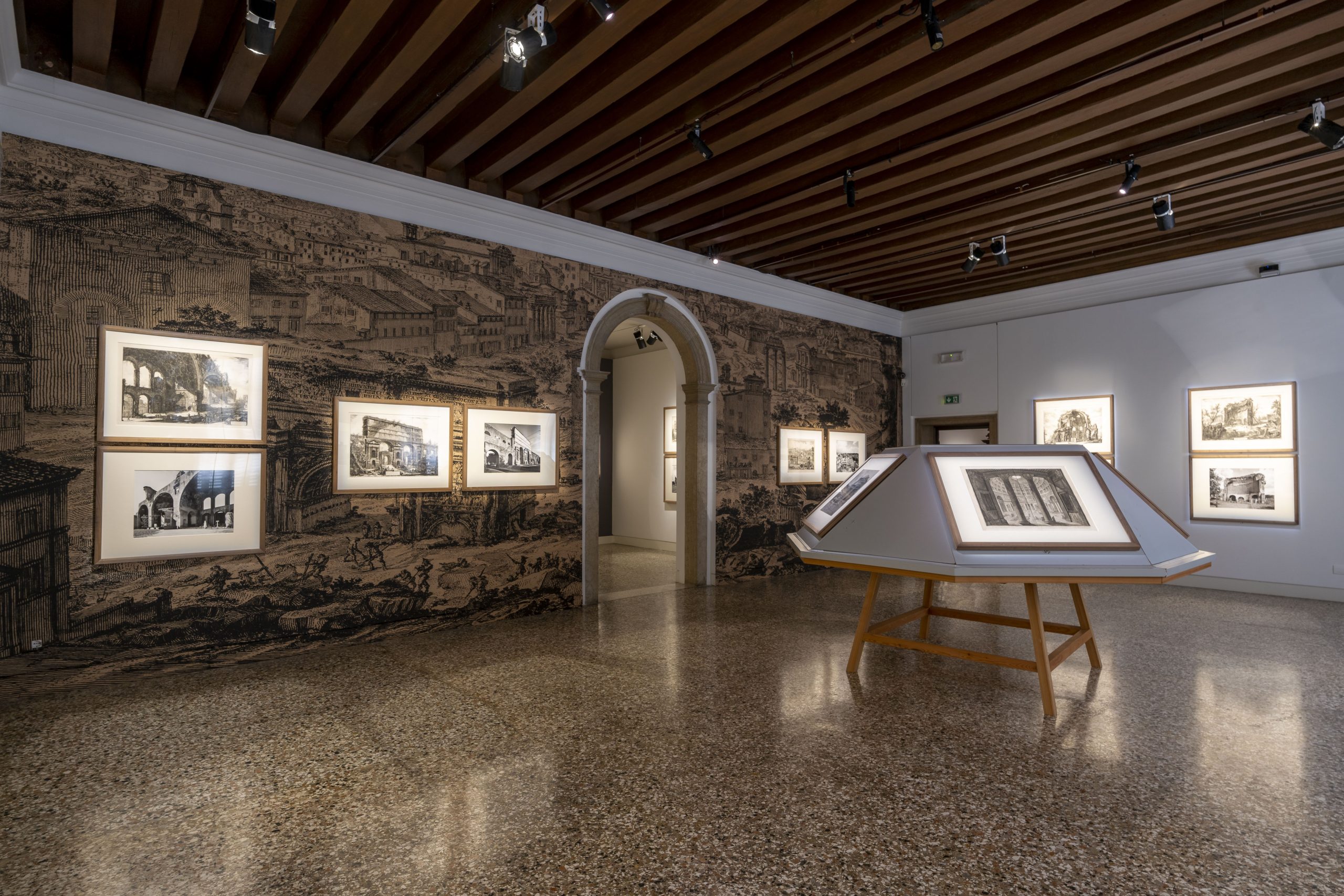
On 20 June 2020, Piranesi Rome Basilico will open to the public. In the year of the Architecture Biennale, the exhibition celebrates the fascination of Rome by comparing the ancient city in Piranesi’s etchings and the contemporary capital captured in Gabriele Basilico’s photographs.


To mark the celebrations for the 300th anniversary of the birth of Giambattista Piranesi (Venice, 1720 – Rome, 1778), the Fondazione Giorgio Cini is paying tribute to the great Venetian artist in the exhibition Piranesi Rome Basilico, curated by Luca Massimo Barbero, director of the Institute of Art History, in collaboration with the Archivio Gabriele Basilico. From 20 June  to 23 November 2020, the second floor of the Palazzo Cini Gallery at San Vio will host a comparison of lyrical cityscapes of Rome featuring the historic etchings of Giambattista Piranesi and the modern photography of Gabriele Basilico. Visitors will thus have the chance to see a previously unshown selection of the work of the great landscape photographer, commissioned by the Fondazione Giorgio Cini in 2010. 


Thanks to Assicurazioni Generali, the Gallery’s main partner since it reopened in 2014 and for many years a patron of the Fondazione Cini, the exhibition season will continue until 22 November 2020.


Piranesi Rome Basilico returns to the figure of Piranesi as vedutista, explored in the exhibition The Arts of Piranesi, conceived by the Fondazione Cini in 2010, with an original interpretation of his views of Rome set beside the work of the contemporary landscape photographer Gabriele Basilico. 

Visitors will be able to admire some of the great symbolic landmarks of the eternal city in twenty-five original prints made in the 18th century by the Venetian engraver, selected from the complete corpus preserved in the Cini graphic art collections,  and in twenty-six views of Rome by the Milanese photographer, taken from the same viewpoint as the Piranesi etchings, including twelve not shown in the exhibition The Arts of Piranesi. Architect, Etcher, Vedutista, Designer, staged at the Fondazione Cini in 2010.

Inspired by writer Marguerite Yourcenar’s wonderful description of Giambattista Piranesi in the early 1960s, Basilico took his camera to all the sites of Piranesi’s views to capture their extraordinary modernity. 


The corpus of Piranesi etchings is one of the largest graphic art collections by the Venetian artist kept in a private institution. It has been preserved intact thanks to Vittorio Cini’s far-sighted, generous decision in the 1970s to acquire it as a whole for the Institute of Art History, where it is still the subject of study today.


Piranesi Rome Basilico will not only be an enthralling exhibition for the general public. It will also provide an opportunity to visit the Palazzo Cini and explore a hitherto partly unknown aspect of the large Fondazione Cini collections in the fascinating, lively setting of a house museum. 


Published by Contrasto in 2019, the catalogue is edited by the Institute of Art History and is conceived as a homage by the Fondazione Cini to the great photographer who died in 2013. It brings together all the photos taken by Basilico for The Arts of Piranesi project and includes writings by Luca Massimo Barbero, Mario Bevilacqua, Michele De Lucchi, Pasquale Gagliardi, Alessandro Martoni and Roberta Valtorta, plus a conversation between Gabriele Basilico and film director Amos Gitai.


The Fondazione Giorgio Cini and its Institute of Art History are also taking part in the Piranesi celebrations by lending sixteen precious prints of Piranesi’s Prisons of Invention, an integral part of the Foundation’s graphic art collections. The prints will be shown from 4 April to 27 July 2020 in the exhibition Giambattista Piranesi. Visions of a Timeless Architect, curated by Chiara Casarin and Pierluigi Panza at the Palazzo Sturm in Bassano del Grappa.
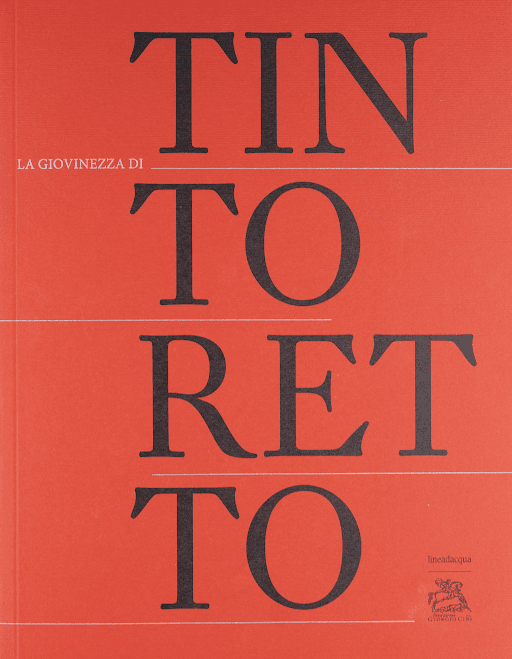
La giovinezza di Tintoretto

To mark the fifth centenary of Jacopo Tintoretto’s birth, the Fondazione Giorgio Cini Institute of Art History has published the proceedings of a conference devoted to the great Venetian artist, one of the most original interpreters of the Mannerist period.
In line with a rich tradition of studies on Veneto art and continuing research going back to Rodolfo Pallucchini’s seminal studies, the Institute wished to contribute to the Tintoretto celebrations – ahead of the anniversary in 2018 – by engaging in critical reflection capable of fully rendering the cultural and artistic complexity of his youthful period.
It seemed important to make a practical institutional contribution on the scene of art-historical studies by hosting an international symposium (28-29 May 2015) and then publishing the papers, collected here according to the themes defined during the event. The book thus presents the salient features that animated the exchanges between scholars: the redefinition of Tintoretto’s youth style, a detailed investigation of the historical documentary contexts, and some suggested new iconographic and iconological interpretations. Following the publication of a book on Paolo Veronese, this is the second part of a project which, in line with the Institute’s distinguished history, has taken the form of a series dedicated to conference proceedings, presented in 2016 with a new aesthetic and graphic design, produced by Lineadacqua Edizioni.

Study Day The Mirror of Taste. Vittorio Cini and Historical Art Collecting in the 20th Century

“The Cini Collection is the most important collection put together in Italy in the last fifty years.” That is how, in 1984, the great art historian Federico Zeri – a former advisor to Count Cini –
began celebrating one of the greatest Italian collectors in the first half of the 20th century. That same year, a permanent exhibition of a group of the most significant items in his collection, donated in 1981 by his daughter Yana Cini Alliata of Montereale, was installed in what had been Vittorio Cini’s Venetian home – the Palazzo Cini. The great monument to his patronage remained, however, Monselice Castle, where some sections of his collections, such as the famous Armory, had been brilliantly laid out by the
ingenious Nino Barbantini.
Forty years after Vittorio Cini’s death, the Foundation named after his son is celebrating its founder by focusing on his intense activity as one of the greatest and most enlightened collectors of historical art works in the 20th century. The celebrations will include a study day, November 14, dedicated to what Zeri described as the “last Doge of Venice”. The morning session will tackle various aspects of the collector’s personality, focusing on art historians and antique dealers who were collaborator or consultant friends, such as Nino Barbantini, Federico Zeri and Bernard Berenson. The afternoon papers, on the other hand, will illustrate Vittorio Cini’s affinities and differences with other contemporary collectors, such as Angelo Costa, Riccardo
Gualino, Guido Cagnola and Aldo Crespi.

 Download the program

Art Conversations at Palazzo Cini

Art Conversations return to Palazzo Cini, from 24 May to 21 June: a unique opportunity to be accompanied by experts and art historians to discover the Masterpieces of the Vittorio Cini collection.

24 May, 5.30pm
I dipinti fiorentini antichi: dal Maestro del Bigallo a Taddeo Gaddi
Angelo Tartuferi
Vice Director Galleria dell’Accademia di Firenze

31 May, 5.30pm
Sul polittico di San Paolo della Collezione Cini
Federica Siddi
Art Historian

7 June, 5.30pm
L’ultima stagione di Piero di Cosimo nei due dipinti della Collezione Cini
Marco Campigli
Art Historian

14 June, 5.30pm
Ritratto di un’amicizia. Il Pontormo di Palazzo Cini
Vittoria Romani
Università degli Studi di Padova

21 June, 5.30pm
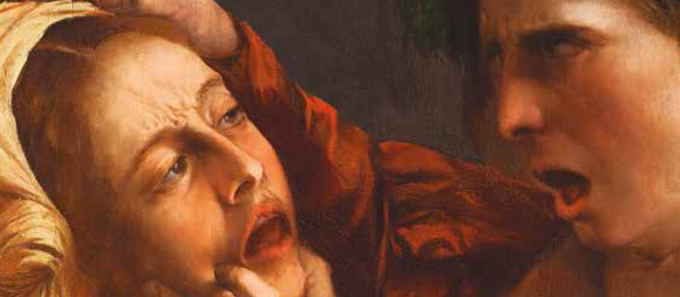
La zuffa di Dosso Dossi della Collezione Cini
Lucia Menegatti
Art Historian

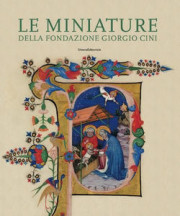
Catalogo della raccolta di miniature della Fondazione Giorgio Cini

Edited by Massimo Medica and Federica Toniolo
Silvana editoriale, Cinisello Balsamo, 2016

Edited by Massimo Medica and Federica Toniolo, who also wrote the two introductory essays, this book is result of a challenging, long study campaign aimed at the complete cataloguing of the miniatures in the Fondazione Giorgio Cini collection. Around  fty scholars were involved, including many leading experts in the  eld of the illuminated manuscript. Presented to the Foundation in 1962 by Vittorio Cini, the collection is one of the most important anthologies of illuminated pages and cuttings of initials, mostly from liturgical books (graduals and antiphonals).  e book o ers a scholarly description of the collection in the form of around 250 index cards, illustrated by numerous images. anks to its highly varied, wide-ranging and chronological nature, the collection is representative of the Italian regional schools of illumination from the 11th to the 16th centuries and includes works by some of the prominent illuminators from the late 13th to the early 16th centuries, such as Neri da Rimini, Lippo Vanni, Cristoforo Cortese, Berardo da Teramo, Belbello da Pavia, Franco dei Russi, Taddeo Crivelli, Francesco Marmitta and Beato Angelico.

Saggi e Memorie di Storia dell’Arte

Founded in 1957 under the direction of Giuseppe Fiocco, Saggi e Memorie di Storia dell’Arte stands as one of the most important scholarly publications in the field of Art History with a historical-critical approach. The journal is distinguished by an interdisciplinary framework that extends beyond the confines of Venetian art, allowing for an in-depth exploration of topics related to Italian and European art.

The journal is directed by Luca Massimo Barbero and coordinated by the Institute of Art History. It is recognised by ANVUR as a Class A scientific journal for Ancient Sciences, Philological-Literary Studies, and Historical-Artistic Research.
[accordion][/accordion]
[accordion_entry title=”Complete List”]
Saggi e Memorie di Storia dell’Arte 1 (1957)
Saggi e Memorie di Storia dell’Arte 2 (1959)

Saggi e Memorie di Storia dell’Arte 3 (1960)
Saggi e Memorie di Storia dell’Arte 4 (1965)
Saggi e Memorie di Storia dell’Arte 5 (1966)
Saggi e Memorie di Storia dell’Arte 6 (1968)

Saggi e Memorie di Storia dell’Arte 7 (1970)
Saggi e Memorie di Storia dell’Arte 8 (1972)
Saggi e Memorie di Storia dell’Arte 9 (1974)
Saggi e Memorie di Storia dell’Arte 10 (1976)
Saggi e Memorie di Storia dell’Arte 11 (1978)

Saggi e Memorie di Storia dell’Arte 12 (1980)
Saggi e Memorie di Storia dell’Arte 13 (1982)
Saggi e Memorie di Storia dell’Arte 14 (1984)
Saggi e Memorie di Storia dell’Arte 15 (1986)
Saggi e Memorie di Storia dell’Arte 16 (1988)
Saggi e Memorie di Storia dell’Arte 17 (1989)

Saggi e Memorie di Storia dell’Arte 18 (1993)
Saggi e Memorie di Storia dell’Arte 19 (1995)
Saggi e Memorie di Storia dell’Arte 20 (1996)
Saggi e Memorie di Storia dell’Arte 21 (1997)
Saggi e Memorie di Storia dell’Arte 22 (1998)
Saggi e Memorie di Storia dell’Arte 23 (1999)

Saggi e Memorie di Storia dell’Arte 24 (2000)
Saggi e Memorie di Storia dell’Arte 25 (2001)
Saggi e Memorie di Storia dell’Arte 26 (2003)
Saggi e Memorie di Storia dell’Arte 27 (2005)
Saggi e Memorie di Storia dell’Arte 28 (2004)
Saggi e Memorie di Storia dell’Arte 29 (2005)
Saggi e Memorie di Storia dell’Arte 30 (2008)
Saggi e Memorie di Storia dell’Arte 31 (2009)
Saggi e Memorie di Storia dell’Arte 32 (2008)

Saggi e Memorie di Storia dell’Arte 33 (2011)
Saggi e Memorie di Storia dell’Arte 34 (2012)
Saggi e Memorie di Storia dell’Arte 35 (2011)
Saggi e Memorie di Storia dell’Arte 36 (2012)
Saggi e Memorie di Storia dell’Arte 37 (2013)
Saggi e Memorie di Storia dell’Arte 38 (2014)
Saggi e Memorie di Storia dell’Arte 39 (2015)
Saggi e Memorie di Storia dell’Arte 40 (2016)
Saggi e Memorie di Storia dell’Arte 41 (2019)
Saggi e Memorie di Storia dell’Arte 42 (2018)
Saggi e Memorie di Storia dell’Arte 43 (2020)
Saggi e Memorie di Storia dell’Arte 44 (2020)
Saggi e Memorie di Storia dell’Arte 45 (2021)
Saggi e Memorie di Storia dell’Arte 46 (2022)
Saggi e Memorie di Storia dell’Arte 47 (2023)
Saggi e Memorie di Storia dell’Arte 48 (2026)

[/accordion_entry]
[accordion][/accordion]

Arte Veneta

Founded in 1947 under the presidency of Giuseppe Fiocco and the scientific direction of Rodolfo Pallucchini, Arte Veneta stands out as one of the most significant specialist journals in the field of Art History. Published by Electa, Arte Veneta serves as a key reference for historical-artistic studies, contributing to research and the dissemination of knowledge in this area.

The journal is directed by Luca Massimo Barbero and coordinated by the Institute of Art History. It is recognised by ANVUR as a Class A scientific journal for Ancient History, Philological-Literary, and Historical-Artistic Studies.
[accordion][/accordion]
[accordion_entry title=”Complete List”]
Arte Veneta 30 (1976)
Arte Veneta 31 (1977)
Arte Veneta 32 (1978)
Arte Veneta 33 (1979)

Arte Veneta 34 (1980)
Arte Veneta 35 (1981)
Arte Veneta 36 (1982)
Arte Veneta 37 (1983)
Arte Veneta 38 (1984)
Arte Veneta 39 (1985)
Arte Veneta 40 (1986)
Arte Veneta 41 (1987)
Arte Veneta 42 (1988)

Arte Veneta 43 (1990)
Arte Veneta 44 (1993)
Arte Veneta 45 (1993)
Arte Veneta 46 (1994)
Arte Veneta 47 (1995)
Arte Veneta 48 (1995)
Arte Veneta 49 (1996)
Arte Veneta 50 (1997)
Arte Veneta 51 (1997)
Arte Veneta 52 (1998)
Arte Veneta 53 (1998)
Arte Veneta 54 (1999)
Arte Veneta 55 (1999)

Arte Veneta 56 (2000)
Arte Veneta 57 (2003)
Arte Veneta 58 (2003)
Arte Veneta 59 (2003)
Arte Veneta 60 (2004)
Arte Veneta 61 (2004)
Arte Veneta 62 (2005)
Arte Veneta 63 (2006)
Arte Veneta 64 (2007)
Arte Veneta 65 (2008)
Arte Veneta 66 (2009)

Arte Veneta 67 (2010)
Arte Veneta 68 (2011)
Bibliografia dell’Arte Veneta (2011)
Arte Veneta 69 (2012)
Bibliografia dell’arte veneta (2012)
Arte Veneta 70 (2013)
Arte Veneta 71 (2014)
Arte Veneta 72 (2015)
Arte Veneta 73 (2016)
Arte Veneta 74 (2016)
Arte Veneta 75 (2018)
Arte Veneta 76 (2019)

Arte Veneta 77 (2020)
Arte Veneta 78 (2021)
Arte Veneta 79 (2022)
Arte Veneta 80 (2023)
Arte Veneta 81 (2025)
[/accordion_entry]
[accordion][/accordion]

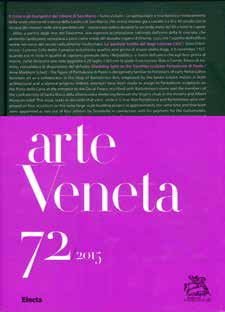
Arte Veneta 72 (2015)

Summary

  • Fulvio Zuliani, Il Cristo e gli Evangelisti del ciborio di San Marco
  • Silvia D’Ambrosio, La ‘perduta’ tomba del doge Lorenzo Celsi
  • Anne Markham Schulz, Shedding light on the Venetian sculptor Pantaleone di Paolo
  • Marsel Grosso, Fonti antiche e moderne per la pittura religiosa di Tiziano nel sesto decennio
  • Luca Siracusano, Per Francesco Segala “padovano scultore et architettore”
  • Martina Lorenzoni, “… e procurò alcuna memoria delle sue mani”. Federico Zuccari e le copie da Paolo Veronese nei taccuini di viaggio
  • Massimo Favilla, Ruggero Rugolo, “Basta che la superficie appaghi la vista”: introduzione allo studio dello stucco a Venezia dal barocco al rococò
  • Chiara Piva, Le copie a colori delle Varie pitture a’ fresco dei principali maestri veneziani di Anton Maria Zanetti

Notices

  • Francesca Flores d’Arcais, Un “nuovo” pittore per Francesco il Vecchio da Carrara. Qualche nota sugli affreschi della stanza di Luigi il Grande d’Ungheria nel castello di Padova
  • Matteo Ceriana, Un nuovo libro su Tullio Lombardo e alcuni ragionamenti sul tema
  • David Eskerdijan, A Portrait of a Lady by Bartolomeo Veneto
  • Daniele Guernelli, Aggiunte a Cristoforo Cortese e al Maestro della Commissione Donato
  • Marco Tagliapietra, La bacchetta del pittore: da poggiamano a reggifirma in alcuni dipinti di scuola veneta
  • Stefano Pierguidi, L’Apollo della collezione Mantova Benavides e la fortuna di Raffaello in area veneta
  • Stefania Mason, Pittori “foresti” in Croazia: proposte per Paolo Fiammingo, Niccolò Renieri e Hans Rottenhammer
  • Giuseppe Sava, Scultori veneziani del Sei e Settecento a Brescia e a Bergamo: Giovanni Comin, Pietro Baratta, Antonio Gai
  • Paolo Delorenzi, Giuseppe Garrovi, l’”unico discepolo dei celebri stuccatori Abbondio Stazzio e Carpoforo Mazzetti”

Archive papers

  • Maria Stella Alfonsi, La chiesa delle Terese di Venezia, nuovi documenti
  • Massimo Favilla, Ruggero Rugolo, Regesto cronologico-documentario degli stuccatori attivi a Venezia da Andrea Pelli (1652-1725) a Carpoforo Mazzetti Tencalla (1710-1775)
  • Debora Tosato, La pittura d’accademia nel Settecento e la decorazione della sala della Nuova Cancelleria nella Scuola Grande di Santa Maria della Carità a Venezia

ebook Bibliografia dell’arte veneta (2014)

edited by Paolo Delorenzi (monographs) and Meri Sclosa (periodicals)

Download Bibliografia

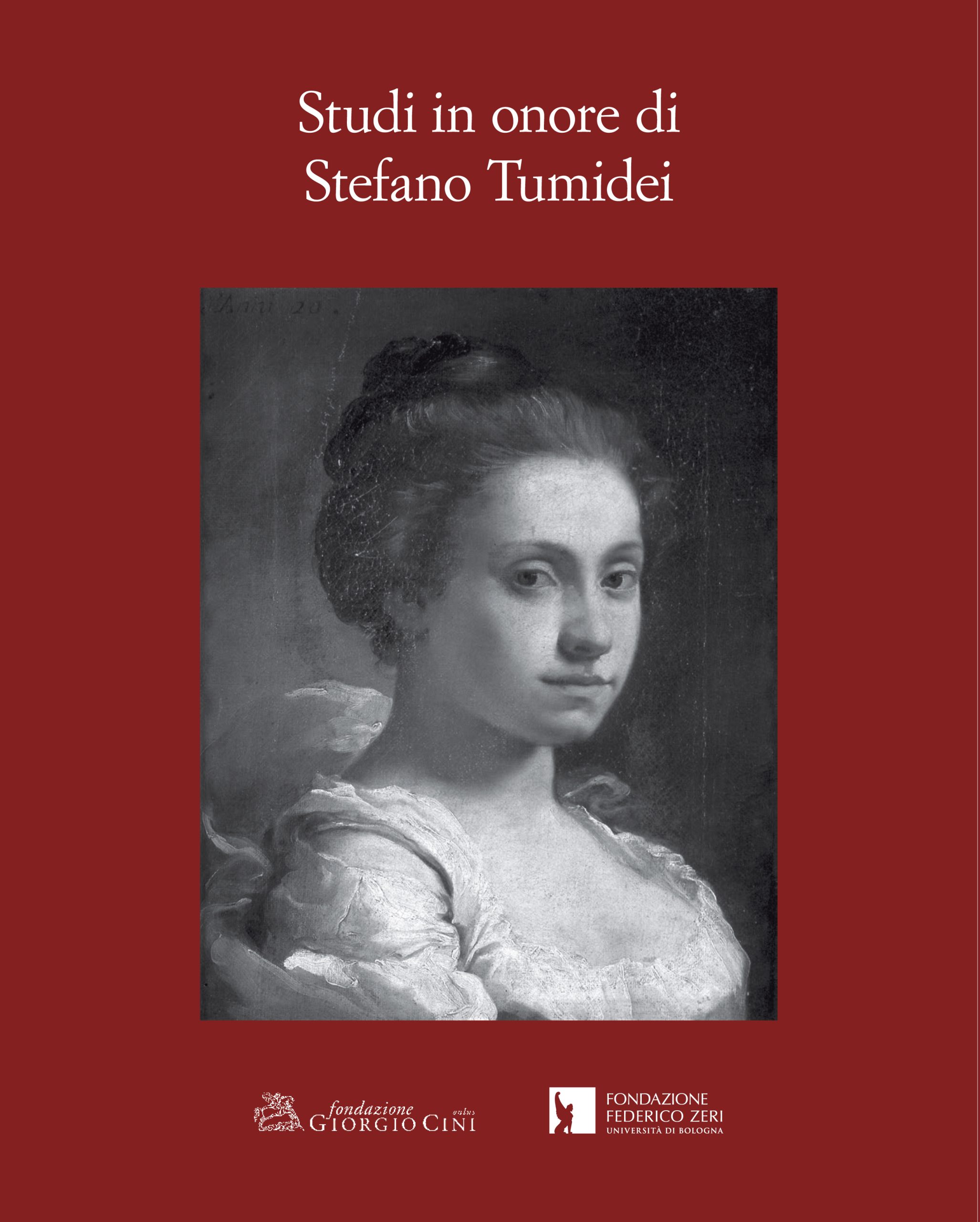
Studi in onore di Stefano Tumidei

Studi in onore di Stefano Tumidei
Edited by Andrea Bacchi and Luca Massimo Barbero
Fondazione Giorgio Cini/Fondazione Federico Zeri, 2016

Five years on from the publication of a significant part of the writings of Stefano Tumidei (Forli, 1962 – Bologna, 2008) in his book on painting in Emilia-Romagna (Studi sulla pittura in Emilia e in Romagna. Da Melozzo a Federico Zuccari), the Fondazione Giorgio Cini and the Fondazione Federico Zeri, Bologna, invited the scholar’s colleagues and students to continue an uninterrupted conversation with a friend who had died prematurely.

Fifty-four writers thus provided original essays and unpublished studies for the production of this book. Many of them explored specific issues, starting from Tumidei’s studies or exchanges with him, always open-minded and full of suggestions. The result is a raft of topics that range from Giotto to Capogrossi, from painting and sculpture to engravings, drawings and photography. The many, disparate subjects reflect the range of interests and enquiries that characterised Stefano Tumidei’s career. In all these diverse research fields, he distinguished himself and became a major reference point.


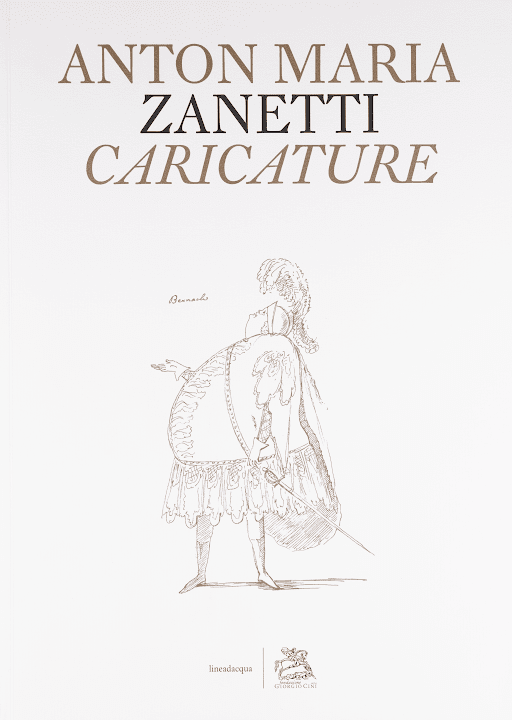
L’album di caricature di Anton Maria Zanetti alla Fondazione Giorgio Cini

Enrico Lucchese

L’album di caricature di Anton Maria Zanetti alla Fondazione Giorgio Cini

lineadacqua edizioni, Venice, 2015

An art connoisseur with many artist friends, Anton Maria Zanetti di Girolamo (1680-1767) was also an amateur artist. He is well-known for his album of caricatures, 350 unforgettable portraits from the variegated world of 18th-century Venice. e subjects range from opera divas to ordinary people, all mocked without distinction. e fresh, lively drawings reveal Zanetti’s talent as an original caricaturist. Donated in 1968 by Vittorio Cini to mark the 15th anniversary of the Institute of Art History, the album has recently been the subject of a study, thanks to the crucial support of Save Venice Inc., with the participation of the Francis Haskell Memorial Fund. The study has reconstructed the formation of the collection, comparing it with similar albums owned by Consul Smith (Windsor Castle, Royal Collections) and Francesco Algarotti (Jerusalem, Israel Museum).

Dedicated to the memory of W. R. Rearick, the book also describes many new developments: attributions of caricatures to Marco Ricci, the chronology and assembling of the drawings, the identification of some subjects and of the late 18th-century annotator, and connections with the figurative arts, theatre and music, which shed new light on Zanetti and his cosmopolitan circle as well as on Venice.