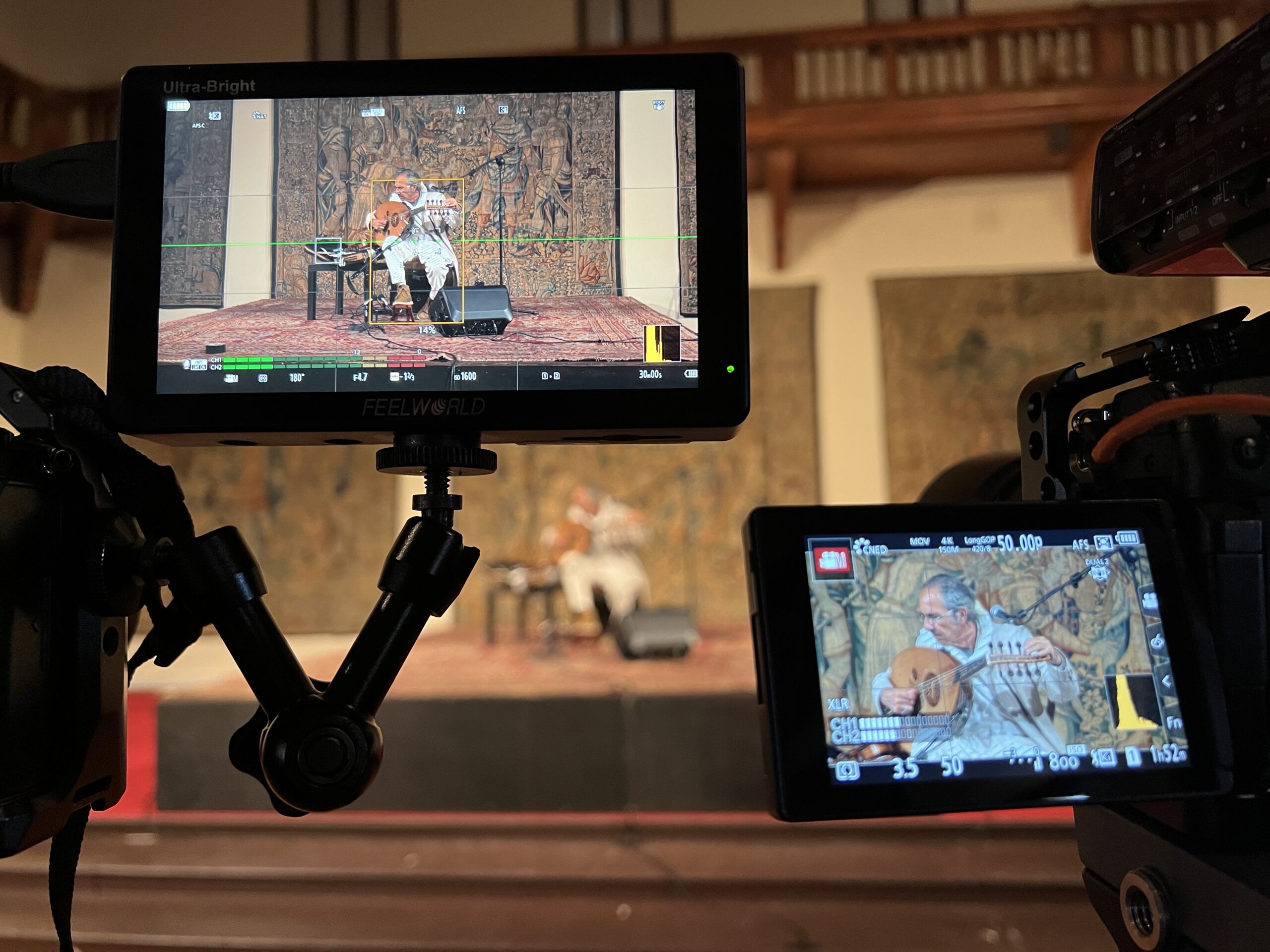
The event is part of a broader initiative called Sguardi Musicali: audiovisual ethnomusicology projects, launched in 2018 by the Intercultural Institute of Comparative Music Studies of the Giorgio Cini Foundation in Venice with the aim of promoting training and support for production in the field of audiovisual ethnomusicology.
This year’s edition includes a meeting to reflect on experiences of ethnographic fieldwork and the screening of audiovisual documentation resulting from the research carried out, with the presence of directors, researchers and curators of the exhibition, followed by the premiere screening of the film made by Kawkab Tawfik with the support of the Diego Carpitella Scholarship (2024-2025). The presentations will explore the cultures and ritual traditions of North-East Africa and the Middle East, with particular reference to the possession cult known as zār.
The event is organised in collaboration with Ca’ Foscari University of Venice and CFZ – Cultural Flow Zone.
[accordion][/accordion]
[accordion_entry title=”Programme | h 14:00 — 18:00 “]
Folk Life in Upper Egypt
by Giovanni Canova (1978–1982) | Super 8 film, 35 min
former Professor at the University of Naples “L’Orientale”
–
This is a rare ethnographic documentary that offers a vivid portrait of everyday traditions in Southern Egypt at the end of the 1970s. Filmed over several years by Giovanni Canova, the work portrays the rhythms of rural life in Upper Egypt through authentic examples of work songs, domestic songs, traditional music and dances. The camera follows farmers in the fields, women in their homes and communities gathered for celebrations, revealing the deep connections between song, work and popular religiosity. Viewers have the opportunity to observe local folklore and religious celebrations up close, where music becomes both a social bond and a spiritual expression. The film has no subtitles, allowing viewers to focus on the images.
–
Ethnographic documentation of male dhikr jahrī in Andijan, Uzbekistan
by Giovanni De Zorzi (2003) | SD video, 5 min
Ca’ Foscari University of Venice
Dhikr jahrī session held on the night of 22 May 2003 in Andijan (Uzbekistan) in the private residence of Shaykh Adil Khan Qāri. The circle (halqah) of dervishes practises various types of vocal dhikr (jahrī), which can serve as a refrain to poetry on spiritual subjects and, in some phases, as a support for collective physical movements (raqs).
–
Ethnographic documentation of female zikri in Harar, Ethiopia
by Simone Tarsitani (2003) | SD video, 5 min
Durham University, UK
Ziyārah (pilgrimage) to the branch of the Qurrabe Limay shrine on the night of 10 February 2003. A group of women sing and dance zikri, in parallel with a mawlūd ritual (celebrated by men only) on the occasion of the Arafa festival in Harar, Ethiopia. At two points in the video, it is possible to observe the altered state of consciousness of one of the participants in the dance.
–
Mingis: a Somali possession cult
by Francesco Giannattasio (1982) | Super 8 film, 16 min
former Professor at the University of Rome ‘Sapienza’
–
This film was made using audiovisual documentation collected on 11 and 18 March 1982 as part of a research project in the then Somali Democratic Republic, funded by the Institute of Psychology of the National Research Council and conducted by Raffaello Misiti, Francesco Antinucci, Alberto Antoniotto, Piero Coppo and Giannattasio himself. The video presents the highlights of a ritual, explained by Jama Valedi in an interview by Piero Coppo. Jama Valedi is one of the officiants in Somalia who preside over the cult of possession called mingis, a variant of zār (in Somali saar) practised in various regions of Muslim and Christian East Africa. The practices of the cult induce states of trance accompanied by music and dancing, with the aim of healing illnesses believed to be caused by possession by spirits known as mingis.
–
Ethnographic documentation of zār
by Giovanni Canova (1978) | audio and photographs, 5 min
former Professor at the University of Naples “L’Orientale”
–
The photographs document a zār session in Luxor on 24 May 1978, led by al-Sayyidah al-Nubiyyah, with an elderly woman who chanted accompanied by a tār (large frame drum), while two other women accompanied her with a duḥullah (terracotta tubular drum) and a riqq (tambourine with jingles). The audio recordings document a subsequent zār session organised in a private home.
–
PREMIERE
Disappearing Zār: Salīlah the Spirit of the Water
by Kawkab Tawfik (Diego Carpitella Fellow, 2025) 60 min
Institut Français d’Archéologie Orientale du Caire (IFAO)
–
Rooted in the ancient traditions of North-East Africa, zār is a ritual of spiritual possession and dance therapy that has long served as a tool for healing and emotional liberation. In Egypt, however, over the last fifty years this practice has been increasingly stigmatised and repressed, pushing the communities that practise it to the margins of society and threatening the very survival of the ritual.
–
Through a combination of intimate interviews and archival footage, the film presents the essential characteristics of zār, while exploring themes of social and gender marginalisation within this disappearing spiritual world.
–
At the centre of the narrative is Samāḥ, a woman oppressed by the burden of possession. Tormented by persistent voices and visions, she turns to a kūdya, a zār priestess, who prescribes a ritual dedicated to Salīlah, the spirit of the waters. Samāḥ’s mother, a follower of the zār, was also possessed by Salīlah and celebrated annual ceremonies to appease the spirit’s wrath, until one day she mysteriously drowned with five relatives in the Nile. Since then, Samāḥ has never found the courage to celebrate another zār. Now, as the possession grows stronger and begins to afflict her two daughters, she seeks help from Muḥammad, one of the last zār musicians still performing within rituals in Egypt. Convinced that there is no time to wait, Muḥammad insists that the ceremony must take place on the waters of the Nile.
–
As preparations proceed – amid the lively markets of Bāb Zuwālah, the gathering of sacred objects and the selection of animals for sacrifice – the film follows the community’s journey towards the ritual. On the river, to the hypnotic rhythm of the Salīlah chants, Samāḥ begins to dance: the dance of possession, a trance that once again connects her to the spirit and legacy of the generations of women who came before her.
[/accordion_entry]
[accordion][/accordion]
Free admission until full capacity is reached.